AI-generated text detection has mostly been the domain of large hosted classifiers from vendors like Turnitin and GPTZero. A newer trend, visible across model-sharing communities, is smaller, purpose-built detectors: take a compact open-weight model such as Qwen 0.8B and fine-tune it specifically to separate human-written text from machine-generated text, rather than for general chat. The appeal is obvious — a model this size can run on modest hardware, respond in milliseconds, and be self-hosted instead of routed through a third-party API.
This piece looks at what's actually verifiable about a Qwen 0.8B detector trained with Pangram-style methodology, what claims deserve skepticism, and what hardware you'd realistically want if you tried to run or fine-tune one yourself.
What "Qwen 0.8B fine-tuned on Pangram" actually means
Qwen's smaller model sizes (0.5B–1.8B parameters) are distributed as open weights on Hugging Face and are commonly used as a base for narrow, single-task fine-tunes — sentiment classifiers, entity extractors, and increasingly, AI-text detectors. Fine-tuning a base model this small for binary classification (human vs. AI-generated) is computationally cheap compared to training a detector from scratch, and inference is fast enough to run per-paragraph or per-sentence rather than only on a full document.
"Pangram" in this context most likely refers to Pangram Labs, a company focused specifically on AI-text detection that has published its own research on detector accuracy and adversarial robustness. When a fine-tune is described as trained "on the Pangram dataset," that typically means it borrows labeled examples or methodology associated with Pangram's published work — it is not a single fixed, universally agreed-upon benchmark the way something like MMLU is for general LLM evaluation. That distinction matters: a specific accuracy percentage attributed to "the Pangram dataset" should be treated as provisional until it's reproduced by someone outside the original project, since detector benchmarks are notoriously sensitive to which generator models and which text domains were used to build the test set.
Why a small model makes sense for this task
Detection is a much narrower task than generation, and a well-labeled dataset can often get a small model most of the way to the accuracy of a much larger one on binary classification. That's the same logic behind spam filters and content-moderation classifiers historically outperforming their parameter count — the task is narrow enough that a specialized small model competes with general-purpose giants. For AI-text detection specifically, the practical upside of staying small is speed and deployability: a 0.8B classifier can plausibly run inline in a browser extension or a CMS plugin without a round trip to a hosted API, which is a meaningfully different privacy and cost profile than sending every document to a commercial detector.
How this compares to commercial detectors
| Commercial hosted detector (Turnitin, GPTZero) | Small local fine-tune (Qwen 0.8B-class) | |
|---|---|---|
| Where text goes | Sent to vendor's servers | Stays on-device if run locally |
| Update cadence | Vendor-controlled, opaque | Depends entirely on the maintainer |
| Cost model | Subscription / per-scan API pricing | Free to run once downloaded, plus your own compute |
| Transparency | Closed model, published accuracy claims only | Open weights, but training data/methodology may still be undisclosed |
| Latency | Network round-trip | Local inference, typically faster for short text |
GPTZero and Turnitin both publish their own accuracy claims for their detectors, and Pangram-style projects publish theirs — but none of these numbers come from a shared, independently-audited benchmark, so head-to-head percentage comparisons circulating in forum posts and blog roundups should be read as directional at best, not settled fact. What's more reliably true across the category: all AI-text detectors, regardless of size, get measurably worse on heavily-edited AI text, on non-English text, and on short excerpts under a paragraph — that pattern shows up consistently in third-party test coverage of the major detectors and is a more useful mental model than any single accuracy figure.
Local inference: browser extension vs. self-hosted
A Chrome extension that calls a hosted detector API needs almost nothing locally — it's a thin client. A self-hosted Qwen-class detector is a different tradeoff: you're running the model yourself, typically through an inference runtime like llama.cpp or a Python serving stack, which means you control the hardware, the latency, and the privacy boundary, but you're also responsible for keeping the model updated as detection-evasion techniques evolve.
For anyone who has already set up a local LLM rig for a general-purpose model, adding an 0.8B-parameter classifier is a rounding error on top of existing hardware. Readers coming from our coverage of running Qwen3.6-35B-A3B on a 6GB VRAM laptop or a 32GB M2 Mac will find that a detector this small runs comfortably within whatever headroom is left after the main model — it's a much lighter workload than the 27B–35B chat and coding models most local-LLM guides focus on.
Hardware notes for running or fine-tuning a model this size
The hardware bar for a sub-1B parameter classifier is low relative to the mainstream Qwen 3.6 deployments covered elsewhere on this site. A rough guide:
| Tier | What it handles | Notes |
|---|---|---|
| CPU-only | Single-document, non-batch detection | Workable for occasional use; slower for batch scanning |
| Consumer GPU (8GB+ VRAM) | Batch scanning, browser-extension backend | Plenty of headroom for a sub-1B model |
| AMD GPU via ROCm | Same workloads, AMD-specific stack | Requires ROCm support for your specific card and driver version — check compatibility before assuming a given AMD GPU is supported |
| Workstation/datacenter GPU | High-throughput batch detection across large document sets | Overkill for a single detector, useful if bundled with other local-inference workloads |
Any throughput number — tokens per second on a specific AMD card, a specific accuracy percentage on a specific test set — depends heavily on quantization, batch size, and driver version, and varies enough between setups that a single cited figure from one forum post shouldn't be treated as representative. If you're benchmarking this on your own hardware, our deep dives into GGUF quantization tradeoffs and VRAM optimization for Qwen-family models cover the same quantization and memory tradeoffs that apply — at a much larger scale — to the bigger Qwen 3.6 models, and the same principles (lower precision trades accuracy for headroom) hold true for a small detector fine-tune.
For readers who want to see what's achievable on genuinely capable local hardware rather than a sub-1B classifier, our coverage of a $400 dual RTX 3060 Qwen 3.6-27B setup, an RTX 5090 running Qwen3.6-27B at claimed high throughput under vLLM, and a Raspberry Pi coding agent running Qwen3.6 on AMD hardware all illustrate the range of hardware people are actually using for the Qwen family day to day — worth a look if a text-detection sidecar isn't the only thing you plan to run. Alibaba's release cadence for the Qwen line also keeps moving; see our tracker on confirmed Qwen 3.6 model updates for what's shipped versus what's still rumor.
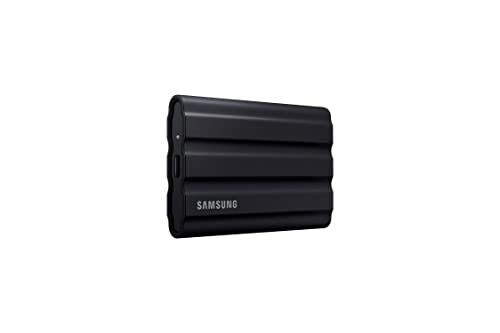
If you're fine-tuning a detector yourself rather than just running one, storage speed for shuffling labeled datasets and checkpoints matters more than most people expect — a fast portable SSD like the Samsung T7 Shield 2TB ($417.13, per current listing) keeps dataset I/O from bottlenecking a training run, though this is a general-purpose recommendation rather than a claim specific to any one project.
The bottom line
A Qwen 0.8B model fine-tuned on Pangram-style data is a plausible and reasonably cheap way to build a fast, self-hostable AI-text detector, and the underlying premise — that narrow classification tasks don't need frontier-scale models — is well established in machine learning generally. What's harder to verify from the outside are the specific accuracy and speed numbers that tend to circulate around any individual project like this. Until a claim is reproduced by someone outside the original team on a disclosed test set, treat exact percentages and tokens-per-second figures as marketing rather than settled benchmark results, and if you're evaluating one of these detectors for real use, test it against your own text rather than trusting a single published number.
Citations and sources
- Qwen model family on Hugging Face
- Pangram Labs
- GPTZero
- Turnitin AI writing detection
- AMD ROCm documentation
- llama.cpp
This piece is editorial synthesis based on publicly available information. No independent first-party benchmarking is reported.