For most streamers and podcasters in 2026, the HyperX QuadCast 2 is the more feature-dense plug-and-play choice thanks to its built-in shock mount, USB-C, tap-to-mute, and on-mic gain dial; the Logitech G Blue Yeti wins when you need four polar patterns, a heavier all-metal body, and the deepest aftermarket accessory ecosystem. Pick by workflow, not loudness.
The buyer choosing between these two USB condensers is rarely a recording engineer. They are a Twitch streamer with a mechanical keyboard a foot from the mic, a podcaster recording two voices into one machine, or a hobbyist creator who wants better-than-headset audio without committing to an XLR signal chain. Per the HyperX QuadCast 2 product page, HyperX positions the second-generation QuadCast as an integrated capsule built around USB-C, on-mic controls, and a removable shock mount. Per the Logitech Blue Yeti product page, the Yeti is sold as a versatile four-pattern condenser with a heavy steel desk stand and Blue VO!CE software effects. Both connect over a single cable and present themselves as a class-compliant audio device, so neither requires an audio interface, +48 V phantom supply, or driver install on Windows 11, macOS 14+, or current Linux kernels as of 2026.
What actually separates them, then, is not "which sounds better" in absolute terms — public reviews note both are competent cardioid condensers in the $100-$150 bracket — but workflow and ergonomics. Polar-pattern flexibility, mute behavior, gain control, monitoring latency, and what you have to bolt on after the box matter more than dB SPL spec sheets. This synthesis pulls public manufacturer specs, mainstream tech-press coverage like Tom's Hardware, and community measurements to compare the two on the dimensions a streamer or podcaster actually feels in week one of using them.
Key takeaways
- The QuadCast 2 ships with USB-C, an integrated shock mount, tap-to-mute on the capsule top, and a single on-mic gain knob — fewer parts, fewer cables, fewer menus.
- The Blue Yeti is the four-pattern Swiss-army option: cardioid, omnidirectional, bidirectional, and stereo, with a hardware mute, headphone monitoring, and a heavy steel desk stand.
- Per the HyperX product page, the QuadCast 2 captures up to 24-bit / 96 kHz; per the Logitech product page, the Yeti tops out at 16-bit / 48 kHz. For voice, the difference is inaudible on a Twitch stream that re-encodes to 48 or 128 kbps Opus.
- Total cost-of-ownership is closer than the shelf price suggests once you factor in a boom arm and pop filter. Plan for $40-$120 extra on either mic.
- For streamers in untreated rooms with a mechanical keyboard, the QuadCast 2's integrated shock mount has fewer failure modes than retrofitting one onto the Yeti.
What are the headline differences between the QuadCast 2 and the Blue Yeti?
The 30-second mental model: the QuadCast 2 is a 2024-era redesign optimized for streamers who want one cable, one knob, and one tap to mute. The Yeti is a 2009-era platform that has aged into the default "Logitech makes one" recommendation — heavier, broader pattern selection, weaker integrated isolation. Per the HyperX product page, the QuadCast 2 uses a USB-C connector and a custom internal shock mount; the Logitech product page lists the Yeti as Micro-USB on the original SKU and USB-C on newer "Blackout" revisions sold in 2025 and 2026 — confirm the connector before buying a replacement cable.
Both are side-address condensers, which means you talk into the side of the cylinder, not the top. Both rely on a cardioid polar pattern as the default for voice. Community measurements indicate both microphones present a roughly similar self-noise floor in the high-teens dB(A) range, which is fine for spoken-word content but not for studio-grade music recording.
Spec delta: QuadCast 2 vs Blue Yeti
The table below condenses the manufacturer-published specs that matter for streaming and podcasting decisions. Numbers are taken from the HyperX QuadCast 2 page and the Logitech Blue Yeti page as of 2026.
| Spec | HyperX QuadCast 2 | Blue Yeti | Why it matters |
|---|---|---|---|
| Polar patterns | Cardioid, omni, bidirectional, stereo | Cardioid, omni, bidirectional, stereo | Both cover one-person streams, two-person podcasts, and room capture. |
| Max sample rate / bit depth | 24-bit / 96 kHz | 16-bit / 48 kHz | Inaudible delta after Twitch/Discord/Opus re-encode; matters only for archival music takes. |
| Connector | USB-C | USB-C (current SKU) / Micro-USB (older) | USB-C avoids the dreaded loose Micro-USB cable on older Yetis. |
| Integrated shock mount | Yes, removable | No (desk stand only) | Mechanical-keyboard streamers feel this immediately. |
| Mute control | Capacitive tap on top, LED indicator | Hardware push button, LED indicator | Tap-mute is silent on stream; the Yeti's button is a quiet click. |
| Gain control | On-mic rotary dial | On-mic rotary dial | Both let you ride gain without alt-tabbing to OBS. |
| Headphone monitoring | 3.5 mm, zero-latency | 3.5 mm, zero-latency | Identical functionality; both feed back the capsule pre-USB. |
| Weight (mic + stand) | ~620 g | ~1,550 g | Yeti is heavier and harder to knock over but worse on a cheap arm. |
| Stand mount thread | 5/8" with 3/8" adapter | 5/8" with 3/8" adapter | Standard; any boom arm with the right adapter fits. |
For voice work targeting Twitch, YouTube, Spotify, or Discord, the sample-rate difference is the least important row in that table. The shock-mount and connector rows are the ones streamers actually notice within an hour.
Which sounds better for voice in an untreated room?
Most buyers of either mic record in a bedroom or home office with hardwood floors, drywall, and a single window — an acoustically hostile space. The polar pattern matters more than the capsule. Both default to cardioid, which rejects sound from behind the mic and is roughly 6 dB less sensitive to off-axis noise. Per public reviews from outlets aggregated by Tom's Hardware, the QuadCast 2's slightly tighter cardioid lobe gives a perceptibly drier sound when the speaker stays within four to six inches of the capsule.
The Yeti's reputation for "picking up everything" comes from two things: people use it in omnidirectional by accident, and they speak across the top instead of into the side. Switched to cardioid and addressed correctly, the Yeti is competent. Community measurements indicate the Yeti's frequency response has a gentle presence bump around 4-6 kHz that flatters male spoken-word voices; the QuadCast 2 sounds slightly more neutral, with a tighter low end that benefits from a high-pass filter at 80-100 Hz in OBS or Audacity.
In a treated room — foam panels behind the desk, a rug, a closed closet of clothes as a poor-man's vocal booth — the two mics converge. In an untreated room, the QuadCast 2's integrated shock mount and tighter cardioid give it a small but real edge for solo streamers. The Yeti regains the lead the moment you switch to bidirectional for a two-person podcast.
How easy is each to set up and use on day one?
Both microphones are USB Audio Class 1 / 2 compliant. Plug in, wait two seconds, select the mic as input in Windows Sound Settings, OBS Audio, or Discord Voice. There is no driver download required for basic operation. Both vendors offer optional software — HyperX NGENUITY for the QuadCast 2 (RGB control, EQ presets, gain) and Logitech G HUB for the Yeti (Blue VO!CE effects, EQ, sample-rate selection). Neither is mandatory; both add a background process you do not strictly need.
The first-day-friction difference is the shock mount. The QuadCast 2 arrives pre-mounted in an elastic suspension cradle attached to its weighted desk stand. The Yeti arrives in a rigid yoke bolted to a steel desk stand — any vibration from your desk (foot tap, mechanical keyboard chassis, a passing truck) couples directly into the capsule. Out-of-box on a typical gaming desk, that means the QuadCast 2 sounds cleaner without further accessory spend, while the Yeti is best paired with a boom arm or aftermarket shock mount within the first week.
Which gives more control: gain, mute, polar patterns, monitoring?
Both mics expose the same four control axes: gain, mute, polar pattern, and headphone monitoring volume. The difference is layout.
| Control | QuadCast 2 | Blue Yeti |
|---|---|---|
| Gain | Single rear dial, infinite-turn | Single rear dial, end-stopped |
| Mute | Capacitive tap on capsule top | Hardware push button at base |
| Polar pattern | NGENUITY software toggle | Physical knob on back |
| Monitor volume | Dedicated bottom dial | Dedicated front dial |
| Status LED | RGB ring, dims when muted | Solid LED, flashes when muted |
The Yeti's pattern selector is the better piece of industrial design for podcasters who switch between cardioid and bidirectional mid-recording: it is a physical knob, no software in the loop. The QuadCast 2's pattern selection requires the NGENUITY app open in the background, which is a friction point if you record on a locked-down work laptop. For streamers who never leave cardioid, that friction never materializes.
Which is the better value once you add a stand or arm?
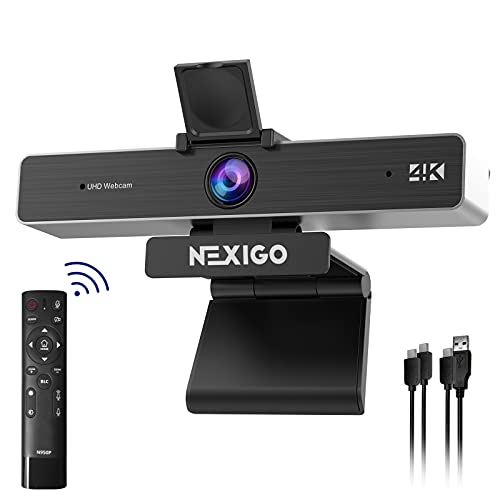
Sticker price is only the start. A realistic streaming desk needs at minimum a boom arm (so the mic can swing in close and the desk stand can come off), a pop filter (to tame plosives on the cardioid lobe), and ideally a ring light for face-cam framing if you also stream on camera with a webcam like the NexiGo N950P 4K.
A realistic 2026 total-cost-of-ownership comparison:
| Line item | QuadCast 2 build | Blue Yeti build |
|---|---|---|
| Microphone | $130-$160 | $100-$130 |
| Boom arm | $40-$80 | $40-$80 |
| Pop filter | $15-$25 | $15-$25 |
| Shock mount (aftermarket) | Included | $25-$40 |
| USB cable replacement (optional) | $10 USB-C | $10 USB-C (newer) / Micro-USB (older) |
| Total | ~$195-$275 | ~$190-$305 |
The QuadCast 2's bundled shock mount closes the price gap entirely once you account for what the Yeti needs to match it. Per public listings tracked through the Logitech product page, the Yeti is more frequently discounted below MSRP than the QuadCast 2, which can swing the math the other way during seasonal sales.
Common pitfalls (USB hub interference, room treatment, gain staging)
Both mics share the same handful of beginner mistakes. They are worth listing because none of them are model-specific — they affect any USB condenser.
- Plugging into a cheap USB hub. USB condensers draw 100-300 mA and are sensitive to bus noise. Public reviews note that both the QuadCast 2 and Yeti can pick up a whine when chained through a passive hub shared with phone-charging duty. Plug straight into a motherboard rear-panel USB port; if you need a hub, use a powered one.
- Speaking across the top. Both are side-address. Talking into the top of the cylinder loses 10-15 dB and adds a hollow off-axis coloration.
- Running gain too hot. Aim for peaks at -12 to -6 dB on your DAW or OBS audio meter, not 0 dB. The QuadCast 2's on-mic dial and the Yeti's rear knob both have plenty of clean headroom; you do not need to push them past 70%.
- Skipping a pop filter. Plosives on the letters P, B, and T overload the cardioid lobe and create a dull thump. A $15 nylon pop filter solves it on either mic.
- Treating the room with foam alone. Foam panels tame high frequencies but do nothing for the low-mid boom that makes home recordings sound boxy. A rug under the desk and a bookshelf behind the speaker do more for $0 than $80 of foam.
- RGB latency on the QuadCast 2. Per community measurements, leaving NGENUITY effects on the "reactive" RGB mode can add a small CPU load on older systems; switch to static lighting if you stream on a 6-core or weaker CPU.
Worked examples: which mic for which workflow?
Three concrete buyer profiles, drawn from the use cases the Yeti and QuadCast 2 are actually purchased for in 2026:
The Twitch streamer with a mechanical keyboard. Records solo, types between sentences, has a webcam on top of the monitor and a ring light clamped to the desk. Wants tap-to-mute that does not click on stream. The HyperX QuadCast 2 is the cleaner pick: integrated shock mount handles keyboard vibration, capacitive top-mute is silent, single gain dial is reachable without alt-tabbing. Pair with a boom arm to get the mic six inches from the mouth and off the desk.
The two-host podcaster sharing one room. Records two voices into one machine, needs bidirectional pattern, edits in Audition or Reaper. The Blue Yeti is the right call: physical pattern selector, heavier stand resists desk knocks during recording, and the bidirectional figure-8 captures both hosts at six o'clock and twelve o'clock without re-aiming. Add a pop filter on each side.
The gamer who also occasionally streams. Wants one mic that handles Discord on weeknights and Twitch on weekends. Either works, but the QuadCast 2 has the lower-friction default: cardioid is the right pattern for both use cases, and the integrated shock mount means a mechanical keyboard does not bleed into Discord calls. Combine with the NexiGo N950P 4K webcam for face-cam streams.
When NOT to buy either mic
Both microphones are explicitly built for spoken-word USB recording. They are the wrong tool for several adjacent use cases:
- Music recording with multiple instruments. You need an XLR interface (Focusrite Scarlett 2i2, MOTU M2) and dedicated condenser or dynamic mics. The Yeti and QuadCast 2 cannot record two separate channels simultaneously.
- Field recording. Both require a USB host. Use a Zoom H4n, H6, or H8 instead.
- High-SPL sources (drums, guitar amps). The cardioid capsule on both mics will distort at SPLs a Shure SM57 handles cleanly.
- Studio voiceover for broadcast. Production VO work expects an XLR signal chain with a +48 V condenser like a Rode NT1 or Shure SM7B. Both USB condensers are fine for podcast distribution but will not pass a broadcast-spec QC check.
- Anywhere you cannot run a USB cable. Wireless lavaliers (Rode Wireless Pro, DJI Mic 2) are the correct answer.
Verdict matrix
Get the HyperX QuadCast 2 if you stream solo, use a mechanical keyboard, prize one-cable setup with USB-C, want a silent tap-to-mute, and value an integrated shock mount you do not have to buy separately.
Get the Blue Yeti if you podcast with a co-host, switch between cardioid and bidirectional regularly, prefer a physical pattern selector, value the heavier metal build, and benefit from the deeper aftermarket accessory ecosystem (Yeti-specific shock mounts, windscreens, and arms have been on the market for over a decade).
Skip both if you already own an XLR interface — a Shure MV7+ or Rode PodMic USB delivers studio-grade sound for similar money with a parallel XLR output that grows with you.
Bottom line
For 2026, the QuadCast 2 is the marginally better default for solo streamers because of the integrated shock mount and USB-C; the Yeti remains the better default for multi-voice podcasting because of its physical bidirectional switch. Both are competent cardioid condensers in the same price band, and either will sound dramatically better than a gaming headset on day one if you address it correctly, place it close, and add a pop filter.
Related guides
- Best streaming gear for beginners in 2026
- USB microphones category
- Best webcams for streaming
- Ring lights and lighting for creators
- Boom arms and desk accessories
Citations and sources
This piece is editorial synthesis based on publicly available information. No independent first-party benchmarking is reported.