

Mustpoint
PCI-E X1 to 2 Ports 19 Pin USB 3.0 Header PCI Express to Dual 20 Pin USB 3.0 Card
Bottom line: The PCI-E X1 to 2 Ports 19 Pin USB 3.0 Header PCI Express to Dual 20 Pin: Two internal 19-pin USB 3.0 headers drive up to 4 front-panel ports; main trade-off: no rear external ports, so it only helps if your case or bay has USB 3.0 cables.
As an Amazon Associate, SpecPicks earns from qualifying purchases. Full disclosure →
Pros & Cons
Pros
- ✓ Two internal 19-pin USB 3.0 headers drive up to 4 front-panel ports
- ✓ NEC uPD720201 controller, a widely used USB 3.0 chipset
- ✓ PCIe x1 card fits any free x1, x4, x8 or x16 slot
- ✓ Full-height and low-profile brackets both included
- ✓ Lets older motherboards without a USB 3.0 header use modern case front I/O
Cons
- ✗ No rear external ports, so it only helps if your case or bay has USB 3.0 cables
- ✗ All four ports share one PCIe 2.0 x1 lane of bandwidth
- ✗ No USB-C or 10Gbps support, only 5Gbps USB 3.0
- ✗ Driver comes on CD, and many current PCs have no optical drive
Manufacturer description
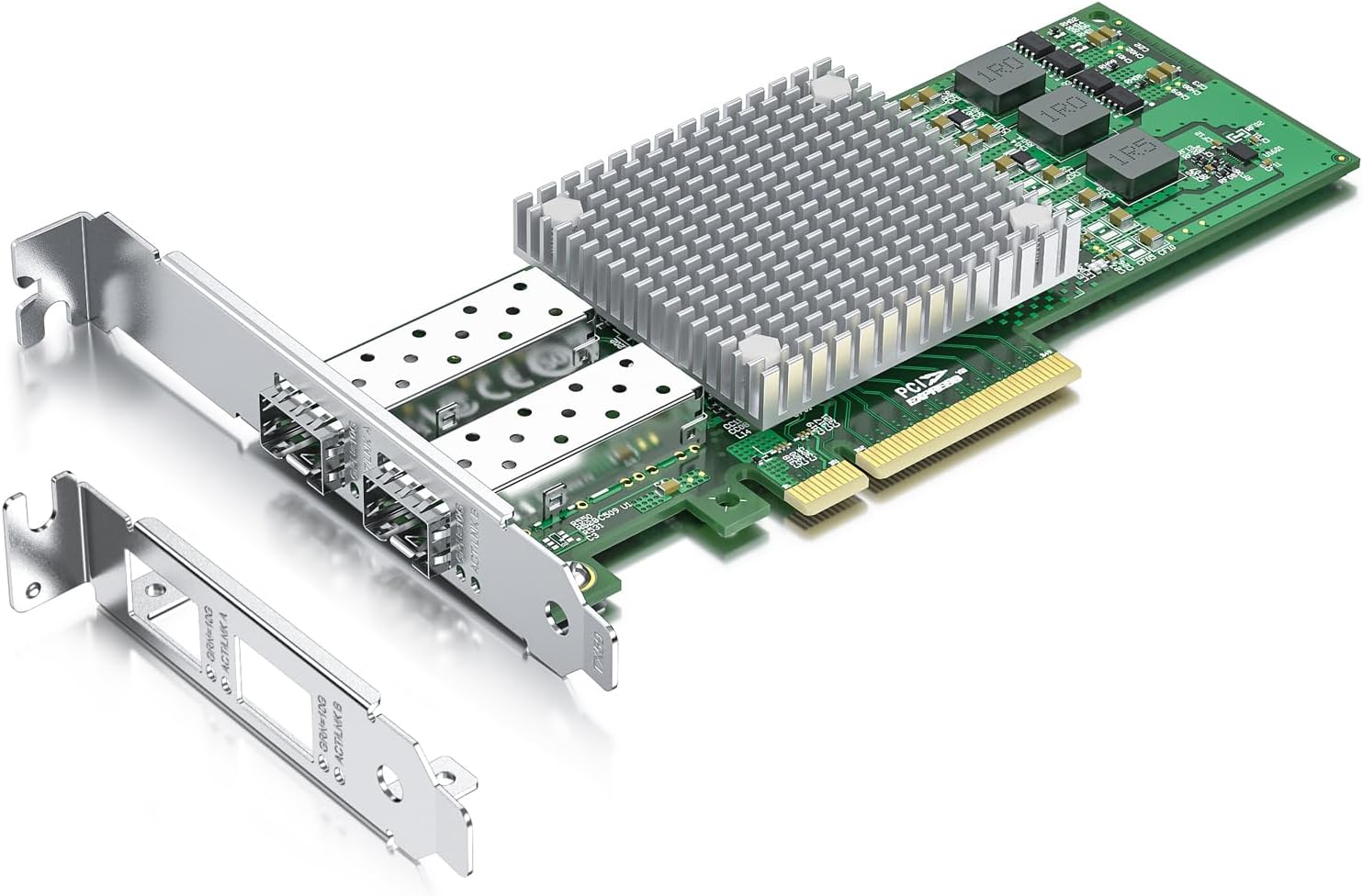
The Mustpoint PCIe to dual USB 3.0 header card adds two internal 19-pin USB 3.0 headers to a desktop PC through one free PCIe slot. If your case has front-panel USB 3.0 ports but your motherboard has no header to connect them, this card fixes that. It uses the NEC uPD720201 controller and complies with the single-lane (x1) PCI Express 2.0 specification, so it fits x1, x4, x8 and x16 slots. Each 19-pin header supports two SuperSpeed 5Gbps ports. Together they can run up to four USB 3.0 ports from front-panel cables, bay modules or internal brackets. USB 3.0 is backward compatible with older…
SpecPicks Verdict
SpecPicks has no buyer-rating or benchmark data for PCI-E X1 to 2 Ports 19 Pin USB 3.0 Header PCI Express to Dual 20 Pin…, so this read rests on the manufacturer's listed specs (how we evaluate). Compare with similarly-priced alternatives in the expansion cards category before committing. On the listing's own facts, the case for it is "Two internal 19-pin USB 3.0 headers drive up to 4 front-panel ports"; the main trade-off is "No rear external ports, so it only helps if your case or bay has USB 3.0 cables". If those two points fit how you will use it, put it beside one or two close alternatives in the Compare tool to confirm the price.
Common buyer scenarios for expansion cards of this kind: matching it to an existing build, replacing a failing part, or upgrading from a previous-generation equivalent. Check the spec table below against your current setup — particularly socket / form-factor / power-rating fields — and confirm compatibility on the retailer's listing before purchase. Prices and stock are set by the retailer and may have moved since this page was last updated.
Frequently Asked Questions
What chipset does the Mustpoint USB 3.0 header card use?
It uses the NEC uPD720201 USB 3.0 host controller and complies with the single-lane (x1) PCI Express 2.0 specification.
How many front USB 3.0 ports can this card run?
It has two internal 19-pin USB 3.0 headers. Each header supports two ports, so the card can run up to four USB 3.0 ports from front-panel cables or bay modules.
Will it fit in a PCIe x16 slot or a small form factor case?
Yes. As an x1 card, it fits any free x1, x4, x8 or x16 PCIe slot. The box includes both a standard full-height bracket and a low-profile bracket for slim cases.
Does it add any USB ports to the back of the PC?
No. Both connectors are internal 19-pin headers. You need a case front panel, drive-bay module or bracket with USB 3.0 cables to use the card.
Do I need to install a driver?
The box includes a driver CD. If your PC has no optical drive, check the product listing or the chipset vendor's support page for driver availability for your operating system.
Key Features
Quoted from the manufacturer's listing. Where it differs from the pros and cons above, those note the conditions the listing leaves out.
- Chipset: NEC UPD720201.
- Extend with 2 USB3.0 19pin connector (can expand 4 USB 3.0 ports) from desktop PC which with one free PCIe slot.
- SuperSpeed USB 3.0 is fully compatible with original USB system, peripherals and cables.
- Fully compliant with onelane (x1) PCI Express 2.0 specification.
- Two internal 5Gbps SuperSpeed USB 3.0 19pin headers.
Full Specifications
| Brand | Mustpoint |
|---|---|
| Style | Classic |
| Chipset | NEC UPD720201. |
| Style Name | Classic |
| Unit Count | 1 Count |
| Connectivity | USB |
| Model Number | 8541585782 |
| Compatibility | PC |
| Mfr Part Number | 8541585782 |
| Compatible Devices | Personal Computer |
| Hardware Interface | PCI, USB |
| Item Dimensions L x W x H | 4.72"L x 3.54"W x 2.7"H |
Ready to buy?
PCI-E X1 to 2 Ports 19 Pin USB 3.0 Header PCI Express to Dual 20 Pin USB 3.0 Card is listed on Amazon. Price, availability, shipping and returns are set by Amazon and its sellers — check the listing for current terms. SpecPicks earns a small commission on qualifying purchases — thank you for supporting independent review work.
Related Expansion Cards



More guides & deep dives from the SpecPicks archive
Browse all articles & guides →- Best Budget Gaming PC Build 2026 — ~$1,000 Parts List
- Emulation Hardware in 2026: FPGA, Software, and Cart-Reader Ecosystems
- How to Build a Windows 98 Retro PC in 2026
- The Complete Voodoo5 5500 AGP Driver Guide (2026 Edition)
- Best Retro Handhelds in 2026: Pocket, Mid-Tier and FPGA Picks
- Best 1440p Gaming GPUs in 2026
- RTX 4070 Super vs RX 7800 XT — Which to Buy in 2026
More reviews from the SpecPicks archive
Browse all reviews →- 1440p Gaming PC Build 2026: Cost, Parts, FPS
- GeForce 4 Ti 4600 Won't Boot Past POST: AGP Voltage and BIOS Field Guide
- Intel Arc AI Training in 2026: What Workloads Actually Work
- Mistral Leanstral 1.5: Running the New Open Math Model on a 12GB RTX 3060
- Forza Horizon 6 Runs Surprisingly Well on Steam Deck — Here's What Players Are Reporting
- Best Mechanical Keyboard for Office and Hybrid Work in 2026
- Best Single-Board Computers for AI and Robotics Projects in 2026
- Streamer PC Specs Decoded: The 2026 Parts That Match
- 3dfx Voodoo3 3000 PCI vs Voodoo5 5500 AGP: Win98 Performance Synthesis (2026)
- Best Wireless Keyboard for Home Office and Light Gaming (2026)
- KOORUI 4K QD-Mini LED vs Samsung Odyssey 4K: Which 27-Inch Wins?
- Is the RTX 3060 12GB Still Worth It for 1440p Gaming in 2026?
- Building a New Gaming PC in 2026: The Complete Guide
- Best GPU for 1440p Local Image Generation in 2026: Why the RTX 3060 12GB Still Wins on Value
- Build a Pi Zero W Retro Handheld in 2026: Full Parts List and Setup
- Best GPU for 1440p Esports at 240Hz in 2026
- Did Anyone Actually Ditch iCloud or Google One for Self-Hosting?
- Best Budget Gaming SSDs Under $100 in 2026
- USB-to-IDE Adapter vs CF-to-IDE for Imaging Retro PC Drives
- CompactFlash as an IDE Boot Drive for Your Win98 Retro PC in 2026
- Best SSD for a PS4 Pro Upgrade in 2026
- Local LLM in VSCode: The 2026 Setup Guide
- Kimi K2.7 Code Is 12x Cheaper Than GPT-5.5 — Run It Local?
- Jetson Orin Nano Super for ROS 2 Robotics: Build Guide + Real Latency Numbers
Earliest SpecPicks reviews
Browse full archive →- Best GPU for Llama 3.1 8B (2026)
- Best GPU for Qwen 3 14B (2026)
- Best GPU for Qwen 3 32B (2026)
- Best GPU for Llama 3.1 70B (2026)
- Best GPU for DeepSeek-R1 32B (2026)
- Best GPU for Llama 3.1 405B (2026)
- How to run Llama 3.1 8B on NVIDIA GeForce RTX 5090
- How to run Qwen 3 14B on NVIDIA GeForce RTX 5090
- How to run Qwen 3 32B on NVIDIA GeForce RTX 5090
- How to run Llama 3.1 70B on NVIDIA GeForce RTX 5090
- How to run DeepSeek-R1 32B on NVIDIA GeForce RTX 5090
- How to run Llama 3.1 8B on NVIDIA GeForce RTX 4090