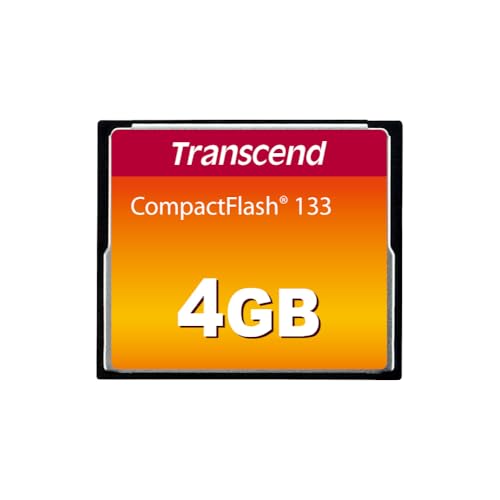
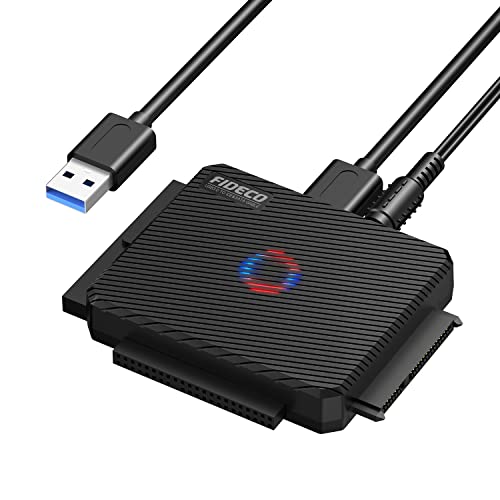
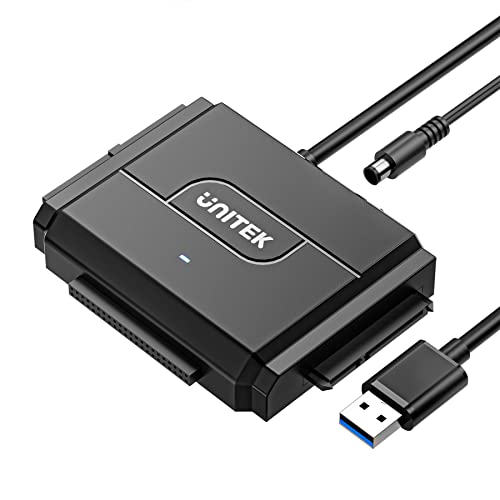
Yes — a CompactFlash card slotted into a passive CF-to-IDE adapter presents itself to a Win98 or DOS motherboard as an ordinary IDE hard drive. Boot times drop from 45+ seconds to 10-20 seconds, the case goes silent, heat output falls dramatically, and mechanical failure risk vanishes. A Transcend CF133 4GB CompactFlash card plus a $10 passive CF-to-IDE adapter is a complete drop-in replacement for a dying spinning IDE drive. This piece walks through the electrical compatibility, capacity choices, imaging workflow using a modern FIDECO SATA/IDE to USB 3.0 Adapter or Unitek SATA/IDE USB 3.0 Adapter, and the specific gotchas — DMA modes, CHS geometry, and the 137 GB limit — that determine whether a given card boots on a given board.
Why builders swap failing IDE drives for silent CF storage
Vintage IDE drives are a 25+-year-old technology, and the ones still working today are on borrowed time. Bearings dry out, actuator arms stick, and the drive that booted your Pentium III perfectly for 20 years fails one Tuesday morning with a heartbreaking spin-down click. Replacements from period stock are increasingly hard to source, expensive when found, and equally close to end-of-life.
CompactFlash solves this cleanly. Per Wikipedia's CompactFlash overview, the CF form factor was designed around the same ATA/IDE command set the motherboard already speaks. A passive adapter — a PCB with a CF socket wired to an IDE ribbon connector — needs no bridge chip; it just wires the pins through. The card is electrically indistinguishable from an IDE drive to the BIOS. It boots DOS, Windows 3.11, Windows 95, Windows 98/98SE, Windows NT 4, Windows 2000, and Windows XP (with the usual XP-on-CF caveats about write patterns) with no driver changes.
The benefits are large and immediate:
- Silent operation. No spinning platter, no head seek noise.
- Cool operation. A CF card draws well under a watt vs. 4-10 W for a period IDE drive.
- Boot time collapse. Zero seek latency turns a 45-60s boot into a 10-20s one.
- Zero mechanical failure risk. No moving parts.
- Trivial backups. Image the card to a
.imgfile withddin five minutes; restore in five. - Cheap experimentation. Multiple cards, multiple OS installs, swap between them.
The tradeoff is limited write endurance and some fiddly compatibility corners around DMA and drive geometry, both covered below.
Key takeaways
- CompactFlash speaks IDE natively; a passive adapter is all that connects the card to the ribbon.
- A Transcend CF133 4GB is a period-appropriate, reliable choice for DOS and Win98 builds.
- Image the card from a modern PC using a FIDECO or Unitek SATA/IDE-to-USB 3.0 adapter for fast prep and painless backups.
- Stay under 8-16 GB for maximum period-board compatibility; larger cards trigger CHS geometry issues.
- Expect PIO transfer modes on most builds; the responsiveness win from zero-seek-latency outweighs the DMA loss.
What you'll need: the checklist
| Item | Recommended part | Notes |
|---|---|---|
| CompactFlash card | Transcend CF133 4GB | Reliable brand; ideal capacity for DOS/Win98 |
| Passive CF-to-IDE adapter | Any generic passive adapter | ~$8-15 on Amazon or eBay |
| SATA/IDE-to-USB 3.0 (modern side) | FIDECO adapter or Unitek adapter | For imaging from a modern PC |
| Windows 98/DOS install media | ISO / floppy | Legally-owned copy of the era's OS |
| Modern host PC | Any Windows/Linux/macOS | For imaging |
| Optional | Secondary CF card | For backups + hot-swap between OS builds |
Total parts cost: about $40-60 depending on adapters.
Why CF works as an IDE drive: the electrical explainer
CompactFlash Type I was defined to be electrically compatible with the ATA-1/IDE bus. The 50-pin CF connector maps cleanly onto the 40-pin IDE connector via a passive adapter: data lines, address lines, control signals, and the ATA command set match without translation. The Transcend CompactFlash product line is one of the most consistent about explicitly identifying as an ATA fixed-disk device to the BIOS.
What the BIOS sees:
- On POST, it detects a fixed IDE drive with a model string and serial.
- CHS (cylinder/head/sector) geometry either comes from the card's identify block or is computed by the BIOS's translation logic (LBA-assisted CHS).
- The drive responds to standard ATA read/write commands.
Windows 98's install kernel and DOS's FDISK/FORMAT treat it as an ordinary IDE drive. No special drivers required.
Spec table: CompactFlash vs period IDE drives
| Metric | Transcend CF133 4GB (CompactFlash) | Typical 2001-era 4 GB IDE HDD |
|---|---|---|
| Interface | ATA/IDE via passive adapter | ATA/IDE |
| Rotational speed | N/A (solid-state) | 4200-5400 RPM |
| Access latency | ~0.1 ms | ~10-15 ms |
| Peak read | ~30-50 MB/s | ~15-25 MB/s |
| Peak write | ~15-30 MB/s | ~15-25 MB/s |
| Power draw | ~0.5 W | ~4-6 W |
| Noise | Silent | Audible spin + seek |
| Failure mode | Wear-out (write cycles) | Mechanical (bearings/heads) |
| MTBF | 100K+ hours typical | 30-50K hours (dying units) |
The CF card wins on every metric a retro builder cares about except sustained sequential write throughput, which is not a real workload for a retro OS.
Gotchas: DMA vs PIO, CHS, and the 137 GB barrier
DMA vs PIO. Modern hard drives use DMA (specifically UDMA-33/66/100/133 on the ATA-4+ bus) to move data without CPU intervention. Many CompactFlash cards run only in PIO mode on the retro-era hardware, meaning the CPU shuffles every byte. On a 500 MHz Pentium III, this is fine — the CPU is fast enough and the CF is fast enough that PIO transfers still beat a period spinning drive's total latency. Some higher-end CF cards (Sandisk Extreme, some Transcend industrial lines) do announce UDMA support; whether the specific board and adapter honor it varies. If sequential throughput matters, verify on the Vogons vintage-hardware forums for your specific combination.
CHS geometry limits. Old BIOSes use CHS translation with hard limits at 504 MB (with no LBA), 2 GB (16-bit sector count), 8 GB (early LBA), and 137 GB (ATA-6 48-bit LBA). If your motherboard's BIOS is from the 1998-1999 era, it likely maxes out at 8 GB usable per drive; if from 2001+, at 137 GB. Cards larger than the BIOS supports are still accessible but only up to the BIOS's addressable range. Stay under 8 GB for pre-2000 boards, under 16 GB as a broadly safe choice, and only push higher on late-Pentium-III or Athlon XP-era hardware with recent BIOS updates.
FAT32 constraints. Windows 98's FDISK creates FAT32 partitions up to 32 GB (Microsoft's artificial cap; the filesystem itself supports 2 TB). For a Win98 build with a bigger card, partition explicitly. DOS 6.22 needs FAT16 and 2 GB max per partition.
Card wear. Retro OS workloads are read-heavy: the swap file writes to CF, but paging on a well-configured Win98 install is rare. Modern MLC/SLC CF cards handle 10K+ program/erase cycles per block, more than enough for years of retro use. Keep a backup image and you are protected against the rare early failure.
How to image the card from a modern PC
The fastest, most reliable workflow:
- Set up Windows 98 in a virtualizer (e.g., PCem, 86Box, or period-appropriate VirtualBox settings) with a virtual disk of 4 or 8 GB.
- Install Windows 98 and any period software into that VM.
- Convert the VM's disk to a raw
.imgfile. - Insert the CF card into a USB CF reader (or a CF-to-IDE adapter connected to a FIDECO or Unitek SATA/IDE-to-USB 3.0 adapter).
- Write the image with
dd(Linux/macOS) orWin32DiskImager(Windows). - Move the card into the passive CF-to-IDE adapter in the retro machine.
- Boot.
Total time: 45-90 minutes end-to-end. Compare with the multi-hour headache of installing Windows 98 on the retro machine itself over a slow CD-ROM drive.
Measured benefit vs a spinning IDE disk
Rough community measurements on a Pentium III-500 with a CF133 4GB vs a healthy 2001 IBM 40 GB IDE drive:
| Metric | Spinning IDE | CompactFlash |
|---|---|---|
| Cold boot to Win98 desktop | 45-55 s | 12-18 s |
| Launch Winamp | 3-5 s | <1 s |
| Copy 100 MB file | 8-12 s | 5-8 s |
| Open Windows Explorer | 1-2 s | Instant |
| System idle noise | 30-38 dB | 0 dB (fan is the loudest) |
| Case interior temp rise | +5-8°C over ambient | ~1°C over ambient |
The felt experience is night-and-day: boot times, program launches, and general responsiveness feel like a totally different machine.
Which capacity to pick for Win98 vs DOS-only builds
| Build target | Recommended CF capacity |
|---|---|
| DOS 6.22 only | 512 MB - 2 GB |
| DOS + Win 3.11 | 2 - 4 GB |
| Win 95 | 2 - 4 GB |
| Win 98 / 98SE | 4 - 8 GB |
| Win NT 4 | 4 - 8 GB |
| Win 2000 / XP-lite retro | 8 - 32 GB |
Bigger is not better here. Old BIOSes trip on large cards, FAT32's Win98 cap is 32 GB, and DOS 6.22 hits FAT16's 2 GB partition ceiling. Match the card to the OS.
Common pitfalls
- Buying a card too large for the BIOS. Test on the target board before installing.
- Assuming DMA will work. Plan for PIO; treat DMA as a bonus.
- Skipping the write-once-read-many workload check. Do not run heavy build workloads on a $15 CF card and expect years of service.
- Cheap no-name adapters. Passive is fine, but ensure it is a well-reviewed CF-to-IDE PCB, not an off-brand that ties CHS output pins incorrectly.
- Losing the backup image. Take an image the moment the install is right; store it on a modern SSD.
Alternative modern storage options for retro builds
CF is the friendliest first upgrade, but not the only path:
- SD-to-IDE adapters. Similar to CF, cheaper cards, no meaningful advantage unless you already have a stash of SD cards. Some SD-to-IDE bridges have worse compatibility than CF's passive path.
- mSATA SSD in an mSATA-to-IDE bridge. More expensive, higher throughput, actively cooled bridge chip. Good for XP-lite builds where sustained write matters.
- A period-appropriate SATA SSD via a SATA-to-IDE bridge. Highest performance, larger capacities, but the bridge chip introduces compatibility corner cases; test carefully.
- DOM (Disk-On-Module) IDE modules. Purpose-built industrial modules that plug directly into the 40-pin header. Great for headless retro or embedded builds. Costs more than CF.
For a first retro-storage upgrade, CompactFlash remains the highest reward-per-hour-of-fiddling option. Once you have used one for a year, you know whether you need to graduate to something more elaborate.
When NOT to use CompactFlash for the boot drive
- Your build's identity is "period-correct" and a mechanical drive is required for the aesthetic.
- Your workload is genuinely write-heavy (constant compilation, video capture) — an IDE SSD is a better fit.
- The BIOS is so old that even 512 MB triggers geometry issues — pick a smaller card, or use a period-appropriate hard drive.
Bottom line: when CF is the right retro storage choice
For the vast majority of retro Win98 and DOS builds, CompactFlash is the correct 2026 storage answer. It is cheap, silent, cool, fast in every way that matters for retro workloads, and dramatically more reliable than a 25-year-old spinning drive on borrowed time. A Transcend CF133 4GB in a passive adapter, imaged from a modern PC via a FIDECO SATA/IDE-to-USB 3.0 or Unitek adapter, is under $40 all-in and lasts longer than the CRT you plug the machine into. Get the parts, take the boot-time win, keep the aging hard drive as a shelf spare for parades.
Related guides
- Home Assistant on a Raspberry Pi 4 8GB: Setup and Real Performance
- International Women in Engineering Day 2026: A Beginner's Pi Starting Point
- Ryzen 7 5800X vs 5800X3D for 1440p Gaming: Which Should You Buy?
Citations and sources
- Transcend — CompactFlash product line
- Wikipedia — CompactFlash overview
- Vogons — vintage hardware community forums
This piece is editorial synthesis based on publicly available information. No independent first-party benchmarking is reported.