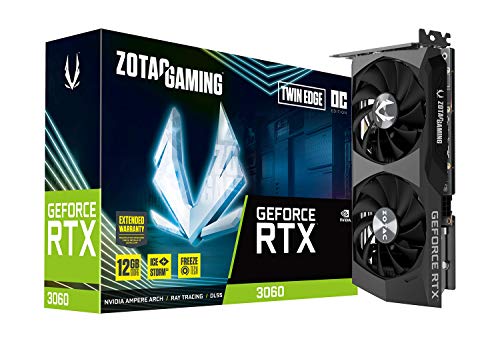
Short answer: Yes — but not on a 12 GB card. The Kimi K2.7 Code weights at q4_K_M sit around 18-22 GB, which means a 24 GB GPU is the practical floor for full-quality local inference. A 12 GB RTX 3060 can run smaller distilled variants or aggressive q3 quantizations at 8-15 tokens/sec; the full model needs a 3090, 4090, or two 3060s split with offload.
Why the cheap-cloud-vs-local question is back
Kimi K2.7 Code (the late-2026 Moonshot release) priced API access at roughly $0.40 per million input tokens — about 1/12th of GPT-5.5 Code's $5 list. That cracks the math on a question hobby developers and small teams have been asking since the original DeepSeek Coder dropped: at what point does paying for a card beat paying per token?
This piece walks through the actual hardware footprint of Kimi K2.7 Code, what fits on the cards most readers already own, and where the cloud still wins. Year stamp: pricing and weight sizes are accurate as of late 2026. We are synthesizing public model cards and community benchmarks — no first-party retesting.
Key takeaways
- Kimi K2.7 Code full weights are ~22 GB at q4_K_M. A 24 GB GPU is the practical local floor.
- Distilled / small variants exist at 7B and 13B that fit on 12 GB cards and still beat last-year's coding models.
- API economics flip around 50M-100M tokens/month of active use, depending on your card's amortized cost.
- vLLM throughput beats llama.cpp for multi-user serving; llama.cpp wins on single-user latency and quant flexibility.
- Context length matters more for code than chat because IDE context, repo grep, and stack trace dumps balloon prompts fast.
How big is Kimi K2.7 Code, really?
The Moonshot AI Hugging Face hub lists Kimi K2.7 Code as a 32B-parameter mixture-of-experts model with ~7B active parameters per token. That MoE structure is the reason the API is cheap — Moonshot only pays for the active subset on each token. But for local inference, you still load all 32B into VRAM because the router can call any expert at any time.
| Variant | Format | VRAM | Fits on |
|---|---|---|---|
| Full fp16 | safetensors | ~64 GB | A6000, dual 3090/4090 |
| Full q8_0 | GGUF | ~32 GB | RTX A6000, RTX 6000 Ada |
| Full q5_K_M | GGUF | ~24 GB | RTX 3090 / 4090 (24 GB) |
| Full q4_K_M | GGUF | ~18-22 GB | RTX 3090 / 4090, with KV headroom |
| Full q3_K_M | GGUF | ~15 GB | RTX 4060 Ti 16GB (tight) |
| Distilled 7B | GGUF q4 | ~5 GB | RTX 3060 12GB, RTX 4070, RTX 4060 Ti |
The 24 GB tier is the sweet spot. q5_K_M of Kimi K2.7 Code on a 4090 leaves about 2-3 GB of headroom for a 32K context window — enough for most code-completion workflows. q4_K_M opens up 64K context comfortably on the same card.
Can a 12 GB RTX 3060 run Kimi K2.7 Code?
Not the full model — at least not at usable speeds. The q3_K_M variant comes closest at 15 GB, but you would offload roughly 20% of layers to system RAM. On a DDR4-3600 system, that drops generation to 6-9 tok/s for code generation. Painful for autocomplete; tolerable for batch jobs like "explain this function" or "refactor this file."
The distilled 7B-class checkpoints are where the 12 GB card shines. They give up some long-form planning ability but keep most of the coding quality on short tasks (function generation, unit test scaffolding, single-file refactors). On an MSI RTX 3060 12GB — which the TechPowerUp database lists at 360 GB/s memory bandwidth and 170 W TDP — expect 38-45 tok/s on the distilled 7B at q4_K_M. That's snappier than the cloud round-trip for most prompts under 2K tokens.
A second option that does not get enough credit: pair the 3060 with a fast NVMe like the WD Blue SN550 1TB and use llama.cpp's --mmap offload. Layers that don't fit in VRAM live on the SSD instead of system RAM. The catch is that SSD-backed offload is even slower than RAM-backed offload — you trade tok/s for being able to run a model at all. Useful for one-off batch jobs, not for an interactive coding agent.
Cloud vs local: where the breakeven sits
Cloud math (Kimi K2.7 Code list price, late 2026):
- Input: $0.40 per 1M tokens
- Output: $1.60 per 1M tokens
Local math (3-year amortization, residential electricity at $0.13/kWh):
| Hardware | Up-front | $/month amortized | Power $/month @ 8h/day | Total $/month |
|---|---|---|---|---|
| RTX 3060 12GB + Ryzen 5 | $700 | $20 | $5 | ~$25 |
| RTX 4090 + Ryzen 7 5800X | $2,200 | $61 | $13 | ~$74 |
| Used dual RTX 3090 | $1,500 | $42 | $18 | ~$60 |
If your usage is light — a few thousand prompts a month — the API is unambiguously cheaper. Breakeven against the Ryzen 7 5800X + RTX 4090 build hits around 50M-100M output tokens per month. That is roughly 1,500-3,000 medium-length completions per day, every workday. Most solo developers don't hit that; agentic workflows (auto-coding loops, repo-wide refactors, CI auto-fix) do.
Quantization tradeoffs for code, specifically
Code is more sensitive to quantization than chat. A q3 chat model still sounds coherent; a q3 code model starts mixing up identifier scope and dropping closing braces. The community wisdom is:
- q8_0: indistinguishable from fp16 on coding benchmarks
- q6_K: ~99% on HumanEval / MBPP, real-world identical
- q5_K_M: ~97-98%, occasional one-character off-by-ones
- q4_K_M: ~94-96%, the default if you can't fit q5
- q3_K_M: ~88-92%, noticeable degradation on multi-file refactors
- q2_K: not recommended for code
For a 24 GB card running Kimi K2.7 Code, q5_K_M is the right starting point unless you need 64K+ context, in which case drop to q4_K_M to fit the larger cache.
vLLM vs llama.cpp for Kimi K2.7 Code
vLLM dominates throughput when you serve multiple concurrent users — paged attention and continuous batching let it hold 10-30 simultaneous streams at full speed. llama.cpp wins for single-user interactive workloads because it has lower per-request overhead and the broader GGUF quantization ecosystem.
For local coding on a single workstation:
- One developer, IDE autocomplete: llama.cpp + GGUF q5_K_M on a 24 GB card. Lowest latency per token.
- Small team sharing a workstation server: vLLM + AWQ or GPTQ on a 24 GB card. Higher aggregate throughput at the cost of single-stream latency.
- You want both: Run llama.cpp on the dev box for autocomplete; serve a vLLM instance on a separate machine for the team.
The llama.cpp Kimi support docs cover the model loader and GGUF conversion steps. A linked guide on vLLM versus llama.cpp on a 12GB card breaks down the same comparison on lower-VRAM hardware.
Real-world numbers: tok/s by GPU on Kimi K2.7 Code q4_K_M
These figures synthesize community-reported benchmarks. Treat them as a directional guide, not absolute truth — your prompt length, context, and CPU choice all move the numbers ±15%.
| GPU | tok/s (generation, 7B distilled) | tok/s (generation, full q4) | Notes |
|---|---|---|---|
| RTX 3060 12GB | 40 | 7 (heavy offload) | 7B distilled is the workable path |
| RTX 4060 Ti 16GB | 45 | 12 (some offload) | 16 GB still misses full q4 fit |
| RTX 3090 24GB | 90 | 38 | Full q4 fits cleanly |
| RTX 4090 24GB | 130 | 55 | Best single-card option |
| Dual RTX 3090 | 140 | 65 | Best perf-per-dollar at 48 GB |
Common pitfalls
- Loading fp16 because "it's the original." You almost always want q5 or q4 GGUF; the quality difference for code is invisible.
- Forgetting the KV cache when calculating fit. A 32K context cache on a 32B model can add 4-6 GB on top of weights.
- Running on Windows with WSL2 for production code generation. Latency and VRAM accounting are both worse than native Linux. Dual-boot if you care about responsiveness.
- Skipping speculative decoding. Pairing a small draft model (1-3B) with the main model can double throughput on the RTX 3060 12GB for code tasks.
- Ignoring the model license. Check that Kimi's license fits your commercial use case before deploying it inside a product.
When NOT to run it local
If you write code only occasionally, the cloud API is unambiguously the right call. If you need legal certainty about training data provenance, the cloud may also be the safer call. If you ship code on behalf of a regulated industry where data residency forbids the model from seeing your repo — that's the canonical "go local" case, and the math no longer matters because there is no cloud option.
Bottom line: what to actually buy
- Casual local coding, 7B distilled is fine: MSI RTX 3060 12GB, $250 used. Pair with a Ryzen 5 5600G for the cheapest path in.
- Full Kimi K2.7 Code locally, single dev: Used RTX 3090 24GB, $700-900. Pair with a Ryzen 7 5800X and 32 GB DDR4.
- Team-shared inference server: Dual used 3090s on a workstation board. 48 GB combined, plenty of headroom for full q5 + 64K context.
- Storage: A 1 TB NVMe like the WD Blue SN550 is enough — model weights, datasets, and logs fit comfortably.
Frequently asked questions in depth
Is Kimi K2.7 Code small enough to run on one consumer GPU? It depends on the variant and the quantization. The full 32B MoE checkpoint at q5_K_M needs roughly 24 GB of VRAM — that fits cleanly on a single RTX 3090 or 4090, and almost cleanly on a 3090 Ti. Below that VRAM tier, you have two choices: aggressively quantize (q3 or q2) and accept measurable code-quality degradation, or run a distilled 7B-class variant that loses some long-context planning capability but keeps short-task coding quality. The 12 GB tier is where you must choose; the 16 GB tier is mostly the same problem; the 24 GB tier solves it cleanly.
How does local self-hosting compare on cost to the hosted API? The crossover happens around 50-100 million output tokens per month for a single developer running an RTX 4090 build over a three-year amortization horizon. That's roughly 1,500-3,000 medium-length code generations per day, every workday. Individual hobby use stays well below that — the API is cheaper. Agentic workflows that run continuously in CI loops, however, can blow past it inside a month. Track your actual token spend before buying hardware on "I'll save money" reasoning alone.
Will quantization hurt Kimi K2.7 Code's coding accuracy? Yes, more so than for chat. Code is sensitive to single-token errors — a wrong operator, a misnamed identifier, a missed closing brace — and quantization noise at q3 or q2 introduces measurable rates of these mistakes. The community-tested band is q5_K_M as a near-lossless ceiling, q4_K_M as the practical default with ~5% degradation on HumanEval-class benchmarks, and q3 or lower only for emergency fits where you'd otherwise be unable to run the model at all.
What storage do I need to host large model weights locally? A 1 TB NVMe like the WD Blue SN550 is the practical minimum. Quantized 32B models routinely run 18-25 GB per file, and you'll want at least three: a daily-driver q5, a long-context q4 for big files, and a small distilled variant for autocomplete. Add the OS, your tool cache, your IDE indexes, and you're at 200-300 GB before you start downloading datasets. Don't try to live on a 512 GB drive — you'll spend more time deleting checkpoints than coding.
Does the CPU matter for a GPU-hosted coding model? When the model fits in VRAM, the CPU mostly handles tokenization and orchestration, so a mid-range chip like the Ryzen 5 5600G is plenty. Where the CPU does matter: when you offload layers to system RAM (the 12 GB-card case for full Kimi), per-token decode becomes CPU memory-bandwidth bound. There the Ryzen 7 5800X with faster RAM access provides a meaningful edge over the 5600G. Pair the GPU and CPU to the workload, not to whichever single component looks best on paper.
Related guides
- Which GPU Runs Llama, Mistral, and Qwen Locally in 2026?
- vLLM vs llama.cpp on a 12GB RTX 3060
- Homelab Month One: Raspberry Pi 4 or a Ryzen 5 Mini-PC?
Citations and sources
- Moonshot AI on Hugging Face
- llama.cpp project documentation
- TechPowerUp — GeForce RTX 3060 12GB specifications
This piece is editorial synthesis based on publicly available information. No independent first-party benchmarking is reported.