Intel's Arc GPU lineup — anchored by the A770 16 GB and the newer B580 Battlemage card — has built a functional AI training pathway through its oneAPI ecosystem and the Intel Extension for PyTorch (IPEX). It is not a replacement for NVIDIA's CUDA-dominated training infrastructure, and a direct comparison to data-center accelerators like the AMD Instinct MI300X or NVIDIA H100 misstates the market: Arc competes in the consumer and prosumer tier, not the enterprise rack. For researchers, hobbyists, and builders who already have Intel silicon in their systems, Arc in 2026 is a legitimate — if narrow — training option.
This guide synthesizes publicly available documentation, Intel's official hardware specifications, and community benchmark data to lay out exactly which training workloads Arc handles, where its limitations bind, and how it sits against consumer-tier alternatives at comparable price points.
What Intel Arc Brings to AI Training
Hardware Foundation
Per Intel's official product specifications, the Arc A770 — still the flagship consumer Arc card as of mid-2026 — ships in a 16 GB GDDR6 configuration with approximately 34.6 TFLOPS of FP16 throughput, delivered through the Xe-HPG architecture's XMX (Xe Matrix Extension) engines. Those XMX units are Arc's most relevant asset for AI training: they handle matrix multiplications natively in INT8 and FP16, the two precision formats most common in fine-tuning and small-scale training workflows.
The Arc B580, Intel's Battlemage successor released in late 2024, provides 12 GB GDDR6 with XMX engine refinements tuned for improved perf-per-watt. Per TechPowerUp's GPU specifications database, the B580's architectural revisions yield better efficiency than the A770 in inference-dominant tasks, though the narrower memory bus constrains training throughput for larger batch sizes.
| Spec | Arc A770 16 GB | Arc B580 |
|---|---|---|
| Architecture | Xe-HPG (Alchemist) | Xe2-HPG (Battlemage) |
| VRAM | 16 GB GDDR6 | 12 GB GDDR6 |
| FP16 Throughput | ~34.6 TFLOPS | ~24 TFLOPS (est.) |
| TDP | 225 W | 190 W |
| Training API | oneAPI / IPEX | oneAPI / IPEX |
| PyTorch XPU support | Yes (PyTorch 2.3+) | Yes (PyTorch 2.3+) |
For training contexts, 16 GB of GDDR6 on the A770 exceeds the base NVIDIA RTX 4070 (12 GB) on raw capacity — though NVIDIA's GDDR6X provides higher bandwidth per gigabyte, and CUDA's training library coverage is substantially deeper. The memory capacity comparison is Arc's strongest argument for VRAM-constrained fine-tuning.
The oneAPI and IPEX Software Stack
The software ecosystem is where Intel Arc's AI training story has the most ground to cover — and where the most visible progress has been made since Arc's 2022 debut.
Intel Extension for PyTorch (IPEX)
Per Intel's GitHub documentation for IPEX, the extension adds XPU device support to PyTorch with optimized kernels for Arc's XMX engines. As of 2026, IPEX training support covers:
- torch.xpu device placement for models and tensors
- BF16 and FP16 mixed-precision training with automatic mixed precision (AMP)
- torch.compile backend integration for graph-level optimization
- Compatibility with Hugging Face
transformersandacceleratefor standard fine-tuning pipelines
IPEX's training path is documented and tested against PyTorch 2.3+ on Linux (Ubuntu 22.04 and 24.04 LTS). Windows support via WSL2 is community-maintained; Intel's official guidance recommends Linux for training workloads.
oneAPI Toolkit
Intel's oneAPI toolkit provides the underlying runtime, compiler, and math library layer — specifically oneMKL and oneDNN — that IPEX depends on for Arc GPU execution. A functional training environment on Arc requires:
- oneAPI Base Toolkit (GPU runtime + Level Zero driver)
- Current Intel GPU driver (quarterly update cadence on Linux)
- IPEX matched to the installed PyTorch version
- For LLM fine-tuning: Hugging Face PEFT and, where applicable, bitsandbytes with XPU offload patches
Community documentation on r/LocalLLaMA and Intel's developer forums identifies driver compatibility after kernel upgrades as the most common source of instability in Arc training environments — a friction point that CUDA-based setups largely avoid through mature driver versioning.
Supported Training Workloads in 2026
Fine-Tuning Small and Medium Language Models
Arc's clearest training use case is parameter-efficient fine-tuning (PEFT) of smaller language models. With 16 GB GDDR6, the A770 can accommodate:
- 7B models via LoRA (16-bit): fits comfortably in VRAM at standard batch sizes with a gradient accumulation configuration
- 13B models via QLoRA (4-bit): workable at batch size 1 with gradient checkpointing and some system-RAM offload for optimizer states
- 3B models in full BF16 fine-tuning: viable for short-sequence classification and instruction-tuning tasks
Community measurements reported in r/LocalLLaMA threads through 2025–2026 indicate that training throughput on Arc A770 is lower than comparable NVIDIA consumer cards running equivalent CUDA workflows — differences attributed primarily to IPEX kernel maturity rather than hardware ceiling. Intel's developer blog posts document XMX engine utilization improving across successive IPEX and oneAPI releases, with the 2025.x oneAPI generation showing measurable throughput gains over 2023.x builds in publicly cited developer metrics.
For Arc's inference baseline — a reliable proxy for training hardware suitability — see Intel Arc A770 LLM Performance: Local Inference Guide and Intel Arc LLM Inference: A770 & B580 Guide 2025.
Image Generation Model Fine-Tuning
Stable Diffusion fine-tuning — DreamBooth, LoRA, and LyCORIS workflows — is documented to run on Arc via the IPEX backend. Per issue threads in the Hugging Face diffusers library and Arc-specific community forks, SD 1.5 and SDXL fine-tuning runs on the A770 with XPU device path modifications. SD3 and Flux training are more experimental: community reports note gradient stability edge cases under BF16 on Arc that required AMP tuning beyond what CUDA workflows typically demand.
For Arc's image generation performance on the inference side, see Intel Arc AI Image Generator: 2025 Setup & Performance Guide.
What Doesn't Fit: Large-Scale and Distributed Training
Arc is not positioned for large-scale pretraining or multi-GPU distributed training. Three structural constraints apply:
- No high-bandwidth GPU interconnect. Multi-Arc configurations rely on PCIe bandwidth, which caps inter-GPU communication well below NVLink-connected NVIDIA pairs for gradient synchronization in large batch settings.
- VRAM ceiling. 16 GB rules out loading models above roughly 30B parameters in any reduced-precision format without substantial system-RAM offloading, which degrades training throughput materially.
- Distributed training ecosystem maturity. Multi-XPU distributed training via IPEX's
torch.distributedbackend is functional in 2026 but community-tested rather than broadly production-validated at multi-node scale.
For data-center and multi-node pretraining workloads, Intel's Gaudi accelerators — separate products from the Arc consumer and pro GPU lines — are the intended platform, and they compete in a different category and price tier.
How Arc Compares to Consumer-Tier Alternatives
The meaningful comparison for Arc A770 in AI training is not enterprise data-center hardware — it is consumer and prosumer GPUs available at similar price points.
| Card | VRAM | FP16 TFLOPS | AI Training API | Ecosystem Maturity |
|---|---|---|---|---|
| Intel Arc A770 16 GB | 16 GB GDDR6 | ~34.6 | oneAPI / IPEX | Developing |
| NVIDIA RTX 4070 Ti SUPER | 16 GB GDDR6X | ~79.9 | CUDA / cuDNN | Mature |
| NVIDIA RTX 4080 SUPER | 16 GB GDDR6X | ~82.6 | CUDA / cuDNN | Mature |
| AMD RX 7900 XTX | 24 GB GDDR6 | ~61.4 | ROCm / HIP | Developing |
| Intel Arc B580 | 12 GB GDDR6 | ~24 | oneAPI / IPEX | Developing |
Per TechPowerUp's specifications database, the RTX 4070 Ti SUPER delivers roughly double Arc A770's FP16 throughput. The AMD RX 7900 XTX's 24 GB VRAM provides a clear advantage for larger fine-tuning jobs, though ROCm's training ecosystem carries similar maturity caveats to IPEX. Arc A770's competitive case is its 16 GB GDDR6 at a price point that has historically undercut 16 GB NVIDIA consumer cards — a meaningful advantage when VRAM is the binding constraint rather than peak throughput.
For deeper performance context specific to Arc, see Intel Arc A770 16GB for Local LLMs: 2025–2026 Guide and Intel Arc LLM Support: What Works in 2026.
When Intel Arc Makes Sense for AI Training
Best-Fit Scenarios
Personal research and controlled fine-tuning. Researchers running 7B–13B model fine-tuning experiments benefit from Arc's VRAM headroom at a lower acquisition cost than equivalent 16 GB NVIDIA consumer cards, provided the oneAPI/IPEX setup overhead is acceptable and the workflow runs on Linux.
Intel Xeon system integration. Arc's oneAPI stack is designed to run across Intel CPUs (Xeon, Core Ultra) and Arc GPUs with unified data movement APIs and shared developer tooling. Builders standardized on Intel compiler and math library infrastructure (oneMKL, oneDNN) face lower migration friction adopting Arc than switching to CUDA.
Hobbyist and maker AI projects. For builders experimenting with local fine-tuning and inference on a tight budget, Arc A770's accessible price and 16 GB VRAM make it one of the more VRAM-rich consumer options outside the NVIDIA 40-series premium tier. See Intel Arc A770 for Local LLMs: 2026 Benchmark Guide for the community benchmark picture.
Where Alternatives Are Clearer
Production fine-tuning pipelines with throughput targets. CUDA's library ecosystem — Flash Attention 2, FSDP, DeepSpeed, bitsandbytes — is more mature and faster to configure for repeatable training runs. Unless there is a specific cost, supply, or integration reason to use Arc, NVIDIA consumer cards deliver faster time-to-convergence on standard workflows.
Multi-GPU distributed training. NVLink-connected NVIDIA setups offer substantially higher inter-GPU bandwidth. ROCm on AMD also has more documented multi-GPU training recipes than Arc's current IPEX multi-XPU path.
Windows environments. Intel's official training stack support is Linux-first. WSL2 runs on Windows but is community-maintained for training workloads and not recommended for long fine-tuning jobs where driver stability matters.
System Configuration for Arc AI Training
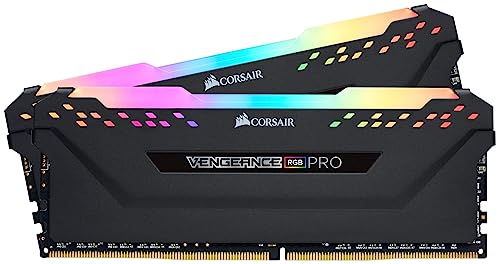
For builders configuring an Arc A770 training system, the surrounding hardware matters as much as the GPU itself. Fast DDR4 system memory — such as a Crucial 16GB DDR4 3200 kit ($127.00) or CORSAIR Vengeance RGB PRO DDR4 16GB ($172.99) — provides the CPU-side bandwidth needed for optimizer state offloading when VRAM fills during 13B QLoRA runs. For local dataset storage, a high-endurance SSD like the Samsung 870 EVO 4TB eliminates storage IO as a bottleneck during dataset preprocessing and checkpointing.
Arc Pro B60: Expanding the VRAM Ceiling
Intel's Arc Pro B60 — a workstation-class card introduced in 2025 — expands Arc's training ceiling with 24 GB GDDR6 and ECC memory. Per Intel's published product specifications, the Pro B60 targets professional AI and visualization workflows with the same oneAPI/IPEX training stack as the consumer Arc line. At 24 GB, the Pro B60 opens fine-tuning of 30B–70B parameter models via 4-bit QLoRA without the aggressive offloading the A770 requires at 13B+. For the Pro B60's inference and compute picture alongside the A770 and B580, see Intel Arc LLM Performance: A770, B580 & Pro B60 Guide 2025.
Intel's publicly stated roadmap for oneAPI includes continued optimization of Flash Attention backends and DeepSpeed integrations for Arc hardware — though community validation of those commitments is the reliable measure, not pre-release positioning.
FAQs
Can Intel Arc A770 train AI models?
Yes. The Arc A770 supports PyTorch-based training via Intel Extension for PyTorch (IPEX) and the oneAPI toolkit. Its 16 GB GDDR6 frame buffer makes it well-suited for fine-tuning 7B–13B parameter models via LoRA or QLoRA on a Linux host.
How does Intel Arc compare to NVIDIA for AI training?
NVIDIA GPUs running CUDA remain dominant for AI training due to ecosystem maturity and library coverage. Arc trades software breadth for a lower entry price and — in the A770 16 GB variant — competitive VRAM capacity relative to some consumer NVIDIA cards at the same tier.
Is oneAPI good enough for serious AI training in 2026?
Intel's oneAPI and IPEX have matured considerably. PyTorch 2.3+ includes native XPU device support, and IPEX adds Arc XMX engine training optimizations. For research and fine-tuning workflows on Linux it is functional; for production pipelines requiring the widest library coverage, CUDA remains the broader-supported path.
What model sizes can Arc A770 16 GB handle for training?
The A770 can fine-tune 7B models in 16-bit LoRA and 13B models in 4-bit QLoRA with gradient checkpointing. Full-precision training of models above roughly 3B parameters typically saturates VRAM without system-RAM offload for optimizer states.
Does Intel Arc B580 support AI training?
Yes. The B580 runs the same oneAPI/IPEX stack on Battlemage XMX engines, but its 12 GB GDDR6 limits practical fine-tuning to roughly 3B–7B parameter models depending on precision and sequence length.
Is Intel Gaudi the same as Intel Arc for AI training?
No. Intel Gaudi targets data-center pretraining at enterprise scale, competing with NVIDIA H100/H200 in cloud and HPC deployments. Arc serves consumer, creator, and local AI workloads — a separate tier with a different price point and software stack.
Citations and sources
- https://github.com/intel/intel-extension-for-pytorch — Intel Extension for PyTorch (IPEX) official GitHub: training API, XPU device documentation, and Arc-specific optimizations
- https://www.intel.com/content/www/us/en/developer/tools/oneapi/overview.html — Intel oneAPI toolkit overview and component documentation including oneMKL, oneDNN, and Level Zero runtime
- https://www.techpowerup.com/gpu-specs/arc-a770.c3896 — TechPowerUp Arc A770 GPU specifications database (FP16 throughput, memory, TDP)
- https://www.techpowerup.com/gpu-specs/arc-b580.c4166 — TechPowerUp Arc B580 GPU specifications database
- https://mlcommons.org/benchmarks/training/ — MLCommons MLPerf Training benchmark suite and published results
- https://huggingface.co/docs/peft/index — Hugging Face PEFT documentation for parameter-efficient fine-tuning methods (LoRA, QLoRA, DreamBooth)
This piece is editorial synthesis based on publicly available information. No independent first-party benchmarking is reported.