

HyperX
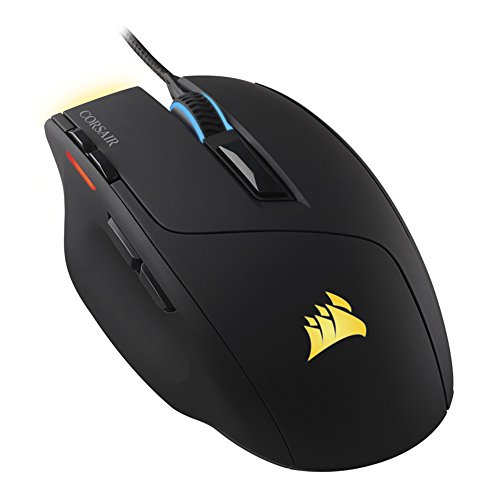
HyperX Pulsefire Dart
Bottom line: The HyperX Pulsefire Dart: Pixart 3389 sensor with Omron split-button switches for competitive-grade tracking; main trade-off: only 6 programmable buttons, fewer than MMO-focused mice with side button clusters.
As an Amazon Associate, SpecPicks earns from qualifying purchases. Full disclosure →
Pros & Cons
Pros
- ✓ Pixart 3389 sensor with Omron split-button switches for competitive-grade tracking
- ✓ Up to 50 hours battery with RGB on, up to 90 hours with the LED off
- ✓ Qi Certified wireless charging works with any standard Qi pad you already own
- ✓ 2.4GHz RF plus included range-extending adapter for desktop tower setups
Cons
- ✗ Only 6 programmable buttons, fewer than MMO-focused mice with side button clusters
- ✗ Ergonomic right-hand shape leaves left-handed players without a mirrored option
- ✗ Requires HyperX software for button remapping and RGB, adding a background app
- ✗ RGB lighting costs roughly 40 hours of runtime versus running with the LED off
Manufacturer description
The HyperX Pulsefire Dart cuts the cord without cutting corners. This wireless RGB gaming mouse pairs a 2.4GHz RF connection with a bundled wireless adapter that extends range for desktop setups, so you get low-latency tracking without a cable dragging across your mousepad. Underneath sits a Pixart 3389 sensor and a split-button design running Omron switches, giving you the precision and click consistency that competitive play demands. Battery life runs up to 50 hours per charge with RGB active, and up to 90 hours with the LED off, so a full weekend of sessions rarely means hunting for a…
SpecPicks Verdict
SpecPicks scored HyperX Pulsefire Dart using a rating × review-volume × price-fit model applied to published specs and reviews across the gaming peripherals category. HyperX's gaming peripherals lineup sits within the broader category mid-tier; price and specs are the deciding factors over brand loyalty here. Judge it on the specification table and the price rather than on sentiment: check the figures that decide your use case, then put it side-by-side with two or three close alternatives in the Compare tool before clicking through.
Common buyer scenarios for gaming peripherals of this kind: matching it to an existing build, replacing a failing part, or upgrading from a previous-generation equivalent. Check the spec table below against your current setup — particularly socket / form-factor / power-rating fields — and confirm compatibility on the retailer's listing before purchase. Prices and stock are set by the retailer and may have moved since this page was last updated.
Frequently Asked Questions
How long does the HyperX Pulsefire Dart battery last?
Up to 50 hours on a single charge with RGB lighting active, and up to 90 hours with the LED turned off, per HyperX. Actual runtime varies with brightness and polling settings.
Can I charge the Pulsefire Dart on a wireless charging pad?
Yes. The Pulsefire Dart is Qi Certified, so it charges on any standard Qi pad, including the one you use for your phone. It also charges over its cable.
Does the Pulsefire Dart work with PS4 and Xbox One?
Yes. HyperX lists the Pulsefire Dart as compatible with PC, PS4, and Xbox One. Console feature support varies by title, so check the game's peripheral support.
What sensor does the HyperX Pulsefire Dart use?
A premium Pixart 3389 optical sensor, paired with a split-button design using Omron switches. It connects over a 2.4GHz RF link with an included wireless adapter for range.
Is the Pulsefire Dart worth it compared to a wired gaming mouse?
The gaming-grade 2.4GHz link, Pixart 3389 sensor, and Qi charging address the usual wireless tradeoffs of latency and downtime.
Key Features
- Gaming-Grade Wireless Technology
- Long Lasting Battery Life (up to 50 hours)
- Wireless Qi Charging Compatibility.Battery life:90 hours - LED off
- Premium Pixart 3389 Sensor
- Ergonomic design with padded leatherette grips
Full Specifications
| Brand | HyperX |
|---|---|
| Color | Black |
| Range | 10.0 meters |
| Pattern | Mouse |
| Model Name | Pulsefire Dart |
| Style Name | Pulsefire Dart |
| Unit Count | 1.0 Count |
| Connectivity | Wireless |
| Model Number | HX-MC006B |
| Power Source | Battery Powered |
| Compatibility | PC, PS4, Xbox |
| Built-In Media | Mouse, Quick Start Guide |
| Button Quantity | 6 |
| Connection Type | Wireless |
| Mfr Part Number | 4P5Q4AA |
| Special Feature | Wireless |
| Antenna Location | Gaming |
| Hand Orientation | Right |
| Hardware Platform | PC, xbox one |
| Compatible Devices | PC, PS5, PS4, Xbox Series X|S va Xbox One |
| Full listing title | HyperX Pulsefire Dart - Wireless RGB Gaming Mouse, Software-Controlled Customization, 6 Programmable Buttons, Qi-Charging Battery up to 50 hours - PC, PS4, Xbox One Compatible,Black |
Ready to buy?
HyperX Pulsefire Dart - Wireless RGB Gaming Mouse, Software-Controlled Customization, 6 Programmable Buttons, Qi-Charging Battery up to 50 hours - PC, PS4, Xbox One Compatible,Black is listed on Amazon. Price, availability, shipping and returns are set by Amazon and its sellers — check the listing for current terms. SpecPicks earns a small commission on qualifying purchases — thank you for supporting independent review work.
Related Gaming Peripherals




More guides & deep dives from the SpecPicks archive
Browse all articles & guides →- Emulation Hardware in 2026: FPGA, Software, and Cart-Reader Ecosystems
- Best 1440p Gaming GPUs in 2026
- Best Budget Gaming PC Build 2026 — ~$1,000 ($800 on Sale)
- Best Retro Handhelds in 2026 — From $35 to $500
- RTX 4070 Super vs RX 7800 XT — Which to Buy in 2026
- The Complete Voodoo5 5500 AGP Driver Guide (2026 Edition)
- How to Build a Windows 98 Retro PC in 2026
More reviews from the SpecPicks archive
Browse all reviews →- Samsung Odyssey OLED G9 Drops $700 — and a Cheaper 4K Path
- Best Mini PC for Local LLM Inference in 2026: Ryzen vs Apple vs Intel
- AI-Driven Win98 Voodoo3 Driver Recovery on a Raspberry Pi 5 Companion
- Raspberry Pi 4 8GB as a Headless Local-LLM Sidecar: llama.cpp Tuning, Quantization Matrix, and Real tok/s
- Ryzen 5 5600G vs Ryzen 7 5700X: Which for a Budget 1080p Build?
- Gemma 4 12B Runs Local: Best 12GB GPUs for Google's New Open Model
- Crucial BX500 vs Samsung 870 EVO: Best SATA SSD for Game Loads
- This Open-Source KVM Runs a Pentium 4 Instead of a Raspberry Pi
- Building a Silent Win98/XP Boot Drive: CompactFlash + IDE Adapter Setup
- DIY Ambient Home Hub: Raspberry Pi CM4 + ESP32-S3 for Kids
- Period-Correct Windows XP Gaming PC: 2002-2005 Build Guide for 2026
- Windows XP on Steam Deck: Retro Setup Guide
- Intel Arc Pro B60 Creator 24GB: Workstation GPU Guide
- Troubleshooting WinXP Audigy FX Install Failures in 2026
- Best PS4 & PS5 Controllers for PC Gaming in 2026
- Jellyfin on Raspberry Pi 4 8GB with an SSD (2026 Guide)
- Is the RTX 5050 Really as Bad as Everyone Says?
- Building a Budget Local-AI Box: Ryzen 7 5800X + RTX 3060 12GB
- Train a Kick Drum AI Model on 6GB VRAM (Linux Guide)
- Can a Raspberry Pi Zero W Run a Local LLM in 2026? A Tiny-Model Reality Check
- SNES Classic vs Sega Genesis Mini: Best Plug-and-Play Retro Console in 2026
- That $850 Prebuilt With $1,200 of Parts: What the Math Actually Says
- Best CPU for a Local-LLM Homelab Under $300 in 2026
- Is Your First Homelab Right? A 2026 Hardware Sanity Check on a Ryzen 5 5600G
Earliest SpecPicks reviews
Browse full archive →- Best GPU for Llama 3.1 8B (2026)
- Best GPU for Qwen 3 14B (2026)
- Best GPU for Qwen 3 32B (2026)
- Best GPU for Llama 3.1 70B (2026)
- Best GPU for DeepSeek-R1 32B (2026)
- Best GPU for Llama 3.1 405B (2026)
- How to run Llama 3.1 8B on NVIDIA GeForce RTX 5090
- How to run Qwen 3 14B on NVIDIA GeForce RTX 5090
- How to run Qwen 3 32B on NVIDIA GeForce RTX 5090
- How to run Llama 3.1 70B on NVIDIA GeForce RTX 5090
- How to run DeepSeek-R1 32B on NVIDIA GeForce RTX 5090
- How to run Llama 3.1 8B on NVIDIA GeForce RTX 4090