In brief — 2026-05-27 · A maker has paired a solar-powered Raspberry Pi Zero 2W with an AI camera to identify birds entirely on-device, with no cloud connection required. The project is a tidy demonstration of how far low-power edge AI has come for hobbyists — and a useful reference point for anyone weighing a small Pi against a roomier board like the Raspberry Pi 4 8GB for heavier on-device models.
What happened
A post circulating on r/raspberry_pi shows a self-contained bird identifier built around a Raspberry Pi Zero 2W and an AI camera, powered by a small solar panel and battery. When a bird lands in frame, an on-device vision model classifies the species and logs it — all without sending a single image to a remote server. The whole thing runs untethered outdoors on its solar budget, waking to process detections and otherwise sipping power.
What makes the build notable is not any single exotic component. It is the combination: a sub-$20-class board, a camera that can run inference, and a power setup small enough to mount on a fence post. A few years ago this kind of always-on, on-device species recognition meant a desktop, a GPU, and a power outlet. Now it fits in a weatherproof box and runs on sunlight.
How on-device vision actually works on a tiny board
The Zero 2W is not a powerful computer by desktop standards, so the trick is matching the model to the silicon. On-device vision for a narrow task like bird-species classification uses small, quantized neural networks — models compressed to run in limited memory and compute. Pairing the board with a dedicated AI camera helps further, because such cameras can offload the heavy inference step to onboard silicon, leaving the Pi to handle orchestration, logging, and power management rather than crunching every frame itself.
This division of labor is why a board that would struggle to run a large model can still deliver reliable detection for one focused job. The model only has to answer a single, bounded question — "what species is this?" — rather than reason about the open world. Narrow scope plus quantization plus camera-side acceleration is the recipe that makes edge AI viable on hardware this small, and it is the same pattern showing up across hobbyist edge-AI projects in 2026.
The solar power budget is the real engineering
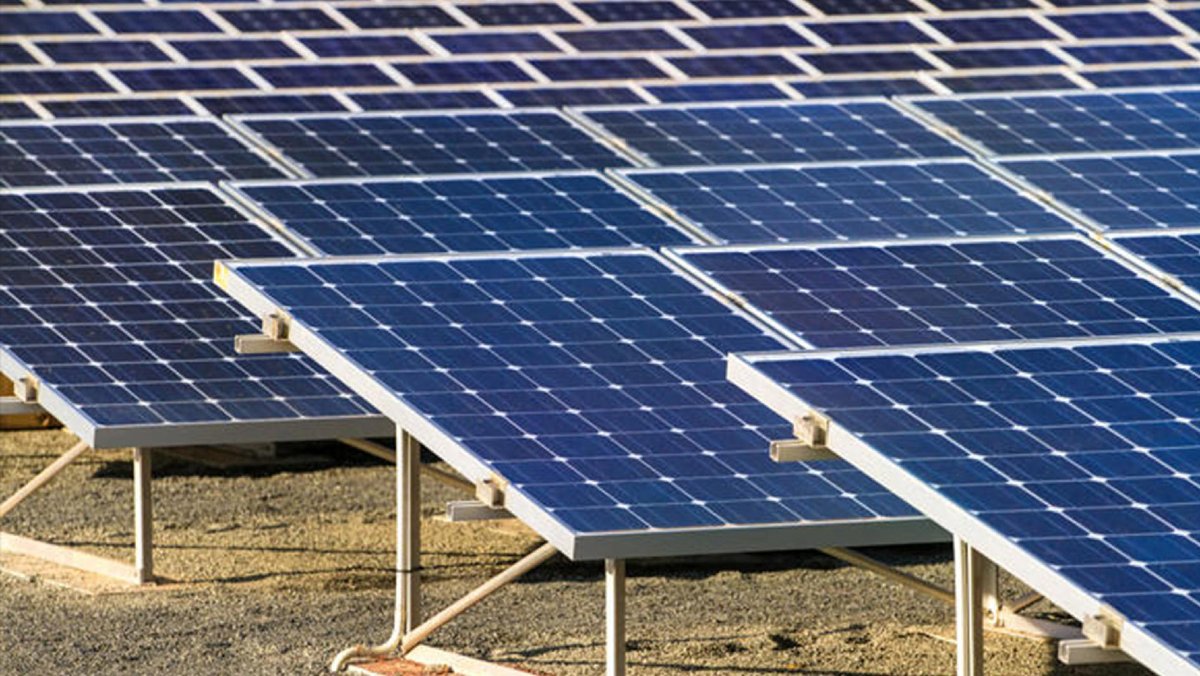
The clever part of a build like this is the energy math, not the AI. A solar deployment lives or dies on its power budget: the panel has to harvest more energy over a day than the device consumes, and the battery has to carry it through the night and cloudy spells. The Zero 2W's low idle and active draw is precisely what makes a small panel and modest battery sufficient. Push to a hungrier board and the panel and battery both have to grow, sometimes dramatically.
That trade-off — capability versus power draw — is the central design decision in any off-grid edge-AI project. The maker here optimized for "runs forever on a small panel," which steered the choice toward the lowest-power board that could still do the job. A different goal, like running a larger model or serving a live dashboard, would tilt the decision the other way, toward a board with more headroom and a correspondingly larger power system.
Why it matters: edge AI is now genuinely hobby-accessible
The significance of this project is what it represents, not the bird list it produces. On-device AI used to be the domain of well-funded labs and expensive accelerators. A solar bird identifier built from commodity parts shows that the floor has dropped to pocket money and a weekend. That accessibility is the story: more makers can now build private, offline, always-on sensing devices without a cloud subscription or a power outlet.
There are real-world reasons to care beyond the novelty. On-device inference keeps captured imagery private — nothing leaves the device — which matters for anything pointed at a backyard, a doorway, or a workplace. It also removes the recurring cost and latency of cloud calls, and it keeps the device working when the internet does not. For conservation citizen-science, home automation, and remote monitoring, cheap offline edge AI is a quietly enabling shift.
How a Raspberry Pi 4 8GB scales the same idea up
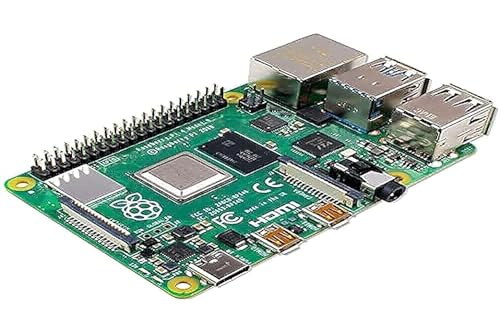
The Zero 2W is the right tool for a single, power-constrained detection task. But the same architecture scales, and the natural step up is the Raspberry Pi 4 8GB. With far more RAM and CPU headroom, a Pi 4 8GB can run larger models, log richer data locally, serve a web dashboard for browsing detections, and juggle multiple sensors at once — things the Zero 2W cannot do simultaneously. Our Pi 4 8GB home-lab writeup covers where that extra capacity pays off.
The cost of stepping up is power. A Pi 4 8GB needs a larger solar panel and battery to run off-grid, so the build gets bigger and pricier. For a fixed mains-powered installation that is no obstacle; for a fence-post solar deployment it is the main constraint to plan around. If you want to experiment with on-device language models rather than vision, our local AI on Raspberry Pi guide walks through what the larger boards can manage.
What you need to start a similar Pi AI camera project
You do not need much to replicate the idea at home. The shopping list is short:
- A Pi board. Start with whatever matches your power budget. A budget Raspberry Pi 4 4GB is a capable middle ground; the Pi 4 8GB gives the most headroom for larger models and a dashboard.
- A camera. A standard Pi camera module or a dedicated AI camera that can run inference on-board.
- Storage and a starter kit. A microSD card for the OS and logs, plus a kit like the Freenove Ultimate Starter Kit if you want sensors, jumper wires, and breadboarding parts to expand the build.
- Power. A quality supply for bench testing, and a solar panel plus battery sized to your board for off-grid use.
From there the software side is approachable: a current Raspberry Pi OS, a small pre-trained vision model, and a short script that runs inference on camera frames and logs results. The community around r/raspberry_pi is full of similar builds to crib from, and our best Raspberry Pi kits and projects guide lists starting points.
Choosing your board: Zero 2W vs Pi 4 vs Pi 5
If this project inspires your own build, the board choice comes down to how you weight power draw against capability. The table below frames the trade-off for an edge-AI sensing project.
| Board | Power draw | On-device capability | Best for |
|---|---|---|---|
| Pi Zero 2W | Lowest | Narrow, quantized vision tasks | Off-grid solar sensors |
| Pi 4 4GB | Moderate | Mid-size models, light dashboard | Balanced mains or large-battery builds |
| Pi 4 8GB | Higher | Larger models, dashboard, multi-sensor | Capable always-on hubs |
| Pi 5 | Highest of these | Heaviest local models | Performance-first, mains-powered |
The Zero 2W wins for a single low-power task that must run on sunlight. Step to a Pi 4 4GB when you want room for a slightly larger model or a basic web view, and to a Pi 4 8GB when the device becomes a small hub doing several jobs at once. A Pi 5 is the performance pick when power is not a constraint and you want the heaviest local models — at the cost of the largest power system if you still want it off-grid.
A broader pattern: cheap offline sensing everywhere
The bird identifier is one entry in a fast-growing genre. The same low-power, on-device, offline-first recipe is showing up in wildlife camera traps, doorway and package detectors, plant-health monitors, weather and air-quality stations, and home-automation triggers that fire on what a camera sees rather than a timer. What ties them together is the realization that a narrow model on cheap silicon, kept local, solves a real problem without a subscription or a server.
For makers, the appeal compounds. Each of these projects reuses the same skills — match a small model to the board, manage the power budget, log locally, optionally sync when a network is available — so the learning transfers. Build the bird identifier and you are most of the way to a doorbell camera that recognizes a delivery van, or a feeder cam that flags a specific species. That reusability, more than any single gadget, is why edge AI on Raspberry Pi has momentum heading through 2026.
The source
The build surfaced as a "Solar Powered Bird Identifier — Pi Zero 2W + AI Camera" post on the r/raspberry_pi community, where makers regularly share off-grid and edge-AI projects. As with any community project, specifics like the exact model, panel wattage, and battery capacity vary by builder; treat the original thread as the primary reference for reproducing the setup.
Bottom line
A solar-powered, on-device bird identifier is a small project with an outsized message: edge AI has dropped to a price and power envelope that any hobbyist can reach. Start small with a low-power board if your goal is an off-grid sensor, and step up to a Raspberry Pi 4 8GB when you want to run larger models or add a dashboard — just budget the extra power. Either way, the era of needing the cloud to run a useful AI model is, for a growing list of tasks, simply over.
Citations and sources
- Raspberry Pi — Raspberry Pi Zero 2 W product page
- Raspberry Pi — AI Camera product page
- r/raspberry_pi — community projects and the source thread
This piece is editorial synthesis based on publicly available information. No independent first-party benchmarking is reported.