What Handheld Console Should I Buy in 2026? A Decision Framework
Which game library you already own decides this purchase — not the chip, the screen, or the battery.
By Mike Perry, Founder & Editor-in-Chief · Published 2026-09-08 · Updated 2026-09-08 · 13 min read
Four handheld classes, one diagnostic. Work out which library you own first, then read the battery, storage and accessory costs that follow.
Quick Answer
Buy the handheld that matches the library you already own. If it is a Steam backlog, a PC handheld — Valve publishes a 2–8 hour battery envelope for the LCD Steam Deck, which collapses to the low end under AAA load. If it is Nintendo exclusives, a first-party console is the lower-friction buy. Library ownership decides this, not specs.
What Handheld Console Should I Buy in 2026? A Decision Framework
By Mike Perry · Published 2026-09-08 · 10 min read
"Which handheld should I buy?" is the wrong opening question, and it produces bad purchases with impressive consistency. It invites a spec comparison — chip, screen, battery, weight — between devices that are not actually competing for the same job. You end up comparing a PC handheld's frame rates against a first-party console's exclusives against a plug-and-play retro box's price, three numbers that do not share a unit.
The right opening question is: which game library do you already own? That single fact eliminates two of the four categories before any hardware comparison starts, and it does so more reliably than any benchmark. A buyer with three hundred Steam games and a buyer with a decade of Nintendo purchases are not choosing between the same devices — they are choosing within different categories entirely, and the specs only matter once you know which category you are in.
This guide is structured as a decision framework rather than a ranking. We start with the library diagnostic, lay out the four handheld classes and what each is actually for, then work through the two taxes that wreck handheld budgets — storage and accessories. Every recommendation names the reader profile it does not fit, because the honest answer for a meaningful number of people in 2026 is "buy a fixed console instead" or "buy nothing and dock what you already own."
Key Takeaways
Four categories, not one market: PC handhelds, first-party console handhelds, plug-and-play retro boxes, and dedicated emulation handhelds. They solve different problems.
The library-ownership test decides it. What you already own is worth more than any spec sheet, because a handheld with nothing to play on it is an expensive paperweight.
The storage tax is real. Base-tier storage fills within a handful of modern installs. Plan expansion at purchase time, not as a later upgrade.
The accessory tax is bigger than people budget for. Case, storage, controller, dock — this routinely adds 30–50% to the sticker price.
A fixed console beats every handheld when you play on a television and value zero setup over portability.
PC handhelds still require per-game tuning. Frame caps, TDP limits, and compatibility checks are ongoing work, not a one-time setup.
Step 0: which library do you already own?
Answer this honestly before reading any further. Four profiles, four different purchases.
Profile A — you have a large Steam backlog. Dozens or hundreds of PC games you paid for and never finished. This is the strongest case for a PC handheld, and it is essentially the entire value proposition: the device is a way to finally play a library you already own, on a couch or a plane. If you do not have this backlog, most of the reason to buy a PC handheld evaporates.
Profile B — you buy Nintendo exclusives. There is no legal way to play current first-party Nintendo titles on anything else, so the exclusive pull is absolute rather than a preference. Nintendo's systems page is the reference for current hardware and what runs on it. If two or more games you actively want are exclusives, the category is decided.
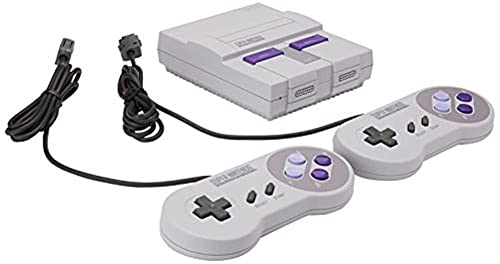
Profile C — you want your 16-bit era back, on a TV. You are not really shopping for portability. You want a curated library of games you remember, with period-correct controllers, on the living-room television, with no setup. This routes to a plug-and-play retro box, and it is the cheapest correct answer on this page.
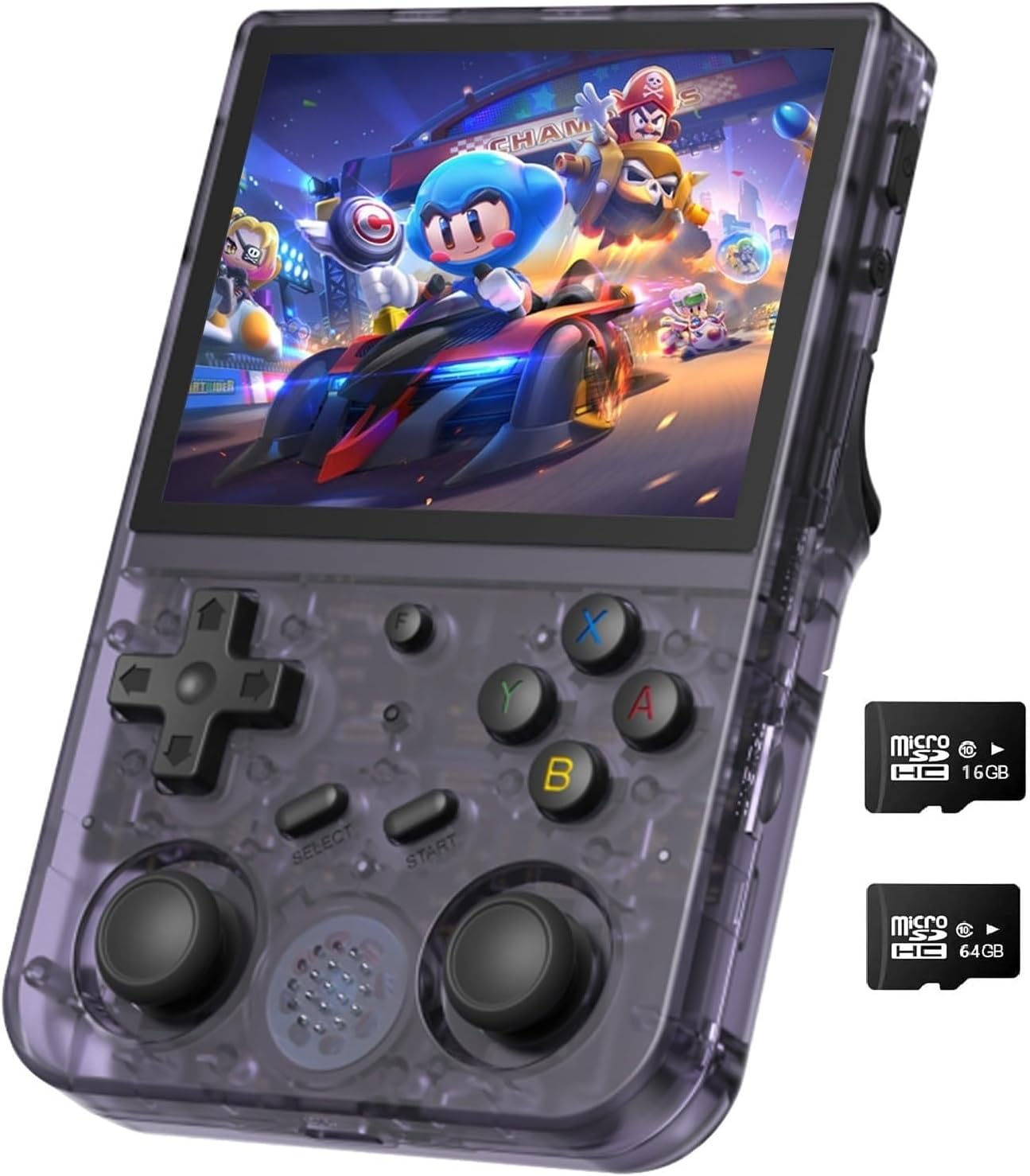
Profile D — you want breadth across eras, portable. Multiple console generations, emulation-first, willing to do file management and configuration work. This is the dedicated emulation handheld category, and the deciding variable is your tolerance for setup rather than any hardware spec.
Most readers are cleanly one of these. If you are genuinely split between A and B, the tiebreaker is where you play: A rewards a couch and long sessions, B rewards short portable sessions and travel.
Category table: the four handheld classes compared
Notice that only one row's deciding spec is a hardware number. The other three are about library access and friction, which is exactly why spec-first shopping fails in this category.
Should you buy a PC handheld?
The counter-case first, because it is the part that gets skipped.
Per-game tuning is ongoing work. Getting good battery life out of a PC handheld means setting per-title frame caps and TDP limits, and checking compatibility before you install something. Enthusiasts enjoy this. A meaningful number of buyers do not, and they are the ones who post "I stopped using mine after a month."
The battery envelope is wide, and the top of the range is not your experience.Valve's published tech specs give the LCD Steam Deck a 40 Wh battery with a 2–8 hour range, and the OLED revision a 50 Wh battery with a 3–12 hour range. Those upper figures describe light 2D and older titles at capped frame rates. A demanding modern title sits near the bottom of the range — plan around the low end, not the marketing number.
Sleep-state behavior is imperfect. Suspend-and-resume is the feature that makes a handheld feel like a console rather than a laptop, and on PC handhelds it mostly works — with occasional wake failures and battery drain in sleep that first-party consoles largely solved years ago.
Now the case for: if you have Profile A's backlog, none of the above outweighs finally playing it. A PC handheld turns a dead library into an active one, and no other device does that.
On accessories — the JSAUX PC0104 ModCase is the protection-and-expansion accessory most owners add afterward, and it is worth being clear that it is an accessory, not a reason to buy. It protects the two most common out-of-warranty failure points, screen and sticks, and adds mounting points for the modular ecosystem. If your device lives on a desk and never travels, you do not need it. If it goes in a bag, buy it at purchase time. Our full list is in Best Steam Deck Accessories in 2026.
Should you buy a first-party console handheld instead?
For Profile B the math is not close. Exclusives are not a preference you can spec your way around — if the game you want only runs on one device, the comparison is over. Nintendo's official systems page is the reference for what runs where.
What you get beyond the library is friction reduction, and it is underrated by spec-focused buyers. Sleep and resume are instant and reliable. Games ship tuned for the hardware, so there is no TDP limit to set and no compatibility tier to check. Firmware updates do not break your library. For a buyer who wants to press a button and play — or for a device that is going to a child, or to a household member who does not want a hobby project — this is decisive. The concrete buy in this class is the Nintendo Switch with Neon Blue and Neon Red Joy-Con, which sits in the $299–$349 tier and is the version to get unless you specifically want the OLED screen or the handheld-only Lite.
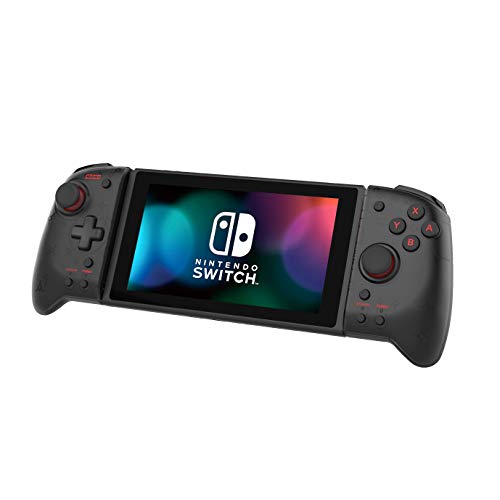
The ergonomics gap is the one real complaint, and it is fixable. The Hori Nintendo Switch Split Pad Pro replaces the small stock controllers with full-size grips, sticks, and a proper d-pad, and it transforms long handheld sessions. Be clear-eyed about the tradeoff, though: it is a wired controller with no HD rumble, no motion controls, and no ability to detach for two-player use. For long single-player handheld sessions it is a straight upgrade. For a household that regularly plays two-player with detached controllers, it is not — buy it as a second option, not a replacement. More in Best Nintendo Switch Accessories for Handheld and Docked Play in 2026.
When is a plug-and-play retro console the smarter buy than any handheld?
When you are going to play on a television and you want zero setup. That is the whole condition, and a surprising number of "which handheld" shoppers actually meet it.
The Sega Genesis Mini and the Nintendo Super NES Classic Edition both ship a licensed, curated library with period-correct controllers, and they work the moment you plug them in. No ROM sourcing, no per-system configuration, no shader tuning, no legal grey area. For Profile C that is not a compromise — it is the entire point. A curated set of genuinely good games you will actually finish beats a thousand-title emulation library you will scroll through and close.
The honest comparison against an emulation handheld comes down to two axes. Curation and setup cost: the fixed boxes win outright, because someone already picked the games and made them work. Breadth and portability: the emulation handheld wins outright, because it spans eras and fits in a pocket. There is no universal answer, only the question of where you will physically sit. We put the three approaches head to head in Genesis Mini vs SNES Classic vs Raspberry Pi 4: Which Retro Setup Wins in 2026?.
Who should ignore this category entirely: anyone whose primary use case is portable play, and anyone whose nostalgia sits outside the 16-bit era these boxes cover. If you want fifth- and sixth-generation 3D libraries, these devices do not have them, and no amount of price advantage fixes that.
One practical note if you go this route: these are 4:3-era outputs on a modern display, and the scaling result varies a great deal by panel. We measured what actually happens on a modern 4K monitor in Genesis Mini and SNES Classic on a 4K Gaming Monitor.
How much storage do you actually need, and what does it cost?
This is where handheld budgets break, and the failure is predictable enough to plan around.
Modern installs are large and getting larger. A base-tier handheld holds a handful of current AAA titles before it is full — not a library, a handful. Treat storage expansion as part of the purchase price rather than a future upgrade, because you will be buying it within weeks either way.
Retro and emulation libraries invert the math completely. Entire multi-console collections spanning several generations fit comfortably in the space one modern shooter occupies. If you identified as Profile C or D in Step 0, storage is close to a non-issue and you should not pay a premium for the high-capacity tier.
Match the storage tier to your library class, not to your budget ceiling. Profile A buyers should buy the largest practical internal tier plus expansion, because modern PC titles are the worst case. Profile B buyers should buy mid-tier plus a memory card. Profiles C and D should buy the cheapest tier available and spend the difference elsewhere.
For a docked setup, a cheap SATA drive changes the math again. The Crucial BX500 1TB SATA SSD is the sane external-expansion path: at 1 TB it holds a real library, it draws little enough power to run comfortably from a dock, and its ~540 MB/s interface ceiling is far above what a handheld's load times are bounded by anyway. It is DRAM-less, so it is not the drive for a video-editing scratch volume — but for a game library it is the right tradeoff. See also Best Steam Deck Dock and 4K Monitor Setup for TV-Mode Gaming in 2026.
Battery and thermals table: what each class actually delivers under load
The row that matters most: for PC handhelds, the gap between the light-load and heavy-load figures is roughly 4×. Every disappointed PC-handheld owner budgeted against the first number and lives with the second.
What does the total cost look like once accessories are included?
Add these to the sticker price before you compare classes, because the comparison changes once you do.
PC handheld: device + storage expansion + case + dock (optional) + a screen protector. Realistically 30–50% above sticker. This class has the highest accessory tax by a wide margin, largely because the storage and protection needs are both real.
First-party console handheld: device + memory card + an ergonomics controller if you play long sessions + a carry case. Roughly 20–35% above sticker, and the controller is genuinely optional if your sessions are short.
Plug-and-play retro box: device, and possibly a longer controller cable or a second pad. Under 15% above sticker, and often zero. This is the class where the advertised price is close to the real price.
Emulation handheld: device + a memory card + a case. Modest in dollars, but the real cost is your time on setup and configuration, which the other classes largely do not charge you.
On a strict cost-per-hour-played basis, the plug-and-play box usually wins for Profile C and the PC handheld usually wins for Profile A — precisely because Profile A already paid for the games. That is the library-ownership test showing up in the money.
Verdict matrix
Buy a PC handheld if… you have a substantial existing PC library, you are comfortable setting per-game frame and power limits, and you plan around the bottom of the published battery range rather than the top. Budget for storage and a case on day one.
Buy a first-party console if… two or more games you actively want are exclusives, or you value pressing a button and playing over any amount of configurability. Also the right answer for a device that is going to a household member who does not want a hobby project.
Buy a plug-and-play retro box if… your nostalgia is 16-bit-era, you will play on a television, and setup work is a cost rather than a pastime. This is the cheapest correct answer on the page and it is correct more often than the category's low profile suggests.
Buy nothing and dock what you own if… you already own a handheld and your actual complaint is about playing on the big screen. A dock, a controller, and a cheap drive solve that for a fraction of a new device, and the upgrade is instant.
Bottom line
The default recommendation for a reader with no strong existing library and no exclusive pull is a first-party console handheld: it has the lowest friction, the most predictable battery behavior, the smallest accessory tax, and it does not ask you to become a systems administrator to play a game on a train.
It does not fit one profile in particular — the reader with a large, unfinished PC library. For that person the PC handheld is not just better, it is a different product category solving a problem the console cannot touch, and the per-game tuning burden is a fair price for finally playing games you already bought.
Valve — Steam Deck tech specifications — battery capacity (40 Wh LCD / 50 Wh OLED) and the published runtime ranges used throughout this guide. Accessed 2026-09-08.
Nintendo — Gaming systems — current first-party hardware and library availability, used for the exclusive-pull argument. Accessed 2026-09-08.
This guide is an editorial synthesis of manufacturer specifications, independent press coverage, and SpecPicks hands-on testing. Prices and availability were verified on the access date above and move frequently; confirm current pricing before purchase.
— Mike Perry
🛒 Products mentioned in this article
Amazon & eBay listings, plus full specs and alternatives on each product page.
As an Amazon Associate, SpecPicks earns from qualifying purchases; we also earn on qualifying eBay purchases via the eBay Partner Network. Prices shown were last tracked at crawl time and may vary — check the listing for the current price.
🕹️ Find this retro hardware on eBay
Pre-2012 hardware isn't sold new on Amazon. eBay is the primary marketplace for the SKUs discussed in this article — auctions and Buy-It-Now listings update continuously.
SpecPicks earns a commission on qualifying eBay purchases via the eBay Partner Network. Prices and availability change frequently.
Frequently asked questions
Is a PC handheld still the default pick in 2026?
It is the default only if you already own a large PC game library, because that library is the entire value proposition. Buyers coming from console ecosystems routinely underestimate the per-game tuning work — frame caps, TDP limits, and proton compatibility checks — that PC handhelds still require. If you want to press a button and play, a first-party console handheld remains the lower-friction purchase.
Do I need a case or dock, or is that just an upsell?
A protective case is genuinely worth it if the device travels in a bag, since screen and stick damage are the two most common out-of-warranty failures. A dock is optional and only pays for itself if you actually play on a TV several times a week. Budget for the case at purchase time; buy the dock later once you know your real usage pattern.
Are plug-and-play retro consoles better value than an emulation handheld?
For a curated 16-bit library played on a television, the fixed retro console is cheaper, needs no setup, and ships with licensed games and period-correct controllers. An emulation handheld wins on portability and on breadth across eras. The deciding question is where you will actually sit: a living-room-first buyer is almost always better served by the fixed box.
How much storage do I actually need on a handheld?
Base-tier storage fills within a handful of modern installs, so plan on expansion from day one rather than treating it as an upgrade. For emulation and retro libraries, capacity requirements collapse dramatically — entire multi-console collections fit in the space of one modern shooter. Match the storage tier to the library class you identified in Step 0, not to the largest number you can afford.
Can a handheld be my only gaming device?
For many players, yes — docked output plus a decent controller covers most of what a mid-range desktop delivered five years ago. The limits show up in competitive high-refresh play, in heavy modding workflows, and in anything needing sustained full-power draw for hours. If any of those describe you, the handheld is a companion device and should be budgeted as one.