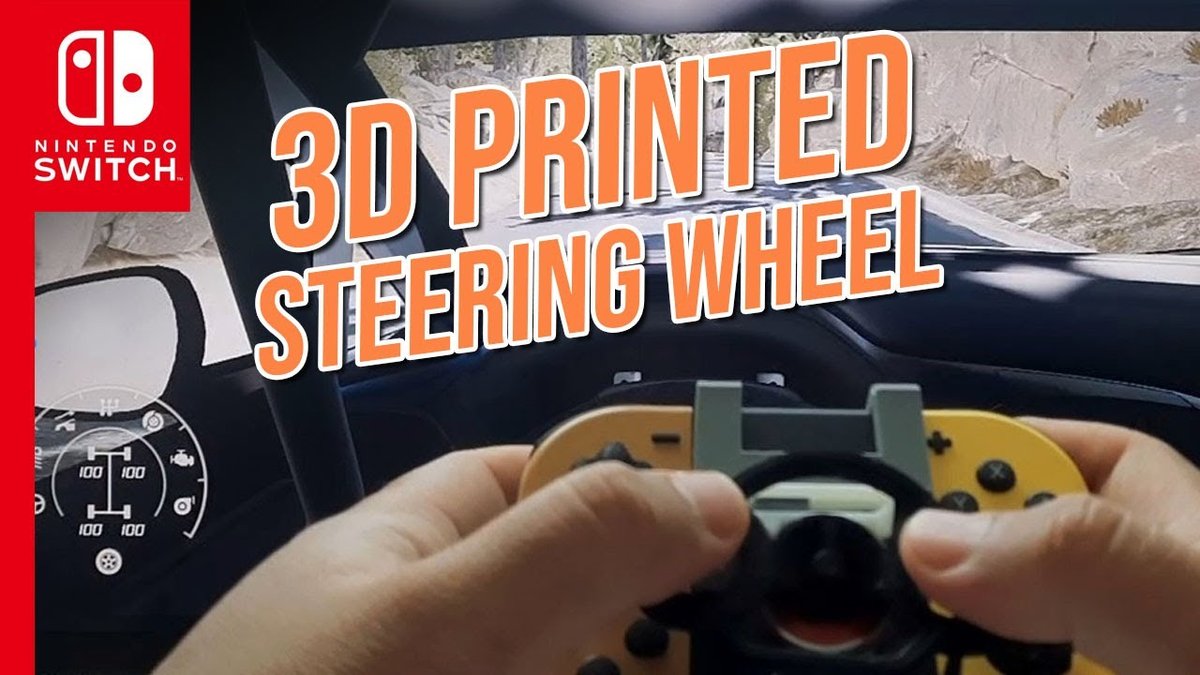
The Nintendo Switch Steering Wheel V2 is a 3D-printable, accessible racing controller from the Belgian assistive-tech project D4E1, covered by Adafruit — an open hardware design that lets makers print and assemble a steering wheel sized for users who can't easily grip a standard controller. It pairs with a Nintendo Switch Lite or full-size Switch and turns Mario Kart, Need for Speed, and other racing titles into something more people can play.
What happened: the D4E1 project, V2's changes, and how it mounts a Switch
Per Adafruit's blog, the D4E1 project has published the second version of its 3D-printable Nintendo Switch steering wheel. D4E1 ("Design for Everyone, version 1") is a Belgian university-affiliated initiative that releases open-hardware assistive devices under permissive licenses, so makers can print and build them for the people who need them.
The V2 design iterates on the original in a handful of practical ways:
- Wider grip surface to accommodate larger or differently-shaped hands.
- Adjustable Switch mounting bracket that fits both the standard Switch and the Nintendo Switch Lite.
- More forgiving Joy-Con socketing that handles repeated installs/removals without wear.
- Improved structural geometry that's printable on common consumer 3D printers without specialized supports.
What makes the project notable isn't novel hardware — toy steering wheels for the Switch have existed since launch — but the explicit accessibility framing. Off-the-shelf Joy-Con steering wheels are sized and shaped for typical user mobility patterns. D4E1's wheel is designed with input from occupational therapists, so the geometry, button reach, and grip size accommodate users with limited dexterity, smaller hands, or specific reach constraints.
Why it matters: accessible, printable gaming hardware
Accessible gaming gear has historically been one of two things: expensive single-purpose hardware (the Xbox Adaptive Controller is the gold standard at around $100, plus mounts and switches that can run into the hundreds), or unsupported community projects with no docs and no longevity. The D4E1 model — university-backed, openly licensed, well-documented, iteratively improved — sits in between, and the print-and-assemble cost is roughly $5-15 in filament plus a few hours of printer time.
For families and care providers, that economics change matters. A printable wheel is also forgiving: if a user grows, breaks the part, or needs a slightly different geometry, you reprint it. Standard plastic controllers don't offer that.
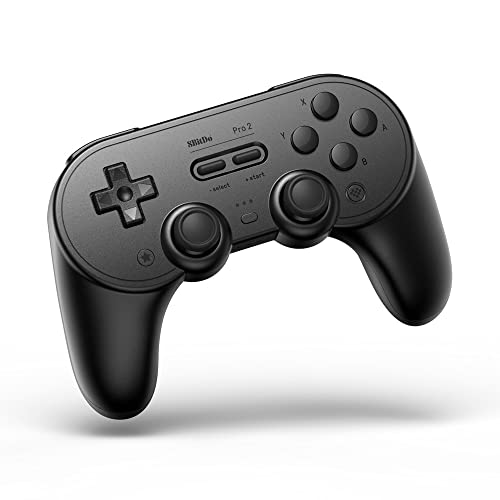
The V2 also leans into pairing with mainstream gaming gear families already own. The featured Nintendo Switch Lite - Turquoise is a natural fit — it's the most affordable Switch in the lineup and the wheel's adjustable mount accepts it cleanly. For families with multiple kids, the wheel pairs with whichever controller they already use — a GameSir G7 SE Wired Controller (Xbox-compatible, works on PC racing games via emulator) or an 8BitDo Pro 2 Bluetooth Controller (works on Switch, PC, mobile) extends the accessible-racing setup across platforms.
The source: where to read the details
The most direct write-up is Adafruit's blog post on the V2 release. Adafruit's coverage typically links the upstream D4E1 project page at d4e1.be, which is where the STL files, BOM, and assembly documentation live. Anyone wanting to print one starts there, not at a vendor.
Adoption beyond home use
Schools and libraries are increasingly the actual delivery channel for printable accessible hardware. A school maker space prints a wheel for a student; a public library lends out the wheel and a Switch Lite together as a circulating kit; an OT clinic uses the wheel as a stepping stone before evaluating a more expensive single-purpose adaptive controller. The D4E1 license permits all of those uses, and the iteration model means a feedback loop from any of those settings can feed back into V3.
For a household DIY use case, the wheel is the entire product. For an institutional delivery, the wheel plus a Switch Lite plus a charging dock plus a few games is a complete circulating kit at roughly the cost of a single Xbox Adaptive Controller. The economics matter — institutional budgets that can support one commercial adaptive controller can support a dozen printable kits.
What you'd need to print one yourself
The V2 is designed for ordinary maker-tier 3D printers — Prusa Mini, Bambu A1, Ender 3 V2, that class. A rough BOM:
- Filament: ~150-250g of PLA or PETG. PETG is the better choice for grip parts that flex.
- Print time: 6-12 hours total across parts depending on layer height.
- Fasteners: a handful of M3 screws and inserts.
- Switch hardware: a Switch Lite or standard Switch + Joy-Cons.
- Printer: standard FDM bed-size 220mm+.
No specialized tools, no soldering, no electronics — the wheel is a passive mount, with the Switch and Joy-Cons providing all the inputs. That's intentional: it keeps the assistive value within reach of a maker space, library makerspace, or school 3D-printing setup.
A short history of accessible game controllers
The modern accessible-controller category effectively started with Microsoft's Xbox Adaptive Controller in 2018 — a flat, expandable control surface with two giant programmable buttons and 19 3.5mm jacks for external switches. The Adaptive Controller solved a category-defining problem (people who couldn't grip a standard pad needed an interface that could be remapped to whatever inputs their bodies actually produced), but it cost roughly $100 plus accessories and required some configuration.
The PlayStation Access controller followed in 2023 with a similar philosophy and Sony-side platform support. Meanwhile, the maker community independently produced adapters, mounts, and shells across Nintendo, Xbox, and PC platforms — most without commercial backing or longevity.
D4E1's contribution to that timeline is specifically the university-backed, open-licensed, iteratively maintained corner of the space. The Switch Steering Wheel V2 is the second generation of a particular wheel; the project also publishes other assistive controller adaptations, gripping aids, and console mounts. The pattern matters because one-off community projects often go stale within a year; a maintained project survives multiple Switch firmware updates and Joy-Con redesigns.
How printable assistive controllers fit alongside commercial gear
The Xbox Adaptive Controller, the PlayStation Access controller, and the various Logitech and Hori adaptive peripherals each occupy a different price/capability tier. D4E1's wheel doesn't replace any of them — it adds a printable Switch-side option to a category that previously didn't have one.
For a household that already owns a Switch and a 3D printer, the V2 is roughly a zero-marginal-cost upgrade in accessibility. For a school or maker space serving multiple kids, the per-user cost approaches the cost of filament. That's qualitatively different from buying a $100 commercial accessible controller per user.
The printable form also enables iteration. The team behind D4E1 has used feedback from real users to drive V1 → V2 changes, and the open license means anyone can fork and remix for narrower use cases — a smaller-hand variant, a one-handed variant, or a wheel sized for a specific user with measured dexterity needs.
What games this opens up
Racing games are the natural fit. On Switch, that means Mario Kart 8 Deluxe (still the dominant title even in 2026), Need for Speed Unbound on emulated PC pairings, Burnout Paradise Remastered, and the various Hot Wheels and Cars titles aimed at younger players. The simpler the steering scheme, the better the wheel works — Mario Kart's two-button-plus-tilt control scheme is essentially perfect for the V2.
For PC racing, pairing a GameSir G7 SE (Xbox-input) or 8BitDo Pro 2 (multi-platform) lets a household use the same accessible-mount design across a Switch and a PC if the build can host the Joy-Cons on the wheel side and the standard controller for menu navigation. The Switch + wheel + secondary controller pattern is also useful for couch co-op.
The broader trend: open-hardware assistive gaming
D4E1's wheel is one example of a broader pattern in 2026. Open-hardware accessible gaming projects have multiplied across maker communities and university assistive-tech labs, partly because consumer-tier 3D printing has matured and partly because the maker community has actively organized around accessibility as a use case. Adafruit regularly covers these projects, and the supplemental project sites at organizations like AbleGamers and SpecialEffect publish their own designs.
The shape of the trend: pick a popular console or controller (Switch, Xbox, PC), design an open-licensed mount or shell that adapts it for specific accessibility needs, document the print and assembly, iterate based on user feedback. The V2 is a clean instance of the pattern.
Common pitfalls
- Printing in cheap PLA on a hot day. PLA softens around 60°C; PETG or PLA+ is more durable for grip parts.
- Skipping the threaded inserts. Self-tapping into PLA strips after a few use cycles; M3 heat-set inserts last.
- Not measuring the user before printing. The default geometry suits a range; trim to the specific user where you can.
- Treating the wheel as a single-game device. It works across many racing titles; introducing one game at a time helps users learn the input scheme.
- Skipping wheel-side controller protection. Add a thin foam pad inside the Joy-Con socket if you'll remove/replace frequently.
Practical recommendations for first-time builders
Anyone printing the V2 for the first time should plan roughly half a day end-to-end:
- Print (overnight is fine). Use 0.2mm layer height for grip parts, 0.15mm for the visible top surfaces if you care about finish. PETG is the better material; PLA+ is acceptable.
- Post-process. Sand the grip surfaces lightly with 400-grit. Insert M3 heat-set inserts where the BOM calls for them, ideally with a temperature-controlled soldering iron at 240°C.
- Assemble. Joy-Cons slide into the side sockets; the Switch or Switch Lite clips into the central mount. Tighten everything finger-tight first, then a quarter-turn with a small screwdriver.
- Test in Mario Kart 8 Deluxe or another racing title with simple controls. Adjust grip surfaces if the user reports edges digging in.
- Iterate. The geometry is open; you can scale or modify it for specific user needs. The original STL files at d4e1.be are CC-licensed.
Most printers report total cost under $5 in materials per wheel.
When this isn't the right fit
The V2 is great for users who can grip and rotate a wheel and benefit from the simpler input geometry. It's not the right answer for:
- Users who need single-switch input. That's Xbox Adaptive Controller territory.
- Sim-racing enthusiasts. A real force-feedback wheel is a different category entirely.
- Users without access to a 3D printer. Maker spaces and libraries are increasingly hosting prints; check locally before assuming this isn't an option.
For its specific niche — accessible Switch racing on home or shared-printer hardware — V2 is a notable step forward.
Bottom line
The Nintendo Switch Steering Wheel V2 from D4E1 is a textbook example of what open-hardware accessibility looks like in 2026: print it, assemble it for the user in front of you, and iterate. Pair it with a Nintendo Switch Lite for the most affordable platform fit, and keep a GameSir G7 SE or 8BitDo Pro 2 on hand for menus or PC pairing. The hardware is real, the documentation is good, and the marginal cost is filament. Per Adafruit's coverage, the project is actively maintained — which is what separates this category of work from one-off community prints.
Related guides
- Best Plug-and-Play Retro Console in 2026: 5 Picks for Instant Nostalgia
- DualSense vs 8BitDo Pro 2 vs GameSir G7 SE: Best PC Controller in 2026
- Best Game Controllers for PC and Emulation in 2026
- Build a Raspberry Pi Zero W Retro Emulation Handheld in 2026
Citations and sources
- Adafruit Blog — D4E1 Switch Steering Wheel V2 coverage
- D4E1 — assistive-tech open-hardware project
- Nintendo — Switch hardware family
This piece is editorial synthesis based on publicly available information. No independent first-party benchmarking is reported.