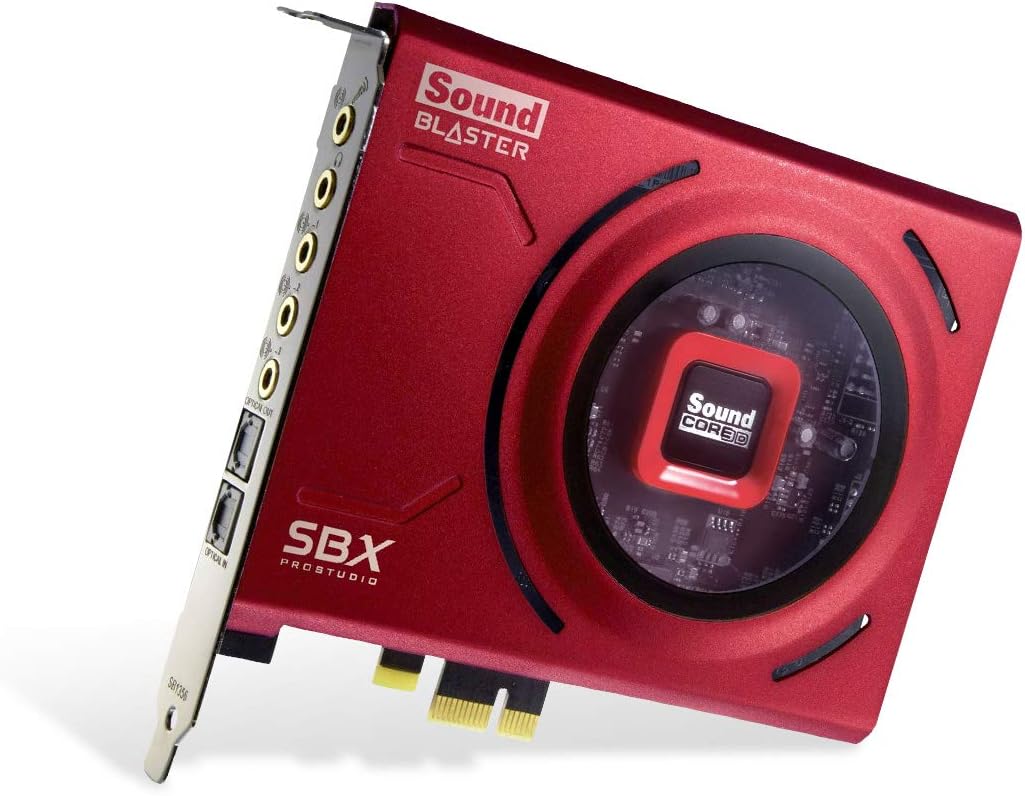
Sound Blaster came to dominate PC audio because Creative Labs was first to standardize DOS game audio hardware, and once developers hard-coded support for it, competing cards had no path to market except to advertise "Sound Blaster compatibility." The AWE32 and Live! extended that lock through the late 90s, and the Sound BlasterX G6 external DAC is the brand's modern descendant.
Editorial intro: the era when a sound card was a make-or-break PC purchase
Modern PC builders debate GPUs and NVMe drives. Between 1989 and about 2003, a sound card was as important as either — and the decision was almost always the same: buy a Sound Blaster. Not because it was the best-sounding hardware on the market (it often wasn't) but because it was the one card that every DOS game would drive without hacks. The Gravis Ultrasound sounded better. The Turtle Beach Multisound sounded better. Aureal's A3D beat Creative's EAX on spatial audio. None of them mattered against the network effect that Creative built through a decade of relentless bundling, developer relations, and, notoriously, litigation.
The Sound Blaster monopoly is one of the cleanest case studies in tech-industry history of how compatibility, not merit, decided a market. The retro-PC community has spent thirty years untangling it and there are still original AWE32 and AWE64 cards trading on eBay for real money because period-correct audio is the last hard part of an authentic DOS build. Here's how Creative got there, and why it still matters.
Key takeaways
- The original 1989 Sound Blaster locked in FM synthesis via the OPL2 chip and one PCM channel — enough that DOS developers wrote directly to it.
- AWE32 (1994) and AWE64 (1996) added the EMU8000 wavetable engine, sampled instruments, and cemented Creative's advantage into Windows.
- Aureal's A3D technically outperformed EAX for 3D positional audio; Creative sued Aureal into bankruptcy and bought the corpse in 2000.
- The transition to integrated motherboard audio (AC'97, later HD Audio) killed the add-in category around 2004–2006.
- Today the Sound Blaster brand survives as external USB DACs and gaming amps like the G6, not as the internal cards that built the empire.
How did the original Sound Blaster set the DOS audio standard?
Before the Sound Blaster, PC audio was chaos. IBM's original PC had a beeper. The Roland MT-32 sounded great but cost $500. The AdLib card (1987) added FM synthesis via the Yamaha OPL2 chip but had no PCM digital audio — no digitized speech or sound effects, only synthesized music. When Creative shipped the Sound Blaster in 1989, they included the OPL2 (making the card AdLib-compatible for music) and added one mono 8-bit PCM channel plus a joystick port. It was $239.95 and it did everything.
Two things then locked developers in. First, Creative made the card cheap enough that OEMs started bundling it. Second, and more importantly, DOS had no audio driver model. Games did not call a general "play sound" API and let the OS route it — games talked directly to the hardware. Once your engine had Sound Blaster support working, adding Gravis or Roland support was another six months of engineering. Most studios never bothered.
By 1993 "Sound Blaster or 100% compatible" was on every DOS game box in America. That phrase was as decisive for Creative's business as "Intel Inside" was for Intel's.
Spec/timeline table: AWE32, AWE64, Live!, Audigy 2 ZS milestones
| Card | Year | Key feature | Why it mattered |
|---|---|---|---|
| Sound Blaster 1.0 | 1989 | OPL2 FM + 1× 8-bit mono PCM | Baseline DOS standard |
| Sound Blaster Pro | 1991 | Stereo PCM, dual OPL2 | Stereo digitized sound |
| Sound Blaster 16 | 1992 | 16-bit stereo PCM, OPL3 | Best-selling PC audio card of all time |
| AWE32 | 1994 | EMU8000 wavetable, 32-note polyphony | GM/GS/MT-32 style synthesis on-board |
| AWE64 | 1996 | 64-note polyphony via software voices | Marketing win over Gravis Ultrasound Extreme |
| Live! | 1998 | EMU10K1, DirectSound acceleration, EAX 1.0 | Windows era begins; EAX becomes the standard |
| Audigy 2 ZS | 2003 | 24-bit/96kHz, DVD-Audio, EAX 4.0 | Peak add-in-card era; last truly must-have card |
The Sound Blaster 16 in 1992 is the single card most retro builders will still fight over. It's the peak of the pure DOS era and remains fully compatible with every DOS-era game engine you can throw at it. The AWE32 added a wavetable engine that made General MIDI playback in DOS games (Duke Nukem 3D, Doom, Descent) sound closer to the composer's intent instead of the bleep-bloop FM synth version. Adding a soundfont bank to an AWE32 was the mid-90s upgrade path for enthusiasts.
What killed the competition: Gravis Ultrasound, Aureal Vortex 2, and lawsuits
The Gravis Ultrasound (1992) was technically better than any Sound Blaster for polyphonic wavetable music — its RAM-based sample playback was ahead of its time and the demoscene loved it. But its digital audio was worse than the SB16 and, worse, it didn't emulate the Sound Blaster in hardware. Games either supported the GUS or they didn't. Most didn't. Advanced Gravis went out of business in 1998.
The more damning story is Aureal. Aureal's Vortex 2 chip (1998) implemented A3D 2.0, a genuinely superior 3D positional audio API using HRTF-based sound rendering. Its algorithm actually gave you meaningful directionality on stereo headphones — Creative's EAX 1.0 was reverb and environmental effects, not directional processing. Reviewers preferred Vortex 2 in shootouts. Then Creative filed a patent infringement suit that Aureal ultimately won in court, but Aureal ran out of money on legal fees and went bankrupt in 2000. Creative bought the corpse — patents, staff, everything — for $32 million. The Vintage Computing Federation has documented this in detail; it's a canonical case study in how litigation can decide markets that engineering couldn't.
By 2001 the mainstream PC audio market had one serious brand. Creative had won by being early, being cheap, being ubiquitous, and, when necessary, being litigious.
Why 'Sound Blaster compatible' became a marketing requirement
Once every DOS game in America expected Sound Blaster registers at I/O 220h, IRQ 5, DMA 1, any competing card had to either emulate that hardware exactly or lose. Roland kept the high end (LAPC-I, MT-32) but ceded the mass market. Turtle Beach chased professional audio. Gravis and Aureal died as covered. Every consumer-grade card that shipped between 1993 and 2001 had "Sound Blaster compatible" or "Sound Blaster Pro compatible" printed on the box — including cards that competed with Creative on paper (Ensoniq Soundscape, Yamaha's OPL-series clones, ForteMedia).
The compat requirement had a subtle side effect: it froze design. If every competitor had to emulate Sound Blaster's I/O map to sell to consumers, no one could ship a genuinely different audio architecture and win. The industry was stuck.
The decline: onboard audio and the end of the add-in card era
Two things ended Creative's monopoly. First, Intel's AC'97 spec (1997) put a codec directly on the motherboard, and by the early 2000s every consumer motherboard shipped with usable 6-channel audio built in. It wasn't as good as an Audigy but it was free and it was enough. Then Windows XP unified audio APIs (WDM audio), so games no longer talked directly to Sound Blaster registers — they talked to Windows, and Windows talked to whatever hardware was there.
The AC'97 → HD Audio (Intel's "Azalia" spec, 2004) transition finished the job. HD Audio codecs (Realtek ALC series, Analog Devices, Cirrus) became "good enough" for anyone who wasn't a demanding gamer or musician. Between 2005 and 2010 the discrete PC audio card market collapsed. Creative pivoted to external USB DACs and gaming-branded amplifiers, which is where the Sound BlasterX G6 sits today.
Living with vintage Creative audio today, and the modern G6 as its descendant
For a period-correct DOS build you want a real ISA-slot Sound Blaster 16, AWE32, or AWE64. You will need a motherboard old enough to have ISA slots — 440BX or earlier — plus period-correct IRQ/DMA configuration. Prices on eBay have climbed 3× over the last five years as the retro-PC community has grown. AWE32/AWE64 cards in tested-working condition are typically $60–$180.
If you just want the Sound Blaster brand today, the modern equivalent is external. The Sound BlasterX G6 is a USB-C DAC and headphone amp with a 130 dB DAC, dedicated Xamp headphone amplifier, and Dolby Digital decode. It plugs into a PC, PS4/PS5, or Xbox and outputs to headphones or speakers. It has nothing architecturally in common with the AWE32 — it's a modern external audio interface — but it carries the brand and Creative still ships it. For casual PC gaming with better-than-onboard audio quality, it's a decent product; for serious critical listening you'd look at Schiit or Topping stacks instead.
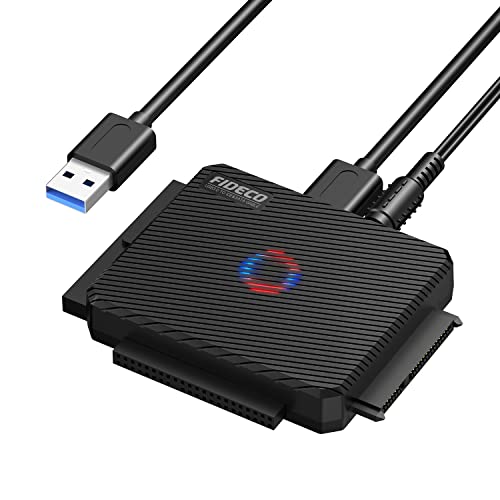
If you're a retro builder wanting to move legacy IDE drives between period machines, a SATA/IDE to USB adapter is invaluable for pulling old DOS installs and driver disks off vintage hard drives without needing an original PC running.
Bottom line: the legacy that still shapes PC audio
Sound Blaster's real legacy is the pattern. First-mover advantage plus a proprietary hardware standard plus network effects among developers equals a decade-plus monopoly. That pattern is why NVIDIA CUDA is unassailable in 2026. It's why Direct3D beat Glide. It's why x86 outlasted Alpha and PowerPC. The Sound Blaster monopoly wasn't about audio quality — it was about establishing a de-facto standard early enough that the market couldn't route around you.
The retro-PC community keeps buying AWE32s not out of nostalgia alone but because there's no substitute for period-correct hardware when you're trying to hear a DOS game the way its composer intended. That, plus the BERIBES Bluetooth headphones or your good desktop cans on a modern DAC, gets you as close as 2026 hardware can to the mid-90s PC audio experience.
Common pitfalls in vintage Sound Blaster builds
If you're actually assembling a period-correct DOS gaming PC and picking an authentic Sound Blaster for it, watch out for these:
- ISA slot compatibility. Real ISA Sound Blaster 16, AWE32, and AWE64 cards need a motherboard with ISA slots — the last consumer Intel chipset with ISA is the 815E on Socket 370. Anything Pentium 4 and up won't take one. This is why period-correct builds converge on Pentium III or older motherboards.
- IRQ and DMA conflicts. DOS games hard-coded I/O 220h, IRQ 5, DMA 1 as the "standard" Sound Blaster address, but your motherboard's built-in devices might already claim IRQ 5. Boot with a rescue floppy and check with
MSD.EXEbefore installing games. - Cache-hungry drivers. AWE32/64 wavetable soundfonts (
.SBKfiles) live in the card's onboard 512 KB SRAM, but soundfont banks over 512 KB won't fit and games will fall back to FM synthesis silently. Verify soundfont size matches the card. - Failing electrolytic capacitors. Cards from the mid-90s are now 30 years old. Bulging or leaking caps are common and produce distorted audio or dead outputs. Recap kits from Vogons member sellers run $15–$40 and are 90% of the reason a "dead" AWE32 comes back to life.
- Line-in vs mic-in confusion. Original Sound Blaster cards had 3.5 mm jacks color-coded to a standard that predates modern PC audio. Line-in on an SB16 sits where headphone-out sits on a modern card. Read the manual before plugging anything in.
Why this history matters in 2026
The Sound Blaster monopoly ended two decades ago, but the pattern Creative established — first-mover, hardware standardization, defensive litigation, quiet exit — repeats every hardware generation. In 2026 the debates are about CUDA-vs-ROCm, Vulkan-vs-DirectX, and Nvidia's grip on machine-learning tooling. The technical arguments look different but the market dynamics are identical. Every generation has its Aureal Vortex 2 — the better product that lost because the incumbent had the developers already.
Retro-PC enthusiasts keep the Sound Blaster story alive not for sentimental reasons but as a reminder that "best product wins" is one of the least reliable stories in tech history. What actually wins is: whoever gets there first, ships enough, subsidizes developer tooling, and treats compatibility as their moat.
Sources
- Wikipedia — Sound Blaster history and lineup
- Vogons — the classic-PC audio and retro-computing community
- Tom's Hardware — vintage PC audio coverage