Cloud-connected digital photo frames — the kind sold by big retailers — typically require an account, an app, and a subscription-adjacent ecosystem to push photos to a screen you own. A growing thread in maker communities takes the opposite approach: pair a low-cost Raspberry Pi Zero 2 W with the open-source Immich photo server to build a frame where the photos, the storage, and the software stack are all under the owner's control.
Why Choose a Self-Hosted Open-Source Photo Frame?
The appeal of a self-hosted build centers on three things: privacy, cost, and control.
- No proprietary cloud dependency. Commercial frames and consumer photo-cloud products like Google Photos or Amazon Photos route images through a vendor's servers. A self-hosted stack keeps the photo library on hardware the owner controls.
- Immich's local-first design. The Immich project — an open-source, self-hosted photo and video backup solution — is built around local storage and self-managed deployment, according to its GitHub documentation, rather than a hosted SaaS model.
- Low hardware cost. The Raspberry Pi Zero 2 W lists at roughly $15 from the Raspberry Pi Foundation, making the display-client portion of the build dramatically cheaper than most commercial digital photo frames, which commonly retail in the $60-150 range.
This pattern — cheap client hardware plus a self-hosted backend — mirrors a broader trend in the maker space toward open-source alternatives to proprietary appliances. It shows up elsewhere too, from open-source robot vacuums built around 3D-printed frames to fully open-source Linux stacks shipping on mini PC hardware.
Hardware and Software Requirements
A minimal build needs a handful of parts, most of them inexpensive and widely available.
| Component | Role | Approx. price |
|---|---|---|
| Raspberry Pi Zero 2 W | Display client (quad-core Arm, 512MB RAM) | ~$15 |
| HDMI or DSI display (e.g., a Waveshare 800x480 panel) | Photo output | Varies by size/panel |
| microSD card | Boots Raspberry Pi OS Lite | Varies |
| Immich server host (NAS, mini PC, or spare machine) | Photo library backend, runs via Docker | Existing hardware or separate purchase |
| External storage for the photo library | Holds originals + backups | See storage options below |
The Zero 2 W's specs, per the Raspberry Pi Foundation product page, make it well suited to a lightweight display role — it is not intended to run the full Immich backend, which includes machine-learning-based tagging and a PostgreSQL database and is better suited to a more capable host.
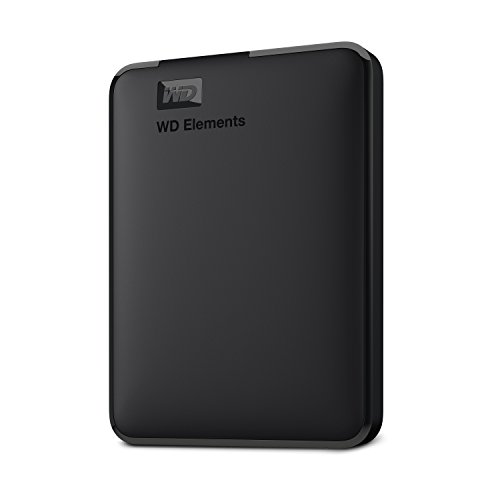
Because the point of self-hosting a photo library is keeping full-resolution originals rather than compressed cloud copies, storage capacity for the Immich server host is worth planning for up front. Multi-terabyte external drives are a common choice for this role — for example, a WD Elements 5TB portable drive or, for larger archives, an 8TB WD Elements desktop drive or a 12TB WD Elements desktop drive — since a growing family photo library, especially with video, can run well beyond the capacity of a Pi's own SD card.
Step-by-Step Setup: From OS Install to Photo Display
The general workflow documented by the Immich project and standard Raspberry Pi imaging tools breaks into three stages.
1. Flash and configure the OS
Raspberry Pi OS Lite — the headless, no-desktop-environment build available from the Raspberry Pi Foundation's OS page — is the typical choice for a Zero 2 W acting purely as a display client, since it minimizes RAM overhead. SSH is enabled during imaging (via Raspberry Pi Imager's advanced options) so the board can be configured headlessly.
2. Stand up the Immich server
Immich's own documentation describes deployment via Docker Compose, using a docker-compose.yml and .env file to configure the server, database, and machine-learning containers. This step is normally done on the more capable host — a NAS, home server, or mini PC — not the Zero 2 W itself, since Immich's ML-based features and Postgres database are more RAM- and CPU-intensive than a Zero 2 W is designed for.
3. Build the display client
On the Zero 2 W side, lightweight image viewers such as feh or fbi are common choices for cycling through a local or synced photo directory with basic transitions. Some builds pull images directly via Immich's API or a shared/synced folder; others use a simple cron-driven script to rotate a local cache of images downloaded from the server.
Optimizing Display Quality and Power Efficiency
Display and power considerations vary by panel and configuration, and specific figures should be sourced from the panel manufacturer's own specs rather than assumed. Waveshare's 7-inch HDMI display product line, a commonly referenced panel in these builds, publishes its own resolution and color-gamut specifications, which are the authoritative source for calibration expectations rather than any generic figure.
On power draw: the Raspberry Pi Zero 2 W's low idle and active power consumption, per the Raspberry Pi Foundation's own hardware documentation, is part of why it's a popular choice for always-on peripheral devices like this one — significantly lower draw than a full-size Pi 4 or 5 in the same role. Exact wattage in a finished build depends heavily on the attached display, which is typically the larger power draw of the two components, so builders should check the specific panel's power specification rather than the Pi's alone.
Alternative Open-Source Photo Frame Solutions
Immich isn't the only option, and it's worth knowing the alternatives before committing to a stack.
- Nextcloud Photos. Nextcloud offers a more general-purpose self-hosted file sync platform with a photos app layered on top, per its own product documentation. It trades some of Immich's photo-specific tooling (facial recognition, auto-organized memories) for broader file-management flexibility.
- Raspberry Pi 4 or 5 for higher-resolution frames. Builders targeting 4K or larger panels, or who want the Immich server and display client on a single board, commonly step up to a Pi 4 or 5, which offer substantially more RAM and CPU headroom than the Zero 2 W.
- E-ink displays for ultra-low-power builds. E-ink/e-paper panels trade color depth and refresh speed for very low standby power draw, making them a niche option for photo frames that stay on 24/7 with minimal energy use — a tradeoff similar in spirit to other low-power maker builds like open-source robot vacuums.
For readers assembling a broader self-hosted or open-source home lab alongside this project — whether that's a local LLM box or a Linux-first mini PC — related builds worth reading include the Ryzen AI Max Mini-ITX / Framework Desktop breakdown, the AMD Ryzen AI Halo mini PC analysis, and coverage of xAI's open-sourced Grok-Build running on local GPUs. On the Linux/open-source software side, the NVK open-source Vulkan driver gaining DLSS support and AMD Ryzen AI Halo's fully open-source Linux stack are useful context for the broader open-source-hardware trend this project sits within. Builders comparing CPU options for a beefier Immich host may also find the Intel Bartlett Lake vs. Core i9-13900K benchmark comparison relevant when sizing a server rather than a display client.
Storage Planning for a Growing Photo Library
Because the entire point of self-hosting is retaining full-resolution originals rather than compressed cloud copies, the Immich server's storage backend deserves as much planning as the display hardware. External drives scale from modest to very large:
| Capacity | Product | Price |
|---|---|---|
| 5TB portable | WD Elements Portable | $229.00 |
| 8TB desktop | WD Elements Desktop | $358.99 |
| 12TB desktop | WD Elements Desktop | $477.46 |
| 14TB desktop | WD Elements Desktop | $610.55 |
| 22TB desktop | WD Elements Desktop | $840.99 |
Pricing reflects SpecPicks catalog data and may vary by retailer and over time. A family archive spanning a decade of full-resolution photos and some video commonly lands in the multi-terabyte range, which is why the server-side storage choice — not the Pi Zero 2 W itself — is usually the more consequential purchase in this build.
Citations and sources
- https://www.raspberrypi.com/products/raspberry-pi-zero-2-w/
- https://github.com/immich-app/immich
- https://immich.app/
- https://www.waveshare.com/7inch-hdmi-lcd-c.htm
- https://www.raspberrypi.com/software/operating-systems/
- https://docs.docker.com/compose/
- https://nextcloud.com/photos/
This piece is editorial synthesis based on publicly available information. No independent first-party benchmarking is reported.