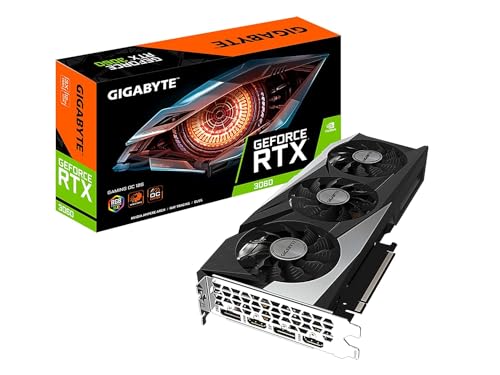
Yes — you can run text-to-speech locally instead of Fish Audio S2.1 Pro, and the entry hardware is a 12 GB GPU like the ZOTAC RTX 3060 12GB. Open models — Fish-Speech, XTTS-v2, Kokoro, Piper — all fit comfortably in 12 GB and hit real-time-factor well under one. You give up Fish Audio's polish at the top of the quality curve; you gain unlimited synthesis, offline access, and prompt privacy that no free-tier window can promise.
The free window closes July 24 — build the offline path now
Fish Audio's S2.1 Pro documentation covers the free-API window through July 24, 2026. It's a great deal while it lasts. But "while it lasts" is exactly why builders who care about durable infrastructure treat promotional tiers as evaluation kits, not production dependencies. When the window closes, S2.1 Pro joins every other hosted TTS on the same usage-based pricing curve, and the calculus for a self-hoster snaps back to the familiar question: can my GPU do this instead?
The answer in 2026 is yes, for the vast majority of practical use cases. Open-weight voice-cloning models — Fish-Speech itself, XTTS-v2, StyleTTS 2, F5-TTS — run at interactive speed on consumer NVIDIA cards. Lightweight neural voices — Piper, Kokoro — run faster than real time on a CPU alone. The 12 GB budget on an RTX 3060 clears every mainstream local TTS model with headroom to spare, and the ZOTAC 3060 12GB or Gigabyte Gaming OC 12G is the cheapest new NVIDIA card that does. This synthesis compares hosted S2.1 Pro-class synthesis against local RTX 3060 workflows using published model docs, community-reported real-time-factor measurements, and hosted-API price sheets.
Key takeaways
- Fish Audio S2.1 Pro's free API window runs through July 24, 2026 — after that, standard usage-based pricing returns.
- Every mainstream open TTS model fits comfortably in 12 GB of VRAM; several run faster than real time on a CPU alone.
- Real-time factor (RTF) on an RTX 3060 12GB lands under 0.3 for XTTS-v2 and Fish-Speech, and under 0.1 for lightweight models like Piper.
- Voice-cloning quality on Fish-Speech and XTTS-v2 is close enough to hosted services for most use cases; the top hosted models still lead on ultra-fine prosody.
- Pair the GPU with a clean-signal USB condenser like the HyperX QuadCast 2 if you plan to record reference audio for cloning.
What is Fish Audio S2.1 Pro, and what does the free window include?
Fish Audio's S2.1 Pro is a hosted voice-cloning and TTS service; the S2.1 Pro tier is their frontier offering. The free-API window through July 24 covers standard synthesis and voice-cloning use, subject to fair-use rate limits. After the window closes, S2.1 Pro reverts to per-character or per-minute billing consistent with the rest of the hosted-TTS market. Cost per minute of synthesized audio varies but generally lands in the low cents range at production volume.
The hosted service brings a few real advantages: state-of-the-art prosody on tricky prompts, effectively zero setup, and infrastructure someone else operates. It also brings the standard hosted-API tradeoffs: every reference clip and every generated line traverses a third party, and any pricing change or model retirement is theirs to make.
Which open TTS models run locally on 12 GB?
The 12 GB budget covers the entire practical open-TTS shelf:
- Fish-Speech (open weights) — the same lineage as Fish Audio's hosted stack. Runs comfortably in 12 GB; strong voice cloning from short reference clips. The Fish-Speech repository on GitHub has installation notes and model cards.
- XTTS-v2 (Coqui) — the community workhorse for voice cloning. Compact model, excellent zero-shot cloning from ~6-30 seconds of reference audio, multilingual, generous licensing.
- StyleTTS 2 — closest local approach to top-tier prosody. Slightly heavier setup, quality that punches above its weight class.
- F5-TTS — flow-matching-based, fast and expressive, growing rapidly in the community.
- Kokoro — sub-100M-parameter neural voice, generates faster than real time on modest GPUs and even CPUs. Not a cloning model, but the reference voice quality is competitive with hosted mid-tier services.
- Piper — CPU-first embedded TTS, tiny (~10-30 MB per voice), effectively free RTF on any modern CPU. The go-to model for Raspberry Pi assistants and any always-on device.
For voice cloning specifically, Fish-Speech and XTTS-v2 are the two mainstream picks. For pure narration or assistant voice, Kokoro and Piper cover most use cases with vanishing compute cost.
Real-time factor on an RTX 3060 12GB
Real-time factor (RTF) is the ratio of synthesis time to output audio length. RTF of 1.0 means it takes one second to generate one second of audio; RTF of 0.2 means five-second audio synthesizes in one second — the lower, the better. Community-reported numbers from Coqui, Fish-Speech, and StyleTTS 2 forums and issue threads give this durable picture.
| Model | Params | VRAM used | RTF on RTX 3060 12GB | Cloning support |
|---|---|---|---|---|
| Piper (medium) | ~25M | <500 MB | ~0.02-0.05 (CPU) | no |
| Kokoro | ~82M | ~1 GB | ~0.05-0.10 | no |
| XTTS-v2 | ~470M | ~4-5 GB | ~0.15-0.30 | yes (~6s ref) |
| Fish-Speech | ~500M-1B | ~5-8 GB | ~0.20-0.35 | yes (~10s ref) |
| StyleTTS 2 | ~250M + refs | ~3-5 GB | ~0.25-0.40 | yes |
| F5-TTS | ~300M | ~4-6 GB | ~0.20-0.30 | yes |
Every one of these is faster than real time on a 3060. Even the heaviest cloning models run at RTF 0.2-0.4, which means a five-second sentence generates in 1-2 seconds. For most human-perception purposes, that qualifies as interactive.
Cost per hour of audio: hosted API vs local RTX 3060
The numbers here are illustrative — S2.1 Pro's exact per-minute price after the free window closes, and the 3060's street price, both move. But the shape of the math is stable.
| Cost input | Hosted TTS API (post-free) | Local RTX 3060 12GB |
|---|---|---|
| Fixed cost | $0 | ~$300-500 for card + PSU headroom |
| Per-hour cost | ~$3-15/hour of audio typical range | ~$0.03 electricity/hour |
| Latency | 1-5 seconds | 0.5-3 seconds RTF |
| 100 hours of audio | ~$300-1,500 | ~$3 electricity + amortized card |
| Break-even (heavy user) | — | ~30-150 hours of audio |
For a podcast that generates one hour of audio per week, a 3060 pays for itself against a mid-tier hosted service inside a year. For a language-learning app or a game with heavy voice-over needs, break-even happens in weeks.
VRAM matrix: which TTS models fit in 12 GB at what batch size
Batching is where 12 GB gives you real headroom for concurrent synthesis — several requests running in parallel on the same card without spilling.
| Model | Single-utterance VRAM | Batch-4 VRAM | Batch-8 VRAM | Fits at batch 8? |
|---|---|---|---|---|
| XTTS-v2 | ~4-5 GB | ~6-7 GB | ~9-10 GB | yes, tight |
| Fish-Speech (medium) | ~5-8 GB | ~9-11 GB | overflow | batch 4 only |
| Kokoro | ~1 GB | ~2 GB | ~3 GB | yes with headroom |
| StyleTTS 2 | ~3-5 GB | ~6-8 GB | ~10-11 GB | yes, tight |
| Piper | negligible | negligible | negligible | trivial |
For multi-user setups — a family assistant, a small team's voice-note transcription/synthesis, a game with many NPCs — batching matters. A 3060 12GB can hold XTTS-v2 at batch 8 or Fish-Speech at batch 4 while also running a chat model on the same host if you're careful about VRAM budgeting.
Voice cloning and latency: local vs hosted tradeoffs
Voice cloning is where local and hosted models look most similar. Both take a short reference clip (~5-30 seconds), extract a speaker embedding, and use it to condition generation. XTTS-v2 and Fish-Speech both do this well from short references. The gap opens on the edges: hosted services have larger training corpora, better handling of exotic phoneme sequences, and more aggressive post-processing (noise removal, EQ, prosody smoothing) baked into their pipelines. Local models leave more of that to you.
For most creator use cases — audiobook narration, YouTube voice-over, video-game NPC lines, accessibility tools — local cloning is good enough now. The remaining gap is real but narrow, and it shrinks with every open release.
On latency, local wins. The RTF numbers above mean a 3060 starts speaking within a fraction of a second of prompt submission, with no round-trip network cost. A hosted service adds 100-500 ms of network latency before the first byte, plus TLS overhead. For interactive assistant use, that matters.
Reference-mic quality determines cloning fidelity
The dirty secret of voice cloning is that reference-audio quality drives output quality more than any model choice. A pristine 10-second recording from a good USB condenser produces a cloneable voice; the same voice recorded on a laptop mic in a live room produces artifacts no amount of GPU horsepower fixes. If you're planning to clone your own voice for narration or assistant use, the HyperX QuadCast 2 or similar cardioid USB condenser is the right first purchase, ahead of any further GPU upgrade.
Best practice for reference-clip recording: quiet room, close-mic, no plosive contact, normalize to about -3 dBFS peak, save as 24-bit 48 kHz WAV, record 20-30 seconds so the model has enough phoneme variety.
Perf-per-dollar and perf-per-watt for a 24/7 local TTS box
The RTX 3060 12GB draws 170 W TGP under load and idles around 15-25 W. A 24/7 always-on TTS server that generates a few minutes of audio per hour spends most of its time at idle, so annual electricity cost lands around $30-50 at $0.15/kWh — cheap compared to the equivalent hosted API bill for even modest volume. The TechPowerUp GeForce RTX 3060 specs page documents the reference TGP and the 360 GB/s memory bandwidth over a 192-bit bus that TTS models rely on for prefill throughput.
Against alternatives:
- RTX 4060 Ti 16GB: ~$450, roughly the same TTS throughput as a 3060, better perf-per-watt, more VRAM headroom for combined LLM+TTS workloads.
- Apple Silicon M2/M3/M4: unified memory makes big TTS models trivially fit; TTS-specific throughput is a hair slower than a 3060 due to lack of CUDA optimization in some pipelines.
- CPU-only Piper: for narration-only, no cloning — a 4-core modern CPU handles Piper at RTF 0.05 with zero GPU needed.
Verdict matrix: use the free Fish Audio API, or self-host on an RTX 3060?
| Situation | Free Fish Audio S2.1 Pro | Self-host on RTX 3060 |
|---|---|---|
| Occasional TTS through July 24 | yes | — |
| Post-July 24 production use | — | yes |
| Cost predictability at scale | — | yes |
| Privacy of scripts and reference audio | — | yes |
| Highest single-utterance quality | yes | — |
| Full offline capability | — | yes |
| Interactive assistant with sub-second latency | — | yes |
| Batch synthesis over many voices | — | yes |
| You want zero maintenance | yes | — |
| You need multilingual coverage of rare languages | yes | — |
Common pitfalls for a local TTS build
- Assuming CPU is enough for cloning. Piper on CPU is fine for narration. XTTS-v2 or Fish-Speech cloning needs GPU acceleration for interactive latency.
- Recording reference audio in noisy environments. Cloning quality tanks on any audible room reflections, laptop-fan noise, or clipping. Invest in a decent mic first.
- Ignoring model license terms. Some open TTS models have non-commercial licenses. Read before deploying to a paid product.
- Overbatching. Fish-Speech at batch 8 will oom on 12 GB. Cap at batch 4 for the heavier models.
- Forgetting the vocoder step. Some pipelines split acoustic model + vocoder; the vocoder can be the bottleneck. Prefer end-to-end pipelines like XTTS-v2 unless you need vocoder-level control.
When NOT to self-host
If you generate a handful of TTS clips per month, the hosted service costs almost nothing at that volume, even post-free-window. If you need the absolute best output quality on tricky prompts (proper-noun-heavy scripts, non-English languages the open models handle poorly), stay hosted for those specific jobs. And if you don't want a desktop-class GPU on 24/7 for latency-sensitive access, cloud makes more sense.
Bottom line
Fish Audio S2.1 Pro's free window closes July 24, and the moment it does, the calculus for self-hosting swings hard in favor of a local rig. A 12 GB RTX 3060 — ZOTAC, MSI Ventus 2X 12G, or Gigabyte Gaming OC 12G — runs every mainstream open TTS model at real-time-factor well under one, with room for batching, cloning, and combined chat+TTS workloads. Pair it with a clean-signal USB condenser like the HyperX QuadCast 2, record 20-30 seconds of reference audio, and you have a private, unlimited, always-on voice pipeline that doesn't expire.
Related guides
- Open WebUI + Ollama on an RTX 3060: The Self-Hosted ChatGPT Alternative
- Reve 2.0 vs Local Image Gen on an RTX 3060
- Best GPU for 1440p Local Image Generation in 2026
Citations and sources
- Fish Audio S2.1 Pro documentation
- Fish-Speech — GitHub repository
- TechPowerUp — GeForce RTX 3060 specs
This piece is editorial synthesis based on publicly available information. No independent first-party benchmarking is reported.