See our review methodology. Prices may vary; verified 2026-07-03.
You can absolutely build a first PC gaming setup where every peripheral costs less than $50 — and skip almost nothing important. The sub-$50 tier in 2026 is full of well-reviewed cloth mouse pads, wireless keyboard-and-mouse combos, wired controllers, and gaming headsets that do the job. Below is the working shortlist for a new gamer, someone rebuilding after a move, or anyone who wants a decent secondary rig without shelling out for premium gear. The winner is a fast-track pick worth naming up front: the SteelSeries QcK XXL cloth mouse pad at street prices near $25 is the single peripheral in this list that most upgrades competitive aim, and it is one of the cheapest picks here.
The rest of the setup fills in with the Logitech MK270 wireless keyboard-and-mouse combo, the GameSir G7 SE wired controller, and either the Turtle Beach Recon 50 gaming headset or the surprisingly good BERIBES Bluetooth over-ear headphones. Together the whole setup runs comfortably under $150 and covers every input a new PC gamer actually needs.
Comparison at a glance
| Pick | Best for | Key spec | Price range | Verdict |
|---|---|---|---|---|
| SteelSeries QcK XXL | Best overall | 900×400×4 mm cloth | $20–$28 | Cheapest meaningful accuracy upgrade |
| Logitech MK270 | Best value | 2.4 GHz wireless, plug-and-play | $22–$32 | Reliable everyday combo |
| GameSir G7 SE | Console+PC crossover | Wired USB, Xbox+PC | $32–$42 | Zero-latency wired pad |
| Turtle Beach Recon 50 | Best headset | 40mm drivers, boom mic | $25–$38 | Clear team-chat audio |
| BERIBES Bluetooth | Budget pick | Bluetooth, 65-hour battery | $22–$32 | Great for cross-device use |
Best overall: SteelSeries QcK XXL mouse pad
The SteelSeries QcK XXL has been the reference sub-$30 gaming pad for years, and for one reason: it works. A large, consistent cloth surface gives your sensor a uniform tracking substrate and your arm a repeatable glide. Compared to gaming on a varnished desk, a bare wood grain, or a slick office mat, the QcK removes a category of sensor noise that quietly costs you shots.
Spec chips: 900×400×4 mm · non-slip rubber base · washable cloth · under $30.
Pros: Enormous coverage that catches sweeping mouse moves; consistent surface for reliable sensor tracking; durable rubber base that does not slide; washable.
Cons: Rolls up during shipping — needs a day flat to settle; large size does not fit small desks.
Verdict: The cheapest upgrade that measurably improves aim consistency. If you buy nothing else on this list, buy the pad. Check current price.
Best value: Logitech MK270 wireless keyboard and mouse
The Logitech MK270 is the utility infielder of budget PC peripherals. Its keyboard-and-mouse combo pairs to a single 2.4 GHz USB receiver, works out of the box, and does not care what you plug it into. It is not a mechanical keyboard, and it will not win any esports tournaments, but for the vast majority of what you do at a PC — browsing, chatting, single-player games, MMO menus, coding — it is completely adequate and it saves a huge amount of cable clutter.
Spec chips: 2.4 GHz wireless · full-size keyboard with number pad · optical mouse · ambidextrous shape · under $35.
Pros: Zero setup complexity; strong Logitech reliability; long battery life on both keyboard and mouse; a single tiny USB receiver runs both devices; ambidextrous mouse works for either hand.
Cons: Membrane keyboard lacks the tactile feel serious typists want; mouse is basic and not built for competitive FPS play.
Verdict: If you want a working wireless setup for under $35 and do not need mechanical feel or gaming-grade mouse specs, this is the safe pick. Check current price.
Best for console+PC: GameSir G7 SE wired controller
The GameSir G7 SE is a wired controller aimed at Xbox Series X|S, Xbox One, and Windows PC — which happens to cover most of what a modern player owns. Hall-effect sticks (in the SE variant) sidestep the stick-drift problem that plagued the last console generation of gamepads, and the wired connection means zero pairing headaches and truly zero input latency.
Spec chips: Wired USB-C to USB-A · Xbox + Windows · Hall-effect analog sticks · programmable back buttons · under $45.
Pros: No batteries to manage; consistent low input latency; Hall-effect sticks resist drift; officially licensed for Xbox so it just works on both consoles and PC.
Cons: Wired-only limits couch play; slightly firmer feel than the DualSense — a matter of taste.
Verdict: For anyone with an Xbox and a PC, this is the sensible pad to keep at the desk. Check current price.
Best headset: Turtle Beach Recon 50 gaming headset
The Turtle Beach Recon 50 is one of the last remaining wired gaming headsets under $40 that still gets the fundamentals right: comfortable over-ear cups, 40mm drivers with a positional sound stage, and a fixed boom mic that captures voice clearly enough for Discord and in-game team chat. It plugs into anything with a 3.5mm combo jack — PS5, PS4, Xbox, PC, Nintendo Switch, mobile — with no dongles.
Spec chips: 40mm drivers · fixed boom mic · 3.5mm combo jack · works on PC + all major consoles · under $40.
Pros: Broad platform compatibility; clear mic pickup; light on the head for long sessions; simple in-line volume + mute controls.
Cons: No detachable mic; not a wide soundstage or serious music headset; wired-only.
Verdict: The dependable "just works" pick for team-chat audio on any platform. Check current price.
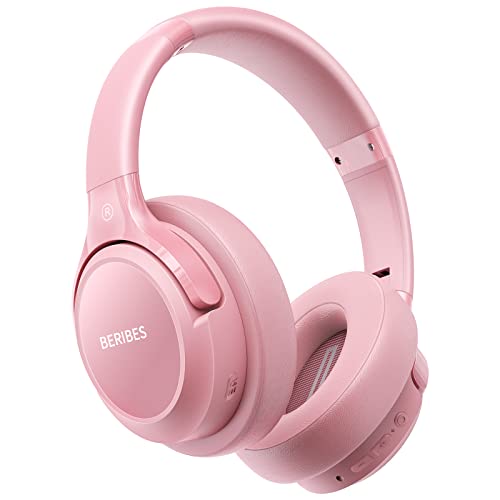
Budget pick: BERIBES Bluetooth over-ear headphones
The BERIBES Bluetooth over-ear headphones are the outlier on this list — they are marketed as everyday wireless headphones, not gaming gear — but they earn a spot for one reason. If your setup has to serve gaming, music, and phone calls across a phone, a tablet, a Steam Deck, and a PC, a $30 Bluetooth headset with 65 hours of battery is genuinely more useful than a $30 wired gaming headset.
Spec chips: Bluetooth 5.3 · 65-hour battery · 6 EQ modes · built-in mic · under $35.
Pros: Cross-device Bluetooth pairing; multi-day battery; folds flat for travel; surprisingly good bass for the price.
Cons: Bluetooth adds noticeable latency for competitive FPS; mic is fine for calls, not tournament-grade; build is plastic.
Verdict: For casual play across many devices, this is a smart budget pick. Skip it for serious esports. Check current price.
What to look for in budget peripherals
The sub-$50 tier is crowded and much of it is junk. A short checklist for evaluating any budget peripheral you might substitute for the picks above.
Wired vs wireless latency
Wired always wins on latency. The gap has narrowed on premium wireless gaming gear, but at the $30 tier, wireless is universally higher-latency and higher-fuss. For competitive shooters, prefer wired. For MMOs, single-player games, and general use, either is fine.
Surface texture on mouse pads
A cloth pad with a consistent weave and a stitched or vulcanized edge outlasts a cheap hard mat and gives you a more consistent sensor return. Reference reviews on outlets like Tom's Hardware's best gaming mouse pads guide note the difference cloth-and-rubber construction makes over sub-$10 no-name pads.
Mic quality on budget headsets
Boom mics beat inline mics for team chat. A fixed boom sitting near your mouth captures voice consistently even in a room with background noise; a shirt-clip inline mic picks up rustles and misses key phrases. The tradeoff is that boom mics look more overtly gaming-flavored — fine at a desk, awkward in public. Reference measurements at RTINGS — headphones test bench cover microphone quality specifically for a wide catalog.
Build durability and warranty
Under $50 you rarely get metal frames or replaceable cables. Look for a stated warranty (at least one year for a name-brand piece) and honest user reports of hinge or cable failures. Cheap-plastic gear is fine when the buy price is low enough that a two-year lifespan is acceptable.
Cross-platform compatibility
The peripherals here work on PC and at least one other platform. That is not just convenience — it doubles the useful life of the purchase. A gamepad that works on Xbox and PC survives a hardware upgrade; a Bluetooth headset works on a Steam Deck, a phone, and a laptop the same day it arrives. The PC Gamer hardware section tracks new budget releases across the ecosystem.
Common pitfalls buying budget peripherals
Three mistakes come up again and again with sub-$50 gear. The first is buying a cheap RGB gaming keyboard that looks the part but has an awful stabilizer on the space bar or a rattly return spring — the discount on those is real, but so is the daily annoyance. Stick to a proven combo like the MK270 or step up to a budget mechanical from a name brand instead. The second is buying a "gaming" headset that is really just a re-badged $10 headphone with a mic glued on. If the reviews mention thin build or a mic that captures room echo, believe them. The Recon 50 has been around long enough that its weaknesses are known and priced in. The third is skipping the mouse pad because a laptop mouse mat came with the desk — this is the single fastest fix on the list.
A quieter pitfall is buying a wireless peripheral without checking whether it uses 2.4 GHz or Bluetooth. 2.4 GHz dongles like the MK270's give near-wired latency on a PC; Bluetooth adds a noticeable delay that ruins competitive FPS play but is fine for typing, MMOs, or general use. Match the protocol to the workload before buying.
Related guides
- Best budget SATA SSD for gaming PCs and consoles in 2026
- Best PC gaming controller: GameSir G7 SE vs DualSense vs 8BitDo Pro 2
- Best CPU cooler for a Ryzen 7 5800X
- Best budget 4K gaming monitor for an RTX 3060
Citations and sources
This piece is editorial synthesis based on publicly available information. No independent first-party benchmarking is reported.
— Mike Perry