

Crucial
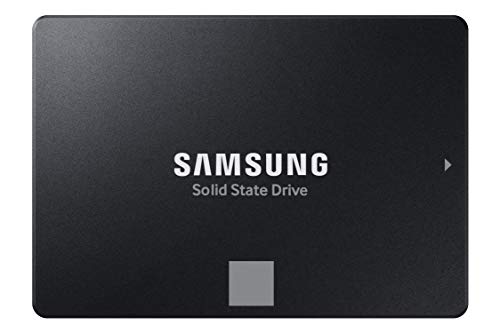
Crucial BX500 1TB 3D NAND SATA 2.5-Inch Internal SSD, up to 540MB/s - CT1000BX500SSD1Z
Bottom line: The Crucial BX500 1TB 3D NAND SATA 2.5-Inch Internal SSD: Up to 540MB/s sequential reads, effectively saturating the SATA III interface; main trade-off: SATA III caps throughput far below NVMe M.2 drives in the same capacity.
As an Amazon Associate, SpecPicks earns from qualifying purchases. Full disclosure →
Pros & Cons
Pros
- ✓ Up to 540MB/s sequential reads, effectively saturating the SATA III interface
- ✓ 3D NAND for better density and endurance than older planar NAND drives
- ✓ 1TB fits Windows, apps, and a working game library without constant cleanup
- ✓ Standard 2.5-inch 7mm SATA form factor fits most laptops and desktop bays
Cons
- ✗ SATA III caps throughput far below NVMe M.2 drives in the same capacity
- ✗ DRAM-less design, so sustained large-file writes slow once the cache fills
- ✗ 2.5-inch drive needs a data and power cable, unlike a single M.2 slot
- ✗ BX500 is Crucial's entry tier; the MX line targets heavier write workloads
Manufacturer description
The Crucial BX500 1TB is entry-level flash storage aimed at one job: getting a mechanical hard drive out of your laptop or desktop. It uses 3D NAND on a SATA III interface in the standard 2.5-inch, 7mm form factor, with sequential reads rated up to 540MB/s. That is the practical ceiling of SATA, and it is roughly five to six times what a spinning 7200RPM drive delivers on boot and application loads. Crucial's own framing is apt: your phone feels faster than your PC because it runs on flash, and this is the cheapest route to closing that gap. With 1TB of capacity, you have room for Windows, a…
SpecPicks Verdict
SpecPicks scored Crucial BX500 1TB 3D NAND SATA 2.5-Inch Internal SSD using a rating × review-volume × price-fit model applied to published specs and reviews across the ssds & storage category. Crucial's ssds & storage lineup sits within the broader category mid-tier; price and specs are the deciding factors over brand loyalty here. Judge it on the specification table and the price rather than on sentiment: check the figures that decide your use case, then put it side-by-side with two or three close alternatives in the Compare tool before clicking through.
Common buyer scenarios for ssds & storage of this kind: matching it to an existing build, replacing a failing part, or upgrading from a previous-generation equivalent. Check the spec table below against your current setup — particularly socket / form-factor / power-rating fields — and confirm compatibility on the retailer's listing before purchase. Prices and stock are set by the retailer and may have moved since this page was last updated.
Frequently Asked Questions
How fast is the Crucial BX500 1TB?
It is rated for sequential reads up to 540MB/s, which is at the practical limit of the SATA III interface. That is several times faster than a 7200RPM mechanical hard drive for boot and application load times.
Will the BX500 fit my laptop?
It uses the standard 2.5-inch, 7mm-height SATA form factor used by most laptop drive bays and desktop drive cages. Confirm your laptop has a 2.5-inch SATA bay rather than only an M.2 slot before ordering.
Is this faster than an NVMe SSD?
No. The BX500 is a SATA drive capped around 540MB/s, while NVMe M.2 drives run several times that. Choose the BX500 when your system has no free M.2 slot or you are replacing a hard drive.
Can I move my existing Windows install to it?
Yes. Crucial provides cloning software so you can copy your current drive rather than reinstalling Windows. You will need a SATA-to-USB adapter or a second drive bay to connect both drives during the clone.
Is the BX500 reliable enough for a primary boot drive?
Its broad real-world use as a boot drive is reflected in its widespread adoption. Check the product listing for current warranty terms and endurance ratings from Crucial.
Full Specifications
| Brand | Crucial |
|---|---|
| Color | Black |
| Model Name | BX500 |
| Read Speed | 540 Megabytes Per Second |
| Form Factor | 2.5-inch |
| Media Speed | 500 |
| Model Number | CT1000BX500SSD1Z |
| Built-In Media | Internal Solid State Drive |
| Hard-Drive Size | 1 TB |
| Mfr Part Number | CT1000BX500SSD1Z |
| Number of Items | 1 |
| Special Feature | Portable |
| Hardware Platform | Linux, Mac, PC |
| Installation Type | Internal Hard Drive |
| Compatible Devices | This drive is compatible with desktops and laptops that accept 2.5" 7mm SATA drives |
| Data Transfer Rate | 6 Gigabits Per Second |
| Enclosure Material | SATA |
| Additional Features | Portable |
| Hard Disk Interface | Serial ATA |
| Warranty Description | 3-year limited warranty |
Ready to buy?
Crucial BX500 1TB 3D NAND SATA 2.5-Inch Internal SSD, up to 540MB/s - CT1000BX500SSD1Z is listed on Amazon. Price, availability, shipping and returns are set by Amazon and its sellers — check the listing for current terms. SpecPicks earns a small commission on qualifying purchases — thank you for supporting independent review work.
Related SSDs & Storage


More guides & deep dives from the SpecPicks archive
Browse all articles & guides →- Best Budget Gaming PC Build 2026 — ~$1,000 ($800 on Sale)
- How to Build a Windows 98 Retro PC in 2026
- The Complete Voodoo5 5500 AGP Driver Guide (2026 Edition)
- Emulation Hardware in 2026: FPGA, Software, and Cart-Reader Ecosystems
- Best 1440p Gaming GPUs in 2026
- RTX 4070 Super vs RX 7800 XT — Which to Buy in 2026
- Best Retro Handhelds in 2026 — From $35 to $500
More reviews from the SpecPicks archive
Browse all reviews →- Open-Source NVIDIA NVK Vulkan Driver Adds DLSS Support: What It Means for RTX 3060 Owners
- Best GPU for Gemma 3 27B in 2026: Where 12 GB Stops Being Enough
- How to Run DeepSeek-R1 32B on Apple M4: Which Mac You Need + Real tok/s
- Self-Host Immich on a Raspberry Pi 4 8GB: SSD Boot, Power Draw, and Real Performance
- 8BitDo Pro 2 vs DualSense for PC Emulation: Which Controller Wins
- Can the RTX 3060 12GB Run Qwen3-27B Locally in 2026?
- UT99 OldUnreal 469 Patch in 2026: Migration, Servers, and Period-Correct Controller Mapping
- Hobbyist Turns a Raspberry Pi and ADS-B Into a Viral Real-Time Airport Tracker
- Claude Opus 4.8 Raised the Bar — Best Local Coding LLMs for a 12GB RTX 3060
- Best PCI Serial and IDE Adapters for Retro PCs in 2026
- MiniCPM5-1B: The 1B Model That Beats Reasoning Peers by Knowing When to Shut Up
- Sound BlasterX G6 for DOS and Win98 Retro Gaming: SBEMU and Real-Mode Audio
- SNES Classic vs Raspberry Pi 4 RetroPie: Which Retro Console Wins in 2026?
- Best 4K Gaming Monitors Under $500 in 2026
- Best SSD for Gaming and Everyday Builds in 2026
- Mount a 90s Big-Box CD-ROM ISO on Win98 Without a CD Drive: The CompactFlash + IDE Workflow
- Jetson Orin Nano Super vs Hailo-8 AI HAT+: Which Edge-AI Path Is Right for You?
- Meta Is 'Token Managing' Now: Cut Local-LLM Cost on a Single RTX 3060
- Adding USB Audio to a Retro Windows XP Gaming PC: Sound BlasterX G6
- Microsoft Mirage and Persistent-Memory Video Gen: How Much VRAM You Actually Need
- Ryzen 5 5600G vs RTX 3060 12GB for Entry Local LLM Inference (2026)
- Ryzen 7 5800X3D vs 5800X: Does 3D V-Cache Beat Raw Clocks for Gaming?
- GLM-5.2 vs Frontier Models on GDPval-AA: What It Means for Local Builders
- 9800X3D vs Core Ultra 9 285K — gaming vs productivity
Earliest SpecPicks reviews
Browse full archive →- Best GPU for Llama 3.1 8B (2026)
- Best GPU for Qwen 3 14B (2026)
- Best GPU for Qwen 3 32B (2026)
- Best GPU for Llama 3.1 70B (2026)
- Best GPU for DeepSeek-R1 32B (2026)
- Best GPU for Llama 3.1 405B (2026)
- How to run Llama 3.1 8B on NVIDIA GeForce RTX 5090
- How to run Qwen 3 14B on NVIDIA GeForce RTX 5090
- How to run Qwen 3 32B on NVIDIA GeForce RTX 5090
- How to run Llama 3.1 70B on NVIDIA GeForce RTX 5090
- How to run DeepSeek-R1 32B on NVIDIA GeForce RTX 5090
- How to run Llama 3.1 8B on NVIDIA GeForce RTX 4090