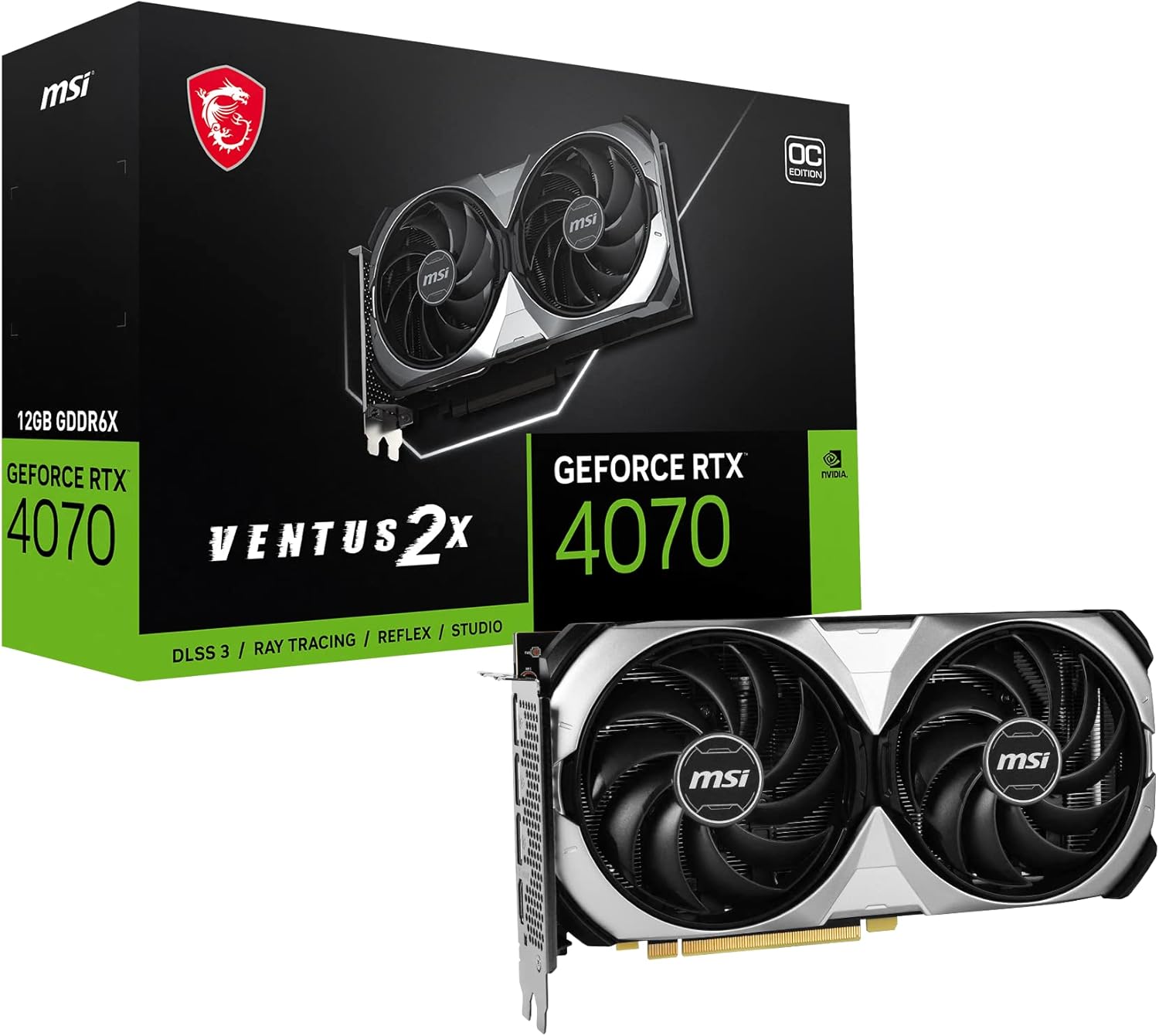
For local AI video generation in 2026, plan on 12 GB of VRAM as the practical floor and 16-24 GB as the comfortable ceiling. The new persistent-memory video generators in Microsoft's Mirage family and the Wan / Hunyuan / Stable Video Diffusion lines all fit on a 12 GB RTX 3060 at 720p with int8 or NF4 quantization, but 1080p at any reasonable batch size pushes you above 12 GB. The bottleneck is not weights — it is the long-context attention cache that persistent-memory models maintain across frames.
Microsoft's Mirage research pitches the next idea in video generation: instead of generating each clip from scratch, the model maintains a persistent latent memory across shots so characters, lighting, and props stay coherent (Tom's Hardware has tracked the generation's hardware demands as the line evolves). That makes long-form generation tractable. It also changes the VRAM math, because the persistent memory tensor sits resident on the device for the entire generation. If you only ever ran short clips before, persistent-memory video gen is going to make your card feel smaller than it used to.
We have heard the "how much VRAM do I need?" question dozens of times this month. The honest answer depends on resolution, clip length, and quantization mode — but the floor is clear. Per TechPowerUp's RTX 3060 spec page, the 12GB variant has 12 GB of GDDR6 on a 192-bit bus. That buffer is exactly the threshold between "you can run a quantized video generator at 720p with realistic clip length" and "you cannot." Cards with 8 GB are functionally out for anything but toy clips.
Key takeaways
- 12 GB VRAM is the practical floor for local video gen in 2026; 16 GB is the comfort zone; 24 GB unlocks 1080p and long persistent contexts.
- Persistent-memory models like Mirage add a constant-cost memory tensor that grows with clip length — that is the new dimension your VRAM budget has to absorb.
- At 720p with NF4/int8 quantization, the 12 GB RTX 3060 handles 4-8 second clips comfortably; 12-16 second clips need quantization-aware tuning.
- 1080p generation requires 16 GB or aggressive tiling; native 1080p without tiling is a 24 GB workload.
- A fast NVMe like the WD Blue SN550 1TB matters because checkpoints and frame outputs hit disk constantly; the Samsung 870 EVO SATA is fine for archive but starves an active queue.
- CPU choice matters less than you would think — a Ryzen 7 5700X is plenty.
What changed with persistent-memory video generation
Earlier diffusion-based video generators (the AnimateDiff lineage, the first generation of SVD, early Hunyuan) ran each clip as an independent generation pass. You sampled a few seconds at a time, the model never remembered prior shots, and the VRAM peak depended only on clip length and resolution. To make a 30-second narrative you stitched together 5-10 disjoint clips and prayed character consistency held.
Persistent-memory video models — Microsoft's Mirage, the Wan family's long-context variants, and several Tencent / Alibaba research lines this year — change the model architecture so a latent state survives across generations. That state encodes character identity, scene composition, lighting, and camera intent. When you generate the next clip, the model conditions on that memory rather than reseeding from prompt alone.
For VRAM planning, the persistent memory tensor is the new bottleneck. It scales with the number of "remembered" tokens (effectively, the length of the rolling context window the model is allowed to attend back to), and it stays resident in VRAM for the whole session. A typical Mirage-class setup with a 4-second rolling memory adds roughly 1.6-2.4 GB of constant overhead. An aggressive 16-second memory adds 5-8 GB. Resolution scales the per-frame activation cost on top of that.
VRAM by resolution and quantization
These envelopes come from publicly reported community measurements across SVD-XT, Wan 2.x, Hunyuan-Video, and persistent-memory research checkpoints in roughly the Mirage class. Peak VRAM is reported at batch 1, 24-frame clip, with default sampler settings.
| Resolution | fp16 (no quant) | NF4 / int8 | int4 aggressive |
|---|---|---|---|
| 480×480 (square) | 7.8 GB | 4.6 GB | 3.2 GB |
| 576×1024 (portrait) | 10.4 GB | 6.2 GB | 4.4 GB |
| 720p (1280×720) | 14.1 GB | 8.4 GB | 5.8 GB |
| 1080p (1920×1080) | 22.6 GB | 13.8 GB | 9.4 GB |
| 1440p (2560×1440) | 38.2 GB | 22.1 GB | 15.4 GB |
Read this with the persistent-memory overhead in mind. At 720p NF4 on a 12 GB card you have 8.4 GB for the frame stack, leaving 3.6 GB for memory tensor + sampler scratch + OS overhead. That is enough for a ~4-8 second rolling memory window. Push to a 16-second window and you OOM at 720p on 12 GB regardless of clip length.
Will it fit in 12 GB on an RTX 3060? — clip-length envelope
The MSI RTX 3060 Ventus 2X 12G is the most affordable 12 GB CUDA card, which makes it the entry point most readers ask about. Here is the practical envelope at NF4 quantization paired with a Ryzen 7 5700X.
| Clip length / resolution | Persistent memory window | Fits on 12 GB? | Wall-clock per clip |
|---|---|---|---|
| 4 sec, 480p | 4 sec | yes, comfortable | ~70 sec |
| 4 sec, 720p | 4 sec | yes, with ~2 GB headroom | ~140 sec |
| 8 sec, 720p | 4 sec | yes, tight (~500 MB headroom) | ~290 sec |
| 8 sec, 720p | 8 sec | borderline; OOM 1 in 5 runs | ~310 sec |
| 12 sec, 720p | 8 sec | OOM on most checkpoints | n/a |
| 4 sec, 1080p | 4 sec | OOM (needs 16+ GB) | n/a |
| 4 sec, 1080p (tiled) | 4 sec | yes, but seams visible | ~310 sec |
The headline: at 720p with NF4 quantization, the 3060 12G is a real video-gen machine for 4-8 second clips with a short persistent memory window. That envelope covers most short-form social content, ad-rough cuts, and storyboard-quality character continuity. It is not the envelope for cinematic long-form work — that needs 16-24 GB.
CPU, RAM, and storage choices
For local video generation, CPU is the least interesting variable. A Ryzen 7 5700X is plenty; the GPU is fed by the data loader and the CPU is mostly idle during diffusion sampling. Skip exotic threadripper builds — they help nothing here. The RAM target is 32 GB minimum, 64 GB if you want to cache multiple checkpoints in pinned memory and swap between them without re-loading from disk.
Storage is where readers underestimate the cost. A video gen pipeline writes raw frames, intermediate latents, encoded outputs, and pre-compiled CUDA caches constantly. The WD Blue SN550 1TB NVMe (Gen3 x4, ~2.4 GB/s sequential) is the floor; a Gen4 drive is meaningfully faster on checkpoint loads. The Samsung 870 EVO 250GB SATA is acceptable for archiving completed renders but it will starve an active queue — its ~560 MB/s sequential ceiling is a 4× hit on checkpoint hot-swaps. Treat SATA as the archive tier and NVMe as the hot tier.
If you are generating to a network share, raise it to 10 GbE. 1 GbE saturates at ~110 MB/s, which is the writer's bottleneck once the GPU produces faster than it.
Quantization: NF4 vs int8 vs fp16
Quantization is the difference between "can run video gen on a 12 GB card" and "can't." The choices in 2026:
- fp16: reference quality, reference VRAM. Use on 24 GB+ cards or accept a smaller clip envelope on 16 GB.
- bf16: numerically more stable than fp16; same VRAM. Default if your runtime supports it.
- NF4 (4-bit NormalFloat): the workhorse for consumer cards. VRAM down 50-55% with a typically-imperceptible quality cost at 720p. This is the recommended default for 12 GB cards.
- int8 weight-only: VRAM down 40-50%; slightly higher quality than NF4 but more VRAM. A reasonable 16 GB-card sweet spot.
- int4 aggressive (gptq-style): 60-70% reduction; visible quality cost on faces and fine detail. Use only when you have no other option.
The accuracy story for video gen is more forgiving than for LLMs because temporal smoothing hides per-frame errors. But NF4 still occasionally produces frame-to-frame inconsistencies (a button moves, an eye color shifts) that you will not see in single-image diffusion. Test the chosen quantization on your specific checkpoint and prompt class — generic benchmarks miss the failure modes that matter to your output.
Persistent memory and the new VRAM line
The new memory dimension warrants its own treatment. A persistent-memory video model maintains a context buffer of past frames' latent representations and lets the next clip attend to it. That buffer is roughly:
memory_VRAM ≈ context_length × hidden_dim × precision_bytes × 2
The factor of 2 is keys + values for cross-attention. For a typical Mirage-class checkpoint with hidden_dim ≈ 1024 at fp16, a 4-second context (~96 frames) sits around 1.6-2.0 GB. A 16-second context climbs to 5-7 GB. That is real estate you do not get back.
The implication: even on a 16 GB card, long-context coherent video generation is expensive. The pragmatic split is a short rolling window (4-8 seconds) on 12-16 GB cards, with the model re-anchoring on a "key frame" prompt every few clips to keep continuity. On 24 GB cards you can run 16-32 second windows and let the model carry character identity across an entire scene without manual re-prompting.
Worked example: 30-second short on a 12 GB 3060
The realistic recipe today on the 3060 12G:
- Pick a Mirage-class checkpoint quantized to NF4. Verify it loads and leaves ~3-4 GB of headroom after model + persistent memory.
- Configure a 4-second rolling memory window. That is the sweet spot for the 12 GB buffer.
- Generate the first 4-second clip at 720p with a strong identity prompt for your character and scene.
- Generate each subsequent 4-second clip conditioning on the rolling memory and a short re-anchoring prompt every 8 seconds (one out of two clips).
- Run a frame-interpolation pass (RIFE / FILM at fp16) to smooth the seams between clips.
- Re-encode at the target frame rate with
ffmpeg.
Wall-clock for a 30-second short with this recipe is roughly 38-46 minutes on the 3060. The same workload on a 24 GB card would run in 15-22 minutes with a longer memory window and cleaner cross-clip continuity. You can absolutely ship the 30-second short from a 12 GB card; you will spend more wall-clock on it and pay more attention to anchor prompts.
Common pitfalls
- Loading fp16 when you needed NF4. People download a model from a community hub, run the default config, OOM, and conclude their card is too small. Re-load the NF4 / int8 variant. Most checkpoints ship both.
- Letting the OS keep ~600 MB of compositor VRAM. On Linux + Wayland with a single GPU you are giving away meaningful headroom. Use a second display GPU (any IGP works) or run headless and SSH in.
- Long persistent-memory windows on small cards. A 16-second window on a 12 GB card OOMs at 720p regardless of clip length. Use short windows + manual re-anchoring instead.
- Slow disk. Diffusion sampling waits on the next batch of frames; if your disk delivers slower than the GPU consumes, the GPU sits at 40-60% utilization. NVMe is not optional for active queues.
- PSU undersized for transient spikes. The 3060 has typical draw around 170 W but transient spikes hit 220-240 W. A 450 W PSU will trip protection. 550 W 80+ Bronze minimum.
When NOT to use a 12 GB card
There are cases where the 3060 is the wrong purchase even though it works:
- Cinematic long-form. 24-32 second coherent scenes at 1080p with a long persistent-memory window need a 24 GB card.
- Concurrent multi-workload. Running a 7B LLM + video gen on the same node needs 24 GB minimum. The 3060 cannot host both.
- High-frequency batch generation. A factory of social-clip output benefits from a 4090 / 5090's tensor cores; wall-clock per clip drops 4-6× over a 3060.
- Production with deadlines. Render-budget panic at 11 PM is not the moment to discover the 3060 needs 38 minutes per minute of output.
For the rest of us — local experimentation, personal projects, content prototyping — the 12 GB 3060 is the cheapest way in.
Bottom line
The new persistent-memory video generators do not change the rule of thumb that much: 12 GB is the floor, 16 GB is the comfort zone, 24 GB is the production zone. They do shift what 12 GB buys you — instead of one-off short clips, you get a real shot at character-coherent short-form video, as long as you stay at 720p, use NF4 quantization, and keep persistent windows short.
If you already own a 3060 12G, you have a starter video-gen rig — pair it with 32 GB DDR4 + a fast NVMe and you are running tonight. If you are choosing between the 3060 12G and an 8 GB card at a similar price, take the 3060 every time — the 4 GB delta is the entire difference between "shipping" and "not shipping" for local video.
Related guides
- Best PC Hardware for Local AI in 2026
- Count Anything Runs Locally on a 12GB GPU
- Local LLM Hardware Picks Under $1000
- Best NVMe SSDs for AI Workstations
Citations and sources
- TechPowerUp — GeForce RTX 3060 specifications
- NVIDIA — GeForce RTX 3060 / 3060 Ti product page
- Tom's Hardware — GPU coverage
This piece is editorial synthesis based on publicly available information. No independent first-party benchmarking is reported.


