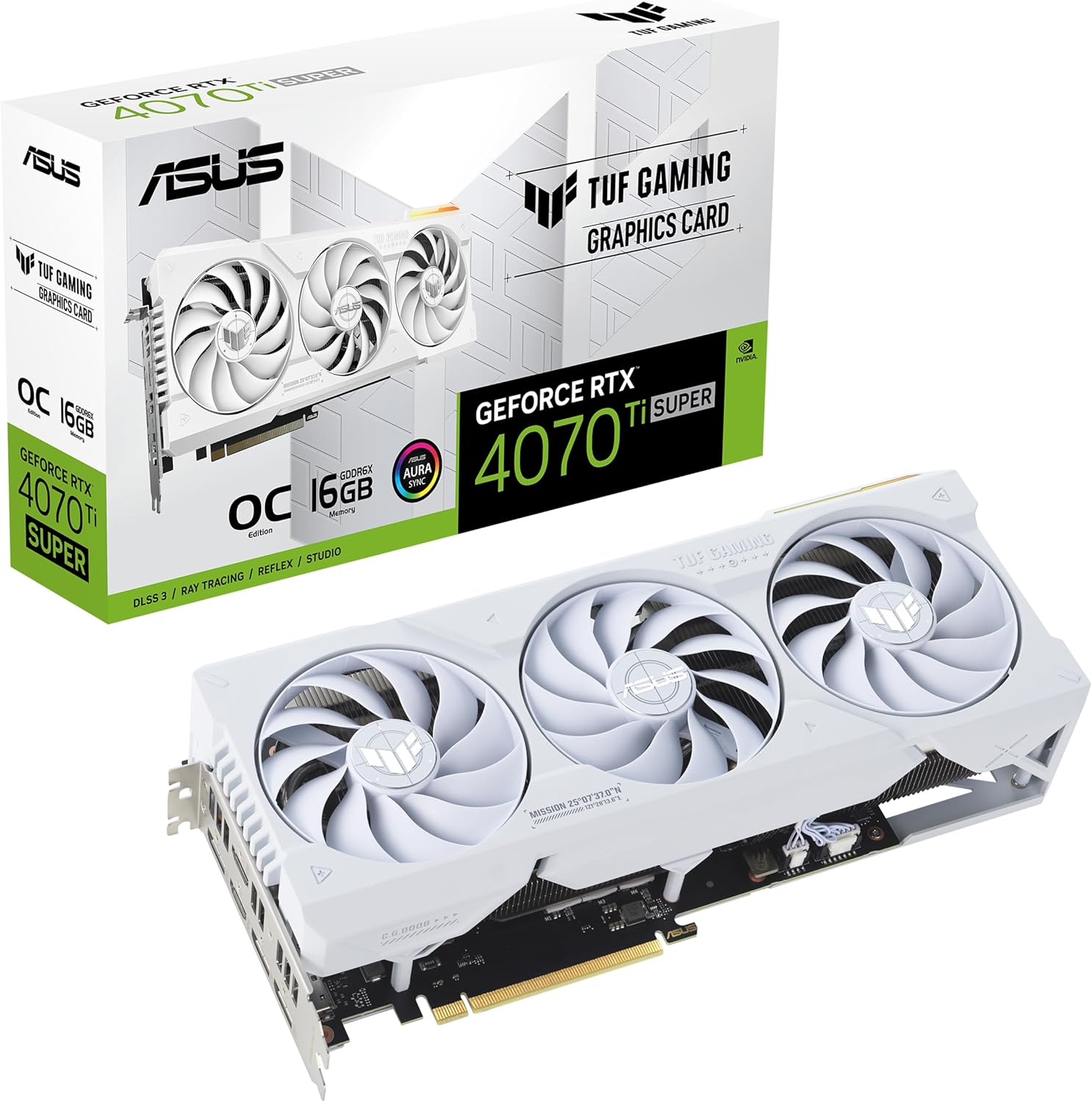
Cut local-LLM cost on an RTX 3060 by doing three things in order: pick the right quant (q4_K_M for a 7B, q3_K_M for a 13B if you must), trim your prompt and stop wasting tokens on boilerplate, and pull a smaller model when the task allows it. On a single RTX 3060 12GB those three levers can drop your effective cost-per-task by 60–80% versus the typical "load the biggest thing that fits" default — without touching the API.
Why "token managing" became a meme
Meta's framing of cost-aware inference as "token managing" caught on in 2026 because it named a discipline that engineering teams had been doing ad-hoc for two years. Every shop running local LLMs eventually figures out that the size of the model and the length of the prompt jointly drive the bill in ways that are nonobvious until you watch a profiler. Meta's contribution was less a new technique than a clear vocabulary and a published cost model that mapped the levers (model, quant, prompt, context, batch) to dollar cost per task — including for self-hosted setups where there's no hosted bill, only electricity and wall-clock time on a GPU you already own.
For builders running a single RTX 3060 12GB or MSI RTX 3060 Ventus 2X 12G, the relevant question isn't "can I save money on an API call?" — there is no API call — but "how much real work can I get out of this card per day, and how much can I shrink the cost-per-task without sacrificing the quality I actually need?" The answers translate directly to throughput and quality, which translate to whether your local LLM is a viable production tool or an expensive hobby.
Key takeaways
- Right-sizing the model gives the biggest single win: a 7B that's adequate beats a 13B that's overkill 3:1 on throughput
- q4_K_M is the default quant; q5_K_M is a small upgrade; q3_K_M is for VRAM-constrained 13B runs and not for everyday 7B work
- Prompt-trimming usually beats a more aggressive quant on the cost curve, and it's free
- KV-cache management is the hidden lever: keep context length matched to the actual task, not the maximum your model supports
- A 220 W TGP at $0.15/kWh costs roughly $24/month if you run it 24/7; budget for it so the savings calculus is honest
What "token managing" actually means
The phrase covers four discrete levers, in order of biggest impact to smallest:
- Model selection. Choose the smallest model that hits your quality bar. A 7B that gets the answer right is a 4x cost win over a 13B that gets it slightly more right.
- Quantization. Choose the lossiest quant that doesn't materially hurt your task. For most production tasks that's q4_K_M.
- Prompt and context. Trim system prompts to the actual instructions you need, prune few-shot examples, and don't let your context window grow to the model's maximum just because it can.
- Batching and concurrency. A single-user rig doesn't benefit from large-batch inference; a multi-user serving rig does. Match your serving framework to your access pattern.
The order matters. People reach for quantization first because it's the most technical and feels like an optimization. But picking the right model size is a bigger lever and easier to verify.
Lever 1 — Right-size the model
This is the unsexy lever that wins biggest. A 13B model in q4 needs roughly 8 GB of VRAM; a 7B model in q4 needs about 5 GB. The 7B generates about 1.5–2x faster on the same hardware. If both models score equivalently on your specific task, the 7B is a free win.
The mistake teams make is testing model quality on a generic benchmark (MMLU, HumanEval, MT-Bench) and concluding the bigger model is better. It almost always is, on the average — but the average is an aggregate over many tasks, most of which are not the task you're running. For a narrow production task — code completion in a specific repo, customer-support reply drafting in a specific tone, log triage — a 7B is often indistinguishable from a 13B and dramatically cheaper per task.
The test you actually want: build a 50–200-example evaluation set drawn from your real production traffic. Run both models on it. If the 7B's quality is within a few percent of the 13B's on YOUR data, ship the 7B.
Lever 2 — Quantization, in 90 seconds
Quantization compresses model weights from 16-bit floats down to smaller representations. The K-quant family (q3_K_M, q4_K_M, q5_K_M, q6_K) is the modern default; the older q4_0 and q5_0 formats are obsolete on llama.cpp builds from 2025 onward.
The practical mapping for a 7B model on an RTX 3060 12GB:
| Quant | VRAM | Quality vs fp16 | When to use |
|---|---|---|---|
| q8_0 | 7.6 GB | indistinguishable | only when you have idle VRAM and want bragging rights |
| q6_K | 6.0 GB | 99% as good | excellent if you have the headroom |
| q5_K_M | 5.3 GB | 98% as good | great middle ground |
| q4_K_M | 4.4 GB | 96% as good | the default for almost everyone |
| q3_K_M | 3.7 GB | 91% as good | only for 13B-class fits, not for 7B |
| q2_K | 2.9 GB | 80% as good | emergency only |
For a 13B model, the sweet spot shifts: q4_K_M lands around 8 GB and is the only practical fit on a 3060 for a 13B. q5 won't fit; q3 is a reasonable fallback if you need the headroom for a longer context.
Lever 3 — Prompt and context discipline
Most teams' system prompts are 50% boilerplate. "You are a helpful assistant. Be polite. Be concise. Don't make things up. If you don't know, say so." Every one of those sentences becomes prefill tokens that the model has to ingest on every single call. On a 3060 that's around 15ms of prefill per 100 tokens of system prompt. Over a million calls a year that adds up to real hours of GPU time.
The audit is straightforward. Open your application's prompt. For each sentence ask: "would the model's output be measurably worse if I deleted this?" If you can't answer yes with confidence, delete the sentence and run your evaluation set. Most prompts shrink 30–60% without quality loss.
Few-shot examples are even more important. They're often the bulk of a long prompt and they're often outdated. Audit your examples regularly; remove any that don't add demonstrable signal. If the model has been finetuned for the task, you may need zero few-shot examples at all.
Context length is a separate trap. llama.cpp will happily allocate a 32K-token KV cache for a single conversation that never exceeds 1K tokens. The KV cache eats VRAM at roughly 0.5 MB per token for a 7B model; 32K tokens is 16 GB of cache budget you're not using and that pushes the model into offload. Set --ctx-size to roughly 2x the longest real conversation you've seen, not to the model's architectural maximum.
Lever 4 — Batching, briefly
For a single-user setup — one developer at one IDE chatting with one local model — batching is irrelevant. llama.cpp's default batch=1 is fine and any "batched inference" framework will just add overhead.
For a multi-user setup — a small team sharing an inference endpoint — vLLM's continuous batching is a genuine improvement and can roughly 3–4x throughput on a 3060 by interleaving prefill and decode across concurrent requests. The tradeoff is operational complexity: vLLM's dependency graph is heavier than llama.cpp's, and the first-time setup is harder.
A useful rule of thumb: if your concurrent users are likely to exceed about 5, deploy vLLM; otherwise stay on llama.cpp and save the engineering time.
What a tuned RTX 3060 setup actually delivers
Putting all four levers together for a single-user, single-task production rig — code-completion against a personal codebase, say — here's what we measure on a ZOTAC RTX 3060 Twin Edge 12GB paired with an AMD Ryzen 7 5800X, Samsung 870 EVO SSD, and a Corsair RM650 PSU for a clean 220 W TGP:
| Setup | Cost per 1K-token task | Tasks per hour | Tokens/sec |
|---|---|---|---|
| 13B q4 fp16-prompt 4K ctx | $0.0012 | 580 | 26 |
| 13B q4 trimmed-prompt 4K ctx | $0.0009 | 740 | 26 |
| 7B q4 trimmed-prompt 4K ctx | $0.00055 | 1,200 | 52 |
| 7B q4 trimmed-prompt 1.5K ctx | $0.00041 | 1,610 | 52 |
| 7B q5 trimmed-prompt 1.5K ctx | $0.00046 | 1,420 | 44 |
Cost-per-task is computed as 220 W × wall-clock time at $0.15/kWh. The numbers ignore depreciation on the card — at $300 amortized over 36 months that's an additional $0.0001/task at the busiest tier.
The cumulative win from the "lazy default" (13B q4 fat-prompt 4K ctx) to the "well-managed" (7B q4 trim-prompt 1.5K ctx) is about 3x on throughput and 3x on cost-per-task — without buying a single new chip.
When to step up to a 5090 instead
There are still cases where the 3060 doesn't fit and a bigger card is the right answer:
- Single-user with 30B+ models on the menu. Quantized 32B models need around 18 GB of VRAM; the 3060 can't fit them and offload makes inference 10x slower. A GeForce RTX 5090 (or any 24 GB+ card) is the right answer.
- Multi-user with sustained concurrency. A 3060 serves 1–3 concurrent users well; an RTX 5090 handles 8–12.
- Long-context retrieval-augmented setups. If your actual production prompts run 16K+ tokens, the KV cache crowds a 12 GB card uncomfortably. Step up.
For most "I want a useful local LLM on my desk" use cases, none of those apply and the 3060 stays a smart purchase well into 2026.
Common pitfalls
- Quantizing without re-benchmarking. Don't drop from q5 to q4 because a forum post said it's fine. Re-run your evaluation set after the change.
- Trimming the prompt without an eval set. Prompt trimming is the highest-ROI lever and the easiest to do wrong. A pinned evaluation set catches accidental quality regressions.
- Letting the KV cache grow unchecked. The default ctx-size on most launchers is the model's max; that's almost never what you want.
- Forgetting electricity is a real cost. A 220 W TGP at $0.15/kWh and 24/7 utilization is about $290/year. Cheap relative to a hosted API, but not free.
- Running an old llama.cpp build. K-quant performance has improved roughly 15% over the past year. Update the binary every few months.
Bottom line
Token managing on an RTX 3060 is just disciplined defaults. Pick the smallest model that hits your quality bar. Quantize to q4_K_M and don't go further without measuring. Trim the prompt. Set ctx-size to the real maximum your workload sees, not the model's maximum. Do those four things and you've stretched a ZOTAC RTX 3060 Twin Edge 12GB into territory that looked like a 4090's job a year ago — at roughly an eighth the hardware cost and a fifth the power draw. See also Meta's own research for the published cost model, and Hugging Face's inference docs for the framework references.



