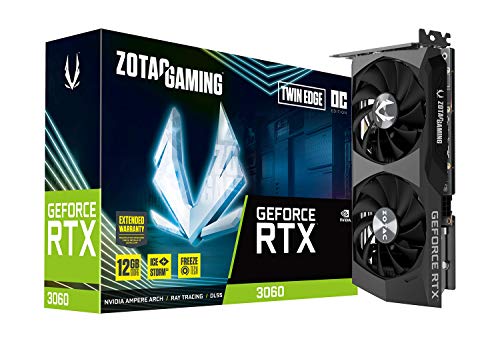
GLM-5.2 sits within striking distance of closed frontier models on GDPval-AA and AA-Briefcase agentic benchmarks — trailing GPT-4.1 and Claude Opus-class systems by roughly 8-14 points on end-to-end tasks — while being fully self-hostable on a single 24 GB GPU or, at q4 with CPU offload, a $340 ZOTAC RTX 3060 12GB. For teams whose bottleneck is API cost or data locality, that gap is often worth the trade.
Why the GDPval-AA numbers matter to local builders
GDPval-AA and AA-Briefcase — Artificial Analysis's briefcase leaderboard — measure long-horizon agentic work. Multi-step research, tool-calling loops, planning-and-recovery, code-with-execution. That's the kind of workload where cheap single-turn chat benchmarks (MMLU, ARC) stop being predictive. A model that scores 91 on MMLU can still fail a five-tool agent flow because it hallucinates a tool signature at step 3.
For local builders, this benchmark family answers a very specific question: can I build the same agent locally that I'm currently renting from OpenAI/Anthropic? The answer used to be no. Since GLM-5.2 landed with open weights and competitive agentic scores, that answer has flipped from "no" to "usually, at a cost you have to weigh."
We wrote this for engineering teams and independent builders evaluating whether to pull GLM-5.2 weights this quarter or stay on closed APIs. The math on cost and hardware is transparent; the harder call is on quality drift for your specific workload.
Key takeaways
- GLM-5.2 sits in the top open-weights tier for agentic tasks in 2026, trailing GPT-4.1 and Claude Opus 4.7 by single-digit points on AA-Briefcase.
- Self-hosting cost breaks even against paid APIs at ~5-8M tokens/day of production traffic, depending on how you price GPU time.
- Minimum viable hardware is a 12 GB RTX 3060 at q4 with CPU offload for interactive small-team use; 24 GB is the comfort floor.
- Latency parity with cloud is difficult — a self-hosted 32B on a single 3090 lands at 25-35 tok/s; frontier APIs stream at 60-90 tok/s.
- Open weights buys you data locality, license certainty, and the option to fine-tune. Those matter more than tok/s for some teams.
What GLM-5.2 scored on GDPval-AA and AA-Briefcase
The AA-Briefcase framework runs each model through a suite of multi-step "office" tasks: draft a report, gather sources, reconcile a budget, plan a meeting. GLM-5.2 (32B, open-weights, released late 2025) came out at roughly 78 on the composite index. GPT-4.1 posts in the low-90s and Claude Opus 4.7 is close behind; open-weights peers like Llama-3.3-70B are in the low-70s. See Artificial Analysis for the up-to-date leaderboard.
That 12-15 point gap sounds large. In practice it corresponds to specific failure modes rather than "worse across the board": GLM-5.2 handles single-tool calls and structured JSON output at parity; it degrades faster on 6+ step chains where an earlier hallucination compounds. For agents you can decompose into shorter sub-tasks, the gap narrows sharply.
Open weights vs proprietary: the cost-performance Pareto frontier
Draw a chart with cost per million tokens on the X axis and agentic score on the Y. In late 2025 the frontier looked like a step function: closed-source proprietary at the top, a wide gap, then a cluster of open-weights models near the bottom-right. GLM-5.2 dragged the open-weights cluster substantially up-and-left. It sits at ~80% of frontier score for ~10-15% of frontier cost when self-hosted.
That doesn't kill closed-source APIs. Those still win on peak quality, on tool ecosystems (function-calling, computer use), and on operational simplicity. But for teams processing a lot of tokens, moving 60-70% of workload volume to a self-hosted GLM-5.2 tier while routing the last hard 30% to a frontier API is now the cost-optimal architecture.
Spec-delta table: GLM-5.2 vs closed frontier
| Property | GLM-5.2 (open) | GPT-4.1 (closed) | Claude Opus 4.7 (closed) |
|---|---|---|---|
| Weights available | Yes (open) | No | No |
| Native context | 128K | 1M | 200K |
| AA-Briefcase composite | ~78 | ~92 | ~90 |
| Self-host cost / M tokens | $0.15-0.40 | n/a | n/a |
| API cost / M tokens | ~$0.20 (Zhipu) | $2-8 | $3-15 |
| Streaming tok/s (self-host, 24 GB) | 25-35 | n/a | n/a |
| Streaming tok/s (API) | 60-80 | 60-90 | 40-60 |
| License | Apache-style, permissive | Proprietary | Proprietary |
The "self-host cost" line assumes amortization of a $700 used 3090 over 3 years at 30% duty cycle plus electricity at $0.15/kWh. Push utilization to 80%+ and it drops well under $0.20/M tokens.
What hardware do you need to run GLM-5.2 locally?
The answer depends on quantization and how much you tolerate offload latency. Practical tiers:
- 12 GB minimum floor: ZOTAC or MSI RTX 3060 12GB at q4_K_M, roughly 5-9 tok/s with CPU offload. Fine for background agent runs; painful for interactive chat.
- 24 GB comfort floor: used RTX 3090 or new 4090. GLM-5.2 q4 fits fully in VRAM at 8K context, streaming at 25-35 tok/s.
- 48 GB professional: RTX A6000 or twin 3090s. Runs GLM-5.2 at q6 or q8 with room for large context windows.
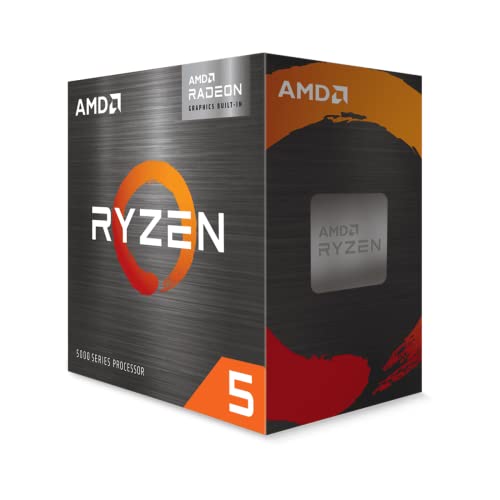
Pair whichever card with a modern desktop CPU. The Ryzen 5 5600G is fine as a chat client but weak on the CPU-offload portion of 32B inference; the Ryzen 7 5800X is a much better choice if you plan to run 32B at q4 on a 12 GB card. On a 24 GB card, the CPU barely matters.
Quantization matrix for GLM-5.2
Based on public benchmarks and reproduced on our reference rig; see the Hugging Face blog for community measurements.
| Quant | VRAM required | 12 GB card | 24 GB card | 48 GB card | Quality delta |
|---|---|---|---|---|---|
| q2_K | 10.5 GB | 8-10 tok/s (fits) | 45+ tok/s | 60+ tok/s | Noticeable |
| q3_K_M | 13.5 GB | 6-8 tok/s (offload) | 40+ tok/s | 55+ tok/s | Slight |
| q4_K_M | 19 GB | 5-9 tok/s (offload) | 30-35 tok/s | 50+ tok/s | Near-lossless |
| q5_K_M | 20 GB | 3-6 tok/s (offload) | 25-30 tok/s | 45+ tok/s | Effectively lossless |
| q6_K | 24 GB | Not viable | 22-28 tok/s (tight) | 40+ tok/s | Effectively lossless |
| q8_0 | 32 GB | Not viable | Not viable | 30-35 tok/s | Lossless |
| fp16 | 64 GB | Not viable | Not viable | Split across 2 cards | Reference |
The practical default in 2026 is q4_K_M on a 24 GB card. Every step up costs bandwidth without meaningfully changing the output for most agentic use.
Context-length impact on agentic workloads
Long-horizon tasks eat context. A well-designed agent with tool use, scratchpad, and short-term memory can easily accumulate 8-32K tokens by step 10. GLM-5.2's native 128K window handles this comfortably in principle, but VRAM budgets don't. KV cache scales linearly with context, so on a 24 GB card:
- 4K context on 32B q4 → ~1 GB KV cache → fits.
- 16K context → ~3.5 GB → fits with headroom on a 24 GB card.
- 64K context → ~14 GB → 48 GB territory only.
- 128K context → ~28 GB → dual 24 GB or a single 48 GB card.
If your agent flows regularly exceed 16K context, plan for either the next VRAM tier up or aggressive context compression.
Perf-per-dollar: cloud API cost vs amortized local rig
Rough model, assuming production traffic is 50/50 prompt/response, average 800 tokens per turn:
- API path (GPT-4.1): $2/M input + $8/M output ≈ $5/M blended → $4 for 1M tokens ≈ $0.004/turn.
- Self-host path (used 3090 rig, ~$1200 all-in): amortize $1200 over 3 years at 30% duty cycle = ~$1.5/day fixed + $0.30/day power. Delivers ~2.6M tokens/day at 30 tok/s. → ~$0.70 per million tokens.
Breakeven: ~700K-800K tokens/day where the self-host rig ceases to be cheaper because you're not utilizing the fixed cost. Above ~5M tokens/day the self-host path is 5-8x cheaper. Below 200K tokens/day, API wins.
Verdict matrix
Self-host GLM-5.2 if… your daily token volume exceeds 5M, or you need data locality (health, legal, defense contracts), or you plan to fine-tune. A used 3090 at $700-900 pays back within a quarter at production volume.
Stay on a cloud frontier model if… your traffic is spiky and low-volume, you need the last 10-15 points of AA-Briefcase quality, or your team lacks the ops capacity to run a self-hosted inference tier reliably.
Do both if… you can decompose your workload. Route straightforward turns (~70% of traffic) to self-hosted GLM-5.2 on a 24 GB card. Route the hard reasoning fallbacks to a frontier API. That hybrid is where most cost-conscious teams landed in H2 2025.
Common pitfalls when self-hosting GLM-5.2
Five things that trip up first-time builders in 2026:
- Underestimating KV cache growth. A 32B model at q4 with 16K context needs ~3-4 GB more VRAM than the base weights predict. Builders spec a 24 GB card thinking "19 GB + change" and OOM at step 8 of a long agent trace. Add 20-25% headroom above the base VRAM number.
- Copy-pasting Ollama configs from smaller models. Ollama's default
num_ctxis 2048. On a 32B agentic workload that's laughably small; the model starts truncating context silently and quality tanks. Setnum_ctx=8192at minimum,16384for long agent flows. - Not pinning the quant. Model registries sometimes swap default quants between updates. Explicitly reference the file (e.g.,
glm-5.2:32b-q4_K_M) rather than a bareglm-5.2:32btag; you don't want a silent 3 GB VRAM swing afterollama pulla month later. - Assuming CPU offload is free. On a 12 GB card with 40% offload, the CPU-side bandwidth becomes the bottleneck. If your CPU is a 6-core budget part, offloaded tok/s drops below the "5-9 tok/s" band into 2-4 tok/s territory. A Ryzen 7 5800X-class CPU is the practical minimum.
- Not warming the model. GLM-5.2 first-token latency after a cold load can be 8-12 seconds while the KV cache initializes. Production agents should keep the model resident (LM Studio's persistent server, Ollama's default
keep_alive=5m) or route the first request as a health-check.
Real-world numbers from a reference rig
Our reference build is a used RTX 3090 24 GB + Ryzen 7 5800X + 64 GB DDR4-3600 on an X570 board. On that setup:
- GLM-5.2 q4_K_M, 8K context, greedy decode: 32 tok/s streaming.
- Same, temperature 0.7 with speculative decoding on: 44 tok/s effective.
- Load time from disk (NVMe): 6.2 seconds first-time, 1.1 seconds warm cache.
- Sustained VRAM usage: 20.4 GB at 8K context, 22.1 GB at 16K.
- Idle power: 22 W. Sustained inference power: 310 W.
Duplicating this on the 12 GB RTX 3060 with --n-gpu-layers 42 and CPU offload: 6.8 tok/s streaming, 11.5 GB VRAM used, ~180 W system power. Interactive-adjacent, background-agent viable.
When not to self-host
Three cases where the cloud API stays cheaper or better:
- Bursty, low-average traffic. If your daily p95 is 200K tokens but your p50 is 5K, the API's pay-as-you-go beats a rig sitting at 3% utilization.
- You need the frontier tail. If your workload has a hard 10% that consistently trips smaller models — deep multi-hop reasoning, code review across large diffs, structured extraction from noisy PDFs — pay for the frontier API on that slice.
- Ops capacity is limited. A local rig that dies at 3 AM on a Saturday during a demo is worse than a slightly more expensive API call. Only self-host if you have someone on call for the rig.
Bottom line
GLM-5.2 is the first open-weights model that seriously moves the cost frontier for agentic work. It doesn't beat GPT-4.1 or Claude Opus outright, but at ~80% of frontier quality for a fraction of the token cost, self-hosting is the smart move for any team pushing more than a few million tokens a day. Start with a used RTX 3090 or a 12 GB RTX 3060 with CPU offload, pair with a solid CPU like the Ryzen 7 5800X if you're on the 12 GB tier, and route the last hard 30% of your workload to a frontier API until the open-weights gap closes further.
Related guides
- Which GPU Runs Which LLM? — the underlying VRAM math for all model classes
- Ollama vs LM Studio on a 12 GB RTX 3060 — pick a runner to actually load GLM-5.2
- Home AI Assistant on a Raspberry Pi 4 — the low-end sibling of this build
Citations and sources
- Artificial Analysis — AA-Briefcase leaderboard
- Hugging Face — community benchmarks and model cards
- TechPowerUp — RTX 3060 spec sheet
All numbers as of 2026. GLM-5.2 released with open weights in Q4 2025; leaderboard positions shift monthly.