If your 90s big-box CD-ROM game has a working installer but you don't have a working CD drive in your retro rig, the cleanest 2026 workflow is to image the disc to .cue/.bin on a modern PC using a USB-to-IDE adapter, copy the extracted files onto a CompactFlash card, mount the CF in the retro PC via a CF-to-IDE adapter, and run the installer from the CF. The whole process takes about 30 minutes per disc and avoids every common failure mode of aging optical drives.
Dead CD drives are the single most common failure mode in retro builds today. Optical drive lasers degrade slowly and then fail completely; the spindle motor's grease dries out; the eject mechanism jams. Replacement period drives exist on eBay but quality varies wildly, and the same failure modes apply to replacements. A CompactFlash + IDE workflow sidesteps the entire problem: it gives you silent, reliable, modern-PC-imageable storage that the retro OS sees as a normal IDE drive.
Key takeaways
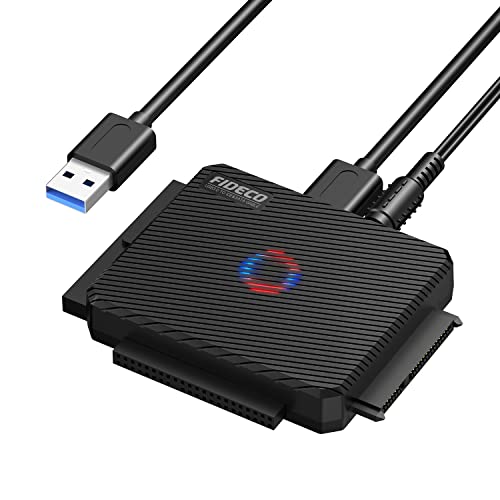
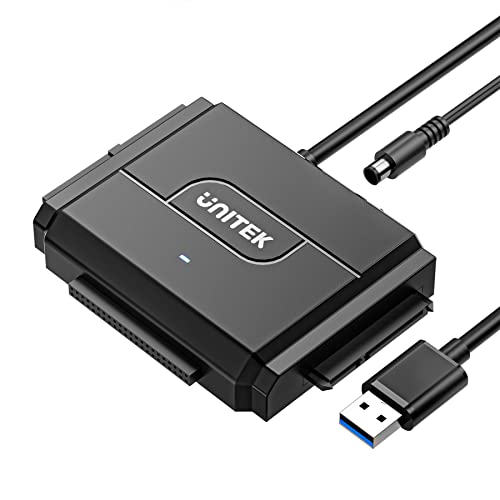
- A USB-to-IDE bridge (FIDECO, Unitek, or Vantec) on a modern PC reads the original CD-ROM and writes the CompactFlash card; a passive CF-to-IDE adapter inside the retro rig makes the CF appear as a regular IDE drive.
- Image discs to .cue/.bin (preserves data tracks) rather than .iso (loses CD-Audio tracks on multi-track discs).
- Windows 98 has no native ISO mount — copy the files or use a period virtual-CD tool.
- FAT32 caps individual files at 4 GB; multi-CD games may need splitting but most single-disc 90s titles fit fine.
- The CF approach is silent, cool, and fail-safe in a way no period mechanical drive can match.
What you'll need checklist
- A modern PC running Windows or Linux with a free USB 3.0 port.
- A SATA/IDE to USB adapter — the FIDECO 3.0 adapter, the Unitek 3.0 adapter, or the Vantec USB 2.0 adapter all work. The USB 3.0 ones image faster; USB 2.0 still works fine for one-time disc reads.
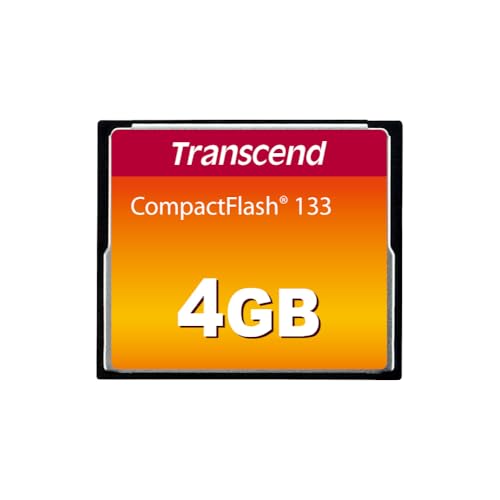
- A CompactFlash card — a Transcend CF133 4GB covers most single-disc 90s installs; larger cards (8-32GB) give room for multiple installed games. The CF133 specifically is well-tested in retro CF-to-IDE adapters.
- A CF-to-IDE adapter for the retro rig (any "DOM" or "CompactFlash IDE Reader" form factor — they're passive bridges and largely interchangeable).
- ISO/CD imaging software: ImgBurn on Windows, cdrdao on Linux. Both handle .cue/.bin imaging.
- A working CD drive (USB external is fine) attached to your modern PC to read the original discs.
Step 1: image the original disc to .cue/.bin
Drop the CD into your modern PC's CD drive (or external USB drive). Launch ImgBurn → Create image file from disc → set output format to BIN/CUE rather than ISO. The .bin file holds the raw track data; the .cue file is a small text descriptor that tells software where each track starts. For data-only discs the two formats are functionally identical; for discs with both data and audio tracks (many Sierra adventures, late-90s music games), the .iso format silently drops the audio and you'll have missing soundtrack later.
Imaging speed depends on the original drive's read speed. A modern 24x CD drive reads a full 700MB CD in under five minutes. A pre-2000 drive on a USB-IDE adapter can take 10-20 minutes. Verify the image with ImgBurn's verify pass before discarding the original disc.
Store the .bin/.cue pair somewhere persistent. Many retro hobbyists build a NAS folder of imaged discs as a personal preservation archive.
Step 2: stage the ISO onto a CompactFlash card
Insert the CompactFlash card into a CF-to-USB reader (or a CF-to-SD adapter if your modern PC has an SD slot). Format it to FAT32 — DOS and Win98 read FAT32 cleanly, and FAT32 is universally writable from modern systems.
Copy the contents of the imaged disc onto the CF card. The cleanest approach is to extract the .bin/.cue to a folder using a tool like IsoBuster or WinCDEmu, then copy the extracted files to a folder on the CF (e.g., D:\GAMES\QUAKE2_CD\). Avoid copying the raw .bin/.cue pair to the CF — Win98 can't mount it natively.
Eject the CF, install it in the retro rig's CF-to-IDE adapter, and boot Win98. The CF should appear as a new drive letter (typically D: or E:) with your game files visible.
Step 3: mount or copy on Win98 — the gotchas
Now run the installer. Many 90s installers expect a CD drive letter and will look for specific paths (D:\SETUP.EXE, D:\INSTALL.EXE). The simplest workaround: when the installer prompts for a CD path, point it at your CF folder (e.g., E:\QUAKE2_CD) instead. Most installers accept this without complaint.
If the installer hard-codes the drive letter or checks for specific CD-ROM device signatures, you have three options:
- Virtual CD tool of the era. Daemon Tools 3.x, Alcohol 120% from 2000-era versions, and a few smaller utilities can mount .bin/.cue files on Win98 and present them as real CD drives. Install one of these on the retro rig first, copy the .bin/.cue to the CF, mount it, then run the installer.
- DOS SUBST trick. Use
SUBST D: E:\QUAKE2_CDto remap the CF folder to look like drive D: temporarily. Crude but works for some installers. - Edit the install script. Less common, more involved, but some early-90s installers are shell scripts you can edit to skip CD checks.
Once installed, most games run fine from the hard drive (or CF) without the original disc inserted. A few late-90s titles do a CD-check at runtime; for those, keep the virtual CD tool mounted while playing.
Common mistakes
8.3 filename traps. Win98 supports long filenames in FAT32, but DOS-mode installers and some pre-1998 games choke on filenames longer than 8 characters plus a 3-character extension. If an installer fails mysteriously after copying files, check for long filenames and rename them.
FAT32 limits. Individual files capped at 4GB. A single-CD 90s game never exceeds this; a multi-CD title imaged into one large .bin can. Split the image or copy extracted files instead.
CF card compatibility. Some CF cards refuse to enumerate as IDE drives in older adapters. The Transcend CF133 line is well-tested for this use case; off-brand cards can be hit-or-miss. If a card isn't detected, swap it before suspecting the adapter.
Cold-boot detection. Some retro motherboards detect the CF capacity at boot only. If you swap CF cards while the machine is on, the BIOS won't pick up the new size. Always power-cycle after a swap.
Adapter compatibility table
| Adapter | USB version | Imaging speed | Boots from CF? | Notes |
|---|---|---|---|---|
| FIDECO SATA/IDE to USB 3.0 (B077N2KK27) | USB 3.0 | Fast (~150 MB/s SATA, IDE slower) | N/A (modern PC use) | Reliable, includes power brick |
| Unitek SATA/IDE to USB 3.0 (B01NAUIA6G) | USB 3.0 | Fast | N/A (modern PC use) | Slightly larger; similar reliability |
| Vantec CB-ISATAU2 USB 2.0 (B000J01I1G) | USB 2.0 | Slower but adequate | N/A (modern PC use) | Lower-bandwidth, works on older host PCs |
| Generic CF-to-IDE (any brand) | N/A | N/A | Yes — appears as IDE drive | Lives inside the retro rig |
The USB adapters live on your modern PC for the imaging step. The CF-to-IDE adapter lives in the retro rig as the boot/data drive.
Bottom line
A CompactFlash + IDE workflow is the cleanest answer to dead CD drives in retro builds. Image the disc once on a modern PC with a USB-IDE adapter, stage to CF, install on the retro rig via a CF-to-IDE adapter. The result is silent, cool, reliable storage that you can re-image in seconds if anything goes wrong. The whole pipeline costs $60-100 in parts and gives you a repeatable, drive-free retro install method that works for nearly every 90s CD-ROM game.
For deeper context, the Vogons forum is the canonical community for this kind of work, Phil's Computer Lab has video walkthroughs of similar pipelines, and WinWorld's Windows 98 Second Edition archive keeps boot media available for the retro side of the install.
Citations and sources
- Vogons — the canonical retro PC and DOS gaming community
- Phil's Computer Lab — video walkthroughs of retro install workflows
- WinWorld — Windows 98 Second Edition ISO archive
This piece is editorial synthesis based on publicly available information. No independent first-party benchmarking is reported.