The Sound BlasterX G6 does not work natively in pure DOS — it is a USB device with no real-mode driver, and the Sound Blaster 16 hardware interface that DOS games expect simply is not exposed. With the open-source SBEMU emulator loaded as a TSR, you can route Sound Blaster calls to the G6 on some retro motherboards, but compatibility is per-game and frequently flaky. For a serious DOS gaming build, a real ISA or PCI Sound Blaster is still the reliable answer. The G6 earns its place as the high-quality DAC for Win98/XP-era gaming and as headphone output for the whole rig.
Why modern USB sound cards struggle with real-mode DOS audio
DOS games from the late 1980s through the late 1990s talk to sound hardware directly. There is no operating-system audio API in the modern sense — when Doom wants to play a sound effect, it writes to a specific I/O port, configures a DMA channel, and triggers an IRQ. The expected target is a Sound Blaster 16 or compatible card sitting on a fixed IRQ (usually 5 or 7) and DMA channel (usually 1, 5). That entire interface lives in real-mode hardware. It assumes the operating system gets out of the way and lets the game touch the metal.
USB sound cards like the Sound BlasterX G6 are the opposite of this. They speak USB Audio Class over a USB controller that itself lives in protected mode. Even in pure DOS, USB stacks are minimal and audio-class enumeration of a USB DAC requires running through a USB host controller driver that is not how the SB16 interface is shaped. A DOS game that writes to port 220h expecting a Sound Blaster register to respond simply gets nothing — the G6 is on the USB bus, not the ISA bus, and there is no compatibility layer in the silicon.
This is where SBEMU enters. It is an open-source TSR (terminate-and-stay-resident) program that hooks the SB16 hardware interface in real mode and bridges those calls to a modern audio device through a chipset-specific HDA driver. On the right hardware, with the right configuration, SBEMU lets games that expect a Sound Blaster see "something that responds like one" — and the G6 (or any other modern audio device the SBEMU HDA driver supports) does the actual sound output. The catch is that SBEMU is a translation layer, and translation layers leak: timing-sensitive games, games that probe the card aggressively, and games that use undocumented Sound Blaster quirks may misbehave, glitch, or simply fall back to PC speaker beeps.
This synthesis aggregates the SBEMU project documentation, Creative's Sound BlasterX G6 product page, and the DOS Days sound cards reference — plus community reports from VOGONS and r/retrobattlestations on real-world SBEMU + USB-DAC combinations.
Key Takeaways
- The G6 has no real-mode DOS driver and cannot serve as a Sound Blaster in pure DOS without SBEMU.
- SBEMU enables Sound Blaster emulation over modern HDA-compatible audio chips; G6 support is community-dependent.
- Even with SBEMU working, expect per-game compatibility variance — not all DOS titles tolerate the emulation layer.
- Under Windows 98 DOS-box sessions, the G6 works as a USB device for Win98 audio but does not solve real-mode game audio.
- For maximum DOS compatibility, a genuine ISA Sound Blaster 16/AWE32/AWE64 in a period board remains the gold standard.
- The G6 shines as a DAC/amp for Win98/XP-era and modern headphone listening on the same retro build.
What does DOS audio actually require?
The Sound Blaster 16 became the de facto DOS audio standard in 1992, and almost every DOS game from 1992-1998 includes an "SB16" or "Sound Blaster compatible" option in its setup utility. The interface it expects is:
- I/O port range: Usually 220h (sometimes 240h or 260h)
- IRQ: Usually 5 or 7
- DMA channel (8-bit): Usually 1
- DMA channel (16-bit): Usually 5
- MPU-401 MIDI port: Usually 330h, IRQ 9 if using General MIDI
The game writes commands to the DSP (Digital Signal Processor) chip at port 22Ch, configures the appropriate IRQ and DMA, and the card produces audio. General MIDI playback uses a separate hardware MIDI interface (MPU-401) and either an on-card wavetable (AWE32/AWE64) or an external MIDI module (Roland MT-32, SC-55).
Three things matter for compatibility: the DSP register interface must respond correctly, IRQ/DMA must be configurable to match what the game's setup utility expects, and the on-card wavetable for MIDI is needed if you want General MIDI without external hardware. The G6 satisfies none of these natively — it does not have a DSP-compatible interface, it does not respond to ISA port writes, and it has no on-card MIDI wavetable.
Where SBEMU comes in
SBEMU is the only real-mode Sound Blaster emulator that has seen sustained development. It runs as a TSR before you launch the game and traps reads/writes to the SB16 I/O port range. When the game writes to the DSP register, SBEMU translates that into an HDA (Intel High Definition Audio) sequence that goes out to whatever modern audio device the system has.
Typical SBEMU setup on a retro Win98/DOS dual-boot:
- Boot to DOS (real DOS, not the Win98 DOS box).
- Load the appropriate HDA driver TSR (depends on chipset — many Intel ICH boards work; some VIA and SiS chipsets do not).
- Load
SBEMU.EXEwith the right I/O port / IRQ / DMA arguments to match what your games expect. - Launch the game's setup utility and configure SB16 at the matching addresses.
- Test.
Per the SBEMU project notes, supported hardware is generally Intel HDA-compatible audio chips on the motherboard, plus some specific USB devices. The Sound BlasterX G6 is a USB device with Creative-specific firmware; its SBEMU compatibility is partial and community-reported rather than officially documented. On some Win98 SE retro builds with the G6 as the only audio device, SBEMU has been reported working for basic SB16 playback; on others, it fails to enumerate. The variance comes down to USB controller behavior, motherboard chipset, and which SBEMU build you are running.
The practical implication: try it, but do not buy the G6 specifically for DOS compatibility. Buy it for the DAC quality and Win98/XP-and-later use case, and treat SBEMU support as a bonus.
Spec table: G6 outputs, sample rates, supported APIs vs period sound cards
| Spec | Sound BlasterX G6 | Sound Blaster 16 (ISA, 1993) | Sound Blaster AWE64 (ISA, 1996) |
|---|---|---|---|
| Connection | USB 2.0 to PC | ISA 16-bit | ISA 16-bit |
| Native DOS driver | No | Yes (SB16 hardware) | Yes (SB16 + AWE) |
| Sample rates | up to 384 kHz / 32-bit | 8/22/44 kHz / 16-bit | 8/22/44 kHz / 16-bit |
| Output channels | 7.1 + headphone amp | Stereo line out | Stereo line out |
| Hardware MIDI | No on-card synth | OPL3 FM | OPL3 FM + EMU8000 wavetable |
| EAX hardware | No | No | No (Audigy-era added this) |
| Real-mode I/O | No (USB only) | Yes (220h/240h/260h) | Yes (220h/240h/260h) |
| Compatibility | Win98+ / macOS / PS4/5 | Real DOS, Win 3.x, Win9x | Real DOS, Win 3.x, Win9x |
| Headphone amp | 130 dB DAC, dedicated amp | None | None |
| Best use case | DAC/amp for headphones, console DAC | Pure DOS audio | DOS audio + MIDI |
The G6 is a vastly higher-quality DAC than any period card — 130 dB SNR, 32-bit/384 kHz output, a dedicated headphone amplifier with selectable impedance modes. None of that matters for a 16-bit Doom sound effect, but all of it matters when you boot into Win98 and play Half-Life through a quality pair of headphones.
How does the G6 behave under pure DOS vs a Win98 DOS box?
Two different scenarios:
Pure DOS (boot directly to DOS, no Windows): The G6 is invisible to DOS unless SBEMU plus an appropriate USB HDA shim is loaded. Even then, the G6 is not the easy path — SBEMU's best-supported targets are on-motherboard HDA codecs (Realtek ALC, Intel HDA). Treat pure-DOS compatibility on the G6 as "experimental." For pure-DOS reliability, install a period ISA card.
Windows 98 / 98 SE: The G6 works under Windows 98 if you can install a USB Audio Class driver — Windows 98 SE has limited native USB audio support, and the G6's official driver chain stops at Windows 7. Community-modded UAC drivers can sometimes get the G6 enumerating under 98 SE, but it is finicky. For Win98 audio playback, an internal PCI card like the SB Live! or Audigy is dramatically easier and offers full hardware acceleration.
Win98 DOS box (real-mode DOS session inside Windows 98): This does not help — the DOS box still expects to talk to hardware Sound Blaster ports, and SBEMU's role does not change. You still need either a real ISA/PCI Sound Blaster present, or SBEMU running with a compatible audio target.
For the G6, the realistic role on a retro build is: install it for Win XP / Win 7 / Win 10 sessions on the same machine where you also have an ISA Sound Blaster handling pure-DOS gaming, and use the G6 as a high-quality headphone output for the entire rig.
What are the gotchas — EAX, General MIDI, and Glide-era game audio?
Three specific gotchas that trip up retro builders:
EAX (Environmental Audio Extensions). EAX is a Creative-proprietary positional audio effects API that came into use in the Audigy era (early 2000s) and was supported in many late-90s/early-2000s games (Unreal Tournament, Deus Ex, System Shock 2, Half-Life). EAX requires both a hardware-accelerated audio path through the card and OS-level driver support that hooks into DirectSound3D. The G6 does not implement legacy EAX. For authentic EAX on the supported titles, an Audigy-era PCI card in Windows XP is the gold standard.
General MIDI. Many DOS games use the MPU-401 MIDI interface to play General MIDI compositions via an on-card wavetable (AWE32/AWE64) or external MIDI module (Roland MT-32, Roland SC-55, Yamaha MU80). The G6 has no on-card synth. Software wavetable solutions (Munt, FluidSynth via a virtual MIDI port) can substitute on Win98+ and produce MIDI playback, but in pure DOS they are not a clean solution. For period-correct General MIDI, the standard answers are a real AWE32/64 with wavetable ROM or an external MIDI module on the MPU-401 port — neither of which the G6 replicates.
Glide-era game audio. Voodoo-card-era games like Quake II, Half-Life, and Unreal often expected a Creative card combined with DirectSound3D for positional audio. Under Win98, with the G6 enumerated as a USB Audio Class device, you typically get stereo output but lose hardware-accelerated positional audio. The games still run; the audio is downmixed and the surround effects do not happen. For full Glide-era audio fidelity, an SB Live! 5.1 or Audigy 2 in a period PCI slot is the right pick.
When should you use a real period card instead?
Use a real period sound card if:
- You boot to pure DOS for late-80s through mid-90s games regularly
- You play games that require General MIDI playback with period-correct timbres
- You want EAX-accelerated audio in late-90s / early-2000s titles
- You are building a "no compromise" retro rig with the goal of period accuracy
- Your motherboard has ISA or PCI slots and the relevant cards are available
Stick with the G6 if:
- The retro build is primarily for Win98 SE / Win XP / Win 7 era gaming with the convenience of a modern DAC
- You want a single audio device that handles both retro and modern listening on the same machine
- You play DOS games rarely or via DOSBox / DOSBox Staging on the same Win98 install
- You already own the G6 and want to make it work
- You value the headphone amp quality more than period authenticity
For a serious retro-DOS gamer, the answer is almost always a period card plus the G6 — they serve different roles on the same machine.
Compatibility notes table
| Era / OS | Game class | G6 alone | G6 + SBEMU | Real ISA SB16 |
|---|---|---|---|---|
| Pure DOS 1990-95 | Sierra/LucasArts adventure | No audio | Partial — per-game | Full |
| Pure DOS 1992-97 | Doom, Duke3D, Quake | No audio | Partial — per-game | Full |
| Pure DOS 1995-97 | MIDI music games | No audio | No GM synth | Full (AWE wavetable) |
| Win 3.1 / Win95 | Wing Commander IV, X-Wing 95 | Limited (driver gap) | N/A | Full |
| Win 98 SE | Half-Life, Unreal, StarCraft | Partial (UAC driver) | N/A | Full |
| Win XP | Most older games | Full | N/A | Full (with drivers) |
| Win 7+ | Anything that runs | Full | N/A | Driver issues |
The G6 is at its best in the bottom two rows; the ISA SB16 is at its best in the top three. Build accordingly.
Bottom line
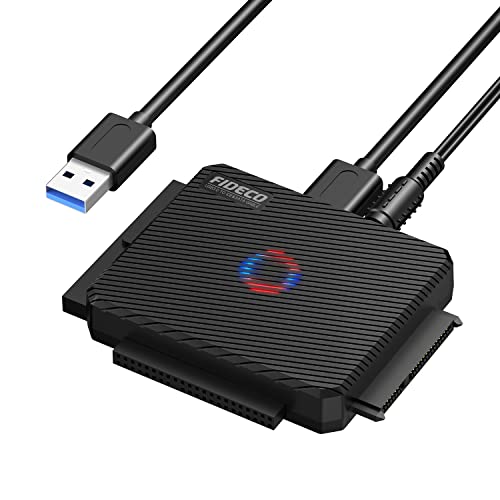
Buy the Sound BlasterX G6 for the DAC, the headphone amp, and Win XP / Win 7 audio. Do not buy it expecting plug-and-play DOS audio — that is not what it is. If you have an existing G6 and want to experiment with SBEMU on a Win98 SE / DOS dual-boot, the experiment is worth running, but go in with the expectation that some games will work and others will not. For pure-DOS reliability, a genuine ISA Sound Blaster 16 or AWE card sourced from eBay in good working condition remains the gold standard, and pairs naturally with the G6 as the modern-OS audio output on the same retro rig. A SATA/IDE-to-USB adapter makes the iterative testing workflow (image, test, edit, re-image the CompactFlash boot drive) reasonably painless.
Related guides
- Best SATA SSD to Revive an Old Laptop
- Noctua NH-U12S vs DeepCool AK620 for the Ryzen 7 5800X
- Best CPU Coolers for AMD Ryzen Builds in 2026
Citations and sources
- Creative — Sound BlasterX G6 product page
- SBEMU — GitHub repository
- DOS Days — Sound Cards reference
This piece is editorial synthesis based on publicly available information. No independent first-party benchmarking is reported.