In brief — 2026-07-02 · The open-source NVK Vulkan driver in Mesa is gaining DLSS support, closing one of the last big gaps between the open Linux graphics stack and NVIDIA's proprietary blob. For RTX 3060 12GB owners on Linux, that means DLSS upscaling should work through a fully open userspace driver as the feature lands across upcoming Mesa releases.
What happened
The NVK driver — the open-source Vulkan implementation for NVIDIA GPUs developed inside Mesa — has been adding support for DLSS (Deep Learning Super Sampling), NVIDIA's tensor-core-powered AI upscaler. NVK sits alongside the Mesa project's other open Vulkan drivers (RADV for AMD, ANV for Intel) and uses the open GPU kernel modules NVIDIA publishes. It has been production-ready for many titles for the last year; DLSS support was one of the more visible gaps still separating it from the proprietary blob.
Progress on DLSS integration is being tracked publicly across Mesa merge requests, kernel patches, and community forums, with Phoronix and other Linux-focused outlets — see phoronix.com — reporting on the milestone as patches land. As with any Mesa feature, the exact version of Mesa, the kernel, and the game or engine's Vulkan interface all determine whether DLSS is available in practice today or only on a bleeding-edge branch.
We're synthesizing public reporting and the Mesa NVK documentation here rather than benchmarking DLSS on NVK ourselves. Anyone running Linux on an RTX card who wants to enable this today should check their distribution's Mesa package version, the NVK-specific notes, and the specific game's Vulkan renderer path.
What is NVK and how is it different from the proprietary driver?
NVIDIA's Linux driver has long shipped as a proprietary kernel module and userspace stack, distributed as a monolithic binary or an out-of-tree kernel module. It has been the most feature-complete option for NVIDIA on Linux since the beginning, but it lives outside the mainline kernel and outside the Mesa userspace graphics stack that AMD and Intel GPUs use.
NVK is the alternative: a Vulkan userspace driver for NVIDIA hardware developed as part of Mesa, sitting on top of NVIDIA's open kernel modules (the open GPU kernel modules NVIDIA started publishing in 2022 for Turing and newer). It benefits from the same mainline kernel integration, the same Mesa infrastructure, and the same distro-packaging path as RADV and ANV. That matters for a lot of small reasons that add up: cleaner integration with Wayland compositors, easier debugging, faster upstream fixes, no separate installer step, no version-mismatch risk between kernel and userspace, and long-term maintainability that doesn't depend on NVIDIA continuing to ship a proprietary binary.
The tradeoff, historically, has been feature coverage. The proprietary driver has had DLSS, RTX ray-tracing acceleration, CUDA, PhysX, and G-SYNC support that took years to arrive (or hasn't yet arrived) in the open stack. Each of those gaps closing shifts the balance a little bit further toward NVK being the default choice for Linux gamers on NVIDIA hardware.
Why it matters for RTX 3060 owners on Linux
DLSS is the marquee feature that turns midrange RTX cards into genuinely capable 1440p and even 4K performers in modern titles. On the RTX 3060 12GB — the 2021 Ampere card that remains the value entry into RTX — DLSS Quality mode typically nets +40-80% frame-rate uplift at 1440p in supported games versus native rendering at the same target resolution. That's the difference between a 3060 hitting 60 FPS in a demanding title and a 3060 hitting 45.
Until now, getting DLSS on Linux meant staying on the proprietary driver stack. For enthusiasts happy with that, no complaint. For users on rolling-release or open-first distributions (Arch, Fedora, openSUSE Tumbleweed, NixOS) where the proprietary driver is a well-known source of friction — signature issues, kernel-module rebuild races, Wayland compositor incompatibilities — NVK gaining DLSS is a meaningful change. It moves DLSS off the only-proprietary island and into the mainline open graphics stack the rest of the desktop already uses.
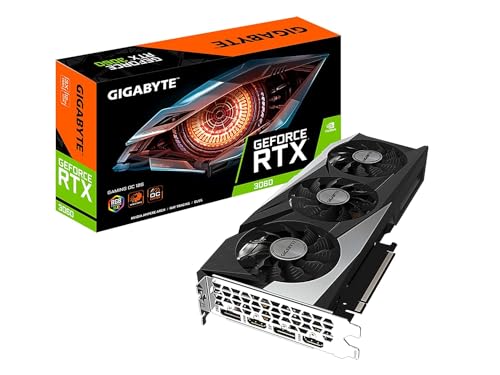
For MSI Ventus 2X 12G and Gigabyte Gaming OC 12G 3060 owners specifically — which is who this news squarely affects — the story is: keep your card, keep your Linux install, and expect a smoother DLSS path as Mesa releases catch up. The 3060 has the tensor cores DLSS needs, and it is well within the tier where DLSS uplift is most useful.
Which cards benefit most?
DLSS runs on the tensor cores present in RTX-series GPUs. On the practical Linux-gaming shelf that means:
| Card | Tensor cores | DLSS 2/3 support | Primary DLSS use case |
|---|---|---|---|
| RTX 3060 12GB | 112 (Gen 3) | DLSS 2 broad, DLSS 3 partial | 1440p uplift to 60+ FPS |
| RTX 3060 Ti / 3070 | 152-184 (Gen 3) | Same | 1440p high refresh |
| RTX 3080 / 3090 | 272-328 (Gen 3) | Same | 4K native + DLSS |
| RTX 4060 / 4070 | 96-184 (Gen 4) | Full DLSS 3, frame gen | Same tier, more efficient |
| RTX 4080 / 4090 | 304-512 (Gen 4) | Full DLSS 3 | 4K max settings + frame gen |
| RTX 5000-series | Gen 5 tensor | DLSS 3.5+ / new features | Latest features |
| GTX 10-series and older | none | not supported | out of scope |
The 3060 12GB gains the most in relative terms because it is the tier that most needs the uplift. A 4090 doesn't strictly need DLSS to hit 60 FPS at 1440p in most current titles. A 3060 often does.
What to check before switching to NVK
If you're considering moving your gaming rig from the proprietary driver to NVK-first specifically to use DLSS through the open stack, verify each of the following against the current state as of your read date, since Mesa moves quickly:
- Mesa version. DLSS support in NVK ships in specific Mesa release branches. Check what your distro packages and, if needed, use a testing repo or PPA for the newer branch.
- Kernel version. NVK depends on the open GPU kernel modules. On some distros those are packaged; on others you install them separately.
- Card generation. Turing (RTX 20-series) and newer are supported by the open kernel modules; earlier cards are not.
- Specific title support. DLSS integration in games ships through the Vulkan Video and NVIDIA Streamline paths — support in NVK doesn't automatically mean every DLSS-enabled game works.
- Wayland vs X. NVK plays best with Wayland; X.org paths may lag slightly on some features.
- Steam/Proton compatibility. Verify the Proton branch you use exposes DLSS via NVK; ProtonUp-Qt and community Proton builds tend to lead here.
Common questions from Linux gamers this week
"Do I need to reinstall Linux to try NVK with DLSS?" No. NVK is a Mesa driver — install the appropriate Mesa version and it becomes selectable alongside the proprietary driver. Distro switching depends on how bleeding-edge you want to be.
"Will DLSS 3 frame generation work on my 3060 via NVK?" DLSS 3 frame generation is officially Ada (40-series) and newer, tensor-core-generation-dependent. The 3060 gets DLSS 2 upscaling either way; frame generation is a separate concern.
"Is NVK ready for daily gaming?" In 2026, yes for most titles. The DLSS milestone closes one of the last commonly-cited gaps. Feature coverage vs the proprietary driver still isn't 100%; test your specific games before committing.
"Should I disable the proprietary driver first?" You can keep both installed on most distros and select between them per session. Disable one only if you're troubleshooting a conflict.
"Does this affect CUDA workloads?" No. CUDA still requires the proprietary NVIDIA userspace. NVK is a Vulkan graphics driver; if you're running local AI inference alongside gaming, you'll still lean on NVIDIA's stack for CUDA.
Common pitfalls when moving to NVK
- Version-mismatched Mesa + kernel. Mesa expects a matching version of the open GPU kernel modules. Read your distro's release notes.
- Forgetting to switch renderer paths. Some games or launchers pin the renderer to the proprietary Vulkan path; explicitly select NVK when possible.
- Assuming DLSS is on by default. In-game DLSS toggles are separate from the driver-level support — enable it in each title's settings.
- Expecting parity with proprietary on day one. Mesa merges land continuously; you may want to hold off if you play a specific title on the day the merge lands.
- Wayland compositor version. Some compositors ship features that NVK exercises heavily — an old compositor build can introduce artifacts unrelated to the driver itself.
How DLSS actually works, in one paragraph for context
DLSS renders the game at a lower internal resolution (say 960×540 or 1707×960 for "Performance" and "Quality" 1440p targets, respectively) and uses a trained neural network on the RTX card's tensor cores to reconstruct a full-resolution frame. Because it starts from a smaller frame, GPU shader load drops sharply — that's where the frame-rate uplift comes from. The reconstruction network runs on tensor cores rather than shader cores, so it uses hardware that would otherwise sit idle in traditional rendering. That is why DLSS is nearly-free to apply on RTX cards but impossible on GTX cards that lack tensor hardware. The specific NVK integration adds the plumbing to expose the tensor-core path through the open Vulkan userspace, so games that support DLSS via the standard NVIDIA integration path can request it and get it, on an open driver.
What this milestone doesn't do
- It doesn't give GTX 10-series cards DLSS. They lack the tensor cores; this is a driver-level change, not a hardware one.
- It doesn't enable DLSS 3 frame generation on 30-series. Frame generation remains an Ada-and-newer feature at the hardware+driver level.
- It doesn't automatically enable DLSS in every game. Per-title support depends on the game's own Vulkan renderer, its DLSS SDK integration, and any launcher-side flags.
- It doesn't replace the proprietary driver for CUDA or professional workloads. NVK is a graphics driver; compute stays on NVIDIA's stack.
- It doesn't fix every long-standing Wayland-on-NVIDIA papercut. Explicit sync, HDR, and various compositor edge cases continue to improve independently of DLSS.
That said, closing the DLSS gap is the kind of milestone that meaningfully changes what Linux gamers on NVIDIA hardware can recommend to new users. "Get a 3060 12GB, install a modern distro, enable NVK, turn on DLSS in your games" is a viable four-step build for 2026 in a way it wasn't a year ago.
When to stay on the proprietary driver
If you rely on features NVK doesn't yet cover — specific CUDA integration in a game (rare), the very latest DLSS 3.5+ frame-gen features (Ada+ only), or vendor-provided optimizations for a specific title you care about — stick with the proprietary blob for now. You can revisit as Mesa releases add the missing pieces. Enterprise users under strict driver-support contracts also often need to stay on the vendor stack.
When to switch to NVK
If you're on a rolling-release distro, if the proprietary driver has ever caused you a Wayland compositor issue, if you care about long-term open-stack maintainability, or if you want to run the same graphics stack across your NVIDIA and AMD systems, this is a good time to move. NVK is production-quality for most gaming titles, and DLSS closing means the day-to-day feature gap on Linux is much narrower than it was a year ago.
Bottom line
The NVK Vulkan driver adding DLSS is a Linux-gaming milestone with real impact for RTX 3060 12GB owners on the MSI Ventus 2X 12G or Gigabyte Gaming OC 12G. The tensor cores that make DLSS possible have always been in the card; what changes is that Linux users no longer have to choose between the open-source graphics stack and DLSS-tier upscaling. Check your Mesa version, verify per-title support, and expect the open path to keep closing the gap release by release.
Related guides
- Best GPU for 1440p Local Image Generation in 2026
- Open WebUI + Ollama on an RTX 3060: The Self-Hosted ChatGPT Alternative
- Reve 2.0 vs Local Image Gen on an RTX 3060
Citations and sources
This piece is editorial synthesis based on publicly available information. No independent first-party benchmarking is reported.