Prices may vary; verify the current price on the listing before buying. Prices in this article were checked 2026-05-26.
The best 4K gaming monitor under $500 in 2026 is the SANSUI 27" 4K — it pairs a high-refresh UHD panel with the ports and response times that make 4K gaming actually playable, at a price that used to buy a 1440p screen. If you want HDR that pops, the KOORUI 27" 4K QD-Mini LED is the value pick; competitive players are better served by a 1440p high-refresh panel like the ASUS TUF 27" 2K.
The $500 4K-gaming threshold finally crossed
For years, "4K gaming monitor" meant $700 and up, and anything cheaper came with compromises severe enough to send buyers back to 1440p. That has changed. As of 2026, the sub-$500 tier ships the same IPS panels — frequently from LG and Innolux — that lived in $800 monitors a year or two earlier. Per RTINGS and Tom's Hardware, the panel-quality gap between a $500 monitor and an $800 flagship has collapsed; what you give up now is HDR peak brightness, factory color calibration, and premium warranty support — not raw gaming performance.
That matters because it reshapes the buying decision. A few years ago the honest advice was "buy 1440p high-refresh unless you have $700+." Today, if you play story-driven and AAA single-player games, a $500 4K panel is a genuinely good choice, and a mid-range GPU with DLSS or FSR can drive it. This guide picks five monitors that clear the $500 bar, explains who each one is for, and closes with the spec checklist that separates a good 4K gaming panel from a frustrating one. Every pick is editorial synthesis from public reviews and manufacturer specs — no first-party lab testing is claimed.
Comparison at a glance
| Pick | Best for | Key spec | Price range | Verdict |
|---|---|---|---|---|
| SANSUI 27" 4K | Best overall | 4K, high refresh, HDMI 2.1 | ~$280 | Most 4K for the money |
| KOORUI 27" 4K QD-Mini LED | Best value HDR | QD-Mini LED, ~1000 nits | ~$500 | Best HDR under $500 |
| ASUS TUF 27" 2K HDR | Competitive players | 1440p high-refresh | ~$279 | Refresh over resolution |
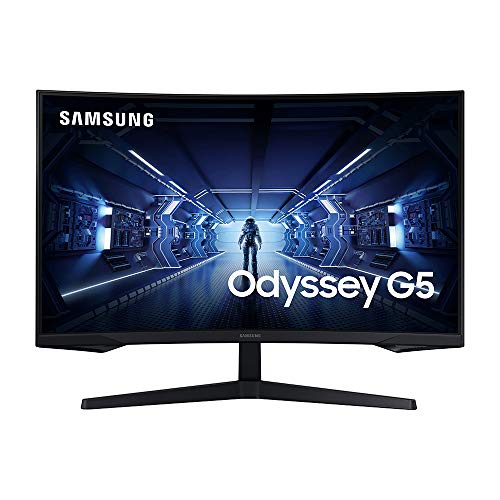
| Samsung 32" Odyssey G5 | Best big-screen | 32" WQHD curved | ~$279 | Immersion on a budget |
| SANSUI 27" 4K (entry) | Budget 4K | 4K base config | ~$280 | Cheapest real 4K |
Top picks
Best Overall: SANSUI 27" 4K Gaming Monitor
The SANSUI 27" 4K is the monitor that proves the thesis of this guide: real 4K gaming for the price of a midrange 1440p panel. At roughly $280 it delivers a 27-inch UHD panel with high-refresh support and at least one HDMI 2.1 port — the spec that matters for driving 4K above 60Hz from current GPUs and consoles.
What you get: crisp 163-PPI sharpness that makes text and game UI razor-clean, wide-gamut color that looks excellent in SDR, and response times quick enough that motion blur is not a problem in fast games. What you do not get at this price: reference-grade factory calibration or class-leading HDR brightness. For the overwhelming majority of buyers who want a sharp, fast, big 4K panel without the flagship tax, this is the pick.
Pros: outstanding 4K-per-dollar; HDMI 2.1; high refresh. Cons: modest HDR; basic stand. Pair it with a GPU that can use DLSS/FSR at 4K and it sings.
Best Value HDR: KOORUI 27" 4K QD-Mini LED
If HDR matters to you, spend up to the KOORUI 27" 4K QD-Mini LED at around $500 — the top of this guide's budget and the only pick here with genuinely good HDR. QD-Mini LED combines a quantum-dot color layer with a backlight split into hundreds of independently-dimmed zones, hitting peak brightness near 1000 nits and meaningfully better local contrast than a standard edge-lit IPS panel.
In practice that means HDR games and movies show real highlight punch and deep, controlled blacks instead of the washed-out "HDR400" experience common at this price. The quantum-dot layer also widens the color gamut, so SDR content looks richer too. This is the monitor for the buyer who watches HDR content and plays HDR-enabled games and refuses to settle for fake HDR. The HDR1000 certification is the easy filter — it is the spec that separates real HDR from a marketing checkbox.
Pros: real ~1000-nit HDR; quantum-dot color; strong contrast. Cons: at the top of the budget; HDR benefit is smaller for pure SDR play.
Best for Competitive Players: ASUS TUF Gaming 27" 2K HDR
Here is the contrarian pick: if you play competitive shooters — Valorant, CS2, Apex — buy the ASUS TUF Gaming 27" 2K HDR instead of a 4K panel. At around $279 it is a 1440p high-refresh monitor, and for competitive play refresh rate beats pixel count every time. A higher frame rate at 1440p sharpens aim and reduces motion blur in ways that 4K's extra pixels simply cannot match when the clock is the enemy.
The ASUS TUF line is built for this: fast pixel response, high refresh, and ASUS's overdrive tuning that keeps ghosting in check. A 1440p panel is also far easier to drive — even a mid-range GPU sustains very high frame rates at 2K, where 4K would force you to choose between settings and smoothness. If your priority is winning ranked matches rather than admiring scenery, this is the right monitor in this price band.
Pros: high refresh; easy to drive; competitive-tuned. Cons: not 4K — sharpness takes a back seat to speed.
Best Performance / Big Screen: Samsung 32" Odyssey G5
The Samsung 32" Odyssey G5 brings size and immersion to the budget tier. At around $279 it is a 32-inch curved WQHD panel — the curve and the larger diagonal pull you into the game in a way a flat 27-inch screen cannot, and Samsung's panel tuning delivers strong contrast for the money.
WQHD on a 32-inch panel lands at a comfortable pixel density that does not demand a flagship GPU, and the Odyssey line's high refresh and quick response make it a capable all-rounder for AAA gaming, racing, and flight sims where immersion matters most. It is the pick for buyers who weight screen real estate and the wraparound feel over outright 4K sharpness.
Pros: 32" curved immersion; strong contrast; easy to drive. Cons: WQHD, not 4K; curve is divisive for productivity.
Budget Pick: SANSUI 27" 4K (entry configuration)
The cheapest way into real 4K is the entry configuration of the SANSUI 27" 4K, around $280. It is the same sharp UHD panel as the Best Overall pick in its base trim — you sacrifice a little on refresh ceiling or extra features depending on the exact SKU, but the core 4K experience is intact. For a buyer who wants maximum sharpness for desktop work and single-player gaming on the tightest budget, this is the floor of credible 4K in 2026.
Pros: cheapest genuine 4K; great for mixed work-and-play. Cons: entry trim trims features; basic HDR.
What to look for in a 4K gaming monitor
Panel type
IPS is the default for gaming 4K at this price — wide viewing angles, accurate color, and response times that have caught up to the point where motion blur is a non-issue. VA panels (like some Odyssey models) trade viewing angles for deeper contrast. Avoid TN at this price; its color and angles are not worth the marginal speed.
Refresh rate
For 4K, anything above 60Hz is a bonus that requires HDMI 2.1 or DisplayPort 1.4 with DSC to reach. High-refresh 4K is glorious but demands a strong GPU. If your card cannot push high frame rates at 4K, prioritize a panel that does 4K 60Hz cleanly over one that advertises 144Hz you will never hit.
HDR
Most sub-$500 monitors carry HDR400, which is barely better than SDR. Real HDR starts at HDR1000 with local dimming — which is why the KOORUI QD-Mini LED is the HDR pick here. If HDR is a priority, do not settle for an HDR400 badge.
Response time
Look for gray-to-gray response in the low single-digit milliseconds with a usable overdrive setting. Per DisplaySpecifications, advertised response times are best-case; reviews that measure overdrive behavior are the reliable guide. All the picks here are quick enough for fast-paced gaming.
Ports
Per DisplaySpecifications, confirm at least one HDMI 2.1 port if you game on a PS5 or Xbox Series X — it is required for 4K 120Hz on console. For PC, DisplayPort 1.4 with DSC handles 4K 144Hz on current GPUs. Older HDMI 2.0 caps you at 4K 60Hz unless you accept chroma subsampling, which hurts text clarity.
How these picks were chosen
This guide synthesizes public review data and manufacturer specs rather than first-party lab testing. The selection criteria, in priority order: panel quality and sharpness at the price, refresh and response adequate for fast games, port selection that supports the resolutions and refresh rates advertised, and honest HDR (real local dimming counts; HDR400 badges do not). Per RTINGS and Tom's Hardware, the most reliable signal at this price is measured response-time and contrast data, not spec-sheet marketing.
One reality to internalize: the panel lottery is real at the budget tier. Brands like SANSUI and KOORUI source panels from multiple suppliers, so two units of the same model can differ slightly in backlight uniformity and color. The mitigation is buying from a retailer with a frictionless return policy and checking your unit for backlight bleed and dead pixels in the first week. This is the genuine cost of $500 4K — not worse gaming performance, but more variance in build quality and support than an $800 flagship.
A note on GPU pairing: native 4K at high settings demands a capable card. Per public game benchmarks, AAA titles at 4K Ultra want at least an RTX 4070 Ti, RX 7800 XT, or RTX 5070 to hold 60fps without upscaling, while mid-range cards (RTX 4060 Ti 16GB, RX 7700 XT) reach 4K 60fps with DLSS Performance or FSR Quality. Esports titles run far higher. Buy the monitor for the games you play and the GPU you own — a 4K panel paired with an underpowered GPU forces you to upscale aggressively or drop settings, which undercuts the sharpness you paid for.
Bottom line
For most buyers, the SANSUI 27" 4K is the best 4K gaming monitor under $500 in 2026 — the most 4K-per-dollar on the market. Step up to the KOORUI QD-Mini LED if real HDR matters, drop to the ASUS TUF 2K if you play competitive shooters and value refresh over resolution, and consider the Samsung Odyssey G5 if big-screen immersion is your priority. The era of 4K gaming costing $700 is over; pick the panel that matches how you actually play.
Related guides
- Best 4K gaming monitors under $600 in 2026
- Best 27-inch 1440p monitor for Ryzen 7 5800X esports
- Best 1440p gaming monitor under $400
- Best gaming monitor for console and PC dual use
Citations and sources
- RTINGS — best 4K gaming monitors
- Tom's Hardware — best 4K gaming monitors
- DisplaySpecifications — monitor spec database
This piece is editorial synthesis based on publicly available information. No independent first-party benchmarking is reported.
— Mike Perry