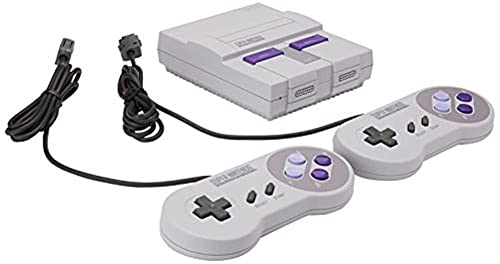
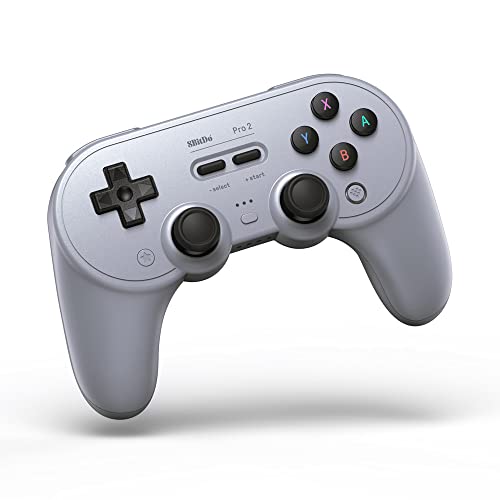
The SNES Classic is the better pick if you want to sit down tonight, plug in an HDMI cable, and play Super Metroid on the couch without touching a keyboard. A Raspberry Pi 4 8GB RetroPie build is the better pick if you want one box that runs your entire legally-owned library across NES, SNES, Genesis, Game Boy, PS1, N64, arcade, and up through early Dreamcast titles — plus save states, shaders, achievements, and any controller you already own. Between them, the Sega Genesis Mini and an 8BitDo Pro 2 controller both change the answer at the edges.
Convenience vs flexibility, decided in 90 seconds
Retro gaming in 2026 sits on either side of a philosophical split. On one side: official mini consoles — the SNES Classic, the Genesis Mini, the NES Classic, the PC Engine Mini. Nintendo, Sega, or Konami curates a library, ships bundled controllers, and hands you a sealed HDMI box that boots into a menu in five seconds and never needs updates. On the other side: DIY emulation platforms — a Raspberry Pi 4, a copy of RetroPie or Batocera, a fast microSD card, your own library of legally acquired ROMs, and whatever controllers you already own from a decade of console generations.
Both are legitimate. Both give you the games back. The right one is whichever matches your patience for setup and your appetite for scope. If you have 15 minutes and $200, the SNES Classic hands you 21 canonical SNES games in near-mint HDMI at 60 Hz. If you have an evening and $150, a Pi 4 hands you 8,000+ ROMs across 20+ systems — but only if you are willing to configure it. This piece walks through both paths honestly, including the tradeoffs each side hides in the marketing.
Prices reflect current 2026 availability. The SNES Classic is out of production and sells used on eBay for $180-$220. The Genesis Mini sees regular re-runs and hovers at $80-$100 new. A Pi 4 8GB with case, power supply, microSD, and controller runs $150-$180 depending on the extras.
Key takeaways
- SNES Classic wins on time-to-play. Boot to first game: under 10 seconds. Setup total: unbox, plug in, done.
- Pi 4 RetroPie wins on scope. Any legally owned ROM, any system through late 90s, any controller.
- The Genesis Mini is a strong alternative if you want a curated experience but did not grow up on Nintendo. 42 pre-installed Genesis games; the SNES Classic ships with 21.
- Controller compatibility is where the Pi 4 quietly pulls away. An 8BitDo Pro 2 works across every system on RetroPie; each mini console is locked to its bundled pads or brand-family accessories.
- Neither is a great cost saver over a Nintendo Switch Online sub if you only want to play a few Nintendo classics. Both make sense as one-time-purchase, offline, forever-yours plays instead.
- Upscaling matters. The SNES Classic outputs 720p with a decent internal filter. RetroPie plus a Pi 4 can push CRT shaders, integer scaling, and 1080p or 4K output that look far more authentic on a modern TV.
Step 0: do you want curated plug-and-play or a tinker-friendly open box?
Answer this before spending any money. The question is not "which is technically better" — it is "which do you want to own." Ask yourself:
- Are you excited about the setup? If yes: Pi 4. If no: mini console.
- Do you want to play more than one console generation on this box? If yes: Pi 4. If no: whichever mini matches your childhood.
- Do you already own a decent Bluetooth or USB controller you like? If yes: the Pi 4's flexibility rewards you. If no: the mini's bundled pad is one less purchase.
- Is this for a shelf where kids or non-tech-savvy family will use it too? Mini console. It is impossible to break.
- Do you want save states, screenshots, achievements, cheats, shader packs, or any modern QoL? Pi 4. Minis have none of this.
If you answered "mini console" to most, go to the SNES Classic section and skip the rest. If you answered "Pi 4" to most, read the Pi section carefully — most disappointments with RetroPie come from underestimating storage and controller setup.
What does the SNES Classic do well out of the box?
Nintendo shipped the SNES Classic with a specific promise: it is the SNES you remember, in HDMI, with 21 games chosen by their retro team. That promise holds up.
You get: Super Metroid, The Legend of Zelda: A Link to the Past, Super Mario World, Super Mario Kart, Super Mario World 2: Yoshi's Island, Donkey Kong Country, F-Zero, Street Fighter II Turbo, Kirby Super Star, Kirby's Dream Course, Star Fox, Star Fox 2 (unreleased at launch, included here), Contra III, Mega Man X, Secret of Mana, Final Fantasy III (VI in Japan), Super Punch-Out!!, EarthBound, Super Ghouls 'n Ghosts, and Super Castlevania IV. That is more first-tier SNES titles than most people played as kids.
The bundled controllers are full-size SNES pads with slightly shortened cables. The system upscales to 720p over HDMI. There is a save-state feature (Nintendo calls them "suspend points") that lets you snapshot mid-game. That is the entire feature list. It boots in five seconds and there are no updates, no accounts, no logins.
Two honest tradeoffs. The cables on the bundled controllers are shorter than the original 6-foot NES/SNES cables — annoying for couch play. And Nintendo stopped producing the unit in 2019, so used-market pricing is climbing.
What does a Raspberry Pi 4 RetroPie build add (systems, storage, controllers)?
A Raspberry Pi 4 8GB running RetroPie or Batocera opens the platform. Systems supported at good speed on a Pi 4: NES, SNES, Genesis, Master System, Game Gear, Game Boy / Color / Advance, PlayStation 1, Nintendo 64 (most titles, some slower), Nintendo DS (many titles), arcade (MAME, FinalBurn Neo), Atari 2600/5200/7800/Lynx, TurboGrafx, and the earliest Dreamcast titles at reduced settings.
You bring your own legally acquired ROMs. RetroPie itself is open source and free; it wraps RetroArch and system-specific cores like snes9x, mupen64plus, PCSX-R, and Genesis Plus GX. Setup lives in a familiar Emulation Station front-end. You can add box art, scanned manuals, ratings, and playlists.
The big feature-set difference from a mini console: save states, real-time rewind, screenshot capture, per-game shader presets, achievement tracking through RetroAchievements, gameplay recording, multiplayer over the network, RGB output through composite / component / HDMI, integer scaling, CRT-mask shaders that make old SNES games look correct on a modern OLED. None of these exist on a mini console.
Storage is the number one thing new builders underspec. A 32GB microSD card holds RetroPie plus a handful of systems. Realistically you want 256GB microSD or an external SSD like the Crucial BX500 1TB hanging off USB 3.0 for a full-library rig with N64 and PSX ISOs.
Spec-delta table: SNES Classic vs Genesis Mini vs Raspberry Pi 4 8GB
| Feature | SNES Classic | Genesis Mini | Raspberry Pi 4 8GB |
|---|---|---|---|
| Bundled games | 21 SNES titles | 42 Genesis titles | 0 (bring your own legally owned) |
| Systems supported | 1 (SNES) | 1 (Genesis) | 20+ through Dreamcast |
| Video output | 720p HDMI | 720p HDMI | 1080p / 4K micro-HDMI |
| Save states | Yes ("suspend") | Yes | Yes (RetroArch) |
| Rewind | No | No | Yes |
| Shaders / scanlines | Filter toggle | Filter toggle | Full shader stack |
| Controller ports | 2 USB (proprietary) | 2 USB (proprietary) | 4 USB + Bluetooth |
| Custom controllers | Brand-family only | Brand-family only | Any HID pad |
| Achievements | No | No | RetroAchievements |
| Retail price 2026 | $180-$220 used | $80-$100 new | $75 board + ~$80 in accessories |
| Time to first game | 90 seconds | 90 seconds | 30-60 minutes setup |
How much setup time and cost does each path require (perf-per-dollar)?
The mini consoles are not close on time. Unbox to first game is under two minutes: plug in HDMI, plug in USB power, hit A twice, pick a game, play.
The Pi 4 is a project. A realistic first-time RetroPie build is:
- 10 minutes: flash the RetroPie image to a microSD card with Raspberry Pi Imager on a desktop PC.
- 5 minutes: boot the Pi, pair a controller, walk through the on-screen key-mapping wizard.
- 15-30 minutes: SFTP or USB-transfer ROM files into
/home/pi/RetroPie/roms/<system>/— this is the step new builders underestimate. Naming conventions matter for scraper accuracy. - 10 minutes: run the built-in scraper to pull box art, ratings, and descriptions from screenscraper.fr.
- 5 minutes: pick a theme, tweak audio latency, set the default emulator per system.
Total: 45-60 minutes for a competent first run. Half a day if you get precious about box art and playlists.
Cost per hour of gaming pays back very differently. The SNES Classic delivers 21 games for ~$200 → ~$10/game if you play them all. A Pi 4 delivers 200-2,000 games for ~$150 → ~$0.07-$0.75/game. But you can only value the ones you actually play. Cost-per-first-satisfying-experience — the metric that actually matters for a gift or a new hobbyist — favors the SNES Classic.
Which controllers work best on each (8BitDo Pro 2 and others)?
Controllers are where the platform's flexibility surfaces most clearly.
SNES Classic: the bundled SNES pads are correct and feel great. Third-party licensed SNES-style controllers (8BitDo SN30 Pro, Retro-Bit) work over the SNES port with a short adapter cable. The 8BitDo Pro 2 does not work natively — its layout is designed for modern systems.
Sega Genesis Mini: ships with reproduction Model 1 3-button pads. Sega's own 6-button pad is available separately. The 8BitDo M30-style Genesis-layout controllers work; general modern pads do not.
Raspberry Pi 4 RetroPie: any HID-compliant controller works. The 8BitDo Pro 2 is close to a universal answer — it has a switchable layout for Switch, Windows, macOS, and Android, dual analog sticks, four back paddles, and Bluetooth 5.0 that pairs cleanly with the Pi 4's onboard radio. A single Pro 2 will map to NES, SNES, Genesis, N64, and PS1 on RetroPie without changing hardware. That flexibility is unmatched by any mini console.
Benchmark-style table: systems emulated, output options, library size
| System | SNES Classic | Genesis Mini | Pi 4 8GB (RetroPie) |
|---|---|---|---|
| NES / Famicom | ✗ | ✗ | ✓ (60 fps) |
| SNES / Super Famicom | ✓ built-in 21 titles | ✗ | ✓ (60 fps) |
| Genesis / Mega Drive | ✗ | ✓ built-in 42 titles | ✓ (60 fps) |
| Master System / Game Gear | ✗ | ✗ | ✓ (60 fps) |
| Game Boy / Color / Advance | ✗ | ✗ | ✓ (60 fps) |
| PlayStation 1 | ✗ | ✗ | ✓ (60 fps, most titles) |
| Nintendo 64 | ✗ | ✗ | ~ (mixed, 60-90% of library at full speed) |
| Arcade (MAME) | ✗ | ✗ | ✓ (extensive; some later boards limited) |
| Dreamcast | ✗ | ✗ | ~ (earliest titles only) |
| Output | 720p HDMI | 720p HDMI | Up to 4K HDMI, composite, HDMI CEC |
Verdict matrix: 'Get the SNES Classic if...', 'Build a Pi 4 if...'
Get the SNES Classic if...
- You want to play canonical SNES games without any setup.
- The gift is for a parent, a kid, or someone who does not want a project.
- You care about the physical look of an official Nintendo box on your shelf.
- $200 today for 20-30 hours of nostalgia is worth it to you.
Build a Pi 4 if...
- You want one box for the whole retro library.
- You already own controllers you like.
- Save states, shaders, and rewind are must-haves.
- You are OK spending an evening on setup for a decade of use.
- You care about output quality on a modern OLED (integer scaling + shaders).
- You want to keep growing the library over time.
Get the Genesis Mini if...
- You grew up on Sega, not Nintendo.
- Streets of Rage 2 and Phantasy Star IV matter more to you than Super Metroid.
- You want a mini console but at a lower 2026 price than the SNES Classic.
Bottom line and recommended pick
Best plug-and-play retro console in 2026: SNES Classic for Nintendo fans, Sega Genesis Mini for Sega fans. Both are excellent, sealed, no-setup nostalgia machines.
Best whole-library retro gaming box in 2026: Raspberry Pi 4 8GB with RetroPie and an 8BitDo Pro 2 controller. It runs 20+ systems, supports every modern QoL feature, upscales cleanly to 4K, and grows with your collection.
If forced to pick one for a gift where the recipient's tolerance for setup is unknown: the SNES Classic. If picking one for yourself as a project you will keep: the Pi 4 build wins for scope and features it will never outgrow. There is no wrong answer — these platforms serve different people, and both do their job well in 2026.
Related guides
- Genesis Mini vs SNES Classic vs Raspberry Pi RetroPie
- 8BitDo Pro 2 vs GameSir G7 SE vs DualSense for Emulation
- Raspberry Pi Zero W Projects 2026
- Raspberry Pi 4 8GB Starter Home Lab
- Raspberry Pi 4 Cyberdeck Music Workstation
Sources
- Nintendo — Super Nintendo Entertainment System: Super NES Classic Edition
- Raspberry Pi — Raspberry Pi 4 Model B
- RetroPie Setup Wiki
— Mike Perry