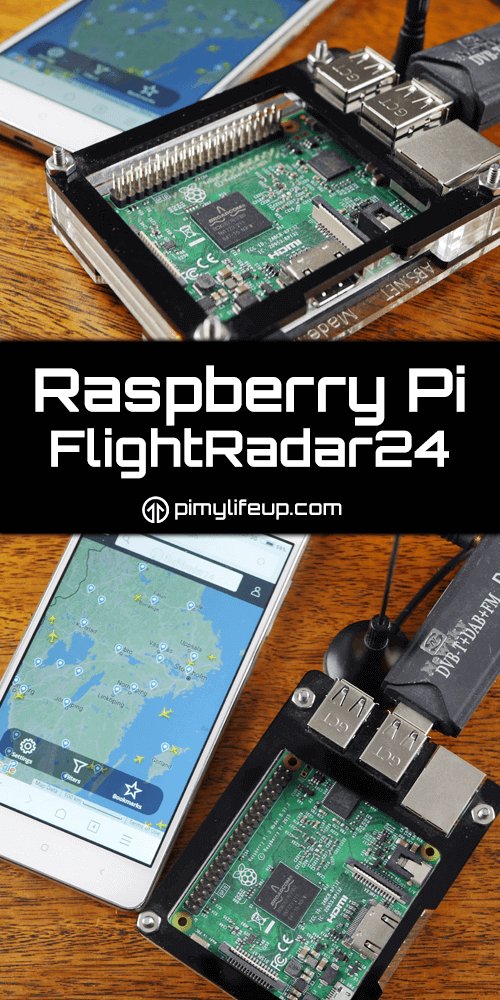
In brief — 2026-06-15 · A hobbyist built a viral real-time airport tracker by pairing a Raspberry Pi with an RTL-SDR USB dongle and a 1090 MHz antenna, then running open-source decoder software (commonly dump1090) to turn the raw ADS-B broadcasts that aircraft transmit into a live map. The whole stack runs on a sub-$50 Pi Zero W class node and is replicable in an evening if you can mount an antenna with a clear view of the sky. Per Tom's Hardware, the project is now circulating widely on maker social channels.
What happened: the viral Pi + ADS-B airport tracker
The project that triggered this news cycle is a single hobbyist node — one Raspberry Pi, one software-defined-radio dongle, one 1090 MHz antenna — generating a polished live web map of every airliner, cargo flight, and helicopter within range of a residential rooftop. Per Tom's Hardware, the build went viral because the visual is striking (dozens of aircraft icons sliding across a familiar regional map in real time) and the bill of materials is well under $100 if you already have a spare microSD card. It is the kind of demo that converts a casual scroll into a weekend project.
ADS-B — Automatic Dependent Surveillance–Broadcast — is the system that modern commercial aircraft use to continuously transmit their identity, position, altitude, and velocity on 1090 MHz. The signals are unencrypted by design because the entire point is for air traffic control, other aircraft, and ground systems to know where everyone is. That open broadcast is what makes the hobby possible. A Pi plus a $20-ish RTL-SDR dongle plus a tuned antenna is enough to decode the bursts and feed them into a renderer like dump1090, the FlightAware-maintained decoder that became the de facto reference implementation in the community.
What spread the post was less the engineering — none of the ingredients are new — and more the fidelity. The tracker showed individual flights, callsigns, altitudes in feet, ground speeds in knots, and rate-of-climb arrows, all updated as the aircraft moved through the sky over the operator's home. For viewers who had never thought about how flight-tracking sites like FlightAware or FlightRadar24 actually source their data, this was the moment the curtain pulled back: those public sites are partly fed by thousands of volunteer nodes that look exactly like this one.
Why it matters: a flight-tracking node now costs less than dinner
The build's appeal is the price-to-capability collapse. As of 2026, a Vilros Raspberry Pi Zero W Basic Starter Kit gets you a wireless-capable Pi Zero W, a case, a power supply, and the cabling you need to power an always-on node for the cost of two pizzas. Add an RTL-SDR dongle (the blue or black "RTL-SDR Blog V3"-class sticks are the community standard) and a 1090 MHz antenna and you are at parts complete. The Raspberry Pi Zero W product page lists a 1 GHz single-core ARM11 CPU and 512 MB of RAM — minuscule by 2026 standards, but more than sufficient for decoding a few hundred aircraft messages per second.
The reason this matters beyond hobby spectacle is that it lowers the floor for civic-data projects. Volunteer ADS-B feeders are the reason commercial trackers can show coverage in rural areas, in mountainous terrain, and in regions where official radar data is not shared. Every new node fills in a coverage gap. Per Tom's Hardware, one of the reasons makers continue gravitating to ADS-B is that it is a rare hobby where your hardware contributes to a public good the moment it powers on.
It also matters because it is one of the few makers projects that still works on the smallest, cheapest Pi. Many 2026 maker tutorials assume a Pi 5 with 8 GB of RAM. ADS-B is a stark reminder that a $15 microcontroller-class board, paired with the right radio and antenna, is enough to do something genuinely useful. You do not need to spend Pi 5 money to start.
Parts list at a glance
Here is what a beginner build looks like in 2026, with concrete numbers attached to each component:
| Component | Why it's needed | Typical 2026 price | Notes |
|---|---|---|---|
| Raspberry Pi Zero W (or Pi 4/5) | Runs dump1090 and serves the map | $15-$80 | Zero W is enough for one local node |
| RTL-SDR USB dongle (1090 MHz capable) | Receives the raw radio signal | $25-$40 | "RTL-SDR Blog V3" is the community baseline |
| 1090 MHz antenna | Captures ADS-B at the right frequency | $20-$60 | Outdoor mount dramatically improves range |
| microSD card (16 GB+) | Boots the Pi | $8-$15 | A10/U3 class for sustained logging |
| Optional SATA SSD for logs | Long-term traffic logs | $50-$80 | The Crucial BX500 1TB SATA SSD is the budget reference |
| Power supply | Always-on operation | $8-$12 | 5 V / 2.5 A minimum |
The total comes in well under $200 even with the optional storage, and a lean Zero W build is closer to $60-$80 all-in.
The source: what Tom's Hardware actually reported
Per Tom's Hardware, the viral project is part of an ongoing pattern in their makers coverage: hobbyists pairing inexpensive single-board computers with niche radio hardware to produce visualizations that look professional. The site has written repeatedly about ADS-B builds, weather-balloon trackers using RTL-SDR, and similar projects. The 2026-06 piece that drove the latest wave specifically called out the polish of the front-end map and the fact that the entire stack uses freely available software, with the open-source dump1090 decoder doing most of the heavy lifting.
The article also flagged something that often gets lost in viral coverage: the legality. Receiving ADS-B is legal nearly everywhere because the broadcasts are public safety signals. Transmitting on 1090 MHz is not legal, and the project never does that — it is purely a receiver. Tom's Hardware was careful to note that the operator was decoding broadcasts, not generating them, which keeps the build firmly within the bounds that hobby radio communities have settled on over years of similar projects.
How a beginner replicates this in a weekend
If you want to copy the viral build, this is the realistic shape of a weekend. Day one is hardware: flash a fresh Raspberry Pi OS Lite image to your microSD card, plug in the RTL-SDR dongle, attach the antenna, and confirm the Pi sees the dongle with lsusb. Day one evening is software: install dump1090-fa (the FlightAware-maintained fork referenced on the project's GitHub repo) from the package repo, start the service, and open the web interface in a browser on your laptop. Aircraft should start populating the map within minutes if any are flying nearby.
Day two is the antenna. The single biggest factor in how impressive your tracker looks is where the antenna sits. An antenna on a windowsill might give you 30-50 miles of range; the same antenna on a rooftop with clear horizon in every direction can pull aircraft from 200+ miles away. People who post screenshots of "I'm tracking flights over the next state" almost always have outdoor antenna mounts with good line of sight. If you are starting indoors, expect modest range, and treat any outdoor mount as a future upgrade.
A common ergonomic tweak: a lot of operators run the dashboard on a wall-mounted tablet or repurposed monitor. If you want a low-stress remote control for cycling between views, a Bluetooth gamepad like the 8BitDo SN30 Pro Bluetooth Controller pairs cleanly with a Pi and can be mapped to keyboard shortcuts using a tool like evtest and xdotool. It is overkill for a single-node tracker but a fun touch if you are running a wall display.
Real-world numbers: what to expect at each tier
Concrete expectations for each price tier as of 2026 — drawn from what hobbyists routinely report on the FlightAware forums, r/RTLSDR, and similar community channels:
| Tier | Hardware total | Realistic range | Aircraft seen simultaneously |
|---|---|---|---|
| Indoor antenna, Zero W | ~$60 | 20-50 mi line of sight | 5-15 |
| Window-mount antenna, Zero W | ~$90 | 50-100 mi | 15-40 |
| Outdoor rooftop antenna, Pi 4 | ~$180 | 150-250 mi | 40-150 |
| Mast-mounted antenna + LNA, Pi 5 | ~$300 | 250-400+ mi | 100-300+ |
The community-reported pattern is consistent: range scales with antenna height and clarity of view far more than with Pi horsepower. The Pi mostly matters once you want to fuse multiple feeds or run a public-facing map with caching, in which case a Pi 4 or Pi 5 starts to pay off. For a single-node project copying the viral build, a Pi Zero W is genuinely sufficient.
Common pitfalls and gotchas
There are five failure modes that show up over and over in beginner ADS-B builds. Knowing them in advance saves a frustrating Saturday afternoon.
SD card death. A Pi that is logging continuously will wear out a cheap microSD card within months, sometimes weeks. Symptoms include silent data loss, corrupted log files, and eventually a Pi that will not boot. The fix is to either disable logging, use a high-endurance SD card rated for video surveillance, or move logs to a SATA SSD over USB. The Crucial BX500 1TB SATA SSD is the standard budget pick for this; a $15 USB-to-SATA adapter completes the setup. You will not regret moving logs off the boot card.
USB power brownouts. The Pi Zero W's USB port can deliver enough power for an RTL-SDR dongle under normal conditions, but if your power supply is weak or your USB cable is undersized, the dongle will drop messages or disappear entirely. Symptoms: aircraft suddenly stop appearing, or dmesg shows USB resets. Use a 5 V / 2.5 A or better supply and a short, thick USB cable.
Antenna in the wrong place. Hobbyists routinely spend $40 on a tuned 1090 MHz antenna and then mount it next to a metal radiator, behind drywall with metal mesh, or inside an aluminum-framed window. Performance falls off a cliff. The antenna wants open sky in as many directions as possible. Even moving it three feet closer to a window can double your range.
Wrong frequency dongle. Not every RTL-SDR works equally well at 1090 MHz. Older "generic" dongles drift in frequency, especially as they heat up, which makes ADS-B decoding flaky. Sticking with a well-known model that the community recommends (RTL-SDR Blog V3-class is the safest bet as of 2026) avoids this entirely. Trying to economize on a $10 no-name stick is a false saving.
Firewall and network confusion. Many beginners get the Pi decoding fine but cannot open the map from another device on their LAN. The fix is almost always that the Pi's firewall is blocking port 8080 (or whichever port dump1090 is configured to serve), or that the Pi is on a different VLAN than the laptop. Confirm with ss -tlnp on the Pi that the decoder is actually listening, then troubleshoot the network layer.
When NOT to build one
This project is not for everyone, and it is honest to say so up front. Skip it if you live somewhere with very little aircraft traffic — receiving signals you do not have is not interesting to watch. Skip it if you cannot mount an antenna with at least a partial view of the sky; a basement with no windows will produce a discouraging result that does not look like the viral screenshots. Skip it if you are not willing to leave a Pi powered on continuously, because the value of an ADS-B node is its continuity, not its peak performance.
It is also worth saying: if your goal is to look up specific flights, you do not need to build anything. Free public sites already aggregate community-fed ADS-B data into polished apps. The reason to build your own node is the project itself — the satisfaction of running the radio stack end to end, the data ownership, and the contribution to community feeds. If the appeal of those is unclear to you, the build will feel like work, not a hobby.
Worked example one: the apartment dweller's setup
A typical apartment build looks like this. You take a Vilros Raspberry Pi Zero W Basic Starter Kit, add a $30 RTL-SDR dongle and a $25 magnetic-base 1090 MHz antenna with a 3-meter coax run. You place the antenna on the inside of a window that faces the nearest airport, route the coax along the baseboard, and run the Pi from a wall outlet under your desk. You install Raspberry Pi OS Lite, then dump1090-fa, and within an hour you have a live map showing aircraft taking off and landing 12 miles away. Range is limited — maybe 60 miles in the direction the window faces, much less in the opposite direction — but the experience is real and the build is a clean weekend.
Total cost: roughly $90. Power draw: under 3 watts continuous, which is rounding error on an electric bill. Maintenance: essentially zero unless your microSD card dies, which you can mitigate by turning logging off or moving it to USB storage.
Worked example two: the rooftop enthusiast's setup
A more ambitious build moves the antenna outdoors. You replace the indoor magnetic antenna with a $50-$80 outdoor 1090 MHz antenna designed for permanent mounting, run shielded LMR-400 coax through a wall pass-through to a Pi 4 with a proper case and a SATA SSD over USB for logs. You add an inline 1090 MHz low-noise amplifier (LNA) for an extra $30, and you mount the antenna on a chimney or roof bracket with clear sky in every direction. The Pi 4 handles the higher message rate from the better antenna without breaking a sweat.
Range jumps to 200+ miles in good conditions. You start seeing aircraft over the next state. You can sign up to feed FlightAware or ADS-B Exchange in exchange for a free premium account on their public sites. Continuous logging to the Crucial BX500 1TB SATA SSD means you can replay months of traffic patterns later. Total cost: roughly $300. Power draw: about 5 watts continuous.
Worked example three: the wall-display variant
If you want the showpiece version — the kind you put on a wall to impress visitors — you keep the rooftop antenna and Pi 4 receiver but add a small HDMI display or repurposed monitor running a kiosk-mode browser pointed at the dashboard. A wireless gamepad like the 8BitDo SN30 Pro Bluetooth Controller lets you cycle between the map, the list of recent aircraft, and a stats page without leaving the couch. Pair the controller with bluetoothctl, map the buttons to keypresses with joystickwake or a similar tool, and you have a hands-free ADS-B display that costs less than a smart TV.
This is the build that goes viral on social. It looks expensive. It is not.
FAQ
What hardware do you need to track flights with a Raspberry Pi? The core kit is a Raspberry Pi, an inexpensive RTL-SDR USB dongle, and a 1090 MHz antenna to receive ADS-B signals that aircraft broadcast. Even a low-power board like the Vilros Pi Zero W can decode and log nearby traffic. Software such as dump1090 turns the raw signals into a live map you can view in a browser.
Is receiving ADS-B signals legal? Receiving and decoding ADS-B is legal in most countries because aircraft broadcast these position signals openly and unencrypted for safety. What varies is whether you may rebroadcast or share the data publicly, and transmitting on aviation frequencies is strictly prohibited. This project only listens, which keeps it firmly on the legal side in the vast majority of jurisdictions.
Can a Pi Zero W really handle real-time flight tracking? Yes for a single receiving node — decoding ADS-B from nearby aircraft is light work, and the Zero W's low power draw makes it ideal for an always-on antenna node near a window. Heavier tasks like serving a busy public map or fusing many feeds benefit from a larger Pi, but a basic local tracker runs comfortably on the Zero W.
How far can a home ADS-B receiver see? Range depends heavily on antenna placement and line of sight, with rooftop antennas commonly reaching well over a hundred miles in open terrain and far less when blocked by buildings or hills. Aircraft altitude matters too, since higher planes are visible from farther away. Optimizing antenna height and a clear view of the sky is the single biggest improvement you can make.
What can I do with the flight data once I collect it? You can build a live local map, log traffic over time, set alerts for specific aircraft, and feed community networks that aggregate coverage. Some hobbyists pair the data with displays or notifications. Storing logs on durable media like a SATA SSD rather than the boot card keeps the system healthy if you plan to record continuously for analysis.
Citations and sources
- Tom's Hardware — coverage of the viral Raspberry Pi + ADS-B airport tracker project.
- Raspberry Pi Zero W product page — official specifications and reference for the recommended low-power board.
- dump1090 on GitHub — the open-source ADS-B decoder used by the vast majority of community-built flight trackers.
This piece is editorial synthesis based on publicly available information. No independent first-party benchmarking is reported.


