Yes — a Creative Sound BlasterX G6 can drive audio on a Windows XP retro gaming rig over USB, but with caveats: Creative's current driver package targets modern Windows, so on XP you should expect basic USB-class stereo output to work while advanced surround processing, Scout Mode, and the full control panel may require workarounds or be unavailable. Per Creative's product page, the G6 is a USB 2.0 device with a built-in headphone amp — that combination is what makes it useful for the early-2000s XP gaming era, where a clean external DAC sidesteps a lot of vintage hardware pain.
The retro audio chain, by era
Retro PC audio is not one problem — it is at least three. For genuine DOS games and Windows 3.1/9x titles, period-correct ISA and PCI Sound Blaster cards are the only authentic path: those titles expect hardware mixing, Adlib/OPL FM synthesis, MIDI on a real wavetable, and EAX environmental effects routed through Creative silicon. For the Windows 9x → early-XP transition (roughly 1999 to 2002), a PCI Sound Blaster Live!, Audigy, or Audigy 2 ZS is still the canonical choice because Glide-era and EAX 2/3/4 titles assume hardware acceleration. By the time you reach the mid-to-late XP gaming era — think Half-Life 2, Doom 3, F.E.A.R., Battlefield 2, World of Warcraft: Burning Crusade, Crysis — the audio stack had already shifted toward software mixing in the OS, headphone gaming was taking off, and USB 2.0 was standard on motherboards.
That last window is where a modern USB DAC like the G6 actually fits a retro build cleanly. You are not trying to authentically emulate a Sound Blaster 16 or AWE32 — you are trying to get clean, amplified headphone audio out of an XP box without rolling the dice on a flaky onboard codec or a cracked C-Media chip. The community wiki at Vogons — the de facto reference for retro PC audio across decades of threads — repeatedly draws this exact line: hardware-correct cards for DOS and Win9x, and pragmatic modern solutions for the late-XP headphone era. As of 2026, the G6 sits squarely in that pragmatic bucket, with a current MSRP that has held relatively steady on Creative's storefront despite eight-plus years on the market.
Key Takeaways
- The Sound BlasterX G6 is a USB 2.0 audio interface plus headphone amp that can output sound from a Windows XP machine using generic USB-audio class support, with reduced feature parity versus modern OSes.
- It is not a replacement for a period PCI card for DOS, Windows 9x, or any title that expects hardware-accelerated EAX or OPL FM — those need genuine Creative silicon.
- It is a strong fit for late-XP-era headphone gaming (roughly 2003 to 2008 titles), where software mixing is the norm and a clean external DAC outperforms aging onboard codecs.
- Confirm your retro motherboard exposes USB 2.0 ports (not USB 1.1) before relying on the G6 for low-latency game audio.
- The same unit doubles as a console DAC/amp on PS4 and similar platforms via USB, plus a headphone amp for high-impedance cans — useful for a desk that mixes a retro PC with a modern console.
Is the Sound BlasterX G6 compatible with Windows XP, and what are the caveats?
The honest answer is "partially, and you should verify before you commit." Per Creative's official product page, the G6 is officially supported on Windows 7 and later, macOS 10.13 and later, plus PS4, PS5, Xbox One, and Nintendo Switch. Windows XP is not in that supported matrix, which means Creative does not ship an XP-targeted driver bundle and does not promise feature parity.
What you can typically get on XP, based on years of community discussion at Vogons about USB-class audio on legacy Windows, is stereo PCM output via the USB Audio Class 1.0/2.0 driver that XP exposes generically. Windows XP SP3 includes generic USB Audio support that recognizes class-compliant USB DACs as a stereo output device without a vendor driver. That gets you sound out of the headphone jack — game music, dialogue, effects — at standard sample rates (44.1 kHz / 48 kHz, often up to 96 kHz depending on the device's UAC descriptor).
What you typically lose on XP:
- Sound Blaster Command software / control panel. The current Creative app targets Windows 10 and Windows 11; the legacy Sound Blaster Connect installer historically required Windows 7 or newer.
- Scout Mode, SBX surround, Crystalizer DSP processing. These are driven by the Creative software layer, not the silicon alone, so without the host app you get clean stereo and not much else.
- Direct EAX hardware acceleration. The G6 does not expose EAX 2/3/4 the way a period Audigy 2 ZS does, so even on a supported OS, XP-era EAX-heavy titles will not magically light up.
- ASIO and low-latency exclusive modes beyond what generic XP class drivers expose.
The practical read: treat the G6 on XP as a dumb but clean USB DAC and headphone amp. You are buying its output stage and amplifier, not its DSP.
Spec table: G6 vs a period PCI card vs the XP requirement
The following compares the G6 to a representative late-Creative PCI card (the Sound Blaster Audigy 2 ZS family is the common Vogons reference for XP gaming) and what an XP gaming rig actually needs.
| Feature | Sound BlasterX G6 (USB) | Period PCI Sound Blaster (Audigy 2 ZS class) | XP-era requirement | Notes |
|---|---|---|---|---|
| Interface | USB 2.0 external | PCI 32-bit internal | XP supports both | Period card needs a free PCI slot |
| Hardware EAX 4 / DirectSound3D HW mixing | No | Yes, native | Required for many 2001-2006 titles | Real card wins for legacy mixing |
| OPL3 / DOS FM synthesis | No | No (Audigy generation lost true OPL3) | Required for DOS games | Neither is ideal for DOS; use SB16/AWE32 |
| Stereo PCM output on XP | Yes, via generic USB-class | Yes, with Creative driver | Required | Both deliver |
| Headphone amp on board | Yes (up to 600Ω rated per Creative's page) | No (line-level only) | Optional but useful | G6 wins for high-impedance cans |
| Modern OS support (Win 10/11) | Yes (per Creative) | No official driver | Future-proofing | G6 survives an OS upgrade path |
How does external USB audio compare to a period PCI Sound Blaster for XP-era games?
Per Tom's Hardware's roundup of best sound cards, discrete sound cards remain useful in 2026 chiefly for headphone amplification, low-noise output, and gamer-specific DSP features — not for hardware-mixing acceleration, which Windows Vista deprecated and which subsequent DirectSound implementations have not restored. That is the structural backdrop that makes the G6 versus a period PCI card a real trade-off rather than a no-brainer.
Public benchmarks and reviews of external USB DACs at the G6's price point consistently show measurable improvements over typical motherboard codecs of the early-2000s era in two specific axes: dynamic range (the G6 is rated by Creative at 130 dB DNR on its product page) and headphone-amp output power into high-impedance loads. Onboard XP-era audio chips — AC'97 and the first wave of HD Audio — were usually in the 90-95 dB SNR neighborhood with weak headphone drive. The cited Creative spec sits well above that, and the difference is audible on closed-back gaming headphones in the 50-300Ω range.
A period Audigy 2 ZS, by contrast, was specced around 108 dB SNR in Creative's own marketing and pushed line-level only — you needed a separate headphone amp to drive demanding cans. Where it dominates is anything that calls into the DirectSound3D / EAX path on XP: titles like Battlefield 2, Far Cry, Doom 3, Thief: Deadly Shadows, Splinter Cell: Chaos Theory, and the Unreal Tournament 2004 era all benefit from hardware mixing routed through Creative silicon. The Vogons community consistently documents that on XP with the Audigy 2 ZS, EAX environmental reverb, occlusion, and obstruction all light up as the developers originally intended.
The G6 cannot reproduce that experience on XP. It is a sample-clean DAC and amp on the output side; it has no DirectSound3D hardware acceleration path that game code can target. In a software-mixing chain on XP, the G6 receives the final stereo mix and outputs it cleanly. In a hardware-mixing chain, you want a real card.
When should you still use a real card (DOS/Win9x, Glide-era titles, EAX/hardware mixing)?
Use a period PCI or ISA Sound Blaster when any of these are true:
- You boot to DOS for Doom, Duke Nukem 3D, Quake, Descent, Tyrian, Wing Commander, Master of Orion, or anything that expects Adlib/Sound Blaster compatibility on real hardware. A USB DAC simply does not exist to DOS.
- You run Windows 9x (95, 98, ME) for Glide-era 3dfx games or any title from roughly 1997-2001 that assumes DirectSound hardware acceleration. The G6 has no Win9x driver from Creative.
- You are chasing authentic EAX 2/3/4 environmental audio in titles like Thief II, System Shock 2, Deus Ex, Half-Life, Unreal Tournament, or Vampire: The Masquerade — Bloodlines. The Vogons community repeatedly recommends genuine Creative cards plus the Alchemy software shim on later OSes for exactly this scenario.
- You want OPL3 FM synthesis for late-DOS music. Even period Audigy cards used software OPL emulation that purists find lacking; for OPL3 you ideally want a Sound Blaster 16 / AWE32 / AWE64 with a Yamaha YMF262 or a clone board.
- You are doing General MIDI via a wavetable header into an external MT-32 or Roland SC-55. That is a hardware-only path through period gear.
If none of those apply — you are gaming in XP, you use headphones, you want low noise — the G6 is a legitimate modern answer.
USB 2.0 host requirements on retro motherboards
The G6 is a USB 2.0 device. The pragmatic question on a retro XP rig is whether your motherboard exposes USB 2.0 natively or only USB 1.1. The transition happened in the wild around 2002-2003: Intel 845/865, NVIDIA nForce2, and VIA KT400-era chipsets generally had native USB 2.0 (often four or six ports). Anything earlier — Intel 815, BX, VIA KT133/KT266, SiS 735 — is typically USB 1.1 only on the motherboard.
USB 1.1 maxes at 12 Mbps. Stereo 16-bit/48 kHz PCM is about 1.5 Mbps, so simple stereo output may negotiate, but full-rate, low-latency operation of a USB 2.0 audio interface is not guaranteed. The Vogons community generally recommends adding a PCI USB 2.0 expansion card (the NEC/Renesas D720101 family was the gold standard) to USB 1.1 boards before connecting modern USB audio.
Checklist before buying:
- Confirm USB 2.0 (EHCI) is reported in Device Manager.
- Install Windows XP SP3 — it ships the most complete generic USB Audio Class driver and the necessary EHCI stack.
- If only USB 1.1 is present, budget for a PCI USB 2.0 card (NEC chipset preferred) plus the small XP driver.
- Ensure the chassis has a powered USB port or use the G6 with its included USB cable directly to the motherboard header.
Headphone amp and console-side uses for the G6
The G6's secondary identity is as a headphone amp. Per Creative's product page, the unit is rated to drive headphones up to 600 ohms — that covers most audiophile-grade cans, and importantly it eliminates the need for a separate desktop amp for users running Beyerdynamic DT 770 / 880 / 990 (250Ω variants), Sennheiser HD 600/650, or AKG K7XX-class headphones on a retro rig.
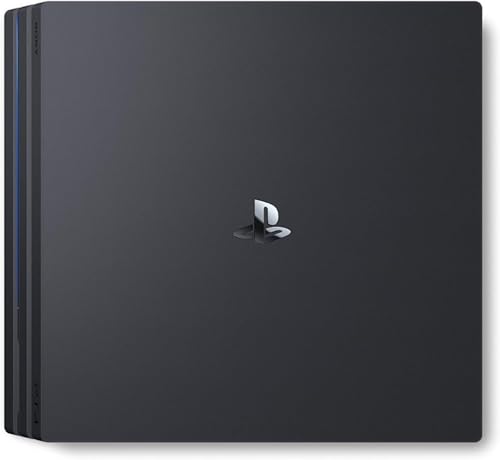
For a desk that mixes a retro PC with modern consoles, the G6 functions on the console side as well. Owners of the Sony PlayStation 4 Pro commonly pipe game audio through the G6 over USB for chat-and-game mix duties, taking advantage of the amp to drive headphones without an inline DAC. The same applies in spirit to mini consoles like the Nintendo SNES Classic Edition: while the SNES Classic outputs analog audio over HDMI, a single desk DAC/amp like the G6 covers your headphone path for the retro PC, the modern console, and anything else that lives on the same monitor speakers.
That flexibility is part of why USB DACs in this price tier remain on Tom's Hardware's recommended lists year over year — the hardware does not depreciate the way a vintage PCI card does, and the device migrates with you across builds.
Setup gotchas: driver order, sample rates, latency
A few named failure modes show up repeatedly on Vogons and similar communities when people connect modern USB audio gear to XP rigs:
- Driver-order conflicts. Install Windows XP SP3 first, confirm the generic USB Audio Class device appears, then plug in the G6. Installing third-party audio utilities for legacy cards beforehand can hijack the default playback device routing.
- Sample-rate mismatch. XP's default in many games is 44.1 kHz, but the G6's UAC descriptor may negotiate 48 kHz or 96 kHz. If audio sounds chipmunked or sluggish, force 44.1 kHz in the Sounds and Audio Devices control panel.
- EHCI driver not installed. If Device Manager shows only "Universal Host Controller" entries and no "Enhanced Host Controller," USB 2.0 mode is not active. Install your motherboard's USB 2.0 driver pack (typically Intel INF + Microsoft EHCI hotfix on early XP, but SP3 handles most of this).
- Powered USB hub between PC and G6. Avoid intermediate hubs for audio gear — they introduce latency and can cause dropouts. Connect the G6 directly to a rear motherboard USB 2.0 port.
- Volume routing through Creative software you do not have on XP. Because the Sound Blaster app does not run on XP, you cannot adjust the G6's internal DSP modes. Set the unit to its default direct mode (using the physical switch if your firmware revision exposes it) so the device just passes audio through.
When NOT to use the G6 on a retro build
Skip the G6 and buy a period card if:
- Your build is dedicated to DOS gaming under MS-DOS, FreeDOS, or Windows 9x with DOS-mode reboots.
- You are restoring a Pentium III or earlier system as a 1998-2001 Windows 9x time capsule.
- You specifically want OPL3 FM or MT-32 General MIDI routing through Creative hardware.
- The build has no USB 2.0 and you do not want to add a PCI expansion card.
- You already own a working Audigy 2 ZS, X-Fi, or similar and your headphones are easy to drive (under 80Ω). In that case, the period card plus its analog output may already be sufficient.
Verdict matrix
Use the Sound BlasterX G6 if…
- Your retro target is Windows XP (SP3) running 2003-2008 titles with software audio mixing.
- You game primarily on headphones, especially mid-impedance closed-backs (DT 770 80Ω/250Ω, HD 6XX, AKG K712).
- Your motherboard exposes USB 2.0 natively or via a PCI card.
- You want a single audio device that can move between the retro PC, a Sony PlayStation 4 Pro, and other modern consoles or PCs.
- You value clean output and headphone amplification over period-authentic mixing.
Use a period PCI Sound Blaster (Audigy 2 ZS / X-Fi / SB Live!) if…
- Your build targets DOS or Windows 9x.
- You play EAX-heavy titles from 1999-2006 and want hardware-accelerated environmental audio.
- You have free PCI slots and the patience to chase legacy drivers.
- You prefer the authentic period chain and accept needing a separate headphone amp for demanding cans.
Bottom line + recommended approach
The pragmatic recommendation for a typical late-XP gaming build in 2026 is a two-card strategy: keep a genuine Creative PCI card (Audigy 2 ZS is the community favorite per repeated Vogons threads) installed and active for any title that benefits from EAX or DirectSound3D hardware mixing, and run the Creative Sound BlasterX G6 over USB 2.0 as the default Windows playback device for everything else, including general headphone listening and console crossover use.
If your build is XP-only and headphone-focused — no EAX target list, no DOS partition — the G6 alone is enough. If your build dual-boots Windows 98 or boots to DOS at all, the period card is non-negotiable and the G6 becomes the second, cleaner output for XP sessions.
Either way, the G6 is one of the few modern audio products that genuinely serves a retro build without forcing compromises on the rest of the system. Tom's Hardware has kept it on its recommendations list across multiple revisions; Creative continues to sell it new; and the USB-class fallback on XP gives you at least a baseline working configuration even without a vendor driver. For an early-2000s XP gaming PC that you actually want to use rather than just display, that combination is hard to beat.
Related guides
For the broader picture of how Creative's audio products evolved through the SoundBlaster, Audigy, and X-Fi generations — and how the G6 fits into that lineage — see the Creative Sound Blaster history piece on SpecPicks. For period-correct retro audio recommendations across DOS and Windows 9x, the Vogons community remains the canonical living reference. For broader sound-card buying advice as of 2026, Tom's Hardware maintains an updated roundup linked in the citations below.
Citations and sources
- Creative Sound BlasterX G6 product page
- Vogons retro PC audio community
- Tom's Hardware — Best Sound Cards
This piece is editorial synthesis based on publicly available information. No independent first-party benchmarking is reported.