

TONOR
TONOR Dynamic Podcast Microphone
Bottom line: The TONOR Dynamic Podcast Microphone: Dual USB and XLR outputs let you start plug-and-play and upgrade to an interface later; main trade-off: 50Hz-14KHz range rolls off high treble that condenser mics capture.
As an Amazon Associate, SpecPicks earns from qualifying purchases. Full disclosure →
Pros & Cons
Pros
- ✓ Dual USB and XLR outputs let you start plug-and-play and upgrade to an interface later
- ✓ Cardioid dynamic capsule with 95dB signal-to-noise ratio keeps room noise out of takes
- ✓ 110dB max SPL handles loud, close-mic vocals without breaking up
- ✓ Onboard +/- volume buttons and long-press mute switch control between mic and headphones
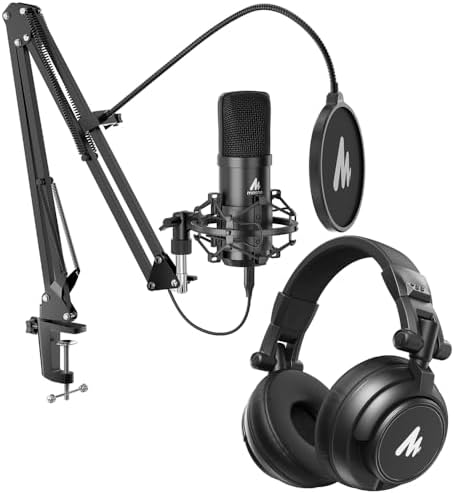
- ✓ T10 boom arm included in the kit, so no separate mount purchase
Cons
- ✗ 50Hz-14KHz range rolls off high treble that condenser mics capture
- ✗ XLR mode needs an interface or mixer you supply separately
- ✗ Volume buttons and mute only work in USB mode, not over XLR
- ✗ Dynamic capsule needs close mic placement to sound full
Manufacturer description
The TONOR TD510+ is a dynamic podcast microphone built for creators who want a single mic that works on both a laptop and a proper audio interface. It ships with dual USB and XLR outputs, so you can start plug-and-play over USB today and move to a mixer or interface later without replacing the mic. The dynamic capsule covers a 50Hz-14KHz frequency range and handles up to 110dB SPL, which keeps loud vocal peaks and energetic streaming sessions from breaking up. Its cardioid pattern rejects off-axis sound, and TONOR's built-in noise reduction pushes the signal-to-noise ratio to 95dB, so…
SpecPicks Verdict
SpecPicks scored TONOR Dynamic Podcast Microphone using a rating × review-volume × price-fit model applied to published specs and reviews across the streaming gear category. TONOR's streaming gear lineup sits within the broader category mid-tier; price and specs are the deciding factors over brand loyalty here. Judge it on the specification table and the price rather than on sentiment: check the figures that decide your use case, then put it side-by-side with two or three close alternatives in the Compare tool before clicking through.
Common buyer scenarios for streaming gear of this kind: matching it to an existing build, replacing a failing part, or upgrading from a previous-generation equivalent. Check the spec table below against your current setup — particularly socket / form-factor / power-rating fields — and confirm compatibility on the retailer's listing before purchase. Prices and stock are set by the retailer and may have moved since this page was last updated.
Frequently Asked Questions
Can I use the TONOR TD510+ without an audio interface?
Yes. In USB mode the TD510+ is plug-and-play with a desktop or laptop. The XLR output is there for when you add an audio interface or mixer later.
How does the TD510+ handle background noise?
It uses a cardioid pickup pattern that rejects off-axis sound, plus built-in noise reduction rated at a 95dB signal-to-noise ratio, so keyboard and room noise sit well below your voice.
Does it come with a boom arm or do I buy one separately?
The TD510+ kit includes TONOR's T10 boom arm. Mounting hardware specifics beyond that are listed on the product page.
Can I monitor myself while recording?
Yes. There is a 3.5mm headphone jack for real-time monitoring. In USB mode, long-pressing the mute button switches the +/- buttons between microphone gain and headphone volume.
Is the TD510+ good enough for podcasting and streaming, not just casual calls?
Its dynamic core covers 50Hz-14KHz with a 110dB max SPL, which suits close-mic podcast and stream vocals.
Key Features
- Warm and Balanced Vocal: The premium dynamic core brings excellent frequency response range (50Hz-14KHz) and outstanding sound pressure level (Max SPL.110dB), helping you to present rich and natural vocals in video, audio recording, and live streaming.
- Excellent Noise Suppression: The TONOR dynamic microphone designed with a cardioid pattern eliminates off-axis audio and minimizes ambient noise. Plus, its built-in noise reduction technology ensures an extremely low noise floor and a signal-to-noise ratio of 95dB, resulting in a pure and pristine sound experience.
- USB and XLR Output: This microphone supports both USB and XLR outputs. With the plug-and-play feature under USB mode, it is easy to use for desktop or laptop recording. The XLR interface outputs analog signals, which enhances the sense of audio space for an immersive podcast experience. Furthermore, it supports connections to an audio interface and mixer for a more natural and high-end audio experience.
- Perfect for Content Creator: Under USB mode, you can directly control the volume by pressing the "+" and "-" buttons. Long-press the mute button to switch volume control between the microphone and headphone. With a 3.5mm headphone jack, you can monitor your voice in real-time. This recording microphone is the perfect choice for YouTubers and TikTok influencers.
- Professional Microphone Set: The TD510+ dynamic microphone kit comes with the brand new Tonor T10 boom arm, delivering exceptional reliability and durability for a truly enjoyable voice recording journey.
Full Specifications
| Brand | TONOR |
|---|---|
| Color | Black |
| Model Name | TD510+ |
| Unit Count | 1 count |
| Connectivity | USB |
| Model Number | TD510+ |
| Power Source | Corded Electric |
| Audible Noise | 95 db |
| Compatibility | Switch |
| Polar Pattern | Unidirectional |
| Built-In Media | Microphone x 1, Usb Cable x 1, Xlr Cable x 1, Boom Arm x 1, Clamp x 1, Cable Ties x 4, Manual x 1 |
| Connector Type | USB, XLR |
| Item Dimensions | 2.4 x 7.44 x 17.01 inches |
| Mfr Part Number | TD510+ |
| Number of Items | 1 |
| Special Feature | 1-Touch Recording, Mute Function, Runs on Plug-In Power, Voice Activated Recording, Volume Control |
| Antenna Location | Gaming, Streaming |
| Audio Sensitivity | 95 db |
| Hardware Platform | PC |
| Compatible Devices | Personal Computer, Laptop |
| Full listing title | TONOR Dynamic Podcast Microphone, XLR/USB Mic for Podcasting, Recording, Streaming, XLR Cardioid Studio Mic with Quick Mute, 3.5mm Headphone Jack, Volume Control, Microfono with Boom Arm, Black,TD510+ |
Ready to buy?
TONOR Dynamic Podcast Microphone, XLR/USB Mic for Podcasting, Recording, Streaming, XLR Cardioid Studio Mic with Quick Mute, 3.5mm Headphone Jack, Volume Control, Microfono with Boom Arm, Black,TD510+ is listed on Amazon. Price, availability, shipping and returns are set by Amazon and its sellers — check the listing for current terms. SpecPicks earns a small commission on qualifying purchases — thank you for supporting independent review work.
Related Streaming Gear


More guides & deep dives from the SpecPicks archive
Browse all articles & guides →- RTX 4070 Super vs RX 7800 XT — Which to Buy in 2026
- Best Retro Handhelds in 2026 — From $35 to $500
- Emulation Hardware in 2026: FPGA, Software, and Cart-Reader Ecosystems
- The Complete Voodoo5 5500 AGP Driver Guide (2026 Edition)
- How to Build a Windows 98 Retro PC in 2026
- Best 1440p Gaming GPUs in 2026
- Best Budget Gaming PC Build 2026 — ~$1,000 ($800 on Sale)
More reviews from the SpecPicks archive
Browse all reviews →- Steam Deck OLED vs ROG Xbox Ally X: 2026 Comparison
- How to run Llama 3.1 70B on NVIDIA GeForce RTX 5090
- AMD Ryzen AI Halo Mini PC: Open-Source Power Analyzed
- All-AMD Gaming PC Build for 2026: Our Top 5 Ryzen + Radeon Configurations
- Inside China's Mini PC Production: How They're Built
- Best Plug-and-Play Retro Game Console in 2026
- Building a Period-Correct 2001 Win98 Rig With Parts You Can Still Buy
- How Running Out of VRAM Affects Your FPS
- CompactFlash vs SATA SSD vs IDE-to-USB: Best Storage for a Retro PC
- Qwen3 0.6B: Raspberry Pi 4 8GB vs Ryzen 5 5600G for Tiny-Model Hosts (2026)
- Adafruit's Cyberdeck Raspberry Pi Music Workstation Guide Lands
- Self-Host Jellyfin on a Raspberry Pi 4 8GB: Real Transcoding Numbers
- Raspberry Pi Locator Shuts Down in July: Where to Buy a Pi Now
- 3dfx Voodoo3 3000 PCI vs Voodoo5 5500 AGP: Win98 Performance Synthesis (2026)
- Sound Blaster X G6 on a Windows XP Retro Gaming PC: Worth It?
- DeepSeek V4 Flash on a 12GB RTX 3060: The Cheapest Agentic Model, Run Local
- Best Parts for a Local LoRA Fine-Tuning Workstation in 2026
- IBM Granite 4.1 8B vs Qwen 3.6 27B: Which Small Local Model Wins on a 16GB GPU?
- Advanced Shader Delivery on the RX 9070 XT: Benchmark Results
- Best Controller for RetroPie & Pi Emulation: SN30 Pro vs DualSense
- RTX 5080 vs RTX 4090: Is the Future-Proofing Worth It?
- Best Controller for PC AAA Gaming in 2026
- Adding a Manual Shifter to Your Sim Rig: Is the Thrustmaster TH8A Worth It for the G29?
- RTX 3060 Drop-In vs AM4 Rebuild for an i7-9700K in 2026
Earliest SpecPicks reviews
Browse full archive →- Best GPU for Llama 3.1 8B (2026)
- Best GPU for Qwen 3 14B (2026)
- Best GPU for Qwen 3 32B (2026)
- Best GPU for Llama 3.1 70B (2026)
- Best GPU for DeepSeek-R1 32B (2026)
- Best GPU for Llama 3.1 405B (2026)
- How to run Llama 3.1 8B on NVIDIA GeForce RTX 5090
- How to run Qwen 3 14B on NVIDIA GeForce RTX 5090
- How to run Qwen 3 32B on NVIDIA GeForce RTX 5090
- How to run Llama 3.1 70B on NVIDIA GeForce RTX 5090
- How to run DeepSeek-R1 32B on NVIDIA GeForce RTX 5090
- How to run Llama 3.1 8B on NVIDIA GeForce RTX 4090