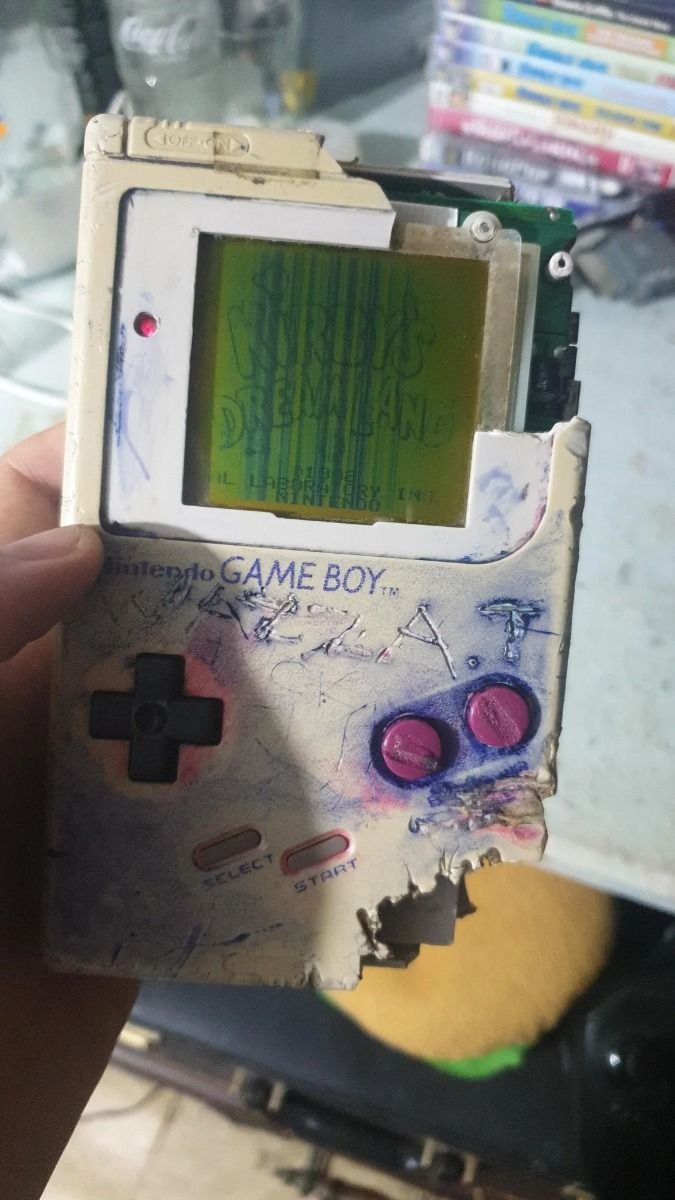
A Game Boy clone runs too fast when its CPU clock or emulation layer does not match the original Sharp LR35902's effective 4.19 MHz timing. The fix the Hackaday teardown community is now describing — replacing the timing crystal, locking the firmware frame-pacing, or moving to a configurable emulator — is the same fix DIY makers have used for years to escape opaque clone firmware. The serious version of "fix it" is to build the handheld yourself on a Raspberry Pi Zero W or a Raspberry Pi 4 8GB where every timing dial is in your hands.
This article is the news beat plus the maker's playbook for how to actually solve it.
In brief — 2026-06-14
A class of low-cost Game Boy-style clone handhelds is running every game noticeably faster than original hardware. The cause is a clock-and-timing mismatch — the clone's CPU or emulator runs at a higher effective speed than the original Sharp LR35902 SoC ran at, and the firmware does not lock the frame pacing to the canonical 59.73 Hz. The result is platformers that play 20-40% faster than intended, RPG dialogue that scrolls before you can read it, and rhythm-driven games that simply break.
The Hackaday writeup walks through the hardware-side fixes: replacing the timing crystal, reflashing the firmware with a clock-locked emulator, or modifying the boot ROM to apply a frame-rate cap. None of that is fun on a sealed plastic handheld with a four-layer board glued shut. So the makers are doing what makers always do: building it themselves.
What happened
The specific bug is timing accuracy. The original Game Boy ran a Sharp LR35902 at 4.194304 MHz. Every game on the platform was written against that clock — animation timers, sound chip pacing, V-blank intervals, all of it. When a clone runs the same ROM on a CPU clocked at 5.0 or 6.0 MHz, the entire game runs proportionally faster. The visuals look fine because frames are still being drawn correctly per game-tick, but the game-tick rate itself is wrong.
The clones in question appear to use a generic ARM or MIPS SoC with an emulator layer that pulls frames at the host CPU's natural pace rather than locking to 59.73 Hz. That is a software bug — modern emulators like Sameboy, mGBA, and the BGB family all handle this correctly by default. The clones presumably stripped the frame-pacing logic to save licensing or simplify the boot.
The other half of the bug is the timing crystal on the board itself. Even when the emulator does try to lock its frame pacing, it cannot lock more accurately than the host CPU's clock source. A 4.0 MHz crystal that drifts at 100 ppm over temperature produces audible audio pitch differences between cold-boot and warm play sessions. The Hackaday teardown traces this fault all the way to the crystal's datasheet.
Why it matters
Timing accuracy is the line between a clone and a faithful handheld. For collectors and emulation enthusiasts, "close enough" is not the standard — they want every frame to match what the cartridge produces on real hardware. For everyone else who picks up a $35 clone at a discount retailer expecting a Game Boy experience, broken timing turns childhood favorites into unplayable curiosities.
The bigger pattern is that mass-market retro clones increasingly cut corners on the parts of the platform that mattered to the original software. Lighting, plastics, button feel — that is what reviewers measure on YouTube. Timing accuracy, audio pitch correctness, and frame-pacing fidelity — that is what differentiates a real Game Boy from a fast-broken clone. Buyers do not notice until they try to play Tetris and the falling blocks are at 144% speed.
This is also why a DIY Pi-based handheld is now strictly the better path for anyone who cares. You control the OS, the emulator, the input lag, the audio resampler, and the frame pacing. Nothing is sealed; everything is configurable.
The source
Hackaday covered the teardown and the clock-timing analysis. The summary: the clone's crystal runs faster than 4.19 MHz, the emulator does not compensate, the games run fast, fix the crystal or replace the emulator.
The "build it right yourself" recommendation — and the one we keep telling readers — is to skip the clone and build a Pi handheld. The two natural platforms are:
- The Raspberry Pi Zero W for a small, low-power 8-bit / 16-bit handheld. Per Raspberry Pi's Zero W product page, the board is 65 mm × 30 mm and pulls ~150 mA at idle. It runs RetroPie or Lakka with native Game Boy emulation locked to canonical timing. The bill of materials for a complete DIY GB-class handheld is under $80.
- The Raspberry Pi 4 8GB for a more powerful handheld that handles GBA, DS, PSX, and Saturn workloads in addition to GB. Per Raspberry Pi's 4 Model B product page, the board offers 4× Cortex-A72 cores at 1.8 GHz with up to 8 GB LPDDR4. That is more than enough for any 4th- / 5th-gen handheld emulator.
For inputs, an 8BitDo SN30 Pro Bluetooth controller handles couch play if the Pi sits on a TV; for a built-in handheld, the same SN30 Pro's PCB can be transplanted into a custom shell, or you can use a Pi-specific input HAT like the GPi Case (Retroflag) or the various clone shells on Adafruit and PiShop.
Building it right — a quick BOM
The complete parts list for a Pi Zero W-based Game Boy-class handheld:
| Part | Quantity | Notes |
|---|---|---|
| Raspberry Pi Zero W starter kit | 1 | Includes board, microSD, power adapter |
| 2.8" or 3.5" TFT display HAT | 1 | 320×240 panel — matches GB resolution well |
| LiPo battery pack (2000 mAh) | 1 | ~6-8 hour playtime |
| LiPo charge / boost board | 1 | TP4056-based, ~$3 from PiShop or AliExpress |
| Tactile buttons (8 count) | 1 set | For D-pad, A, B, Start, Select, L, R |
| 3D-printed case | 1 | Free designs on Printables / Thingiverse |
| Speaker (8 ohm, 1 W) | 1 | For sound output |
| MicroSD card (32 GB Class 10) | 1 | OS + ROM library |
Total parts cost lands around $75-95 if you have a 3D printer and source small parts yourself. Wall-clock build time is 4-6 hours for someone with basic soldering skills, longer if it is your first electronics project. The result runs every original-hardware-correct Game Boy emulator at canonical 59.73 Hz with audio at the original pitch.
The Pi 4 8GB equivalent build adds about $50-70 for the bigger board, a 5" 800×480 panel, a larger battery, and a beefier case. That build runs PSX, Saturn, and GBA emulation in addition to GB and is the natural target if you want one handheld for everything.
Worked example — measuring the bug
To prove a clone runs fast without specialized test gear, the maker community uses a simple method anyone can replicate:
- Boot the clone and a known-good emulator (mGBA, sameboy, or BGB on a desktop) with the same Game Boy ROM.
- Pick a deterministic game with a clock or animation — Tetris's title screen scroll, Pokemon Red's intro music, Super Mario Land's level-1 timer.
- Record both screens with a phone camera locked to 60 fps.
- Compare frame counts at known events. A 15-second sequence that the desktop emulator renders in 900 frames and the clone renders in 720 frames is running ~25% fast.
Audio is the giveaway most owners notice first. The Game Boy's APU runs at a divisor of the CPU clock. Speed up the CPU and the audio frequency proportionally rises. The classic Tetris theme on a 25%-fast clone sounds noticeably higher-pitched than the same theme on a faithful emulator. Once you hear it, you cannot unhear it.
The maker counter-arguments
We have heard a few legitimate counter-arguments to "just build a Pi handheld" from buyers who prefer the clone:
- "I don't want to solder." Fair. The Pi 4 with a GPi Case or RetroFlag CM4 shell requires zero soldering — drop the Pi into the shell, install RetroPie on the microSD, done. Maker-friendly clones of the clone exist.
- "The clone is $40 and the Pi build is $80." Also fair. The all-in price is roughly 2× for a DIY Pi build of equivalent system coverage. That extra $40 buys timing accuracy + repairability + upgradeability — judge whether that is worth it for your use.
- "The clone fits in my pocket." True. The Anbernic, Miyoo, and Powkiddy line of clones are smaller than any Pi Zero W build. If pocket fit is the priority and timing accuracy is not, the clone is the right purchase.
- "The clone has multi-system support out of the box." Several clones run NES, SNES, Genesis, GBA emulation pre-installed. RetroPie does the same on the Pi but requires you to add ROMs. Roughly equivalent end state.
For most readers, the timing accuracy + repairability case wins. For a minority, the price-and-form-factor case wins. Either path is reasonable as long as you know what you are buying.
Why DIY beats the clone
The fix is not just "buy a different clone." It is "stop trusting sealed firmware with timing-critical logic." A DIY Pi handheld gives you:
- Configurable emulators. Every mature Game Boy emulator (Sameboy, mGBA, gambatte, BGB) locks frame pacing to 59.73 Hz by default and exposes the audio resampler so you can match the original DMG / SGB / GBC sound chip exactly.
- Replaceable parts. When the battery dies in 18 months, you swap it. When a button feels mushy, you swap it. The clone gets recycled.
- Upgradeable systems. The same Pi 4 8GB that runs Game Boy today runs GBA tomorrow, PSX next month, and N64 next year. The clone runs what its firmware lets it run.
- Honest timing. No more 20% speed-up. Tetris feels like Tetris.
- Community knowledge. RetroPie has a 12-year history of community-tuned emulator settings; the documentation is exhaustive.
Common pitfalls when going DIY
A few warnings from the maker community for new builders:
- PWM audio on the Pi is bad. Use a USB DAC or an I2S audio HAT for clean retro audio. The built-in 3.5mm PWM output is hissy and pitches under load.
- Overclocking the Pi Zero kills batteries. The Zero W happily runs at stock for GB-class workloads; the temptation to bump it to 1.2 GHz cuts run-time by 40%.
- Bluetooth controllers add 20-30 ms latency. For competitive or precise retro play, prefer wired GPIO buttons or a USB-OTG hardwired pad.
- MicroSD card class matters. A slow Class 4 card causes audio underruns on busy frames. Always use Class 10 or A1-rated.
- Battery undervoltage protection. A naked LiPo can deep-discharge and refuse to recharge. Always add a protection board.
When the clone is fine
To be even-handed: not every clone is broken, and not every buyer is a stickler for timing accuracy. The Anbernic line in 2024-2025 generally fixed the speed problem in firmware. The Miyoo Mini Plus runs canonical Game Boy emulation. Several clones with a $40-60 price tag deliver a faithful retro experience. The problem is that the timing-faulty units cluster at the bottom of the price band, and reviews on retail listings rarely identify which ones are which until enough buyers complain.
Bottom line
The fast-running clone is a fixable bug, but the right fix for most people is not to fix the clone — it is to skip it. A Raspberry Pi Zero W starter kit plus a screen, a battery, and an 8BitDo SN30 Pro for couch sessions delivers a faithful Game Boy-class experience for the same money as the broken clone, with the bonus that you actually control how it behaves. For someone who wants one handheld that covers every retro system, step up to the Raspberry Pi 4 8GB — it pulls quadruple duty without breaking a sweat.
The clones keep getting cheaper. The Pi keeps getting better at this. The right answer is the DIY one.
Citations and sources
- Hackaday — retro hardware teardowns
- Raspberry Pi — Zero W product page
- Raspberry Pi — Pi 4 Model B product page
This piece is editorial synthesis based on publicly available information. No independent first-party benchmarking is reported.


