Creative Labs' Sound Blaster came to dominate PC audio because, at the late-1980s and 1990s inflection point when game developers needed a single target API, Creative shipped the first sound card that combined FM synthesis, digital audio sampling, and a MIDI interface in a single ISA slot — and then locked in that combination as the de facto standard for the next decade. The technical advantages were real but small; the network effect of being "the card every game supports" was the actual monopoly. In 2026, the legacy lives on in the Sound BlasterX G6 USB DAC and in a vintage market where used Sound Blaster 16 and AWE32 cards still sell briskly to retro-PC builders.
Key takeaways
- Sound Blaster won not on audio quality but on game-engine compatibility — once "Sound Blaster compatibility" became a marketing requirement, no competitor caught up.
- The Pro and 16 generations cemented the lock-in by combining FM synthesis (AdLib-compatible) with PCM sampling on one card.
- AWE32 added wavetable MIDI and consumed an entire ISA slot — the high-water mark of single-card PC audio.
- USB sound cards, integrated motherboard audio, and Windows' generic audio drivers ended the on-card lock-in in the 2000s.
- The Sound BlasterX G6 and modern USB DACs are the descendants — Creative still ships, but the moat is gone.
The starting position: PC audio in 1989
Before Sound Blaster, PC audio was the IBM PC speaker — a square-wave beeper driven by the 8253 timer. AdLib released its FM-synthesis card based on the Yamaha YM3812 in 1987, which gave games actual musical chords but no digital sampling. Games like Sierra's adventure titles supported AdLib first; that became the "I have a sound card" baseline.
Creative's first Sound Blaster (1989) shipped with: AdLib-compatible FM synthesis (same Yamaha chip), an 8-bit DMA-driven digital audio channel for sampled effects, a game port for joysticks, and a MIDI interface. The card was a 25% premium over AdLib alone, but it also supported every AdLib game out of the box.
That last point is the entire history.
How "Sound Blaster compatibility" became a marketing standard
Game developers in the early 1990s had to pick which audio cards to support. Coding for one card was 1× engineering; coding for two cards was 2.5× because of test matrices; coding for five was untenable. So they picked the card with the largest installed base. Creative's price-aggressive bundling and OEM deals made Sound Blaster that card by 1991.
Per the Sound Blaster Wikipedia entry, Creative's strategy was explicit: license the card to OEMs cheaply, push the Sound Blaster API as the standard, and ship the same FM-synthesis chip everyone else was already using. Other vendors (Pro Audio Spectrum, Gravis Ultrasound) shipped technically better cards but never broke the "Sound Blaster compatibility" gate.
The Sound Blaster lineage — what each generation did
| Year | Model | Key addition |
|---|---|---|
| 1989 | Sound Blaster (CT1320) | Mono 8-bit PCM + AdLib-compatible FM |
| 1991 | Sound Blaster Pro | Stereo audio, dual OPL2 then single OPL3 |
| 1992 | Sound Blaster 16 | 16-bit stereo sampling + better OPL3 FM |
| 1994 | Sound Blaster AWE32 | EMU8000 wavetable MIDI, sample RAM |
| 1996 | Sound Blaster AWE64 | Reduced footprint AWE32 + extra "voices" via host CPU |
| 1998 | Sound Blaster Live! | PCI bus, EMU10K1 DSP, EAX effects API |
| 2001 | Sound Blaster Audigy | Higher-quality DACs, hardware MIDI |
| 2005 | Sound Blaster X-Fi | Modern DSP with 3D positional audio |
| 2010s+ | USB/external | Sound BlasterX G6 and similar USB DACs |
The two generations that matter for retro-PC builders are the Sound Blaster 16 (the ubiquitous DOS-era card) and the AWE32 (the high-water mark of ISA-era PC audio).
The technical truth: Sound Blaster was rarely the best card
Pro Audio Spectrum 16 had better sampling rates; Gravis Ultrasound had better wavetable; Roland's MT-32 had vastly better MIDI synthesis; Turtle Beach's higher-end cards had better signal-to-noise ratios. None of them mattered. Per the deep retro-PC community discussions on VOGONS forums, the winning trait of Sound Blaster was never audio quality — it was the certainty that the game would make sound when launched.
This is the canonical platform-lock pattern: once one product wins the developer ecosystem, every subsequent product is judged by how well it emulates the winner. Pro Audio Spectrum cards literally shipped Sound Blaster compatibility modes to compete; Gravis Ultrasound shipped a software emulator.
What killed the lock-in
Three forces broke the Sound Blaster monopoly through the late 1990s and 2000s:
- Integrated motherboard audio. AC'97 and later HD Audio integrated directly onto the chipset. By 2003, most consumer motherboards shipped competent six-channel audio at no extra cost. "Buying a sound card" became a niche use case.
- DirectSound and Windows audio. Microsoft's audio stack normalized away the hardware differences. Games no longer needed to know whether they were running on a Sound Blaster or onboard AC'97 — they wrote to Windows, and Windows handled the rest.
- USB and external DACs. Audio enthusiasts moved off the noisy PCI bus and onto external USB DACs. Even Creative's own modern offerings, including the Sound BlasterX G6, are USB units rather than PCIe cards. Per the Creative product page for the G6, the unit is positioned as a gaming DAC for headphones rather than as a PC audio card.
By 2010 the Sound Blaster brand had transitioned from "the card you need" to "a premium accessory for gamers who care about headphone audio."
What's worth buying now — the modern descendants
For retro-PC builders restoring a 486 or Pentium-era rig, the answer is a period-correct Sound Blaster 16 or AWE32. These remain available used in $40–$150 ranges on the secondary market depending on revision and condition.
For modern PC audio:
- Sound BlasterX G6 — USB DAC + headphone amp aimed at gaming. Per Creative's spec sheet, 130 dB SNR and 32-bit / 384 kHz capability. The modern card-equivalent in 2026.
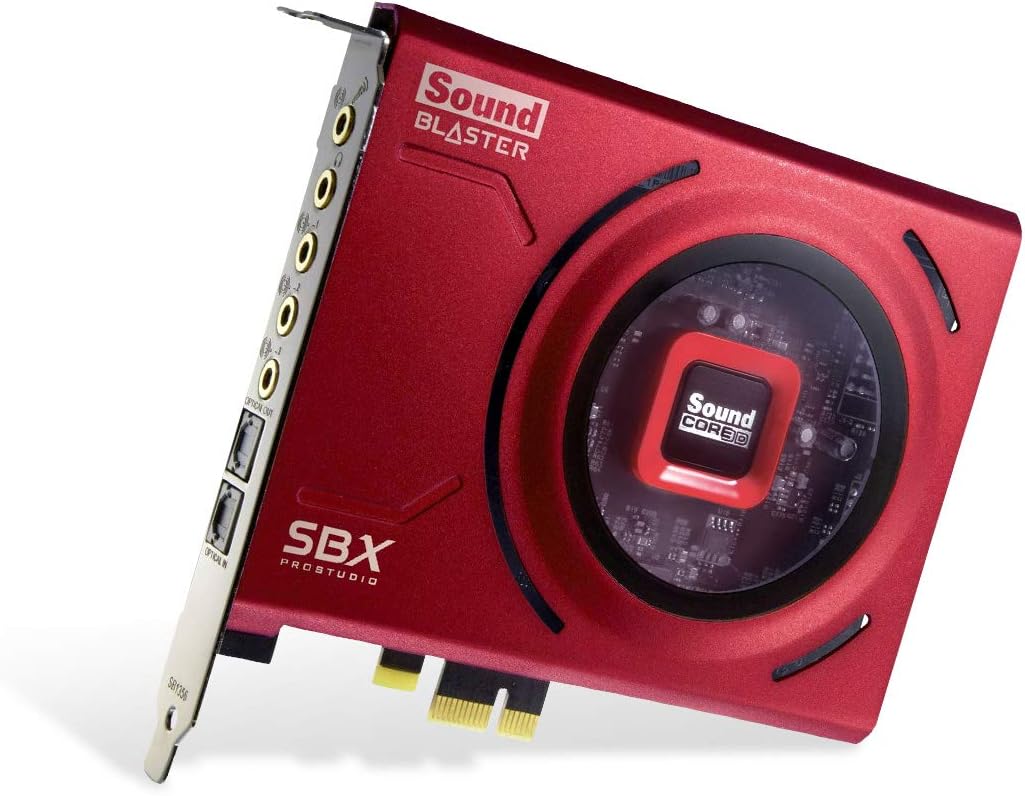
- Modern Creative AE-series PCIe cards — for desktop users who want a card-on-card upgrade over onboard audio.
- Generic onboard audio — for the vast majority of users, fine. The Sound Blaster premium is no longer required for "having sound."
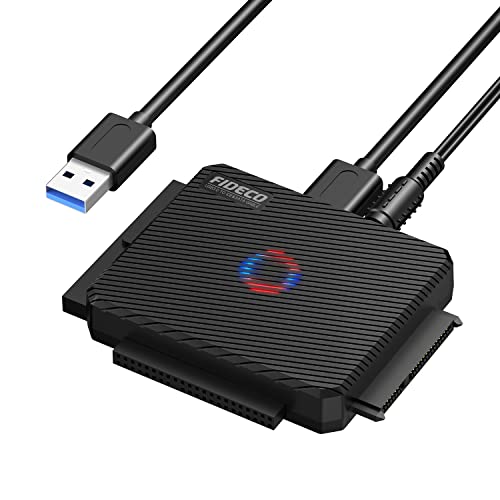
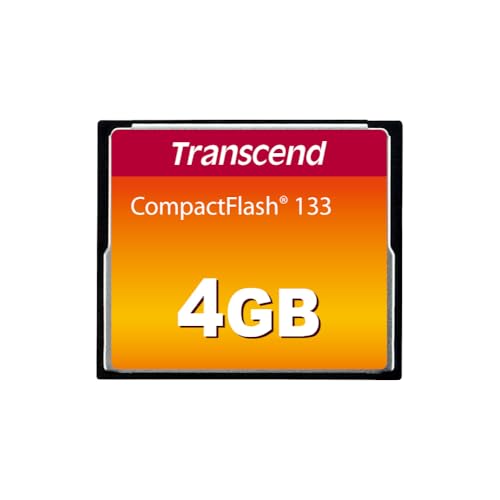
For the imaging-and-archival workflow that retro-PC builders use, pair any vintage Sound Blaster install with a Vantec IDE-to-USB bridge for image backups, a FIDECO bridge for portability, and a Transcend CF card as the silent storage target.
Common retro-PC pitfalls when running vintage Sound Blasters
- Mixing CD-ROM interfaces. Early Sound Blaster cards shipped with proprietary CD-ROM connectors (Mitsumi, Panasonic). Match the cable and BIOS to the drive.
- DOS IRQ conflicts. Sound Blaster 16 defaults to IRQ 5, port 220h, DMA 1. If your network card or scanner sits on the same IRQ, half your games will lock up.
- Buying a fake card. Counterfeit Sound Blaster 16 boards from the late 1990s exist. Verify by chip markings and PCB revision.
- Loud caps. Late-era Sound Blasters from the 2000s sometimes have failed electrolytic capacitors. Recap before deploying in a long-running rig.
- Mistaking AWE32 for AWE64. Same Creative branding, different feature set. The AWE32 has the EMU8000 chip and sample RAM; the AWE64 fakes some voices in software.
When NOT to buy a vintage Sound Blaster
If your retro-PC interest is purely emulation on a modern host, you do not need a real card — DOSBox-X emulates Sound Blaster 16 cleanly. The real card matters when you want period-accurate sound on real hardware, especially the OPL3 FM synthesis nuances that emulators still get slightly wrong.
Bottom line
The Sound Blaster monopoly was a network-effect story, not an audio-quality story. Creative shipped a competent card at the right moment, locked in the developer ecosystem with "Sound Blaster compatibility" as a baseline, and rode that flywheel for two decades. The lock-in finally broke when integrated audio and OS-level audio APIs made the hardware differences invisible to games. In 2026 the brand survives as the Sound BlasterX G6 USB DAC and a healthy secondary market of vintage cards prized by retro-PC enthusiasts. Pair any vintage Sound Blaster build with a Vantec USB 2.0 IDE/SATA bridge, a FIDECO USB 3.0 bridge, and a Transcend 4GB CF card for clean image backups and silent storage.
Citations and sources
- Wikipedia — Sound Blaster — primary reference for the card lineage, dates, and chip details.
- VOGONS forums — the retro-PC community's living archive of Sound Blaster compatibility, IRQ tables, and revision notes.
- Creative — Sound BlasterX G6 product page — official specifications for the modern USB DAC successor to the on-card line.
This piece is editorial synthesis based on publicly available information. No independent first-party benchmarking is reported.