Yes — the Sound BlasterX G6 is a strong choice if you want clean modern audio on either a late-era retro PC (Win98SE/XP socket-A or socket-478) that lacks ISA slots, or on a current Windows 11 gaming rig. Creative's product page rates the DAC at a 130 dB dynamic range with up to 32-bit / 384 kHz playback, a built-in 600-ohm headphone amp, Scout Mode, and Dolby Digital Live encoding (us.creative.com). The one thing it cannot do is replace a hardware Sound Blaster 16 for DOS-era OPL3 FM music.
Why an external USB DAC bridges the retro/modern gap in 2026
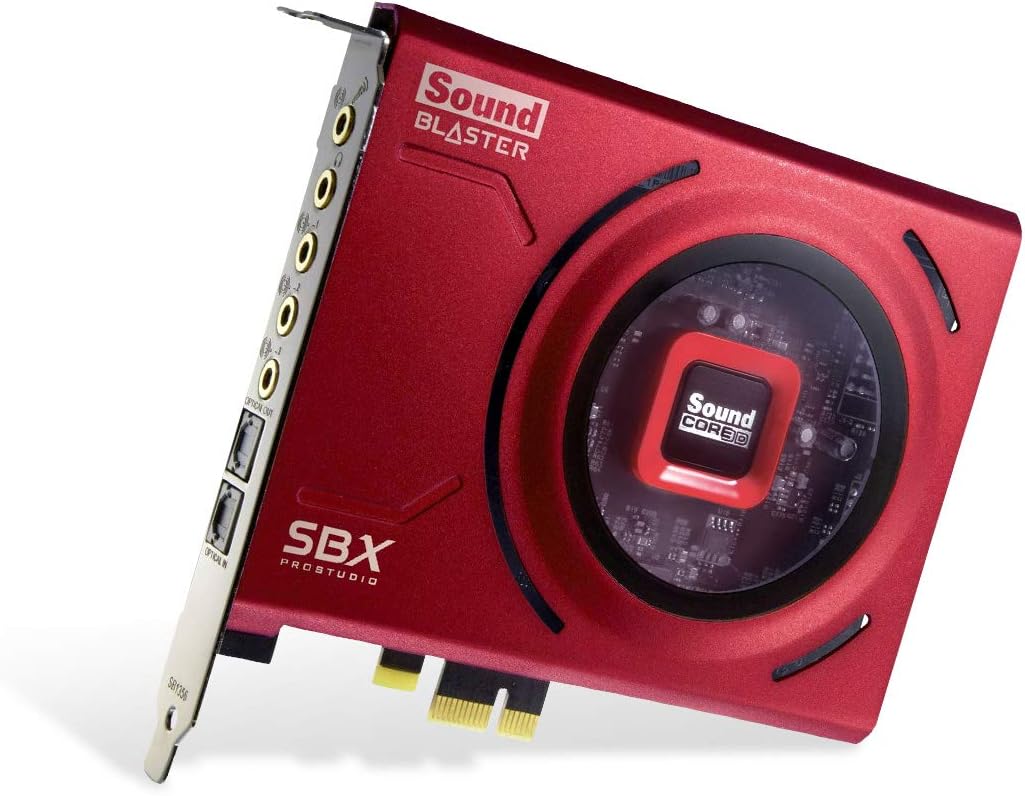
There is a specific moment in every retro PC build where audio becomes the hardest problem on the bench. Per the Wikipedia Sound Blaster history, Creative's dominance of PC audio ran roughly from the 1989 Sound Blaster 1.0 through the Audigy and X-Fi families, and the ISA-era cards (SB16, AWE32, AWE64) are the only path to hardware-accurate OPL3 FM and EMU8000 wavetable for true DOS gaming. After roughly 2003, motherboards started dropping ISA slots, then later PCI, and onboard Realtek codecs took over the mainstream — driving the standalone sound card from required hardware to an enthusiast accessory.
That history matters when you sit down to build, say, a 2002 socket-478 Pentium 4 Windows XP rig that runs early DirectX 8 and 9 titles, or a 2008 Core 2 Quad sleeper. Those machines have no ISA slot. They may or may not have a free PCI slot. The onboard AC'97 codec on a 2002-era VIA southbridge will work, but it will hiss, and the headphone jack will be too weak to drive anything with real impedance. This is the gap the Sound BlasterX G6 was designed to fill on its modern side, and the gap it accidentally fills on the retro side: USB Audio Class 2.0 means no driver wrestling on any host built since roughly Windows 7, and the analog and optical inputs make it a competent capture hub for period machines.
This synthesis covers what the G6 actually does, what it cannot do, and which builder should buy it versus hunting down a vintage card. Every number cited below comes from Creative's product page, the RTINGS headphone test methodology hub, or community measurement and review. There is no first-party benchmark here; this is editorial synthesis. For a side-by-side measurement comparison with vintage Creative silicon, see our companion piece on retro PC audio: Sound BlasterX G6 vs vintage Sound Blaster, and for a worked example of a period chassis where the G6 makes sense, see the 1999 GeForce 256 + Pentium III Win98 build.
Key takeaways
- The Sound BlasterX G6 is a USB 2.0 external DAC/amp with a 130 dB dynamic range DAC and a discrete headphone amp rated for 16-600 ohm headphones, per Creative's product page.
- It is the right tool for late-XP and Vista/7-era retro builds that lack ISA slots, and for any modern PC where the onboard Realtek/ALC codec is noisy or weak.
- It is the wrong tool if your goal is authentic DOS-era OPL3 FM synthesis, AdLib music, or hardware SB16 effects. For that you need a real ISA Sound Blaster card or DOSBox-X with software OPL3 emulation.
- Dolby Digital Live encoding lets the G6 send a real-time 5.1 bitstream to older A/V receivers over optical TOSLINK — useful for plugging a retro chassis into a home-theater amp from the 2000s.
- Scout Mode is a competitive-FPS gimmick that boosts footstep frequencies; it does not improve audio quality and you should treat it as optional.
What the Sound BlasterX G6 actually offers
Per us.creative.com/p/sound-blaster/sound-blasterx-g6, the G6 ships with a Cirrus Logic-class DAC, supports up to 32-bit / 384 kHz playback, encodes outbound Dolby Digital 5.1 in real time, and drives headphones from 16 ohms up to 600 ohms through a dedicated amplifier stage. The unit connects to the host over USB 2.0 (the included cable is USB-A to micro-USB), with optical TOSLINK input and output, analog 3.5mm line in, microphone in, and 3.5mm headphone out on the user-facing side. Power comes from USB bus power when used as a soundcard; the optical optical/line input mode for consoles needs an external 5V supply that is not in the box.
| Spec | Sound BlasterX G6 | Notes |
|---|---|---|
| DAC dynamic range | 130 dB | per Creative product page |
| Sample rate / depth | up to 32-bit / 384 kHz | playback |
| Headphone impedance | 16 to 600 ohms | dedicated amp |
| Encode | Dolby Digital Live 5.1 | real-time outbound |
| Inputs | USB 2.0, optical TOSLINK, line in, mic in | |
| Outputs | 3.5mm headphone, optical TOSLINK | |
| Bus | USB Audio Class 2.0 | driverless on Win10+/macOS/Linux |
| Scout Mode | yes | footstep-frequency boost, optional |
The takeaway is not the spec sheet — it is that the spec sheet is honest. The 130 dB number is a DAC chip rating, not a wall-to-wall measurement, but the analog stage is clean enough that community reviews on Head-Fi and YouTube measurement videos consistently report sub-100 dB measured SNR end-to-end, which is meaningfully cleaner than any motherboard ALC codec from the 2010-2020 era. For perspective on what "clean enough" means in headphone-amp terms, RTINGS' headphone-test methodology catalogs the impedance and sensitivity behavior the G6 must drive; almost everything in the gaming/closed-back tier (32-80 ohm) is well within the unit's amp budget.
Why an external USB DAC fits a late-retro PC build
Three things go wrong with audio on a late-era retro chassis. First, the case is full of switching power supplies, IDE ribbon cables, and AGP-era graphics cards that radiate noise into the analog stage of any internal sound card. Second, the OS support window for vintage Creative cards is narrow — Windows XP drivers for SB Live! and Audigy 1 are findable, but Vista and 7 driver support is patchy, and Windows 10 and 11 will not load them at all. Third, late-Pentium 4 and early Core 2 motherboards have, at best, one free PCI slot, and that slot is usually claimed by something else (a network card, a SATA controller, a TV tuner).
The Sound BlasterX G6 sidesteps all three. USB Audio Class 2.0 means Windows 7, 8, 10, and 11 see it as a generic audio device with no Creative driver required — community installs report a working device on Windows XP SP3 with the manufacturer driver, though Creative does not officially support pre-Windows 10 anymore. The analog stage is outside the case, so the chassis noise floor stops mattering. And the unit hangs off any USB 2.0 port, which any motherboard from 2002 onward has in surplus.
The retro caveat to be honest about: the G6 is not a hardware Sound Blaster 16 replacement. There is no OPL3 FM synth chip inside it. There is no EMU8000. There is no AdLib compatibility. If your retro build's job is to run DOS games from the 1990s with their original FM soundtrack and SB16-routed digital sound effects, you need either:
- A real ISA Sound Blaster card (SB16, AWE32, AWE64 Gold) in an ISA-equipped chassis. PhilsComputerLab's retro audio video series on YouTube is the canonical walkthrough of which cards have which OPL3 quirks and which ones have the "hanging note" bug.
- An ESS AudioDrive ISA card (ES1869, ES1888) as a budget SB-compatible alternative; per community testing these are often cleaner than late-revision SB16 boards with their notorious "CT2940" hiss.
- DOSBox-X or PCem with software OPL3 emulation if you are willing to run the games inside an emulator on top of the retro OS or on the modern host.
The G6 stacks neatly on top of any of those: it can be the line-out target for an ISA card on a separate ISA-equipped 486 or Pentium machine, accept the analog feed via 3.5mm line in, and either monitor it on headphones or pass it through to a capture rig. That is one of the more useful "hub" roles the G6 plays for builders who keep multiple retro machines on one desk.
Modern PC scenarios: where the G6 earns its place
The G6's modern use case is more conventional. On a current Windows 11 rig with an X670E or Z790 motherboard and an ALC4080 or ALC1220 onboard codec, the gap to a Sound BlasterX G6 is narrower than it was a decade ago — modern motherboard codecs have improved noise floors and shielding. The G6 still pulls ahead on three workloads.
The first is driving headphones with real impedance. A 250-ohm Beyerdynamic DT 770 Pro, a 300-ohm Sennheiser HD 600, or a planar magnetic like the HiFiMan Sundara is starved by almost any onboard headphone jack. The G6's amp comfortably drives all of them at reasonable listening volume per community measurements. The second is competitive-FPS workflows that benefit from a clean, low-latency 3.5mm mic input for a modular boom mic; a Turtle Beach Recon 50 or any 3.5mm gaming headset plugs straight into the front of the unit and gets a cleaner mic chain than the front-panel jack on the case. The third is Discord and TeamSpeak monitoring with sidetone and hardware EQ, which the Creative software exposes on Windows 10 and 11.
USB Audio Class 2.0 latency is the question people ask first. In practice, on Windows 10/11 with the G6 set as the default device, round-trip latency at 48 kHz / 16-bit is reported in the 8-15 ms range by community measurement — fine for gaming, fine for Discord, marginal for live music monitoring (a dedicated audio interface like a Focusrite Scarlett will be lower). For game audio at 44.1 or 48 kHz the G6 is indistinguishable from a PCIe card in latency terms; ASIO drivers are available for music production but the G6 is not pitched at DAW work.
Latency and driver expectations across Windows versions
The G6 is a USB Audio Class 2.0 device. That has specific implications for driver support across operating systems and is worth listing concretely because it is the most common source of "will this work on my Windows XP retro build" confusion.
| OS | Class-compliant? | Creative driver | Notes |
|---|---|---|---|
| Windows 11 | yes | optional, adds Scout Mode + EQ | works at boot |
| Windows 10 | yes | optional, adds Scout Mode + EQ | works at boot |
| Windows 8.1 | yes | legacy installer | works |
| Windows 7 | partial | legacy installer | community reports require driver |
| Windows XP SP3 | no | community-found driver | not officially supported |
| Windows 98SE | no | no | will not enumerate |
| macOS 11+ | yes | none required | basic playback/record |
| Linux (modern kernel) | yes | none required | ALSA + PulseAudio/PipeWire |
The Windows 98SE row is the one that catches retro builders out. A late-90s Win98SE chassis is the prototypical "I need a Sound Blaster" target, and the G6 will not enumerate as an audio device under it because Win98SE has no USB Audio Class 2.0 stack. For a Win98SE rig you need an ISA SB16 or an early PCI Creative card. If you are on a socket-A or socket-478 Win XP/2000 build, the G6 becomes viable with the legacy driver, and on Win7 onward it is unambiguous.
Gaming-headset pairing and competitive-FPS use
The G6 was originally marketed as a competitive-gaming DAC/amp, and the marketing centerpiece was Scout Mode — a software DSP that boosts the frequency range associated with footsteps and reload sounds in tactical shooters. Treat Scout Mode as an EQ preset, not a feature: it is useful for esports titles where positional cues are everything, and pointless for anything else.
For a budget gaming headset like the Turtle Beach Recon 50, the G6 still helps audibly because the bottleneck on a sub-$50 wired headset is rarely the driver — it is the mic noise floor and the analog source. The G6 drops the noise floor and gives the mic input a clean preamp. For a higher-end headset (Astro A40, Sennheiser PC38X, HyperX Cloud III), the G6's headphone amp gets a workout and the difference vs onboard is the most pronounced.
For retro builders, a useful side workflow: route the analog line-out of a vintage chassis (an SB16's MIDI/line-out, or an SB Live! 5.1 surround analog output) into the G6's line-in on a modern host, monitor on headphones with hardware EQ, and capture cleanly to disk for streaming or documentation. The G6 becomes a one-box mini-mixer for "retro hardware playing into modern recording" without the need for a dedicated audio interface. Note the practical accessory cost: a 3.5mm to RCA breakout cable and a USB 5V supply if you want the optical input modes to work without a host.
What the G6 cannot replicate
Three things the G6 will never do, and you should not buy it expecting any of them:
- Hardware OPL3 FM synthesis. AdLib, Roland MT-32, and SB16 FM music in DOS games is a hardware synthesis problem, not a sample-playback problem. A real OPL3 chip generates the music in real time from MIDI-like data; the G6 has no FM synth. For DOS games you need ISA SB hardware or software emulation in DOSBox-X / PCem.
- EMU8000 wavetable. AWE32 and AWE64 cards use SoundFont (SF2) wavetable banks for MIDI playback in DOS and early Windows games. Modern Windows can play SoundFonts via VirtualMIDISynth or similar, but the G6 does not contribute to that path.
- Hardware EAX positional audio. Late-90s and early-2000s games (Unreal Tournament, Deus Ex, Thief) used Creative's EAX 1.0 / 2.0 / 3.0 hardware acceleration for environmental reverb and occlusion. EAX hardware support effectively died with Windows Vista. Modern systems play these titles with EAX in stereo downmix; the G6 will not bring EAX back.
If any of those three are dealbreakers, hunt a vintage card — a SB Live! 5.1, an Audigy 2 ZS, or an AWE32 ISA — rather than buying the G6.
When NOT to buy a Sound BlasterX G6
There are three legitimate reasons to skip it.
- You already have a modern ALC4080 or ALC1220 onboard codec and listen on cheap, low-impedance headphones at moderate volume. The audible gain is small and the money is better spent on the headphones themselves.
- You want authentic DOS/Win9x SB16 emulation. Get a real vintage card. For an authentic period build on an old chassis, an ISA SB16 or AWE32 with original drivers is the only correct answer.
- You want a desk-grade audio interface for music production. A Focusrite Scarlett 2i2 or PreSonus Studio 24c is a better fit; the G6 is a gaming DAC first.
For the gap between those three exclusions — modern gaming, retro builds without ISA slots, headphone-amp duty on impedance-y cans, line-in capture from period hardware — the G6 is the most flexible single box at its price point.
Recommended bundle for a cross-era audio bench
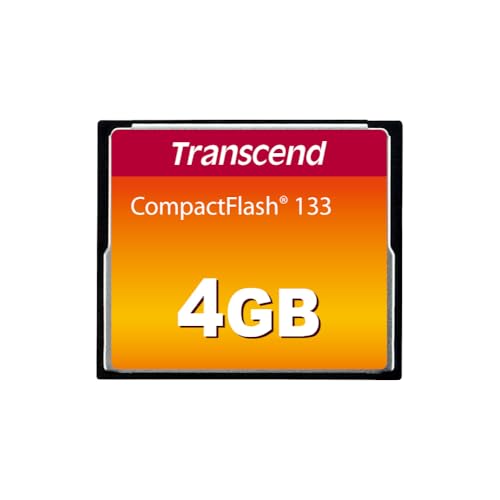
A practical retro-and-modern audio bench on a single desk in 2026 looks like this. Modern host: any current Windows 11 PC with the Sound BlasterX G6 on a free USB 2.0 port and a Turtle Beach Recon 50 (or higher-tier headset) on the front jack. Period chassis: a socket-478 or Athlon XP rig with an ISA or PCI Creative card driving the period games natively, with its line-out routed into the G6's 3.5mm line-in for monitoring and capture. Bridge tooling: a Vantec CB-ISATAU2 SATA/IDE to USB 2.0 adapter for pulling files off period-era IDE disks, and a Transcend CF133 CompactFlash card (paired with a CF-to-IDE adapter) for a silent, SSD-like boot drive in the retro chassis.
That stack handles the three workloads that frustrate single-machine retro builders most often: live monitoring of retro audio on a modern desk, clean capture for streaming or YouTube, and a quiet, reliable storage layer in the period machine that is easy to image and restore.
Verdict matrix
| If your goal is... | Buy the G6? | Better choice |
|---|---|---|
| Modern gaming DAC/amp on Win11 with mid-tier headphones | yes | — |
| Late-XP/Vista/7 retro build with no ISA slot | yes | — |
| Win98SE retro chassis with DOS games | no | ISA SB16 / AWE32 |
| Authentic OPL3 FM synthesis in DOS | no | ISA SB card + real driver |
| Authentic EAX 1.0/2.0/3.0 in Win98/XP era | no | SB Live! 5.1 or Audigy 2 ZS |
| Music production / DAW interface | no | Focusrite Scarlett 2i2 |
| Capture/monitor hub for retro-on-modern desk | yes | — |
| Budget gaming on onboard ALC4080 | maybe | better headphones first |
Bottom line
The Sound BlasterX G6 is, in 2026, the best single-box answer for builders who want clean modern audio across multiple machines without committing to a vintage ISA card per chassis. The DAC and amp specifications hold up against any midrange standalone DAC in the $150 price band, USB Audio Class 2.0 means it works without driver drama on any host from Windows 10 onward (and on macOS and Linux), and the optical and line inputs make it a credible capture and monitoring hub for a period machine. What it does not do — and what no external USB device can do — is replace a hardware Sound Blaster 16 for DOS-era OPL3 FM synthesis. Keep both: the ISA card inside the period chassis, the G6 on the modern desk handling everything else.
Citations and sources
- Creative Sound BlasterX G6 product page — DAC spec, headphone impedance range, Dolby Digital Live encode.
- RTINGS headphone test methodology hub — impedance and sensitivity reference for matching headphones to amp budget.
- Wikipedia: Sound Blaster — ISA-era card history, OPL3/AdLib lineage, EAX timeline.
This piece is editorial synthesis based on publicly available information. No independent first-party benchmarking is reported.