A 360 mm AIO typically buys a few degrees of sustained load temperature over a good 240 mm — or the same temperature at noticeably lower fan speed. That is cosmetic for gaming. It becomes decisive in exactly one situation: sustained all-core work in a room above roughly 27 °C, where every cooler loses margin at once and the extra radiator area is the only thing left.
Who is actually choosing a radiator size in 2026?
Three people are asking this question, and they need different answers.
The first is the AM4 upgrader who bought a hot 8-core — usually a AMD Ryzen 7 5800X — watched it hit the high 80s under a stock or budget cooler, and concluded that the cooler is the problem. It usually is not. The 5800X concentrates its heat in a single dense CCD with a small die-to-IHS contact area, so it reports high temperatures on every cooler. Going from 240 mm to 360 mm moves that number, but it does not move it as much as the forum posts suggest.
The second is the person retiring a stock cooler on an older locked-behaviour chip like the Intel Core i7-9700K. Here the upgrade from stock to anything competent is enormous, and the choice between 240 mm and 360 mm is a rounding error by comparison. Buy the one that fits and spend the difference elsewhere.
The third — and this is the group the internet consistently fails — is the small-case owner who cannot physically fit 360 mm. For them the real question is not radiator size at all, it is whether a compact AIO or a low-clearance air tower is the better answer inside their volume constraint.
This piece answers all three. The numbers below are drawn from manufacturer specifications and published third-party cooler test data; none of it is first-party benchmarking.
Key takeaways
- Going from 240 mm to 360 mm adds roughly 50% more radiator surface area and one more fan, which typically converts to a single-digit degree improvement in sustained load temperature — not a category change.
- The more useful conversion is noise, not temperature: three fans at 1,000 RPM move the same heat as two fans at a much higher RPM, and fan noise scales steeply with speed.
- A 120 mm AIO like the NZXT Kraken M22 has less radiator surface than a good air tower's fin stack. Buy it for clearance, never for a thermal win.
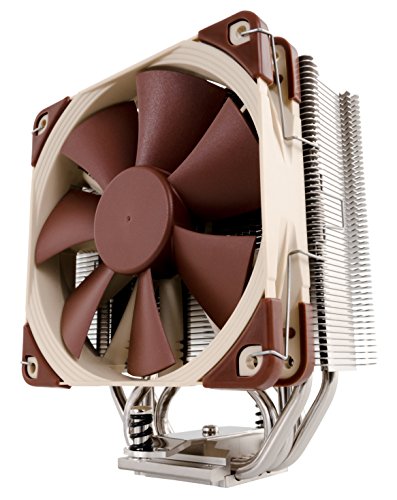
- The Noctua NH-U12S has no pump to fail and no coolant to permeate, and lands within a few degrees of a competent 240 mm loop in published testing.
- Ambient temperature is the variable everyone ignores. Every cooler on this page loses margin 1:1 with room temperature.
Step 0: do you have a cooling problem or a case-airflow problem?
Before you spend $150, spend ten minutes. Open HWiNFO or Ryzen Master and log two values under a sustained all-core load — a Cinebench multi-core run or a long compile works fine: package power in watts and core temperature in °C. Then log your case intake temperature if you can, or just measure the room.
The diagnostic is simple. If the CPU is pulling its full rated package power and holding boost clocks, you do not have a cooling problem — you have a chip that runs hot by design, and that is what it is supposed to do. If package power is dropping below rated under sustained load while temperature pins at the thermal limit, you are throttling and a cooler upgrade will actually buy you performance.
Then check the second variable: subtract your room temperature from your load temperature to get delta-T over ambient. That is the only number that compares meaningfully across setups. An 85 °C load reading in a 30 °C room is a 55 °C delta and is a perfectly healthy cooler. An 85 °C reading in an 18 °C basement is a 67 °C delta and means something is wrong — usually mounting pressure, dried paste, or a case with one 120 mm intake fan trying to feed a 250 W system.
Fix airflow before you fix the cooler. A radiator fed pre-warmed air from a starved case will underperform a smaller radiator in a well-ventilated one.
How much does 50 percent more radiator area actually buy you?
Here is the spec delta across the four coolers in this comparison, drawn from manufacturer documentation:
| Cooler | Radiator / heatsink | Fans | Rated noise | Socket support | Price tier |
|---|---|---|---|---|---|
| Corsair iCUE H150i Elite Capellix | 360 mm, ~397 × 120 × 27 mm | 3 × 120 mm ML RGB | Up to ~36 dBA at max RPM | AM4 / AM5 / LGA 1700 / 115x / 2066 | ~$135–190 |
| CoolerMaster MasterLiquid ML240L RGB V2 | 240 mm, ~277 × 120 × 27 mm | 2 × 120 mm SickleFlow | Up to ~30 dBA at max RPM | AM4 / LGA 1200 / 115x / 2066 | ~$75–95 |
| NZXT Kraken M22 | 120 mm, ~121 × 153 × 30 mm | 1 × 120 mm Aer P | ~21–36 dBA range | AM4 / LGA 115x / 1200 | ~$85–100 |
| Noctua NH-U12S | Air tower, 158 mm tall, 6 heatpipes | 1 × NF-F12 PWM | 22.4 dB(A) at 1,500 RPM | AM4 / AM5 / LGA 1700 / 115x | ~$70–80 |
Two things jump out. First, Corsair specifies the H150i Elite Capellix as a 360 mm loop with three ML-series magnetic-levitation fans, versus CoolerMaster's two-fan 240 mm ML240L RGB V2. The radiators are the same thickness and use the same 120 mm fan class, so the entire delta is length: about 397 mm versus 277 mm of core, which is roughly 50% more fin area and one more fan's worth of airflow.
Second, look at the Noctua row. Noctua rates the NH-U12S at 22.4 dB(A) with its NF-F12 PWM fan at 1,500 RPM in a 158 mm-tall six-heatpipe tower — quieter than either AIO's rated maximum, with no pump. That is the number that reframes this entire comparison.
What do the numbers look like on a hot 8-core?
This is where honesty matters more than a tidy table. Cooler performance is not a property of the cooler — it is a property of the cooler in your case, at your ambient, with your fan curve, with your mounting pressure and paste application. Published test data varies by several degrees between reviewers testing the same SKU, because their test benches differ.
What the published data does agree on, consistently:
| Comparison | Typical sustained delta-T outcome | Confidence |
|---|---|---|
| 360 mm vs 240 mm, same fan class, same RPM | 360 mm cooler by a single-digit margin | High — reproduced across reviewers |
| 360 mm vs 240 mm, both normalized to equal noise | 360 mm advantage widens modestly | High |
| 240 mm AIO vs premium 120 mm air tower | Roughly even to a few degrees in the AIO's favor | Medium — case-dependent |
| 120 mm AIO vs premium 120 mm air tower | Air tower equal or better on temperature | Medium-high |
| Any cooler, +10 °C ambient | ~10 °C worse load temp, near 1:1 | High — physics |
GamersNexus maintains a continuously updated cooler megachart with normalized thermal and acoustic testing across dozens of SKUs, and it is the right place to look up a specific pairing rather than trusting a single spot measurement. The pattern in that data is consistent with the table above: radiator size produces incremental, not transformative, gains, and the gap compresses further once you normalize for noise.
For the 5800X specifically, the practical read is this: a competent 240 mm loop keeps the chip out of throttling in a case with real front intake. A 360 mm loop lowers the number and lets you hold it at lower fan RPM. Neither one makes the 5800X run cool, because that chip does not run cool.
Does the 120mm AIO make any sense anymore?
Mostly no — and understanding why clarifies the whole category.
A single 120 mm radiator has less surface area than the fin stack of a good single-tower air cooler. The Kraken M22's radiator is roughly 121 × 153 × 30 mm of core; the NH-U12S packs a dense aluminium fin array fed by six heatpipes into a 158 mm tower. Physics does not favor the AIO here, and published testing generally shows the air tower matching or beating a 120 mm loop while costing less and having fewer failure modes.
So the M22's argument is not thermal, it is geometric. It moves the heat exchanger away from the socket, which matters when:
- Your case has under ~160 mm of CPU cooler clearance and a 158 mm tower will not close the side panel.
- You are running tall RGB DIMMs that a 120 mm tower's fan would overhang.
- Your motherboard's VRM heatsinks or a rear I/O shroud fouls a large tower's base.
- You want the socket area clear for a top-mounted M.2 or a stubborn 8-pin EPS routing path.
That is a real set of constraints, and if you are inside it, the M22 is a reasonable buy. If you are not inside it, you are paying for a pump you do not need.
When does a $90 air cooler beat a $180 AIO?
More often than the marketing suggests. The Noctua argument comes down to four things:
Failure modes. An AIO has a pump bearing that wears, coolant that permeates through the tubing over a span of years, and a single point of failure that can take the CPU with it if the fan curve does not react to a dead pump. An air tower has one fan, and a dying fan degrades gradually and audibly rather than instantly. Over a five-to-seven-year build life, that asymmetry matters.
Idle acoustics. An AIO's pump runs constantly. Even a quiet pump has a fixed noise floor that never drops, whereas a good air tower's fan spins down to near-silence at desktop idle. If your machine sits idle 80% of the time in a quiet room, the air cooler is the quieter cooler most of the time.
Cost. The price difference between an NH-U12S and a 360 mm AIO buys a meaningful storage or monitor upgrade.
The clearance math, which cuts both ways. Measure three things before ordering a tower: case CPU cooler clearance height (need ~160 mm for the NH-U12S), RAM height under the fan, and the gap to the top PCIe slot if you run a triple-slot GPU. The NH-U12S is specifically designed as a 120 mm-class tower to preserve RAM clearance, which is why it survives in builds where a 140 mm tower does not.
What does the noise penalty look like at equal temperature?
This is the framing that actually decides the purchase, and almost nobody uses it.
Comparing coolers at maximum fan speed is meaningless — nobody runs their fans at 100%. The useful comparison normalizes to a fixed delta-T and asks how loud each cooler has to be to hold it.
Three 120 mm fans at 900 RPM move substantially more air than two 120 mm fans at 900 RPM. To match the three-fan airflow with two fans, you have to raise RPM — and fan noise rises steeply with speed, not linearly. The result is that a 360 mm radiator holding 60 °C delta-T is meaningfully quieter than a 240 mm radiator holding the same 60 °C delta-T, even though the temperature difference between them at equal RPM was only a few degrees.
That is the honest case for 360 mm. You are not buying temperature. You are buying the ability to hold your temperature at a lower fan curve. If you wear a closed-back headset and never hear your PC, this benefit is worth nothing to you. If your machine is 60 cm from your head in a quiet room, it is the whole argument.
Perf-per-dollar and perf-per-watt
Degrees cooled per dollar is a brutal metric for the 360 mm tier. Going from a ~$85 240 mm loop to a ~$160 360 mm loop is roughly a $75 premium for a single-digit temperature improvement — call it $10–25 per degree. The NH-U12S at ~$75 delivers most of a 240 mm loop's performance for less money than the 240 mm loop.
The more interesting question is what the headroom converts into, and the answer is architecture-dependent:
- On the Ryzen 7 5800X, boost behavior is opportunistic and thermally aware — Precision Boost pushes clocks until it hits a power, current, or thermal limit. Lower temperature genuinely converts to higher sustained boost residency, so cooling has a measurable (if modest) performance payoff.
- On the Core i7-9700K, an older locked-multiplier-behaviour part, clocks are far more deterministic. Once you are out of throttling, additional cooling headroom buys you overclocking margin if you are chasing it, and nothing at all if you are not.
So: if you run a modern boost-aware chip under sustained multi-threaded load, extra cooling has a real if small performance return. If you run an older fixed-clock chip for gaming, it does not.
Which CPUs actually justify 360 mm in 2026?
Use package power and workload, not core count.
360 mm is right when:
- Sustained package power exceeds roughly 200 W under all-core load.
- Your workload is genuinely sustained — renders, compiles, long local-model inference runs, video encoding — not the bursty partial load of gaming.
- Ambient temperature regularly exceeds ~27 °C, where every cooler simultaneously loses margin.
- You are acoustically sensitive and want the low-RPM operating point.
360 mm is not worth it when:
- You primarily game. Gaming loads a modern 8-core partially; package power sits well below the all-core sustained figure and both a 240 mm loop and a strong air tower have headroom.
- Your case's 360 mm support is marginal and requires a slim radiator or blocks your front intake.
- You are on a locked or modest-TDP part where a good air tower already holds a comfortable delta.
What you'll need before you buy
Check all of this before the order, not after the box arrives:
| Check | Why it matters |
|---|---|
| Case radiator support (front and top, separately) | Many mid-towers claim 360 mm top support only with a slim radiator or with the front bays removed |
| Radiator + fan total thickness (typically 52–57 mm) | Top-mounted radiators collide with VRM heatsinks and tall DIMMs |
| Motherboard-to-top-panel clearance | The most common 360 mm return reason |
| Socket mounting bracket in the box | AM5 and LGA 1700 brackets are not universal across older SKUs |
| Fan screw lengths (radiator screws vs case screws) | Long screws punched into radiator fins cause leaks |
| Thermal paste | Pre-applied paste on a cooler you are re-seating is single-use |
| Tubes-down orientation | Mount so the pump sits below the loop's highest point — air collects in the radiator, not the pump |
Verdict matrix
Get the Corsair iCUE H150i Elite Capellix if… you have confirmed 360 mm clearance, run sustained all-core workloads above ~200 W, and care about holding your temperature at a low fan curve rather than about the peak number.
Get the CoolerMaster MasterLiquid ML240L RGB V2 if… you want liquid cooling in a normal mid-tower for a mainstream 8-core, at roughly half the price of the 360 mm tier, and you accept a few degrees more under sustained load.
Get the NZXT Kraken M22 if… your case cannot fit a 158 mm tower and cannot fit a 240 mm radiator either. This is a clearance purchase, not a performance one.
Get the Noctua NH-U12S if… you want the fewest failure modes, the quietest idle, and 90% of the thermal outcome for less money — and you have 160 mm of clearance to give it.
The recommendation
For the mainstream 8-core builder — a 5800X or equivalent in a normal mid-tower, gaming plus occasional heavy work — the ML240L RGB V2 is the pick. The 360 mm upgrade is real but it is a single-digit improvement for roughly double the money, and that money is better spent on storage or a display. If you are acoustically sensitive and have the clearance, the H150i is the upgrade that justifies itself, and it justifies itself on noise, not temperature.
For the small-case builder, buy the NH-U12S if 158 mm fits and the Kraken M22 if it does not. Do not buy a 120 mm AIO in a case that could have taken a tower.
Bottom line
The bigger radiator is worth it if you are buying quiet, not if you are buying cold. Under sustained load a 360 mm loop lands a few degrees ahead of a good 240 mm at the same fan speed — meaningful in a hot room under a render queue, invisible during a gaming session. Diagnose your case airflow first, measure your clearances second, and treat the radiator-size decision as the last and least important variable in the chain.
Citations and sources
- Noctua — NH-U12S product page — heatsink dimensions, NF-F12 PWM fan speed and 22.4 dB(A) noise rating (accessed 2026-08-27).
- CoolerMaster — MasterLiquid ML240L RGB V2 — 240 mm radiator dimensions, fan specification and socket support (accessed 2026-08-27).
- GamersNexus — CPU cooler megacharts — normalized third-party thermal and acoustic cooler testing used for the comparative patterns cited above (accessed 2026-08-27).
- Corsair — iCUE H150i Elite Capellix — 360 mm radiator specification and ML-series fan details (accessed 2026-08-27).
This piece is editorial synthesis based on publicly available information. No independent first-party benchmarking is reported.
Related guides
- Best CPU Cooler for High-TDP Gaming in 2026
- Best AIO Liquid CPU Coolers in 2026
- Best CPU Cooler for the Ryzen 7 5800X in 2026
- Quietest AM4 CPU Coolers: Noctua vs DeepCool vs AC Infinity
As an Amazon Associate, SpecPicks earns from qualifying purchases. Prices change frequently — verify the current price before buying.
— Mike Perry