For a first 1080p gaming build in 2026, take the Ryzen 5 2600 — not because it is the faster chip, but because AM4 is still a live socket and LGA1151 is not. The Core i7-9700K wins more benchmarks and costs more once you add the cooler it does not ship with, and it upgrades to nothing.
Who this is for
The buyer here has under $500 for a whole platform — CPU, motherboard, memory — and is pairing it with a 12 GB midrange graphics card that is already bought or already spoken for. That is a specific and very common situation: someone stepping up from a laptop or a hand-me-down office PC, shopping the used market, and trying to get to 1080p60 in modern titles without a second mortgage.
It is not the situation where either of these chips looks good on paper against a current-generation part. Both are old. The AMD Ryzen 5 2600 launched as a six-core, twelve-thread Zen+ part; the Intel Core i7-9700K launched as an eight-core, eight-thread Coffee Lake Refresh part with an unlocked multiplier. Neither has been a current product for years. What keeps them relevant is that the used and clearance market has priced them into the range where a first build is possible at all.
The framing that actually matters for this buyer is not "which chip is faster" — it is "which of these two dead-ends is less dead." One socket still has parts you can drop in. The other does not. Everything below is downstream of that.
Note the catalog pricing caveat up front: the listings for both chips on SpecPicks sit around $245–265 as of 2026, which reflects new-old-stock pricing rather than what either sells for used. Buying either of these new at those prices is the one scenario where the answer to this article is "neither."
Key takeaways
- Threads versus clocks split by workload. Six cores with simultaneous multithreading versus eight physical cores without it is not a straight win for either side — the Intel part wins lightly-threaded game logic, the AMD part wins when something is running in the background.
- Platform dead-end risk is the whole argument. Socket AM4 received CPU generations for years after the 2600 shipped. LGA 1151 second revision ended with ninth-gen Intel.
- The cooler is not optional on the Intel side. Per Intel's product specifications, the i7-9700K is a 95 W TDP part with no bundled cooler. The Ryzen 5 2600 includes a Wraith Stealth per AMD's product page.
- DDR4 is the shared floor. Both platforms use DDR4, so memory is not a differentiator — but it is also not carried forward if you later move to a modern platform.
- Neither is the answer if you can stretch. A current entry platform buys you a warranty, modern memory support and a real upgrade path.
Step 0 — decide the socket before you decide the chip
Pick the socket first. The CPU is the cheap, replaceable part; the board is the commitment.
What AM4 still gets you in 2026. AM4 spans Zen through Zen 3, which means a board bought today for a Ryzen 5 2600 can, subject to the vendor's BIOS support list, later take a substantially faster chip from the same socket family. The upgrade is a screwdriver and a BIOS flash, not a rebuild. That is the single most valuable thing you can buy on a $500 platform budget, because it converts "I need a new PC in two years" into "I need a new CPU in two years."
What LGA1151 does not get you. The second revision of LGA 1151 used for eighth- and ninth-gen Intel ended with ninth gen. There is no meaningfully faster drop-in above the i7-9700K on that socket — the i9-9900K is the ceiling and is a lateral move at best for gaming. A board bought for the 9700K is a board you replace when the CPU stops being enough.
The BIOS caveat, stated plainly. AM4's upgrade path is real but not universal. Board vendors dropped support for some early chipsets on some models, and the flash may require a compatible CPU already installed or a BIOS-flashback header. Check the specific board model's CPU support list on the vendor site before you assume anything. Buying a B450 or B550 board with flashback is the way to keep the option open.
Spec delta
| CPU | Cores / threads | Base / boost | TDP | Socket + upgrade ceiling |
|---|---|---|---|---|
| AMD Ryzen 5 2600 | 6 / 12 | 3.4 / 3.9 GHz | 65 W | AM4 — upgradeable through Zen 3, subject to board BIOS |
| Intel Core i7-9700K | 8 / 8 | 3.6 / 4.9 GHz | 95 W | LGA 1151 (2nd rev) — ends at ninth gen |
Core counts, clocks and TDP figures above are the manufacturers' published specifications: see AMD's Ryzen 5 2600 page, Intel's i7-9700K specifications, and the corresponding database entries at TechPowerUp for the Ryzen 5 2600 and TechPowerUp for the Core i7-9700K.
The interesting row is the last one, and it is the only row where the gap is not a matter of degree.
Which one bottlenecks a 12 GB midrange GPU at 1080p?
Both do, in different games, and the distinction is worth understanding before you read any benchmark chart.
The two most common 12 GB midrange cards in this budget bracket are the ZOTAC Gaming GeForce RTX 3060 Twin Edge OC 12GB and the MSI GeForce RTX 3060 Ventus 3X 12G OC. They are the same GPU — the GeForce RTX 3060 as catalogued by TechPowerUp — in different coolers with different factory clocks. Whichever you have, the CPU question is identical, and the two cards' behaviour differs only in sustained boost under thermal load, not in how they respond to the processor feeding them.
GPU-bound titles. Modern AAA games at high settings and 1080p push the RTX 3060 to its limit before either CPU runs out of headroom. In this class the CPU choice barely moves average frame rate, because the graphics card is the constraint. Both chips deliver essentially the same experience.
CPU-bound titles. Competitive shooters, MOBAs, large-scale simulation and city builders are the opposite case. Frame rate here is set by how fast the processor can execute game logic and issue draw calls, and the graphics card sits partly idle. This is where an older six-core with lower clocks runs out first, and where the 9700K's higher boost clock earns its price.
Read the right metric. In CPU-limited scenarios the damage shows up in one-percent low frame times — the stutters — not in the average. An average-FPS bar chart can show a 5% gap while the frame-time graph shows a chip dropping frames every time an asset streams in. When you check third-party reviews for these chips, look for frame-time plots, not bar charts.
Benchmark synthesis by title class
There is no first-party testbench data behind this piece, so the table below describes the shape of published third-party results for this class of hardware rather than reproducing specific numbers.
| Title class | Typical limiter at 1080p | Which chip leads | What the gap looks like |
|---|---|---|---|
| Esports (CS-class, MOBA, high-refresh) | CPU | Core i7-9700K | Higher averages and cleaner frame times from the clock advantage |
| Open-world AAA, high settings | GPU (RTX 3060) | Effectively tied | Averages converge; CPU choice is close to irrelevant |
| Simulation / strategy, large save states | CPU, single-thread heavy | Core i7-9700K | Late-game turn times and tick rates favour the higher clock |
| Gaming while streaming or recording | CPU, thread count | Ryzen 5 2600 | SMT absorbs the encode thread the 8c/8t part has to give up a core to |
For the underlying per-chip specifications behind these characterisations, see the TechPowerUp database entries linked in the spec-delta section above.
Does 6c/12t beat 8c/8t for streaming and background tasks?
This is the one workload where the AMD part is straightforwardly better, and it is worth being precise about why.
Simultaneous multithreading lets one physical core work on two instruction streams, filling execution slots that would otherwise stall. It is not two cores — the usual rule of thumb is that the second thread adds a fraction of a core's throughput, not a whole one. But that fraction is exactly what you want when a background task is competing with a game for CPU time, because the game keeps its cores and the encoder gets the leftovers.
Eight physical cores without SMT handles the same situation differently: to run an x264 encode you give up whole cores. On an 8c/8t part that is a visible hit to the game thread. On a 6c/12t part the encoder soaks up spare execution capacity instead.
Where the eight physical cores win is the opposite case: a workload that scales cleanly across cores and keeps all of them saturated, like compiling or CPU rendering. That is not a gaming argument, but it is worth knowing if the machine has a second job.
For a first build that will also run a Discord call, a browser with thirty tabs, and possibly OBS, the thread count is the more useful spec.
Cooling and power — the hidden price gap
The sticker prices on these two chips are close. The build prices are not.
The Ryzen 5 2600 includes a Wraith Stealth cooler in the box per AMD's product page. At its 65 W TDP and stock clocks, that cooler is adequate. It is not quiet under sustained load, and it is not what you would choose if you planned to push the chip, but it is a complete solution at zero additional cost.
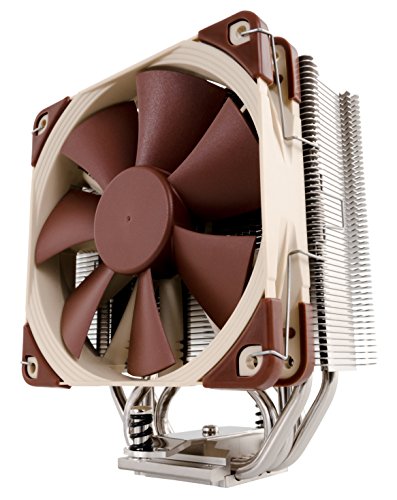
The Core i7-9700K includes nothing. It is a K-series part, and per Intel's specifications it carries a 95 W TDP — which, on ninth-gen Intel, understates sustained power draw under an all-core load considerably. A bargain-bin tower cooler will let it throttle. A competent single-tower air cooler such as the Noctua NH-U12S, listed at $79.95 as of 2026, is the class of cooler this chip actually needs.
Add that to the comparison and the Intel build costs meaningfully more than the CPU listings alone suggest. On a $500 platform budget, an $80 cooler is a large fraction of the motherboard you were going to buy. If you are already sold on the Intel side, our dedicated i7-9700K cooler guide covers the cheaper options that still hold clocks.
There is a power-supply implication too. A 95 W TDP chip that boosts hard, paired with an RTX 3060, is not a build for a no-name 450 W unit. Budget for a quality mid-wattage supply on either platform, but treat it as non-negotiable on the Intel side.
Storage and the rest of the build
Do not spend the savings on the CPU and then cripple the machine with storage.
A Kingston 960GB A400 SATA3 2.5" Internal SSD is the sensible floor for a first build's game library. SATA is slower than NVMe on paper, and on both of these platforms NVMe support is board-dependent — many budget B450 and Z390 boards have one M.2 slot, some have none. For a 1080p gaming machine the practical difference between SATA SSD and NVMe is load times measured in a couple of seconds, not frame rate. Capacity matters more than interface here; see our comparison of SATA SSDs for reviving an old PC for the tradeoffs.
What to skip on a first build: RGB anything, a case with a glass panel and two intake fans, an aftermarket cooler on the AMD side, and more than 16 GB of DDR4. Each of those is money that would move more frames if it went into the GPU tier instead.
Perf-per-dollar and perf-per-watt
On perf-per-watt the Ryzen 5 2600 wins clearly: 65 W against 95 W, and the ninth-gen Intel part's real-world sustained draw runs above its TDP rating under load. On a small case with limited airflow — a common first-build constraint — that difference shows up as noise and as thermals.
On perf-per-dollar the answer depends entirely on where you buy. At the catalog listings quoted earlier the two are close on the chip alone, and the Intel side loses once the required cooler is added. On the used market the picture shifts month to month, and the Ryzen 5 2600 has historically been the cheaper of the two by a wide margin because far more of them were sold.
Two caveats on used pricing that are easy to get wrong:
- The motherboard, not the CPU, is where used-market money is lost. Boards have failure modes CPUs do not — bulging capacitors, dead VRM phases, damaged sockets — and no way to test before purchase.
- A used K-series Intel chip has an unknown overclocking history. That is a smaller risk than it sounds since degraded silicon usually shows up as instability at stock immediately, but it is a risk the AMD part does not carry to the same degree.
The upgrade-path argument, and the counter-case
Two years from now, the AM4 buyer's move is a CPU swap: a faster Zen 3 chip into the same board, with the same memory, for the price of one component. The LGA1151 buyer's move is a new board, new memory, new CPU — effectively a new PC.
That asymmetry is worth more than the frame-rate delta between these two chips today, because the frame-rate delta is small and confined to CPU-bound titles, while the upgrade delta is the entire cost of a platform.
The counter-case is real, though: if you are certain this machine will be replaced wholesale rather than upgraded — because it is a stopgap, a second PC, or a build for someone who will not open the case again — then the upgrade path is worth nothing and you should just buy whichever chip is cheaper in front of you on the day.
If you do go AMD and later want the upgrade, our Ryzen 5 2600 to Ryzen 7 5800X analysis covers exactly what that swap buys you.
Verdict matrix
Get the Ryzen 5 2600 if… you are buying a platform rather than a PC, you want the option of a faster chip on the same board in two years, you will run background tasks alongside games, or you want a build that is complete without an extra cooler purchase.
Get the Core i7-9700K if… you already own a compatible LGA1151 board and a decent cooler, you play primarily CPU-bound esports or simulation titles at high refresh, and you accept that this machine is a fixed configuration you will replace rather than upgrade.
Skip both and save for a current platform if… you are buying every component new at full retail. At the new-old-stock prices these chips carry in 2026, the value case collapses, and a current-generation entry platform gives you modern memory support, a live upgrade path and a warranty for a similar total outlay.
Bottom line
The Ryzen 5 2600 is the recommendation for a first 1080p build, and the reason is the socket, not the silicon. It is the cheaper complete build, it handles background workloads better, it runs cooler and quieter, and the board you buy for it can carry a much faster chip later.
The honest tradeoff: in CPU-bound esports and simulation titles at high refresh, the i7-9700K is measurably the faster gaming chip and will stay that way. If those titles are the only thing you play and you already have the board, buy the Intel part and accept that the machine is finished the day you assemble it.
Related guides
- Ryzen 5 2600 vs Ryzen 7 5800X: Is the AM4 Upgrade Worth It?
- Core i7-9700K vs Ryzen 7 5800X for 1440p Gaming in 2026
- ZOTAC RTX 3060 Twin Edge vs MSI RTX 3060 Ventus 3X: Which 12GB Card?
- Best CPU Cooler for the Core i7-9700K in 2026
- Best SATA SSDs for Reviving an Old PC in 2026
Citations and sources
- AMD — Ryzen 5 2600 product page — manufacturer specification for core/thread count, clocks, 65 W TDP and the bundled Wraith Stealth cooler.
- Intel — Core i7-9700K specifications — manufacturer specification for the 8c/8t configuration, 95 W TDP and the absence of a bundled cooler.
- TechPowerUp — Core i7-9700K CPU database entry — third-party specification database used to cross-check clocks and socket details.
- TechPowerUp — Ryzen 5 2600 CPU database entry — third-party specification database for the AMD side of the spec-delta table.
- TechPowerUp — GeForce RTX 3060 GPU database entry — reference for the 12 GB card both partner models are built on.
- Socket AM4 — background on the socket's CPU-generation span, the basis for the upgrade-path argument.
- LGA 1151 — background on the socket revision that ends with ninth-generation Intel.
- Simultaneous multithreading — reference for the 6c/12t versus 8c/8t discussion.
This piece is editorial synthesis based on publicly available information. No independent first-party benchmarking is reported.