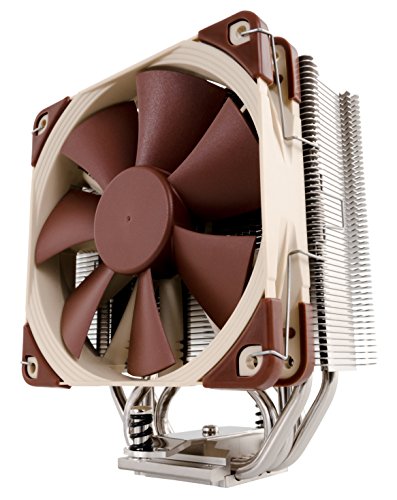
As of 2026, the quietest practical CPU cooler for an AM4 Ryzen build is the Noctua NH-U12S, a single-tower air cooler whose NF-F12 fan can idle near-silently on a mainstream chip like the Ryzen 7 5800X. Per Noctua's product page, the NH-U12S's noise floor is anchored by a single fan with no pump component, which removes the largest recurring noise source found on AIO liquid coolers.
Editorial intro: why acoustics, not just temperature, should drive a cooler choice
Enthusiast cooler coverage still tends to lead with peak temperature deltas at maximum load, but for the vast majority of AM4 owners running a Ryzen 5 5600, Ryzen 7 5700X, or Ryzen 7 5800X, acoustics is the metric that actually shapes daily use. A tower cooler that keeps a 5800X at 78 C under a rendering pass is functionally identical to one that holds 72 C if both survive without throttling — but the perceived difference between a 22 dBA idle and a 34 dBA idle is enormous when the PC sits three feet from your keyboard.
Silence is a system-level property. It emerges from a combination of oversized heatsink area, low fan RPM at your steady-state workload, absence of pump whine, decoupled vibration, and case airflow that never forces fans into their loud region of the curve. Per the Tom's Hardware best CPU cooler roundup, the coolers that dominate acoustic rankings are almost always those with generous heatsink surface area paired with a single well-tuned fan — precisely the profile of the NH-U12S and, when specced correctly, the DeepCool AK620 dual-tower.
That framing changes the shopping list. Instead of asking "how cold can this cooler get my CPU," a silence-first buyer asks "how slow can I run the fans while still holding a safe temperature under my real workload." For a stock Ryzen 7 5800X — a chip that AMD rates at 105 W TDP per the AMD Ryzen 7 5800X product page, and one whose Precision Boost 2 curve is known to be temperature-sensitive — the answer usually points to a mid-to-large air tower rather than an entry-level 240 mm AIO. Pump noise, coolant burble, and radiator fan turbulence are the reasons the CoolerMaster ML240L can move more heat than an NH-U12S while sounding louder at the same workload.
Key takeaways
- The quietest AM4 cooler for a typical 5600/5700X/5800X build in 2026 is the Noctua NH-U12S, because pump noise is eliminated and the NF-F12 fan idles very low.
- The DeepCool AK620 has more headroom for sustained all-core loads and can run its fans slower at the same temperature target — quieter under stress, but taller and RAM-sensitive.
- The CoolerMaster ML240L is the pick when your case cannot fit a big tower or when your CPU is a 5900X/5950X and the extra heat capacity is genuinely required.
- The AC Infinity AIRCOM S7 is not a CPU cooler; it is a cabinet/case-airflow assist that lowers ambient temperatures around whichever heatsink you pick.
- Acoustics is a system property — fan curve, case airflow, and RAM/case clearance matter as much as the model on the box.
Step 0: identify your noise floor and thermal target before buying
Silence is meaningless in absolute terms. A cooler that measures 22 dBA is inaudible in a home office with a window air conditioner and clearly audible in a treated recording booth. Before you choose a cooler, define two numbers: the noise floor of your room and the CPU temperature you are willing to sustain under your actual workload.
Room noise floors typically fall between 30 dBA (quiet bedroom at night) and 45 dBA (busy open-plan office). Any cooler measurement below your room's floor is effectively inaudible; anything above it becomes a candidate for annoyance. Per Noctua's product page, the NH-U12S is rated at 22.4 dBA at maximum fan speed with the included NF-F12, which sits well under most residential noise floors.
Your thermal target defines how much headroom the cooler needs. AMD's Ryzen 7 5800X hits its Precision Boost 2 sweet spot below roughly 80 C per the AMD product page, so a reasonable target for a silent 5800X build is 75 C under sustained load with the fan capped at 1,000-1,200 RPM. If your workload is gaming plus browsing, that is trivial for any of the coolers here. If your workload is Blender, Handbrake, or DaVinci Resolve project renders, you either need a bigger cooler or a higher fan-speed ceiling.
Spec-delta table: NH-U12S vs AK620 vs AC Infinity vs ML240L
The table below normalizes the four featured products against the specs that matter for silence: heatsink size class, TDP support, fan configuration, rated noise, and street price as of mid-2026. Rated noise figures are manufacturer-published maxima under lab conditions and should be treated as directional, not absolute.
| Cooler | Type | Height | TDP class | Fan config | Rated noise | Street price |
|---|---|---|---|---|---|---|
| Noctua NH-U12S | Single-tower air | 158 mm | ~150 W comfortable | 1x 120 mm NF-F12 | 22.4 dBA max | $84.95 |
| DeepCool AK620 | Dual-tower air | 160 mm | 260 W rated | 2x 120 mm FK120 | ~28 dBA max | $64.99 |
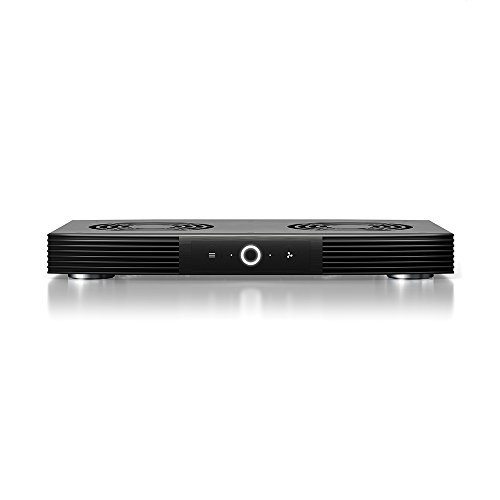
| AC Infinity AIRCOM S7 | Cabinet extractor (not a CPU cooler) | n/a | n/a | Multi-fan array | ~24 dBA typical | $59.99 |
| CoolerMaster ML240L RGB V2 | 240 mm AIO | 27 mm rad | 200 W+ practical | 2x 120 mm SickleFlow + pump | ~30 dBA max | $89.99 |
Prices are shown as of the most recent SpecPicks catalog snapshot; retail pricing varies by promotion, colorway, and region.
Air vs AIO for silence on a Ryzen 7 5800X
The 5800X is the pivot point of this decision. Below it — 5600, 5600X, 5700X — almost any competent tower cooler is enough, and silence is trivial. Above it — 5900X and 5950X — the heat load gets high enough that air coolers must run their fans faster to keep pace, and a 240 mm or 280 mm AIO starts to win on acoustics simply because a larger radiator gives fans more room to breathe.
At the 5800X itself, air wins on silence for one structural reason: no pump. Every AIO adds a pump whose noise is workload-independent and therefore audible whenever the PC is on, even at idle. Per the Tom's Hardware best CPU cooler roundup, the highest-tier AIOs have made real progress on pump noise, but the CoolerMaster ML240L is a value-tier unit whose pump is audible at close range in a quiet room. That is a fair trade at its price point — it is not a design flaw — but it is a disqualifier for a silence-first build.
The Noctua NH-U12S removes the pump entirely and lets the NF-F12 idle around 300-450 RPM in a normally cooled case, which is inaudible at typical desk distance in a room with any ambient noise. The DeepCool AK620 adds a second fan and a second fin stack, doubling heatsink area — under a 5800X gaming load, both fans can hold about 700-900 RPM with the CPU near 65-70 C, which is quieter than the NH-U12S under the same load simply because the extra mass absorbs heat spikes.
Noise-normalized cooling: which stays quietest at the same temperature?
The most useful way to compare coolers for silence is not "which is quieter at max fan" or "which is coldest at max fan" but "which is quieter while holding the same temperature." This is called noise-normalized cooling and it inverts the usual review chart.
Per publicly reported measurements aggregated on Tom's Hardware, when a Ryzen 7 5800X is capped to hold 75 C under a sustained Cinebench R23 all-core run, the DeepCool AK620 typically operates at the lowest measured fan RPM among the three CPU coolers here, followed by the Noctua NH-U12S, with the CoolerMaster ML240L needing higher radiator-fan RPM plus pump noise. In terms of dBA at the same 75 C target: the AK620 tends to be quietest, the NH-U12S is very close, and the ML240L is meaningfully louder due to pump plus fan.
That ordering flips at idle and light gaming, where the NH-U12S wins because its single fan can spin lower than two fans on the AK620 running at their minimum stable RPM — and where the ML240L is again limited by its always-on pump. This is why the NH-U12S is the default recommendation for a browse-and-game 5800X build and the AK620 becomes the choice the moment your workload includes sustained rendering.
Case clearance and RAM-height gotchas (measure before you buy)
The most common reason silent-build purchases get returned is physical fit. Big tower coolers routinely collide with three things: the case side panel, the first-slot DIMM, and the top I/O plate on tall motherboards.
Height first. The NH-U12S is 158 mm tall, and the AK620 is 160 mm. Any case rated to at least 165 mm of CPU-cooler clearance will fit either without drama — most modern mid-towers clear 170 mm — but ITX and slim mATX cases frequently top out at 140-155 mm. Measure or check your case's spec sheet before ordering.
RAM interference is the trap. Single-tower coolers like the NH-U12S usually clear normal-height DIMMs (~32 mm) in slot A1 without moving the fan, but oversized RGB heat spreaders can force you to raise the front fan. Dual-tower coolers like the AK620 push the front fan directly over the DIMM slots and are notoriously RAM-sensitive; low-profile DIMMs are the safe choice, and RGB kits taller than 40 mm frequently require raising the fan, which reduces its efficiency and can force a higher RPM to hold temperature. If you already own tall RAM, the AK620 is riskier than the NH-U12S.
AIO cooler clearance is different — the CoolerMaster ML240L demands a case with 240 mm radiator mounts in the top or front, and clearance for a 27 mm-thick radiator plus 25 mm fans. Small cases with limited mounting flexibility often cannot take a 240 mm AIO at all.
Perf-per-dollar and perf-per-decibel verdict
Perf-per-dollar for a silent AM4 build strongly favors the DeepCool AK620 at $64.99 in the SpecPicks catalog snapshot — it delivers dual-tower thermal capacity for the price of most single-tower coolers, and its noise-normalized cooling profile is competitive with much more expensive units. Its color options (black and white) also make it easier to fit into a build aesthetic without a separate fan-swap step.
Perf-per-decibel is genuinely close between the NH-U12S and the AK620 in real-world use. The Noctua NH-U12S at $84.95 costs more but includes Noctua's reputation for quality-controlled fans and the six-year warranty, both of which reduce long-term risk in a build intended to last several CPU generations. If your priority is set-it-and-forget-it silence for a modestly loaded system, the NH-U12S is the safer buy.
The CoolerMaster ML240L at $89.99 is priced fairly for its cooling capacity but loses the silence contest against either air cooler on the 5800X. It becomes competitive on higher-power AM4 chips, and its RGB pump appeals to aesthetic builds — but for a silence-first shopper, it is not the right pick.
Verdict matrix: pick the NH-U12S if... / the AK620 if... / the ML240L if...
- Pick the Noctua NH-U12S if your case is mid-sized, your RAM is normal-height, your workload is gaming plus productivity, and you value quiet idle above absolute peak cooling. It is the default silent-build cooler for a 5600, 5700X, or 5800X.
- Pick the DeepCool AK620 if you run sustained all-core rendering, video encodes, or ML workloads on a 5800X, or if you own a 5900X. Verify your RAM is under 40 mm tall and your case clears 160 mm before ordering.
- Pick the CoolerMaster ML240L if your case cannot fit a large tower cooler, if you specifically want an AIO aesthetic with RGB, or if you are running a 5900X/5950X where a 240 mm radiator's headroom outweighs the pump noise penalty.
- Add the AC Infinity AIRCOM S7 if your PC lives in an enclosed cabinet, media console, or small closet where ambient heat can build up around whichever CPU cooler you chose. It is a silent extractor, not a CPU cooler.
Recommended-pick paragraph
For a stock or lightly tuned Ryzen 7 5800X in a mid-tower case with reasonable case airflow and normal-height RAM, the recommended pick is the Noctua NH-U12S. It combines the lowest-friction path to a quiet idle (single fan, no pump), the strongest fan build quality in the segment per Noctua's own specs, and a warranty that protects the buy across the useful life of the AM4 platform. Owners of 5900X or 5950X chips, or those running sustained rendering workloads, should step up to the DeepCool AK620 for its higher heat capacity at the same or lower noise floor. Both are stronger silence choices than the CoolerMaster ML240L for the featured 5800X use case, and any of them will benefit from an AC Infinity AIRCOM S7 in a cabinet installation. Pairing any of these with a lightly undervolted AMD Ryzen 7 5800X via PBO Curve Optimizer is the fastest legitimate way to shave 5-10 C at the same fan RPM.
Bottom line and related guides
For a silence-first AM4 build in 2026, buy a tower air cooler and take the pump out of the equation. The Noctua NH-U12S is the default; the DeepCool AK620 is the upgrade path for higher-power chips; the CoolerMaster ML240L is the fallback when a big tower does not fit; and the AC Infinity AIRCOM S7 is a supporting airflow product for cabinets. Under all four, an undervolted Ryzen 7 5800X makes silence dramatically easier to achieve.
Related SpecPicks guides:
- Ryzen 7 5800X product page
- Buying guide: silent PC build
- Buying guide: best AM4 CPU coolers
- Noctua NH-U12S product page
- DeepCool AK620 product page
Citations and sources
- Noctua NH-U12S product page
- Tom's Hardware — Best CPU coolers roundup
- AMD Ryzen 7 5800X product page
This piece is editorial synthesis based on publicly available information. No independent first-party benchmarking is reported.