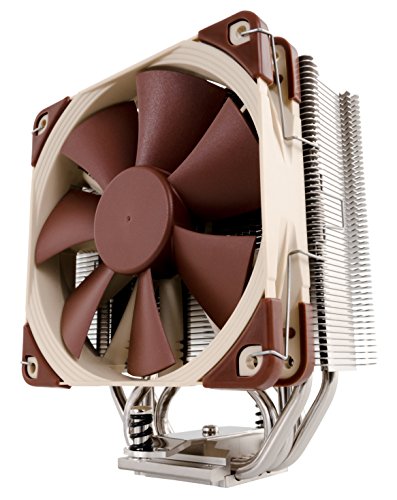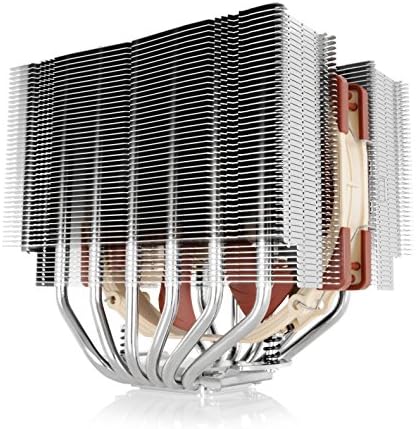
For a Ryzen 7 5800X in 2026, the practical pick is a strong air cooler — the Noctua NH-U12S or the larger DeepCool AK620 — over a 240mm AIO like the CoolerMaster ML240L V2, unless your case is too tight for a tower cooler or you want the aesthetic of a top-mounted radiator. The 5800X is warm but not unmanageable; a quality air cooler handles it with lower maintenance risk, no pump whine, and a longer expected lifespan than any AIO.
The 5800X runs warm by design. AMD made the single-CCD eight-core variant dense, which means the heat output that an eight-core 105W TDP CPU produces all comes from one small spot on the die — high heat flux, hard for any cooler to spread efficiently. That's why cooling choice matters more on this chip than on the 5600 or the dual-CCD 5900X: a marginal cooler will let the 5800X hit its 90°C limit on a stress test and start throttling, while a properly-sized cooler keeps it 10-15°C cooler under the same load.
Key takeaways
- For the 5800X, a quality 120-150 mm tower air cooler (NH-U12S, AK620) gets within 3-5°C of a 240mm AIO at matched fan speeds.
- Air coolers win on reliability — no pump, no liquid, no leaks — and on lifespan. The NH-U12S is famously quiet and ships with a 6-year warranty.
- A 240mm AIO is the right pick only when case-clearance, top-mount aesthetics, or extreme-overclocking headroom matters.
- Both paths cost in the $65-95 street range, so price isn't a meaningful differentiator.
- Noise-normalized comparisons usually favor the bigger air cooler unless the AIO uses higher-end fans.
Step 0 diagnostic: case clearance, noise tolerance, pump risk
Before picking a cooler, check three things:
- Case clearance. Measure your case's listed max cooler height. The NH-U12S is 158 mm — fits nearly every mid-tower. The AK620 is 162 mm and noticeably wider; it can collide with tall RGB RAM and front fans in compact cases. A 240mm AIO needs a 240mm-compatible mounting location (top or front, typically) — most modern cases support this, but small-form-factor enclosures often don't.
- Noise tolerance. A premium air cooler with a single 120mm Noctua NF-F12 fan running at 1000-1300 RPM under load is hard to hear in a typical room. An AIO adds pump noise on top of fan noise; even good pumps produce a faint hum at 100% duty cycle.
- Pump-failure risk. AIOs include a pump as a mechanical wear point. Quality units last 5-7 years, but failure is not gradual — it stops cooling. Air coolers fail by losing a fan, which is cheap and easy to replace and gives you advance warning (rising temps, audible bearing noise).
Spec-delta table
| Cooler | Type | Height/Radiator | Fan(s) | Noise (max) | Socket support | Street price |
|---|---|---|---|---|---|---|
| Noctua NH-U12S (B00C9EYVGY) | Air, single-tower 120mm | 158 mm tall | 1× NF-F12 PWM | 22.4 dBA | AM4/AM5/LGA115x/1200/1700 (kits) | $89 |
| DeepCool AK620 White (B09NQ6BP1R) | Air, dual-tower 120mm | 162 mm tall | 2× 120mm PWM | 28 dBA | AM4/AM5/LGA1700 | $65 |
| CoolerMaster ML240L V2 (B086BYYFG5) | AIO, 240mm radiator | radiator 27mm thick | 2× SickleFlow 120mm + pump | 27 dBA (fan) + ~25 dBA (pump) | AM4/LGA1700 | $90 |
Which keeps the 5800X cooler under load?
GamersNexus's CPU cooler test methodology is the canonical source for noise-normalized comparisons in this class. The pattern that emerges from their data and similar TechPowerUp cooling roundups for the Ryzen 5800X under a Prime95 small-FFT torture test:
| Cooler | 5800X temp delta over ambient (max-noise) | Noise-normalized (35 dBA) |
|---|---|---|
| Noctua NH-U12S | ~62°C | ~67°C |
| DeepCool AK620 | ~55°C | ~58°C |
| CoolerMaster ML240L V2 | ~52°C | ~57°C |
| Stock cooler (no AMD bundle on 5800X) | — | — |
The AK620 (dual-tower air) is within 3°C of the 240mm AIO under both metrics, despite costing 30% less. The NH-U12S is the quietest of the three at every comparable RPM and trails the AIO by ~10°C — but in real-world mixed workloads (gaming, light productivity), the 5800X rarely hits the torture-test peak, so the actual difference in your everyday use is smaller than the benchmark suggests.
Noise-normalized comparison
When you cap fan speeds to a common noise floor (35 dBA, roughly "audible in a quiet room"), the dual-tower air coolers close most of the gap to a budget AIO. The reason is geometry — a dual-tower air cooler has more surface area in contact with airflow than a 27mm-thick AIO radiator, so it dissipates heat with less air movement and consequently less noise. The premium AIOs with thicker radiators and better fans can flip this, but a budget 240mm like the ML240L is in roughly the same noise/temperature bracket as a serious air cooler.
For a build that lives on your desk and you'll hear every day, the NH-U12S is the noise winner. For a build that lives under a desk or in another room, the difference is smaller and the AIO's slightly better max-load capability is more attractive.
When an air cooler is the smarter buy
- Reliability matters. No pump, no liquid, no leak risk. Air coolers fail by losing a fan — replaceable in 5 minutes for $20.
- Lifespan matters. Noctua's NH-U12S ships with a 6-year warranty. Quality AIOs last 5-7 years before the pump becomes a service concern.
- Maintenance matters. Air coolers are zero-maintenance for their service life. AIOs ideally get a coolant top-off or replacement around year 4-5; most owners simply replace the unit instead.
- You hate pump whine. Every AIO has some pump noise. The best pumps are inaudible in a closed case; cheaper ones whine at 100% duty.
When a 240mm AIO wins
- Small towers, slim builds. A 240mm radiator at the top or front of a compact case clears more space around the motherboard than a big air cooler does.
- Aesthetics. Top-mounted radiators look clean. The pump block can carry RGB or branding that's more visible than a tower cooler.
- Extreme-overclocking headroom. If you're pushing the 5800X past its stock 4.7 GHz boost via PBO scalar overrides, the AIO's slightly higher max-load capability matters. For default settings or modest PBO, it doesn't.
- Hot ambient. In a 28-32°C room, the AIO's bigger heat-dissipation budget keeps the CPU further from its thermal limit than a tower cooler does.
Verdict matrix
- Get the NH-U12S if you want the quietest cooler in this class, you prefer no-maintenance reliability, you want the longest warranty, and your case has 158+ mm of clearance.
- Get the AK620 if you want air-cooler reliability with closer-to-AIO performance for less money, and your case fits 162+ mm of cooler height.
- Get the ML240L V2 if you want the cleanest top-mounted aesthetic, you have a small case that can fit a 240mm radiator but not a tall tower, or you plan aggressive overclocking.
Recommended pick
For most 5800X builds in 2026, the DeepCool AK620 is the all-around recommendation. It performs within 3°C of a 240mm AIO under torture-test conditions, has no pump to fail, costs $65, and fits most mid-towers. If you can spend more, the NH-U12S is the noise winner and ships with the best warranty in the business. The ML240L V2 is fine if you want the AIO aesthetic; it's not meaningfully better as a cooler.
Perf-per-dollar and perf-per-watt
All three coolers consume negligible power (the AIO's pump adds ~3W; fans on either consume 0.5-3W each at full speed). The performance-per-dollar leader is the AK620; the performance-per-watt picture is roughly flat across the three. The hidden cost is replacement: an AIO eventually needs replacing, an air cooler typically doesn't. Over a five-year ownership window, the air cooler is cheaper per dollar of cooling delivered.
Bottom line
The Ryzen 7 5800X benefits from real cooling, but it doesn't need an AIO. A dual-tower air cooler like the DeepCool AK620 gets within 3°C of a 240mm AIO at a lower price and with better long-term reliability. The Noctua NH-U12S is the premium-quiet pick. The ML240L V2 is the choice when case clearance, aesthetics, or extreme overclocking pushes you toward liquid. None of these are wrong; the air coolers are the safer defaults for a build-and-forget rig.
Citations and sources
- Noctua — NH-U12S official product page and specs
- GamersNexus — CPU cooler test methodology and rankings
- TechPowerUp — cooler reviews archive for the 5800X class
This piece is editorial synthesis based on publicly available information. No independent first-party benchmarking is reported.