Advanced Raspberry Pi projects for adults in 2026 go well beyond blinking an LED. The Raspberry Pi 5's quad-core Arm Cortex-A76 CPU and PCIe 2.0 interface make it a legitimate platform for home labs, AI edge inference, and always-on infrastructure that used to require a full desktop or a dedicated appliance, per the Raspberry Pi Foundation's product page. This guide rounds up the builds worth an experienced maker's weekend, the hardware each one needs, and how the Pi stacks up against the boards it's most often compared to.
Why the Raspberry Pi 5 Is the Platform for Advanced Builds
The Raspberry Pi 5 ships with a 2.4GHz quad-core Cortex-A76 CPU, up to 8GB of LPDDR4X RAM, and — for the first time on a mainline Pi — a PCIe 2.0 x1 connector exposed through the official M.2 HAT, enabling NVMe boot drives instead of relying solely on microSD, according to the official specifications. That combination of CPU headroom and fast storage is why it has replaced the Pi 4 as the default board for projects that need to stay powered on continuously: home labs, network appliances, and lightweight AI inference.
Two things separate an "adult" Pi build from a weekend toy: active cooling that lets the board sustain full clock speed under continuous load (the official Active Cooler is the reference option), and enough RAM headroom on the 8GB model to run several containerized services at once without swapping to storage. Readers still deciding which board generation fits their first serious project should start with Raspberry Pi 4 8GB vs Pi Zero W: Which Fits Your First Project?, which breaks down when the extra compute is actually worth the cost difference.
Top Advanced Raspberry Pi Projects for Adults
| Project | Replaces | Core hardware | Difficulty |
|---|---|---|---|
| Self-hosted home lab (Docker/Kubernetes) | Cloud SaaS subscriptions | Pi 5 8GB, NVMe HAT | Intermediate |
| Network-wide ad/tracker blocking | Router-level filtering apps | Any Pi 3B+ or newer | Beginner-intermediate |
| Home automation hub | Cloud smart-home hubs | Pi 4/5, Zigbee/Z-Wave USB dongle | Intermediate |
| Personal NAS / media server | Consumer NAS appliance | Pi 5, USB 3.0 SSDs or NVMe | Intermediate |
| AI vision / edge inference rig | Cloud vision APIs | Pi 5, Camera Module 3, Coral USB accelerator | Advanced |
| Retro emulation cabinet | Original vintage consoles | Pi 4/5, RetroPie/Batocera, VGA/HDMI display | Intermediate |
| SDR / ham radio monitoring station | Dedicated SDR appliance | Pi 4/5, RTL-SDR dongle | Advanced |
| 3D printer / CNC controller | Printer's stock control board | Pi 4/5, OctoPrint or Klipper | Intermediate |
Self-Hosted Home Lab
An 8GB Pi 5 running Docker (or a lightweight Kubernetes distribution like k3s) is enough to host Pi-hole, a Home Assistant instance, a Uptime Kuma monitor, and a handful of small self-hosted apps simultaneously, provided storage is offloaded to an NVMe drive via the M.2 HAT rather than a microSD card. This is the project that most directly showcases the PCIe upgrade — sustained container I/O on SD card storage bottlenecks quickly, while NVMe keeps multiple services responsive at once.
Network-Wide Ad and Tracker Blocking
Pi-hole remains the reference self-hosted DNS sinkhole project, and it runs comfortably on hardware as modest as a Pi 3B+ — it's a low-CPU, low-RAM workload, which makes it a good first "always-on" project before committing a full Pi 5 to a home lab. For a broader list of starter-through-advanced builds ranked by skill level, see 50+ Raspberry Pi Project Ideas for 2025 (By Skill Level).
Home Automation Hub
Home Assistant publishes an official Raspberry Pi installation image that auto-discovers most Zigbee and Z-Wave USB radios on first boot, which is why it has become the default self-hosted alternative to cloud-dependent smart-home hubs. Running it on a Pi keeps automations (lights, locks, sensors) functional even when internet service drops, since processing happens locally rather than in a vendor's cloud. For a fuller walkthrough of automation-specific builds, see Raspberry Pi Home Automation Projects: A 2025 Starter Guide, and for board-specific tradeoffs on the automation use case, Best Raspberry Pi Alternative for Home Assistant (2026) is worth checking before committing to a Pi over a competing SBC.
Personal NAS and Media Server
Pairing a Pi 5 with OpenMediaVault and either an NVMe HAT or a powered USB 3.0 SSD enclosure produces a workable household NAS: SMB/NFS shares, basic RAID, and a Plex or Jellyfin media server for direct-play content. It won't match a purpose-built NAS chassis with hot-swap bays and multi-gigabit networking for a household running heavy simultaneous transcodes, but for single-household file storage and backup it's a fraction of the hardware cost. Readers comparing the Pi against lower-cost SBC options for this exact use case should see Best Cheap Raspberry Pi Alternatives in 2025.
AI Vision and Edge Inference
The Raspberry Pi Camera Module 3 adds autofocus and HDR support, and paired with a Coral USB accelerator it can run TensorFlow Lite object-detection models for a DIY security camera or wildlife monitor without sending video to the cloud. This is the most compute-constrained project on this list — for anything beyond lightweight classification models, the comparison to dedicated edge-AI boards below matters more than for any other build.
Retro Emulation Cabinet
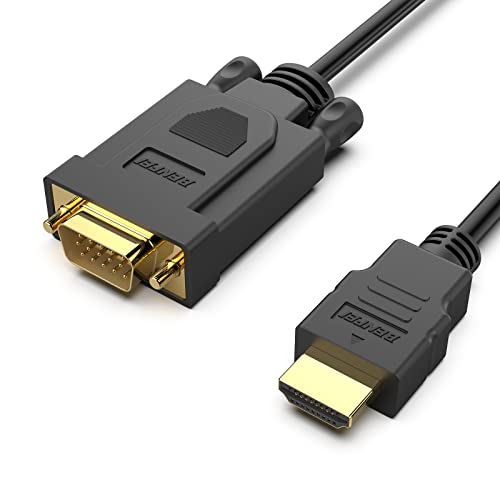
A Pi 4 or 5 running RetroPie or Batocera remains the standard brain for a DIY arcade cabinet or console-replacement build. Older CRT-style monitors and some vintage cabinet displays are VGA-only, which is where an HDMI-to-VGA adapter cable becomes a practical accessory rather than an afterthought — it's the cheapest way to get a Pi's HDMI output onto a display that predates the interface. For a board-by-board breakdown of what performs best specifically for emulation workloads, see Best Raspberry Pi Alternative for Emulation (2025).
SDR and Ham Radio Monitoring
A Pi paired with an RTL-SDR USB dongle turns into a dedicated software-defined radio station capable of monitoring ADS-B aircraft traffic, weather satellite downlinks, or amateur radio bands around the clock — a workload that would otherwise tie up a full desktop. The RTL-SDR project site maintains the reference software stack and hardware compatibility list for this build.
3D Printer and CNC Controller
OctoPrint turns a Pi into a network-connected front end for a 3D printer — remote monitoring, time-lapses, and queued print jobs — and is one of the most widely deployed "utility" Pi projects among makers who already own a printer. Klipper, a newer firmware/host combination, uses the same Pi-as-controller pattern to add input shaping and higher print speeds on supported printer boards.
Raspberry Pi 5 vs. the Alternatives
For AI-heavy edge inference specifically, Nvidia's Jetson Orin Nano ships with a dedicated GPU and tensor cores purpose-built for running larger vision and language models locally — a workload the Pi 5's CPU-only inference path was never designed to match. The tradeoff is cost and general-purpose flexibility: the Pi 5 is cheaper, has a far larger community software ecosystem, and is the better choice for anything that isn't primarily an AI-inference workload.
| Board | CPU | RAM (max) | Storage interface | Best fit |
|---|---|---|---|---|
| Raspberry Pi 5 | Quad-core Cortex-A76 @ 2.4GHz | 8GB | microSD + PCIe 2.0 (NVMe via HAT) | General-purpose home lab, NAS, automation |
| Raspberry Pi 4 | Quad-core Cortex-A72 @ 1.8GHz | 8GB | microSD + USB 3.0 | Budget builds, lighter workloads |
| Nvidia Jetson Orin Nano | Arm Cortex-A78AE + dedicated GPU | Up to 8GB unified | microSD + NVMe | Real-time AI vision, larger ML models |
Actual throughput on any of these varies heavily by workload and software stack, so treat the table as a starting point for narrowing hardware, not a substitute for checking the specific model or container image you plan to run. For a broader survey of boards worth considering instead of a Pi 5, see Best Raspberry Pi 5 Alternatives in 2025 and Best Raspberry Pi Alternative in 2025: Full Buying Guide.
When a Raspberry Pi Isn't the Right Board
The Pi's biggest limitation for advanced builds is that it's a general-purpose SBC, not a workload-optimized one — projects that need guaranteed real-time GPIO timing, meaningfully better price-to-performance at the low end, or heavier on-device AI inference are often better served by a purpose-built alternative. The roundups above cover board-by-board tradeoffs for the emulation, home-automation, NAS, and AI use cases specifically, rather than treating "alternative to a Pi" as a single generic category.
Getting Started
Most of these builds share a common starting point: an 8GB Raspberry Pi 5, active cooling, and either a fast microSD card or an NVMe drive via the official M.2 HAT. From there, the project determines the add-on hardware — a Zigbee dongle for home automation, a Camera Module 3 for vision, an RTL-SDR dongle for radio work, or simply a larger drive for NAS duty. Readers new to the platform should start with the full project list in 50+ Raspberry Pi Project Ideas for 2025 (By Skill Level) before committing to one of the advanced builds above.
Citations and sources
- Raspberry Pi 5 product specifications — Raspberry Pi Foundation
- Raspberry Pi computers documentation — Raspberry Pi Foundation
- Raspberry Pi Camera documentation — Raspberry Pi Foundation
- Pi-hole official site
- Home Assistant Raspberry Pi installation guide
- OpenMediaVault official site
- OctoPrint official site
- Nvidia Jetson Orin Nano product page
- Jeff Geerling's Raspberry Pi coverage
- RTL-SDR project site
This piece is editorial synthesis based on publicly available information. No independent first-party benchmarking is reported.