Raspberry Pi 5 shortages, price creep, and one-per-customer purchase limits have pushed makers to ask what else is out there. The short answer: it depends on which bottleneck actually matters for your project. For raw CPU/GPU throughput, Rockchip RK3588 boards like the Radxa ROCK 5B are the most-cited pick. For on-device AI inference, NVIDIA's Jetson Orin Nano line is the default recommendation. For industrial-grade I/O, BeagleBone AI-64 fills a niche the Pi doesn't touch. None of them fully replace the Pi 5's software ecosystem — but each solves one specific bottleneck better than the Pi does.
What Counts as a Raspberry Pi 5 Alternative in 2025?
The Raspberry Pi 5 ships with Broadcom's BCM2712 SoC — a quad-core Arm Cortex-A76 CPU paired with a VideoCore VII GPU — per the Raspberry Pi Foundation's own specification sheet. "Alternative" boards generally fall into three camps:
- Rockchip RK3588-based SBCs (Radxa ROCK 5B, Orange Pi 5 Plus, and similar) that trade some of the Pi's software polish for more CPU cores and a beefier GPU.
- Purpose-built accelerator boards like the NVIDIA Jetson Orin Nano, which sacrifice general-purpose GPIO flexibility for dedicated AI throughput.
- Industrial and niche SBCs — BeagleBone AI-64 for real-time I/O, Odroid-N2+ for HTPC use, Pine64 RockPro64 for storage-heavy builds — each optimized for one job rather than being a drop-in Pi replacement.
If a project already leans on AI acceleration, it's worth comparing these boards against a Pi 5 fitted with an accelerator HAT before switching platforms entirely. See our breakdowns of the Raspberry Pi AI HAT+ 2025, the lower-power AI HAT+ 2, and the wider AI Kit lineup — a HAT-equipped Pi 5 sometimes closes the gap without a platform switch at all.
Top Alternatives by Category
| Board | Best for | SoC family | Notable strength |
|---|---|---|---|
| Radxa ROCK 5B / Orange Pi 5 Plus | Raw CPU/GPU throughput | Rockchip RK3588 | More CPU cores, Mali-G610 GPU |
| NVIDIA Jetson Orin Nano | Edge AI inference | NVIDIA Orin (Ampere GPU + DLA) | Dedicated AI acceleration, up to 67 TOPS in Super mode |
| Hardkernel Odroid-N2+ | Home theater / HTPC | Amlogic S922X | Hardware video decode, mature Armbian support |
| BeagleBone AI-64 | Industrial I/O, real-time control | TI TDA4VM | PRU real-time co-processors, expansion headers |
| Pine64 RockPro64 | NAS / storage builds | Rockchip RK3399 | PCIe and SATA expansion options |
| Raspberry Pi Compute Module 4 | Custom carrier boards, Pi-ecosystem lock-in | Broadcom BCM2711 (Pi 4-class) | Full Raspberry Pi OS / HAT-driver compatibility |
RK3588 SBCs for Raw Performance
Boards built on Rockchip's RK3588 — Radxa's ROCK 5B chief among them — pair up to eight CPU cores (a mix of Cortex-A76 and Cortex-A55) with a Mali-G610 GPU, per Radxa's published hardware documentation. That's a bigger core count than the Pi 5's four A76 cores, which is why RK3588 boards routinely come up in "faster than Pi 5" community comparisons. The tradeoff is software maturity: Raspberry Pi OS benefits from years of first-party Debian tuning and near-universal HAT compatibility that RK3588 boards — running community-maintained Debian or Ubuntu images — don't fully match yet.
NVIDIA Jetson Orin Nano for AI Workloads
The Jetson Orin Nano is NVIDIA's answer to on-device inference, not general-purpose computing. Per NVIDIA's official Jetson Orin product page, the Orin Nano module line scales up to 67 TOPS of INT8 performance in its "Super" configuration — a firmware-unlocked boost NVIDIA shipped to existing Orin Nano hardware in late 2024. That's a different class of AI throughput than a bare Pi 5's CPU/GPU path, though a Pi 5 paired with the AI HAT+ narrows the gap for lighter models at a fraction of the Jetson's price and power draw. For projects that are model-serving-first rather than GPIO-first, the Jetson's dedicated Ampere-generation GPU and deep learning accelerator make it the more direct fit; for GPIO-and-sensors-first projects with occasional lightweight inference, a HAT-equipped Pi is usually the cheaper, lower-power answer.
Odroid-N2+ for Media Center Duty
Hardkernel markets the Odroid-N2+ around its Amlogic S922X SoC's hardware video decode path, and it's a long-running favorite in the Armbian/CoreELEC HTPC community. Whether it's worth it over a Pi 5 depends heavily on the specific codecs and display refresh rates a build targets — for most self-hosted media-server use cases, a Pi 4 8GB already handles Jellyfin adequately, as detailed in our Jellyfin on Raspberry Pi 4 8GB write-up, and a Pi 5 only improves on that headroom.
BeagleBone AI-64 for Industrial I/O
BeagleBoard.org's AI-64 is built around Texas Instruments' TDA4VM SoC, which pairs general-purpose Cortex-A72 cores with real-time PRU-ICSS co-processors — hardware the Pi 5 simply doesn't have. That makes the AI-64 a niche pick for projects needing deterministic, low-latency I/O (motor control, industrial sensor polling) rather than a general Pi replacement; it's overkill, and less documented, for a typical hobbyist project.
Pine64 RockPro64 for Storage-Heavy Builds
The RockPro64's Rockchip RK3399 platform is older than the Pi 5's BCM2712, but Pine64's board design exposes PCIe and SATA options that make it a recurring choice for DIY NAS builds — a use case where the Pi 5's newer CPU matters less than raw drive-attachment flexibility. If storage throughput is the priority rather than compute, it's worth comparing against a dedicated SSD-based build like the one covered in our best SSD for Steam Deck and handheld emulation piece, which addresses similar storage-first tradeoffs on a different platform.
Raspberry Pi Compute Module 4 — Staying in the Ecosystem
Not every "alternative" needs a different chip family. The Raspberry Pi Compute Module 4 uses the earlier Pi 4-generation Broadcom SoC in a SODIMM-style module meant for custom carrier boards, per the Raspberry Pi Foundation's CM4 product page. It's the right call when a project needs full Raspberry Pi OS and HAT-driver compatibility but a non-standard board footprint — not when the goal is more raw performance than the Pi 5 already offers.
GPIO and Expansion Comparison
| Board | I/O approach | Storage expansion | Ecosystem maturity |
|---|---|---|---|
| Raspberry Pi 5 | 40-pin GPIO, largest HAT catalog | microSD, optional M.2 via HAT | Highest — years of tutorials and drivers |
| RK3588 boards | Vendor-specific headers (pinouts vary) | Often onboard eMMC + M.2 NVMe | Community-maintained, growing fast |
| Jetson Orin Nano | 40-pin header, CSI camera connectors | microSD + M.2 NVMe | Strong for AI/CV, thinner for general GPIO projects |
| BeagleBone AI-64 | Dual 46-pin headers, PRU real-time I/O | eMMC + microSD | Mature for industrial/embedded control |
| Pine64 RockPro64 | 40-pin GPIO | SATA + PCIe (via adapter) | Solid for NAS-focused Linux distros |
For projects that specifically need the Pi's HAT ecosystem — AI accelerators included — a standard Pi 5 (or a Pi 5 plus a HAT from our AI HAT+ 2 or AI Kit guides) remains the path of least resistance; none of the alternatives above match that plug-and-play add-on catalog.
Which Board Should You Actually Buy?
- Need more raw CPU/GPU headroom and can tolerate rougher software polish: an RK3588 board (Radxa ROCK 5B, Orange Pi 5 Plus).
- Need dedicated on-device AI inference: Jetson Orin Nano — or a Pi 5 with an AI HAT if the model is small enough.
- Building a media center: Odroid-N2+, though a Pi 4 8GB or Pi 5 already covers most Jellyfin use cases.
- Need real-time industrial I/O: BeagleBone AI-64.
- Building a NAS: Pine64 RockPro64 for its PCIe/SATA options.
- Need Pi-software compatibility in a custom form factor: Raspberry Pi Compute Module 4.
- Everything else — general tinkering, largest tutorial base, broadest HAT support: stick with the Raspberry Pi 5.
If the bottleneck is actually local AI/LLM inference rather than GPIO or SBC form factor at all, it's worth stepping back and comparing against a small dedicated PC build — see our budget local-LLM box or an N100 mini PC for home-automation-scale workloads, both of which outperform any SBC in this list on sustained compute per dollar, at the cost of GPIO access.
Accessories: Connecting to Older Displays
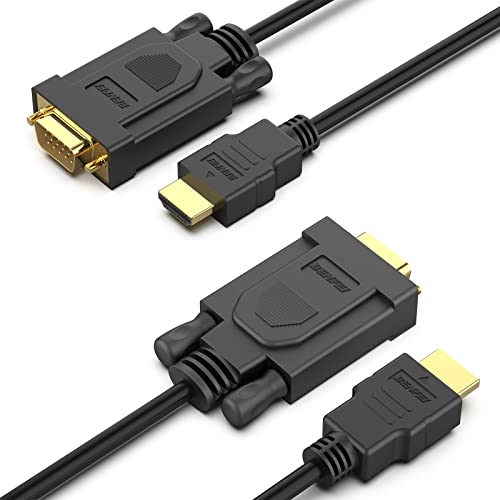
Most of these boards — RK3588, Odroid, BeagleBone — output HDMI only, with no native VGA path. For workbenches still running a VGA-only monitor, capture card, or KVM, a basic HDMI-to-VGA adapter bridges the gap; options range from compact male-to-female adapters to longer cable runs depending on desk layout. None of this is Pi-5-specific, but it's a common snag when repurposing an older monitor for a new SBC build.
Citations and sources
- Raspberry Pi 5 specifications — Raspberry Pi Foundation
- Raspberry Pi Compute Module 4 — Raspberry Pi Foundation
- Jetson Orin embedded systems — NVIDIA
- Odroid-N2+ — Hardkernel
- BeagleBone AI-64 — BeagleBoard.org
- RockPro64 — Pine64
- ROCK 5B hardware documentation — Radxa
This piece is editorial synthesis based on publicly available information. No independent first-party benchmarking is reported.