Budget gaming laptops in 2026 have narrowed the gap with mid-range hardware faster than most shoppers expect, largely because AMD and Nvidia have both pushed efficient mobile silicon down into sub-$1,000 price bands. This guide synthesizes publicly available specs, pricing patterns, and independent lab coverage to explain what separates a genuinely capable budget gaming laptop from a laptop that merely wears "gaming" branding.
What Defines a Budget Gaming Laptop in 2026
The budget tier generally spans roughly $600–$1,000, and the defining question at that price is which corners a manufacturer cut to hit the number. Community measurements and reviewer coverage from outlets like NotebookCheck and Tom's Hardware point to three recurring trade-offs at this price point: a lower-tier discrete GPU, a smaller battery paired with an inefficient CPU, or a lower-refresh, lower-color-accuracy display panel. Knowing which trade-off a specific model made matters more than any single marketing spec sheet claim.
The GPU Tier Ladder That Actually Matters
At the budget end of the market in 2026, the realistic GPU choices cluster into a few known tiers rather than a continuous spectrum:
| GPU tier | Typical laptops it appears in | What it's realistically good for | Representative SpecPicks listing |
|---|---|---|---|
| RTX 3050 / RX 6550M | Entry "gaming" laptops near $600-700 | 1080p esports titles (Valorant, CS2, Overwatch 2) at high framerates; AAA titles need lowered settings | Acer Nitro 5 — i5-12500H, RTX 3050, 15.6" 144Hz |
| RTX 4050 / RX 7600M | Mainstream budget picks, $750-950 | 1080p AAA gaming at medium-high settings, with DLSS/FSR closing gaps in newer titles | HP Victus 15 — i5-13420H, RTX 4050 6GB, 16GB/512GB |
| RTX 4060 / RX 7600M XT | Upper-budget to lower-mid-range, $900-1,100 | 1080p high settings comfortably, entry-level 1440p in lighter titles | ASUS TUF Gaming A16 — Ryzen 7 7735HS, Radeon RX 7700S 8GB |
Per public GPU database entries at TechPowerUp, the RX 7600M XT and RTX 4050 sit close enough in raw shader throughput that real-world results tend to favor whichever laptop has the better cooling solution and power limit configuration — not the GPU name alone. That's a point independent reviewers make repeatedly: the same GPU chip can perform meaningfully differently across two chassis depending on how many watts the manufacturer allows it to draw.
Why AMD's Mobile Platform Gets Recommended So Often
AMD's Ryzen mobile lineup has become a fixture of budget gaming laptop recommendations for a few specific, verifiable reasons rather than brand loyalty:
- Efficiency per dollar. Ryzen mobile chips built on newer process nodes have generally been reported by reviewers as running cooler and with better battery life than comparable Intel H-series parts, which matters in thinner budget chassis with limited cooling headroom. A concrete example of that pairing at this tier is the Acer Nitro V 15 built around a 6-core Ryzen 5 7535HS with an RTX 4050, which puts an AMD CPU in front of an Nvidia GPU in a 15.6-inch 144Hz chassis — the configuration reviewers reach for when battery life matters nearly as much as framerate.
- Bundled GPU value. Laptops built around AMD CPU-plus-GPU pairings have tended to launch at lower MSRPs than equivalent Nvidia-GPU configurations, per pricing patterns tracked across retail listings.
- FSR 3 compatibility. AMD's FidelityFX Super Resolution 3 upscaling works across a wide range of GPUs, including non-AMD hardware, which helps stretch a weaker GPU's usable lifespan as new games ship heavier requirements. Nvidia's DLSS remains restricted to RTX-series cards, which is a real advantage on higher-tier laptops but irrelevant if the budget laptop in question isn't RTX-equipped.
None of this makes Intel-plus-Nvidia budget laptops a bad choice — DLSS support and Nvidia's driver update cadence are genuine advantages reviewers cite — but it explains the pattern of AMD-heavy recommendation lists at this specific price tier.
Specs Worth Prioritizing (and Ones to Ignore)
RAM and storage
16GB of DDR5 is the consensus minimum across current buying guides; 8GB configurations, still sold at the lowest advertised prices, bottleneck modern titles and multitasking alike. On storage, 512GB NVMe is treated as the practical floor given that many current AAA installs run 50-100GB or more; shoppers who intend to keep several large games installed simultaneously should budget for 1TB. The memory gap is easy to see across otherwise comparable listings: the Acer Nitro V configured with an RTX 4050 and only 8GB of DDR5 carries the same GPU class as the 16GB HP Victus 15 yet has often listed higher, and it leaves a second SO-DIMM purchase waiting on day one. Check the memory line before the GPU line whenever two laptops advertise the same graphics chip.
Display
A 144Hz panel is common marketing language at this price point, but panel type and color coverage vary widely between models advertising the same refresh rate. Reviewers frequently flag TN or low-gamut IPS panels bundled with an otherwise capable GPU as the actual weak link in an otherwise reasonable budget laptop — a mismatch worth checking in independent panel measurements before buying, similar to the panel-quality scrutiny applied in reviews like the TCL 27R944K 165Hz monitor review.
Cooling and sustained performance
Thermal throttling under sustained load is one of the most consistently cited issues in independent testing of thin, low-cost gaming laptops. A laptop's peak benchmark numbers matter less than whether it can hold clocks during a 30-60 minute gaming session — a distinction that rarely shows up on a spec sheet and generally only surfaces in longer-form reviews.
Budget vs. Mid-Range: Where the Value Actually Shifts
The jump from roughly $700 to $900-1,000 tends to buy a meaningfully better GPU tier and often better cooling, rather than just a faster CPU. Below $700, laptops more frequently pair a mid-tier GPU with a chassis that can't sustain its rated power draw, which erodes the on-paper GPU advantage. That's consistent with the general software-and-hardware balance advice covered in First PC Build Guide: Components, Budget & Aesthetics for desktop builds — the individual component tier matters less than whether the whole system is balanced enough to actually deliver it.
For buyers who already own a desktop and are deciding whether a laptop upgrade or a desktop refresh makes more sense for the money, it's worth comparing against options like the best budget upgrades for an old gaming PC or picking up a cheap 1440p-capable GPU instead — desktop upgrades generally deliver more performance per dollar than a laptop at an equivalent price, at the cost of portability.
Common Mistakes Buyers Make
- Trusting "gaming" branding over the actual GPU model. Some laptops marketed with gaming aesthetics (RGB keyboards, angular chassis) ship with GPUs barely above integrated graphics. Always check the specific GPU model number, not just the marketing tier name.
- Ignoring sustained clock speeds. A GPU's rated boost clock is a best-case number; thermal design matters more for actual gameplay framerates than the spec sheet suggests.
- Skipping warranty terms. Budget laptops vary widely in coverage — a 1-year manufacturer warranty is the common minimum worth confirming before purchase, since GPU and motherboard repairs on laptops are typically far more expensive than on desktops.
- Underestimating storage needs. A base 512GB drive fills quickly with modern game installs; factor in either a 1TB configuration or a plan for external/expandable storage from the start.
Accessories Worth Pairing With a Budget Gaming Laptop
A few accessories consistently make more difference to the actual gaming experience than laptop shopping guides tend to mention:
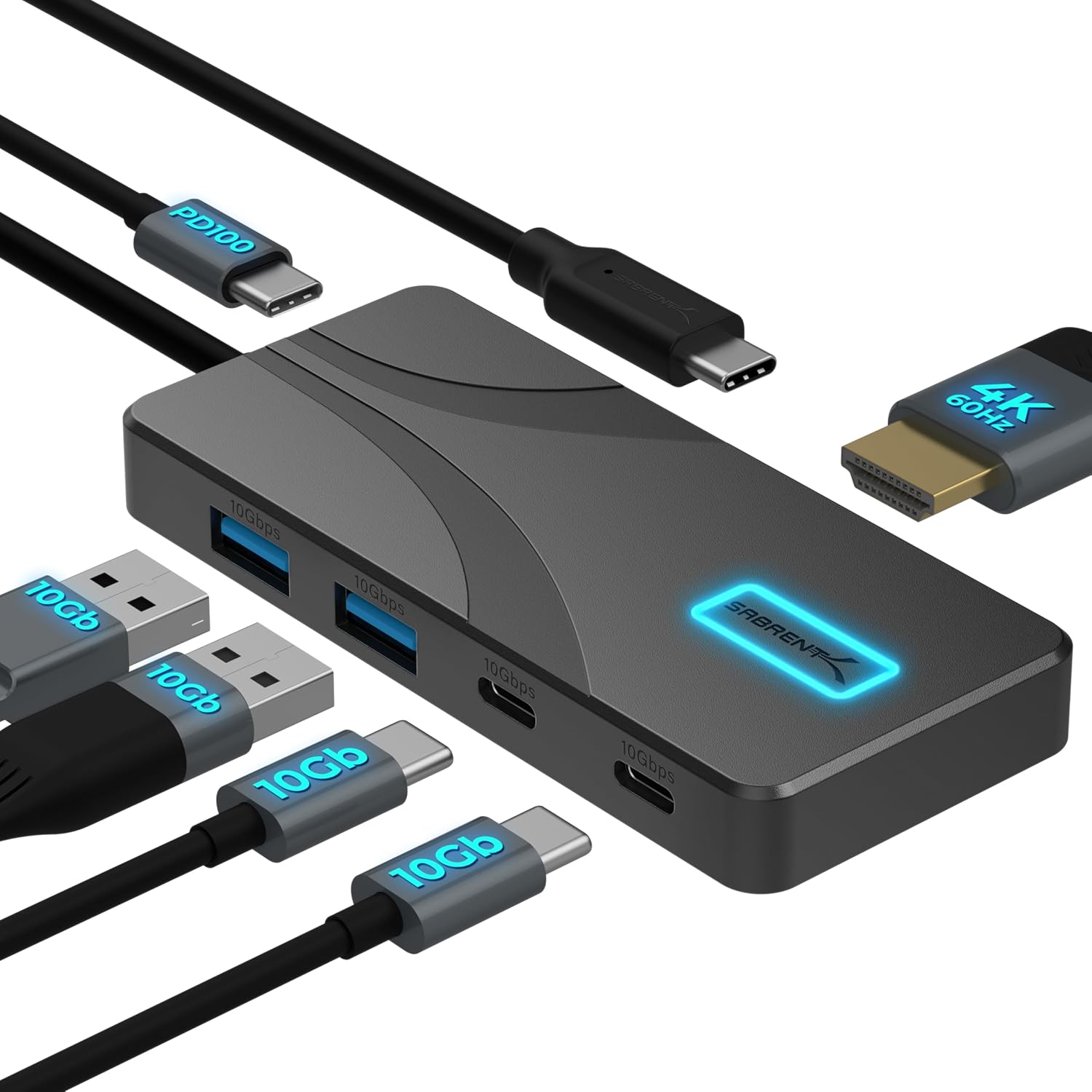
- A USB-C hub with HDMI output, such as the Sabrent USB-C 5-in-1 Hub ($24.95), lets a budget laptop drive an external 4K@60Hz monitor while keeping USB-A ports free for a mouse and keyboard — useful since many budget models skimp on port selection.
- A wired Ethernet connection reduces the latency variance that Wi-Fi introduces in competitive multiplayer titles; a cable like the Jadaol Cat 6 50ft Ethernet cable ($19.99) is a low-cost way to get a laptop wired to a router in a home office or bedroom setup, echoed by the general low-latency setup advice in the Twitch beginner streaming gear guide.
Buyers assembling a broader budget setup — desktop or laptop — may also find the storage-tier reasoning in Best SSD for a Raspberry Pi 4 Media Server and the AI-workload GPU value comparison in Is the RTX 3060 12GB Still the Best Sub-$400 AI Card in 2026? useful for comparing budget hardware value more broadly, and retro-minded builders may enjoy the contrast with the Late 2000s Windows XP Gaming PC Build guide, which shows how far the budget-hardware baseline has moved.
Bottom Line
The strongest budget gaming laptops of 2026 pair a genuinely current-generation mid-tier GPU (RTX 4050/4060 or RX 7600M/7600M XT class) with 16GB of DDR5 RAM, at least 512GB of NVMe storage, and — critically — a chassis that can actually sustain that GPU's rated power draw under load. Marketing tiers and headline clock speeds are a starting point, not a substitute for checking sustained-performance results and panel quality in independent reviews before buying. Of the configurations currently listed in the SpecPicks catalog, the HP Victus 15 with an RTX 4050, 16GB of RAM and a 512GB SSD is the closest match to that description inside the budget band, with the ASUS TUF Gaming A16 on AMD's Ryzen 7 7735HS and Radeon RX 7700S as the step-up for buyers willing to cross the $1,000 line for a higher GPU tier and a 16-inch 165Hz panel. Live pricing and availability sit on each product page.
Citations and sources
- https://www.notebookcheck.net/Laptop-Reviews.221.0.html
- https://www.tomshardware.com/best-picks/best-gaming-laptops
- https://www.techpowerup.com/gpu-specs/
- https://www.rtings.com/laptop
- https://www.gamersnexus.net/
This piece is editorial synthesis based on publicly available information. No independent first-party benchmarking is reported.


