What GameNative Actually Is
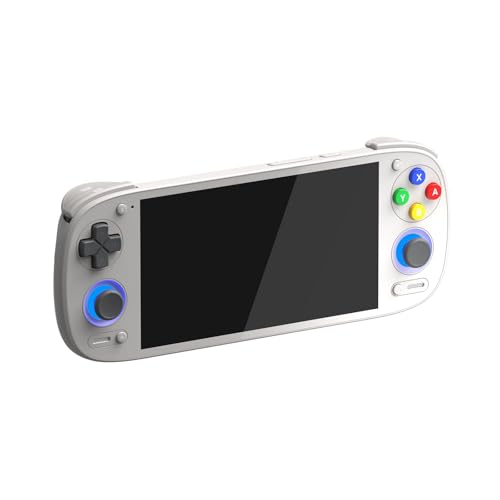
GameNative is an Android app built on the same underlying idea as Winlator: a Wine-plus-translation-layer stack, typically paired with Box64 or FEX for x86-to-ARM instruction translation, that lets Android devices run Windows PC games without a native Android port. It sits in the same emulation lineage as Winlator forks that have become popular on handhelds like the Retroid Pocket and Ayn Odin lines, as well as flagship phones with enough spare horsepower to run a translation layer.
The headline-grabbing addition is frame generation borrowed from Lossless Scaling, the Windows utility originally sold on Steam that interpolates extra frames between rendered ones to raise the displayed frame rate without a matching increase in GPU render load. Lossless Scaling's frame-generation mode has been reimplemented as an open Vulkan compute shader so it can run outside Windows entirely — including inside a Wine/Proton-style layer on Android. Folding that shader into GameNative is what lets the app claim smoother motion on hardware that can't natively render at high frame rates.
It's worth being precise about what "up to 100 fps" actually means here: it describes the output frame rate after interpolation, not the native render rate of the underlying game. That distinction matters for anyone deciding whether the feature solves their actual problem, and it's the thread this article pulls on throughout.
How the Vulkan Frame-Generation Pipeline Works
- Native render. The Wine translation layer renders the game normally, at whatever frame rate the device's GPU and translation overhead allow — often well below 60 fps for demanding titles on mobile silicon.
- Vulkan interpolation pass. The frame-generation shader analyzes consecutive rendered frames and generates one or more synthetic in-between frames, conceptually similar to AMD FSR Frame Generation or Nvidia DLSS Frame Generation on desktop, but implemented independently of any specific GPU vendor's proprietary stack.
- Display output. The combined stream of real and generated frames is presented at the higher rate — which is what shows up as "100 fps" on a frame-counter overlay, even though only a fraction of those frames represent freshly rendered game state.
Because the technique operates on the finished frame buffer rather than the game engine's render pipeline, it's engine-agnostic: it doesn't require per-game support the way some natively-integrated frame-generation features do. That's also its core limitation. It can't reduce input latency, and in some cases interpolation adds a frame or two of display lag relative to native rendering — a tradeoff that matters far more in fast, precision-dependent genres than in slower or turn-based ones.
Frame Generation Compared to Desktop Equivalents
| Technology | Platform | Implementation | Hardware lock-in |
|---|---|---|---|
| Lossless Scaling / Vulkan frame-gen (used by GameNative) | Windows, and via Wine on Linux/Android | Vulkan compute shader, post-render | None — runs on any Vulkan-capable GPU |
| AMD FSR 3 Frame Generation | Windows, consoles | Mostly engine-integrated | Broadly compatible, AMD-favored |
| Nvidia DLSS 3/4 Frame Generation | Windows | Requires RTX 40/50-series tensor cores | Nvidia RTX only |
The practical upside of the Lossless Scaling-style approach is portability. Because it isn't tied to a specific GPU architecture, it can be dropped into an Android translation layer where the underlying graphics block is a mobile Adreno, Mali, or Xclipse GPU rather than a desktop discrete card. The tradeoff is that a generic, vendor-agnostic interpolator generally has less information to work with than a vendor's engine-integrated solution, which is why motion artifacts around fast-moving edges tend to be more noticeable than with DLSS or FSR Frame Generation running on the hardware they were purpose-built for.
Device Requirements and Realistic Expectations
Running a Windows game through a translation layer and then adding a real-time interpolation pass on top is demanding twice over: once for the CPU-bound instruction translation, and again for the GPU-bound interpolation shader. In practice that means a few things hold true regardless of which specific device is running it:
- A recent flagship-tier SoC matters more than raw clock speed. Devices built around current Snapdragon 8-series or comparable Dimensity chips have enough spare GPU headroom to run the interpolation pass without starving the base render. Among dedicated handhelds the practical floor sits around the Retroid Pocket 4 Pro and its Dimensity 1100, while the Retroid Pocket 5 — Snapdragon 865 with an Adreno 650, one flagship generation behind current phone silicon — is the device most Winlator-family frame-generation demos are recorded on.
- RAM headroom helps stability more than peak fps. Translation layers keep large working sets in memory; devices with 12GB or more of RAM tend to see fewer stutters during scene loads than 8GB configurations, independent of the frame-generation feature itself. Worth checking before buying: the widely sold Retroid Pocket 5 configuration is an 8GB/128GB part, which is the tier where that distinction starts to bite.
- The "up to 100 fps" figure is a ceiling, not a guarantee. It depends on the base native frame rate being high enough — interpolating from 15 fps to 100 fps produces a far worse experience than interpolating from 45 fps to 90 fps — and on the specific title's compatibility with the Wine/Box64 translation stack in the first place. Not every Windows game runs cleanly under translation.
Handheld and phone gamers pushing sustained high frame rates for hours also run into a mundane bottleneck that has nothing to do with software: battery drain and thermal throttling under sustained GPU-plus-translation-layer-plus-interpolation load. A fast-charging setup that can top a device off between sessions — the kind covered in SpecPicks' 65W gaming charger for ROG Ally- and Steam Deck-class handhelds — is a practical accessory question for anyone running this stack for extended sessions, even though GameNative itself targets Android devices rather than those specific Windows-based handhelds. On the Android side the same problem is why battery capacity is worth weighing against screen quality: the Retroid Pocket Flip 2 pairs a 5.5-inch AMOLED 1080p panel with a 5000mAh cell and Hall-effect sticks, which is the configuration that survives a long session of translation-layer plus interpolation load.
Where This Fits Alongside Other Emulation and Compatibility Trends
GameNative's approach — take a technique built for one platform (Windows frame generation) and re-implement it in a portable graphics API so it works somewhere else entirely — mirrors a broader pattern across the emulation and compatibility-layer space. SpecPicks has covered a similar dynamic in PS3 emulation reaching support for Radeon HD 2000-4000-series cards, where broadening the supported hardware floor, rather than raising peak performance, is what actually expands who can use the software day to day. The same logic applies here: GameNative's value proposition isn't that it makes a phone as fast as a gaming PC — it's that it makes a wider range of existing Android hardware usable for Windows titles that would otherwise be unplayably choppy.
That trend toward squeezing more usable performance out of unified, non-discrete-GPU hardware also shows up on the PC side. AMD's push into large unified-memory APU platforms, discussed in SpecPicks' look at the Ryzen AI Max 400 "Gorgon Halo" and its 192GB of unified memory, reflects the same underlying shift: software and silicon increasingly compensate for the absence of a discrete GPU rather than assuming one is always present. GameNative doing that on a phone SoC via a Vulkan shader is the mobile-scale version of the same story, and it's worth watching whether the PS3-on-old-Radeon and unified-memory APU trends keep converging on "more usable hardware" over "faster hardware" as the industry's next axis of competition.
How to Try GameNative's Frame Generation
Because GameNative distributes outside the Google Play Store — as most Winlator-family apps do, due to Play policy restrictions on x86 emulation and Windows-executable execution — setup is more involved than a typical app install:
- Install the APK directly from the project's official distribution channel rather than a third-party mirror, to avoid tampered builds — a standard caution with any sideloaded Android emulation software.
- Enable Vulkan rendering in the app's graphics driver settings, since the interpolation shader requires a Vulkan-capable rendering path rather than the OpenGL fallback some translation layers default to on older devices.
- Install the target game's dependencies (DirectX and Visual C++ runtimes, for example) inside the Wine prefix, the same as would be required on a desktop Wine or Proton setup.
- Enable frame generation in the app's performance panel and tune the interpolation intensity — lower settings favor image fidelity, higher settings favor a higher displayed frame-rate ceiling.
- Benchmark your own device before committing to a title. Because native render rate varies enormously by SoC, game, and translation-layer compatibility, the only reliable way to know whether a specific game will hit smooth interpolated output is to test it directly, rather than assume the "up to 100 fps" ceiling applies universally.
Two pieces of hardware do more for this setup than any tuning slider. Windows games assume a gamepad, and on a phone that means a physical controller rather than a touch overlay — the 8BitDo Ultimate Mobile Gaming Controller for Android uses Hall-effect joysticks and triggers, so stick drift will not outlive the phone it clamps to. Storage is the other constraint: a Wine prefix plus its DirectX and Visual C++ runtimes plus a single modern PC game will outgrow the 128GB internal storage most of these handhelds ship with, which is why a high-endurance card such as the SanDisk 512GB Extreme microSDXC — A2 random-IO rated, V30 sustained write — matters more for load stutter than its headline 160MB/s sequential figure.
For creators documenting these setups for a cross-platform audience — capture cards, macro decks, and stream overlays are common companion gear for comparison content — SpecPicks' Stream Deck+ audio mixer and studio controller is a relevant cross-shop for anyone recording native-versus-frame-generated gameplay side by side. The same Stream Deck+ also shows up frequently in setups built around Windows compatibility-layer testing more broadly, alongside the handheld charging gear covered above.
The Bottom Line
GameNative's Vulkan-based frame generation is a genuinely clever piece of engineering — it takes a Windows-only tool, reimplements its core algorithm in a portable graphics API, and drops it into an Android translation layer where it wasn't originally designed to run. That's a meaningful unlock for owners of mid-tier Android hardware who want smoother motion out of games their device can't natively push past 30-45 fps. It is not, however, a substitute for native rendering performance, and the "up to 100 fps" framing describes a display-output ceiling rather than a guaranteed, universal result. Anyone evaluating it should treat the figure the way they'd treat any frame-generation multiplier on desktop: real, useful, and worth testing on a specific game and device — but not equivalent to genuinely rendering twice as fast.
Citations and sources
- PancakeTAS/lsfg-vk on GitHub — open-source Vulkan reimplementation of Lossless Scaling's frame-generation algorithm
- brunodev85/winlator on GitHub — the Wine/Box64-based Android translation layer that GameNative-style projects build on
- Lossless Scaling on Steam — the original Windows frame-generation and scaling utility
- r/EmulationOnAndroid — community discussion of Winlator/GameNative-family Android compatibility layers
This piece is editorial synthesis based on publicly available information. No independent first-party benchmarking is reported.