A compact DIY NAS in 2026 typically centers on three decisions: a small AM5 or LGA1700 mini-ITX platform for the CPU/motherboard, NAS-rated hard drives sized to the case's bay count, and a storage OS — TrueNAS, OpenMediaVault, or Unraid — matched to how much hands-on tinkering you want to do. The rest of this guide walks through each layer and compares the three most common software choices.
Why Build Compact in 2026
Mini-ITX cases with four to eight drive bays have narrowed the gap with full-tower NAS builds while taking up a fraction of the shelf space. Community builds shared on r/homelab and r/DataHoarder consistently favor small form factor boards paired with modern efficiency-focused CPUs, since a NAS typically runs 24/7 and idle power draw matters more than peak compute.
The use cases driving most 2026 builds: consolidating Plex/Jellyfin media libraries, replacing cloud backup subscriptions with local storage, and running a lightweight Docker stack (Home Assistant, *arr apps, Immich) alongside file shares. If you're also experimenting with home automation, our Home Assistant air quality monitor setup guide pairs well with a NAS-hosted Home Assistant instance.
Core Components
CPU and motherboard
For a dedicated build, current AM5 chips like the AMD Ryzen 5 7600 are a popular pick for compact NAS duty. Per AMD's official specifications, the Ryzen 5 7600 is a 6-core/12-thread part with a 3.8GHz base clock and boost up to 5.1GHz, at a 65W TDP — modest enough for passive or single-fan cooling in a small case. If you're repurposing an existing gaming PC's CPU rather than buying new, our Ryzen 5 5500 GPU pairing guide and cooler roundup for Ryzen and Intel builds cover compatible cooling in a similarly tight thermal budget.
Mini-ITX B550/B650-class boards with onboard M.2 NVMe slots are the common denominator across builds — the NVMe slot typically hosts either a fast boot/cache drive or, via a PCIe adapter, a 10GbE network card for builds that outgrow gigabit Ethernet.
Storage and drives
NAS-rated hard drives (as opposed to standard desktop drives) are built for continuous, multi-bay vibration and rated for higher annual workloads. Per Seagate's IronWolf product page, the standard IronWolf line is rated for workloads up to 180TB per year, with the IronWolf Pro tier rated higher and bundled with a data-recovery service plan — worth considering for anything storing irreplaceable data.
For a cache or boot drive, a SATA SSD is still the most cost-effective option in a compact build. Our SATA SSD comparison for gaming and retro builds and the Crucial BX500 vs Samsung 870 EVO breakdown both apply directly here — the same drives used for OS boot duty in a gaming rig work identically as a NAS boot volume.
Networking and connectivity
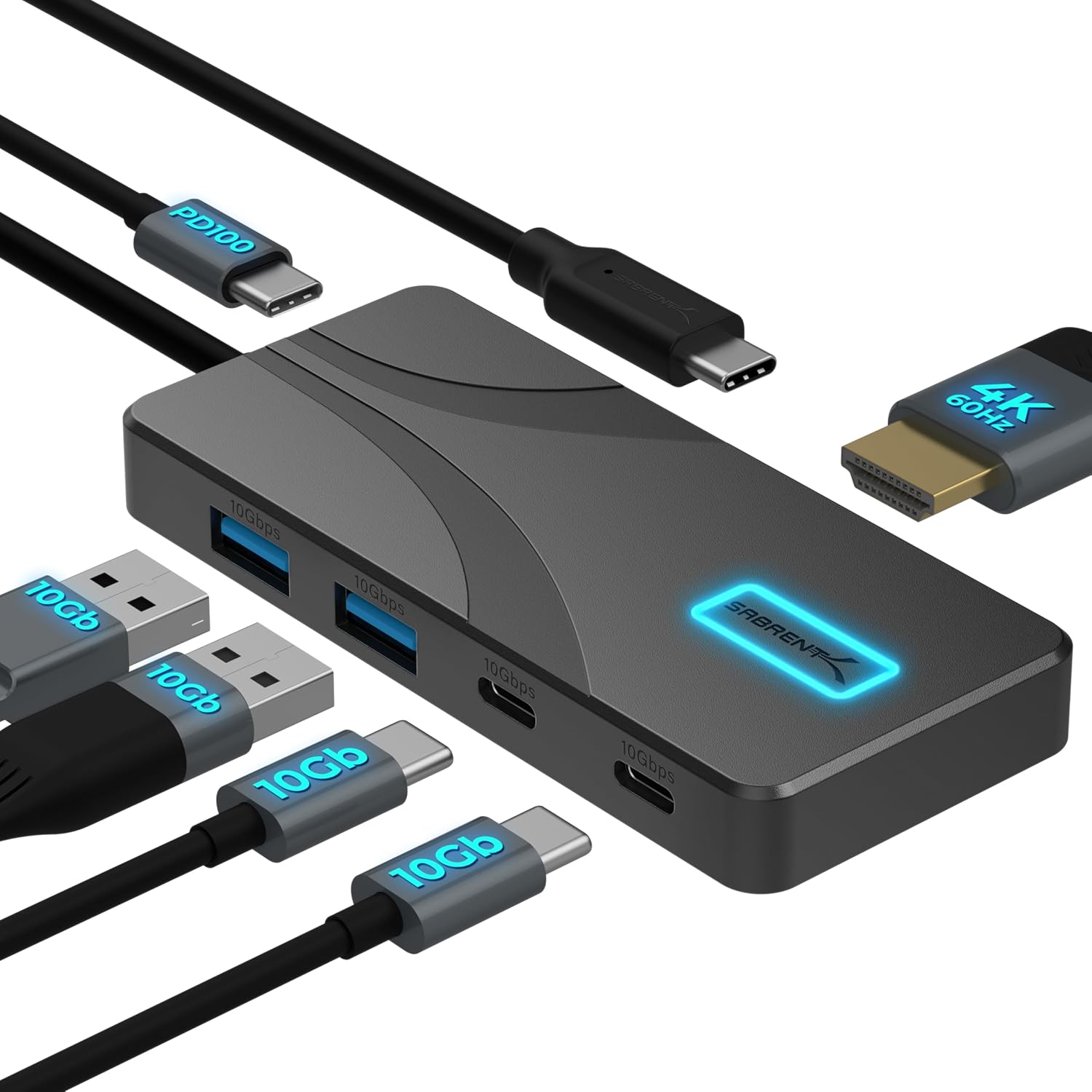
Not every mini-ITX board includes 10GbE onboard, and adding a PCIe card competes with drive-controller slots in a compact case. A practical middle ground for smaller builds — or for anyone bridging a NAS to a laptop for a fast local transfer — is a USB-C hub with a 10Gbps data path, like the SABRENT 5-in-1 USB-C Hub or the Hiearcool 7-in-1 USB-C Hub, both of which expose 10Gbps USB-A/USB-C ports without occupying a PCIe slot.
Three Compact Build Tiers
| Tier | Typical drive count | CPU class | Best for |
|---|---|---|---|
| Budget media server | 4 bays | Low-power AM5 or mobile-derived chip | Plex/Jellyfin libraries, basic backups |
| Balanced home server | 4-6 bays | 6-core AM5 (e.g., Ryzen 5 7600) | File sharing + a small Docker app stack |
| High-performance | 6-8+ bays | 8-core AM5 with more PCIe lanes | Multi-user households, heavier transcoding, ZFS with more vdevs |
Exact part costs vary by retailer and drive capacity chosen, so treat this as a shape to fill in with current prices rather than a fixed budget — the case and drive count matter more to the final total than the CPU tier.
GPU-accelerated transcoding
If the NAS also serves as a Plex/Jellyfin transcoding box, a discrete GPU with hardware encode/decode support cuts CPU load substantially for multi-stream transcodes. Builders repurposing an AMD card for this duty can check compatibility notes in our local LLM and AMD GPU benchmark roundup and, for higher-end builds pairing a stronger CPU with a capable GPU, the Ryzen 7 9800X3D pairing guide — though for most compact NAS builds, a modest CPU with integrated graphics handles one or two simultaneous transcodes fine.
NAS Operating System Comparison
| OS | Storage engine | Learning curve | Best fit |
|---|---|---|---|
| TrueNAS Core | ZFS | Steeper | Data integrity-focused builds, snapshots, ECC-backed setups |
| OpenMediaVault | ext4/Btrfs (plugin-extensible) | Gentlest | First-time builders, simple file/media sharing |
| Unraid | Array + parity (mixed drive sizes) | Moderate | Mixed-capacity drive pools, Docker/VM-heavy setups |
TrueNAS runs natively on Ryzen 7000-series AM5 platforms and leans on ZFS for checksummed, self-healing storage — the tradeoff is a steeper setup process and a preference for uniform drive sizes per vdev. OpenMediaVault trades some of that rigor for approachability: it's Debian-based, has a simpler web UI, and is often the recommended starting point for a first NAS build. Unraid's parity-array model is the most flexible about mixing drive capacities within one pool, and recent releases extend GPU passthrough support to AMD RDNA3 cards for hardware-accelerated transcoding inside VMs or Docker containers — a detail relevant to anyone planning a combined media-server-plus-NAS build.
Setup Tips for Headless Operation
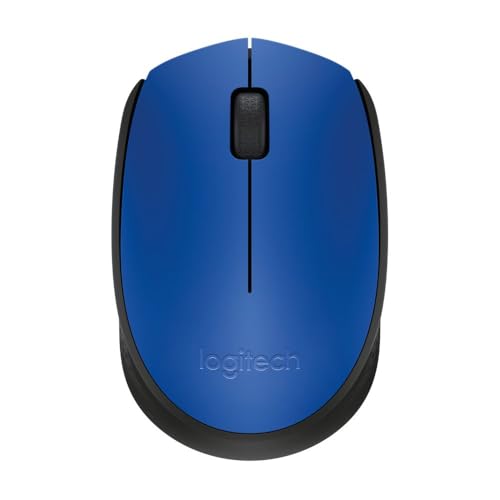
Most compact NAS builds run headless after initial setup — no monitor attached day to day. During the initial OS install and BIOS configuration, a basic wired or wireless keyboard/mouse is still needed. A compact wireless combo like the Logitech MK270 or a standalone travel mouse such as the Logitech M170 covers this without permanently occupying desk space once the box is tucked onto a shelf and managed over SSH or the web UI afterward.
Maintenance and Longevity
Compact cases pack drives closer together than full towers, so airflow across the bay cage matters more than in a spacious build. A single case fan drawing air past the drives, rather than relying on passive convection, is the difference between drives running within their rated temperature range and drives running hot enough to shorten their service life. Beyond cooling, the other common longevity factor is workload — sticking within a drive's rated annual workload (per its manufacturer spec sheet) rather than exceeding it with constant read/write activity keeps failure rates in line with published expectations.
For anyone considering an even smaller, lower-power footprint than a mini-ITX x86 build, our Raspberry Pi home-lab guide covers where a Pi-based NAS makes sense versus where it falls short on sustained throughput.
Citations and sources
- AMD Ryzen 5 7600 official specifications
- Seagate IronWolf NAS hard drive product page
- TrueNAS Core overview
- OpenMediaVault official site
- Unraid official site
- r/DataHoarder community build discussions
- r/homelab community build discussions
This piece is editorial synthesis based on publicly available information. No independent first-party benchmarking is reported.