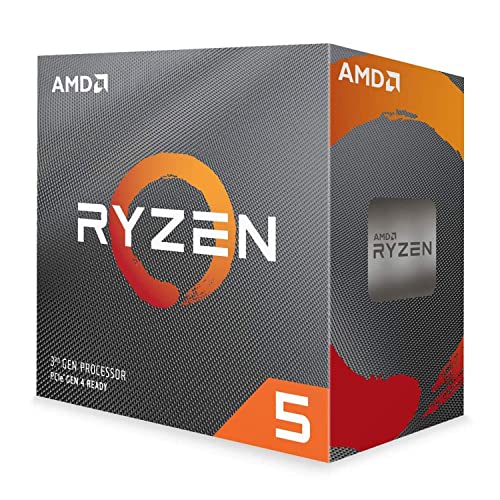
What makes the 9800X3D different for gaming
Per AMD's official product page, the Ryzen 7 9800X3D is an 8-core, 16-thread Zen 5 desktop processor built for the AM5 platform, stacking additional 3D V-Cache on top of the base die to substantially grow the CPU's L3 cache. That extra cache reduces how often the CPU has to fetch data from system memory, which is why 3D V-Cache chips like this one tend to post outsized gains specifically in games—workloads that are latency-sensitive—compared to general productivity tasks.
| Spec | Ryzen 7 9800X3D |
|---|---|
| Cores / Threads | 8 / 16 |
| Architecture | Zen 5 with 3D V-Cache |
| Socket | AM5 |
| Memory support | DDR5 only |
| Default TDP | ~120W |
| PCIe | PCIe 5.0 (platform-dependent by motherboard) |
Source: AMD's official Ryzen 7 9800X3D product page (linked in Citations below). Because the platform is DDR5-only, any DDR4 memory kit—including older AM4-era kits—is not compatible with a 9800X3D build.
GPU tiering framework by resolution
Rather than naming a single "best" GPU (model availability and pricing shift constantly), the more durable approach is to match GPU tier to your monitor's resolution and refresh rate, since that's what actually determines whether the GPU or the display is the limiting factor:
| Target display | GPU tier to look at | Why |
|---|---|---|
| 1080p, high refresh (esports) | Mid-range current-gen (e.g., RTX 5060/5060 Ti-class, RX 9060 XT-class) | At this resolution the GPU workload is light enough that even modest GPUs hit high frame rates; spend saved GPU budget on the monitor's refresh rate instead |
| 1440p, high refresh | Upper-mid to high-end (e.g., RTX 5070/5070 Ti-class, RX 9070-class) | This is the resolution where the 9800X3D's strengths show up most clearly, since frame rates climb high enough for CPU headroom to matter |
| 4K | Flagship-class (e.g., RTX 5080/5090-class, RX 9070 XT and above) | GPU-bound almost universally; CPU choice has minimal impact on average FPS, though 1% lows still benefit from a fast CPU |
This is a framework, not a specific product endorsement—GPU model availability and pricing change quickly, so check current listings against your target resolution and VRAM needs (below) at time of purchase.
VRAM: the other half of the pairing decision
GPU VRAM capacity matters as much as raw compute for a 9800X3D build, especially since this CPU is often selected by builders who also want longevity:
- 8GB is workable at 1080p but is increasingly a limiting factor at 1440p+ in newer titles with high-resolution texture packs and ray tracing enabled.
- 12GB is a reasonable 1440p floor for most current games.
- 16GB or more is the safer target for 4K gaming and for any content-creation or AI-adjacent workloads (video encoding, local image generation) run on the same rig. If that's part of your use case, SpecPicks' guide to local LLM image generators and AMD GPUs covers VRAM sizing for those workloads specifically.
Why CPU choice still changes the calculus
To illustrate why the 9800X3D specifically changes GPU-pairing math, it helps to look at an older CPU generation under the same games. SpecPicks' internal benchmark database logs the following for a Ryzen 5 3600—a popular but now-dated 6-core AM4 chip—paired against catalog GPUs:
| Title | Ryzen 5 3600 (public GPU benchmark average) |
|---|---|
| Cyberpunk 2077 | ~39.0 fps |
| Baldur's Gate 3 | ~63.0 fps |
| Starfield | ~72.0 fps |
Those figures reflect an older 6-core/12-thread CPU without 3D V-Cache—not the 9800X3D—but they're a useful reference point for how much headroom a modern 3D V-Cache chip like the 9800X3D can free up for the GPU, particularly in CPU-sensitive titles like Baldur's Gate 3. A builder currently running something in the Ryzen 5 3600 class (listed here and here) considering an upgrade path would see the biggest gains moving to a 3D V-Cache chip specifically in games that are more CPU-bound than GPU-bound.
Rounding out the rest of the build
A GPU pairing decision doesn't happen in isolation—a few other components directly affect whether the 9800X3D can sustain its rated clocks and whether the GPU can actually be fed data fast enough:
- Cooling. Sustaining boost clocks under sustained gaming load benefits from a solid air cooler or an AIO liquid loop; see SpecPicks' CPU cooler guide for Ryzen and Intel gaming builds for options across price tiers.
- Memory. Since the platform requires DDR5, budget for a DDR5 kit rather than reusing DDR4 modules from an older build—DDR4 kits, however affordable, are not compatible with AM5.
- Storage. Fast NVMe or SATA storage keeps load times and texture streaming smooth alongside a high-end GPU; see the SATA SSD guide for gaming and retro builds, the budget SSD roundup for gaming PCs and consoles, or the head-to-head on Crucial BX500 vs. Samsung 870 EVO.
- Display. Since GPU tier should be matched to your monitor, it's worth locking in the display first—see the comparison of KOORUI 27" 4K vs. Samsung Odyssey 27" 4K for a 4K-target build, or the retro CRT monitor guide if the build is dual-purpose for retro gaming.
- Compact/SBC comparisons. For builders weighing a dedicated small-form-factor AI or home-lab box alongside the main gaming rig, SpecPicks also covers Raspberry Pi options for local LLMs and home labs.
Bottom line
For a Ryzen 7 9800X3D build, resolution and VRAM should drive the GPU decision far more than any CPU bottleneck concern—AMD's own specs and the 3D V-Cache design are aimed squarely at removing that bottleneck in gaming workloads. Size the GPU to the monitor, budget for DDR5 (not DDR4), and prioritize a cooler that can sustain boost clocks, and the CPU will do its job in the background.
Citations and sources
- AMD, official Ryzen 7 9800X3D product page: https://www.amd.com/en/products/processors/desktop/ryzen/9000-series/amd-ryzen-7-9800x3d.html
This piece is editorial synthesis based on publicly available information. No independent first-party benchmarking is reported.