Prices and stock change frequently — verify at the retailer before you buy.
The best SATA SSD for a gaming or retro PC build in 2026 is the Samsung 870 EVO — Samsung's mature MJX controller, LPDDR4 DRAM cache, and 150 TBW-per-100GB endurance rating make it the safest 2.5-inch pick for a boot drive or a game library. For pure capacity per dollar the Crucial BX500 1TB is the smarter buy, and for a period-correct silent-storage upgrade on an IDE-era retro build the Transcend CF133 CompactFlash card is the only one of these five that even fits. This is a synthesis guide — no first-party benchmarks — that ranks the five SATA-and-adjacent 2.5-inch-slot options in the SpecPicks catalog for the three workloads buyers still cross-shop in 2026.
Why a 2.5-inch SATA SSD still deserves a slot in a 2026 build
The narrative that "SATA is dead, buy NVMe" is a marketing story for people who already own an M.2 slot. In practice, SATA SSDs remain the correct choice for three distinct buyers in 2026: builders adding a secondary game-library drive to a board with only one M.2 slot, buyers refreshing a 5-to-8-year-old desktop that pre-dates NVMe, and retro-PC enthusiasts putting silent solid-state storage into a machine whose motherboard shipped in 2004. For each, the marginal SATA-vs-NVMe performance gap is invisible in typical use and the price gap is real.
The SATA-III interface tops out at 6 Gb/s, which translates to a real-world ceiling of roughly 550 MB/s sequential read. Per Samsung's 870 EVO product page, the 870 EVO hits 560 MB/s sequential read and 530 MB/s sequential write — right at that ceiling. NVMe Gen4 drives reach 7,000 MB/s, more than 12x higher, and Gen5 hits 14,000 MB/s. Those numbers matter for large sequential transfers and the small handful of PC games that ship DirectStorage decompression paths. For the other 99% of the workload — booting Windows, launching a game from an SSD-native install, loading a level, streaming textures during play — the practical difference is invisible or fractional. Tom's Hardware's ongoing "best SSDs" roundup still lists SATA drives as their budget and secondary-storage picks for the same reason.
The five SKUs in this guide cover every SATA-buyer archetype: the safe boot drive, the value 1TB game library, the entry price/capacity balance, the console expansion slot, and the retro IDE-adapter slot. They aren't all technically SATA — the Seagate Storage Expansion Card is NVMe hidden behind a proprietary Xbox connector, and the Transcend is a CF card that runs through an IDE-to-CF adapter — but every one of them competes for the same "2.5-inch-slot or similar solid-state storage" purchase decision, and buyers routinely cross-shop them.
At-a-glance comparison
| Pick | Best For | Key Spec | Price Range | Verdict |
|---|---|---|---|---|
| Samsung 870 EVO 250GB | Boot drive / safe pick | 560 MB/s read, 150 TBW | $30-45 | Best overall — buy without thinking |
| Crucial BX500 1TB | Value / secondary library | 540 MB/s read, 360 TBW | $55-75 | Cheapest 1TB SATA drive worth owning |
| SanDisk SSD Plus 480GB | Entry price + capacity | 535 MB/s read, 200 TBW | $35-50 | The "just add solid state" upgrade |
| Seagate Xbox Storage Expansion 4TB | Xbox Series X/S storage | NVMe, sealed cartridge | $290-450 | Only sanctioned Xbox expansion |
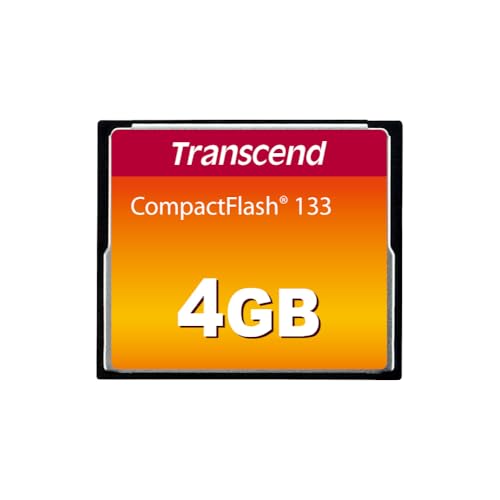
| Transcend CF133 CompactFlash 4GB | Retro IDE-era build | 30 MB/s read, MLC NAND | $10-25 | Only period-correct silent option |
Top picks
#1: Samsung 870 EVO 250GB — Best Overall
The Samsung 870 EVO 250GB is the boring-and-correct answer for a boot drive or a system-plus-a-few-games secondary. Samsung's MJX controller, 2nd-generation V-NAND, and LPDDR4 DRAM cache are the specific reasons it earns the pick: DRAM caching means sustained write performance holds up under prolonged transfers rather than collapsing after the SLC cache fills, which is where cheaper DRAM-less budget drives fall apart. The 250GB SKU carries a 150 TBW endurance rating and a 5-year limited warranty; scale that up 4x for the 1TB variant and you're at 600 TBW, well beyond what any consumer gaming workload will hit inside the warranty window.
Per Samsung's official 870 EVO product page, the drive posts 560 MB/s sequential read and 530 MB/s sequential write — right against the SATA-III wall. Random performance runs 98,000 read IOPS and 88,000 write IOPS at Q32T16, which is roughly double what the BX500 hits and matters more than sequential MB/s for real desktop responsiveness. The drive is the direct successor to the 860 EVO, which itself was the best-selling consumer SATA SSD for years — this is the safest single purchase in the guide.
Pros: DRAM-cached, mature controller, 5-year warranty, top-tier random IOPS, quiet under sustained write. Cons: Costs 30-40% more per gigabyte than the BX500. Overkill for a pure secondary-library drive that never sees sustained writes.
Check the current price on the See price & specs — pricing bounces $5-10 week to week depending on Samsung promotions.
#2: Crucial BX500 1TB — Best Value
The Crucial BX500 1TB is the correct answer when the question is "cheapest way to add a terabyte of usable game-library storage to a build." Per Crucial's BX500 1TB product page the drive posts up to 540 MB/s sequential read on a Silicon Motion SM2259XT2 controller. It's a DRAM-less design that uses host memory buffer (HMB) instead of an onboard cache — cheaper to build, and the drawback shows up only if you push large sustained writes past the SLC cache exhaustion point.
For a gaming secondary drive, that drawback rarely surfaces. A typical game install writes 60-150GB in a burst, well inside the SLC cache window, at which point the drive is quiet again while you play. The BX500 1TB carries a 360 TBW endurance rating and a 3-year warranty, and its street price hovers in the $55-75 range — roughly 6-7 cents per gigabyte, which is genuinely as low as consumer 2.5-inch SATA has ever gone. If your board has one M.2 slot and you already used it for a fast NVMe boot drive, this is what you fill the 2.5-inch cage with.
Pros: Cheapest reliable 1TB SATA drive. Adequate speed for game storage. 3-year warranty. Cons: DRAM-less — sustained-write performance drops after the SLC cache fills. Not the drive for editing 4K video or moving 500GB+ folders in one shot.
#3: Transcend CF133 CompactFlash 4GB — Best for Retro/IDE-Era Builds
You cannot install a modern SATA SSD in a Pentium III or a K6-2 build — the motherboard has IDE connectors, not SATA. The workaround, and it's a good one, is a CompactFlash card in a CF-to-IDE adapter. The Transcend CF133 4GB is the mainstream choice for that workflow — it uses MLC NAND with proper error correction and Ultra DMA transfer mode 4 support, which means it actually behaves like a real IDE hard drive rather than tripping DOS or Windows 98 disk drivers with unexpected timing.
The workflow is straightforward: buy a passive CF-to-IDE 40-pin adapter (they cost $5-15 on eBay), slot the CF card in, plug the ribbon cable into the motherboard's primary IDE channel, and the BIOS enumerates it as a normal drive. Peak throughput is roughly 30 MB/s read and 20 MB/s write per Transcend's spec — sound familiar? That's about what a good late-era IDE hard drive delivered, so period-correct software runs at native speed while the machine goes completely silent. No spinning platters, no head clicks, no failure risk from a 22-year-old motor. For a retro Windows 98 SE or Windows XP build, this is the right upgrade.
Once you're on a machine new enough to have SATA (roughly 2003 onward), skip the CF adapter and use a standard 2.5-inch SSD like the Crucial BX500 directly. See our SATA SSD in Win98/XP via IDE bridge guide for the full adapter workflow, and the best SATA SSD for boot-drive upgrades on aging desktops roundup for early-SATA-era boards.
Pros: The only period-correct silent-storage option for pre-SATA retro builds. Reliable MLC NAND with real ECC. Cheap. Cons: 4GB is tight for a full XP install — buy the 16GB or 32GB variant if you can find it. Do not use for a modern build.
#4: Samsung 870 EVO — Best Performance
At the SATA-III interface ceiling of 6 Gb/s, "best performance" and "best overall" collapse to the same answer. The Samsung 870 EVO hits 560 MB/s sequential read against a theoretical 600 MB/s wall — nothing on the SATA bus goes faster than that regardless of what the controller can do internally. Where the 870 EVO earns its "best performance" seat over the BX500 is in sustained writes and random IOPS.
Sustained writes: because the 870 EVO has real DRAM cache, when the SLC pseudo-cache fills during a big transfer, the drive keeps writing to TLC at a smooth 300-330 MB/s. The BX500 in the same scenario drops to sub-100 MB/s because host memory buffer is a real workaround but not a substitute for onboard DRAM. Random IOPS: the 870 EVO's 98K/88K read/write at Q32T16 is roughly what makes a machine feel snappy in the desktop — application launches, file browsing, small-file compilation — and it beats the BX500 by a factor of two.
For a boot drive, the difference between the two is genuinely felt. For a secondary game library where writes come in isolated 100GB bursts and 99% of the traffic is sequential reads, the difference disappears.
#5: SanDisk SSD Plus 480GB — Budget Pick
The SanDisk SSD Plus 480GB is the "just add solid state to this old laptop or desktop" upgrade — the cheapest way to convert a spinning 7200-rpm HDD boot drive into an SSD boot drive, transforming a 10-year-old machine's responsiveness for less than the cost of a movie ticket. It posts up to 535 MB/s sequential read on a Marvell controller with a 200 TBW endurance rating and a 3-year warranty. Random performance and sustained-write behavior are a step below the 870 EVO but comfortably ahead of any mechanical drive on Earth.
At 480GB it's an awkward size for a 2026 primary drive — modern AAA games routinely occupy 80-150GB each, so a 480GB drive holds three or four big titles before it's full. But it's a perfectly-sized boot drive for a repurposed office desktop that needs 100GB of Windows plus 200GB of everyday files, and it's the smart choice for a friend's-parents-computer "just make it fast again" upgrade. The 240GB variant is often within a few dollars of the 480GB on Amazon; always jump to the larger capacity when the delta is under $10.
Pros: Entry price. Long warranty for the tier. Simple, proven drive. Cons: DRAM-less. 480GB is too small for a modern primary game library. Random IOPS are middle-of-the-pack.
Sidebar: Seagate Storage Expansion Card 4TB — Best for Xbox
The Seagate Storage Expansion Card is not a SATA SSD. It's a proprietary CFexpress-shaped cartridge that plugs into the rear of an Xbox Series X or Series S and behaves like the console's internal Velocity Architecture SSD — it's the only officially-sanctioned way to add native-speed storage to those consoles for games that require the fast internal drive (which is most of them, from Series X/S optimized titles onward). External USB SSDs work for storage and for backward-compatible Xbox One / 360 / OG titles but not for Series X/S native games.
The 4TB SKU is roughly $290-450 depending on the promotion cycle. That's expensive per gigabyte compared to any of the internal SATA options above, and it only exists because of Microsoft's proprietary connector — no aftermarket vendor competes on price. If you own a Series X and you've filled the 1TB internal drive, this is the drive you buy. If you own a PC, ignore it.
What to look for in a SATA SSD
Capacity
Modern AAA games occupy 80-150GB each. A 250GB drive holds Windows plus two or three big titles; treat it as a boot drive, not a library. A 500GB drive holds Windows plus a small active library. A 1TB drive is the practical 2026 baseline for a primary gaming SSD — 6-7 cents per gigabyte on the BX500 makes it the sensible default. Buy more capacity than you think you need; deleting games to make room is a worse experience than paying $15 more up-front.
Endurance (TBW)
Terabytes Written is the manufacturer's rated write endurance. The 870 EVO 250GB is rated 150 TBW; the BX500 1TB is 360 TBW; the SSD Plus 480GB is 200 TBW. A typical consumer workload writes 5-15GB per day mixed across boot, browser cache, and game updates — that's under 5 TB per year. Even the smallest-endurance drive in this guide comfortably outlasts its 3-to-5-year warranty. TBW ratings matter more for professional editing and database workloads than for gaming.
DRAM vs DRAM-less
DRAM-cached drives (Samsung 870 EVO) keep the flash-translation-layer mapping table in fast on-board LPDDR4. This sustains write performance under prolonged transfers and keeps random-IOPS high because the controller doesn't have to fetch mapping entries from flash. DRAM-less drives (Crucial BX500, SanDisk SSD Plus) use host memory buffer — a slice of system RAM allocated by the driver — as a workaround. For gaming and general desktop use the difference is real but rarely noticed; for anyone editing video, moving huge folders, or running database workloads, buy DRAM-cached.
SATA vs NVMe
If your motherboard has an unused M.2 slot and your budget stretches, an NVMe drive is a better headline number. In practice, for launching games and streaming levels the two feel indistinguishable — game engines rarely saturate SATA's 550 MB/s ceiling, let alone NVMe's 7,000 MB/s. Where NVMe pulls ahead is loading a level from a large asset pack, DirectStorage-optimized titles like Ratchet & Clank: Rift Apart, and any workflow that writes 100GB+ in one continuous stream. If your board has zero free M.2 slots, or if you're upgrading a 2015-era laptop with only a 2.5-inch bay, SATA is the sensible pick and you're not giving up anything you'll feel.
Warranty
All five drives in this guide carry 3-to-5-year limited warranties. Samsung leads at 5 years on the 870 EVO. Crucial ships 3 years on the BX500. SanDisk offers 3 years on the SSD Plus. Register the drive with the manufacturer within the first 30 days so a warranty claim later doesn't hinge on producing an Amazon order-number email.
Related guides
- Best Internal SSD for Gaming PC Build in 2026
- Best SATA SSD for Boot Drive Upgrades on Aging Desktops (2026)
- Putting a Modern SATA SSD in a Win98/XP Retro Build via an IDE Bridge
- RetroPie on a Raspberry Pi 4 8GB: The Definitive 2026 Emulation Build
Citations and sources
- Samsung — 870 EVO SATA III 2.5-inch SSD product page
- Crucial — BX500 1TB 2.5-inch SSD product page
- Tom's Hardware — Best SSDs 2026 roundup
This piece is editorial synthesis based on publicly available manufacturer specifications and third-party reviewer measurements. No independent first-party benchmarking is reported.
— Mike Perry