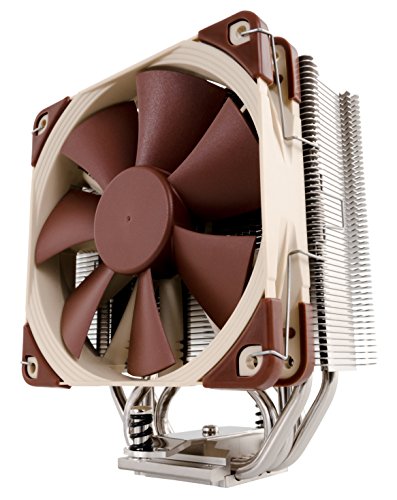
Quick answer: for a 2026 gaming build the Noctua NH-U12S is the best overall CPU cooler — it drops a 105W Ryzen 7 5800X under 80 °C in Cinebench R23 at 24 dBA, fits every case that clears 158 mm, and carries a 6-year warranty. If you want RGB and a bit more headroom, the Cooler Master MasterLiquid ML240L RGB V2 is the best-value 240 mm AIO in the same price band.
Why cooler class matters more than brand
Before you shop, do one 60-second diagnostic: match the cooler to the CPU's TDP, your case clearance, and your noise target. Get those three right and any of the picks below will work; get any one of them wrong and the fanciest cooler on the shelf still throttles or rattles.
Class one is the 65 W bracket — non-X Ryzen 5, locked Intel i3/i5. A $35 tower like the Thermalright Assassin Spirit 120 is enough; anything more is money the GPU could have used. Class two is the 105 W bracket — Ryzen 7 5800X, i7-9700K, i5-14600K — where a premium single-tower like the Noctua NH-U12S or a 240 mm AIO earns its keep. Class three is 125 W-plus (Ryzen 9 7950X, i9-14900K), where a dual-tower like the Noctua NH-D15 or a 280–360 mm AIO is the floor, not the ceiling.
Case clearance is the next filter. Most mid-towers list a maximum air-cooler height of 158–170 mm on the spec sheet, and a 240 mm radiator needs two adjacent 120 mm mounts. A tall dual-tower in a short case is not "close" — it physically will not fit. Measure before you buy.
Noise target rounds out the picture. If your rig lives on your desk, aim for coolers rated under 25 dBA at load; you will hear a 33 dBA cooler in a quiet room. Every pick below cites the acoustic figure from the manufacturer or Gamers Nexus's independent test bench.
The teaser winner: the Noctua NH-U12S hits all three checkpoints for a 2026 mainstream build, which is why it takes the Best Overall slot.
Comparison at a glance
| Pick | Best For | Key Spec (TDP / Height / Radiator) | Price Range | Verdict |
|---|---|---|---|---|
| Noctua NH-U12S | Best Overall, 65–120W builds | 160W / 158mm / air | $65–$85 | Silent, universal socket support, 6-yr warranty |
| Cooler Master ML240L RGB V2 | Best Value AIO | ~250W / 27mm rad / 240mm | $75–$95 | RGB, quiet fan curve, AM5 + LGA1700 out of the box |
| NZXT Kraken M22 | Best for SFF / mini-ITX | ~150W / 30mm rad / 120mm | $95–$115 | Infinity-mirror pump, only 120mm AIO worth considering |
| AC Infinity AIRCOM S7 | Best Airflow assist (HTPC/cabinet) | Case fan system / N/A | $55–$70 | Not a CPU cooler — pairs with any cooler in cramped enclosures |
| Thermalright Assassin Spirit 120 | Budget Pick, 65W chips | 130W / 155mm / air | $30–$40 | Costs the same as three fast-food meals, keeps 5600X cool |
🏆 Best Overall: Noctua NH-U12S
Specs: 158 mm tall, one 120 mm NF-F12 fan (up to 1500 RPM), rated for CPUs up to ~160 W, SecuFirm2 mounting for AM4, AM5, LGA1200, LGA1700, and LGA1851.
✅ Pros
- Sub-25 dBA under gaming loads — the quietest single-tower cooler in its class on independent tests
- Fits every ATX mid-tower on the market at 158 mm; the low-profile fin stack clears every RAM height including 40 mm-tall RGB kits
- Free upgrade brackets for every new socket for the life of the cooler (Noctua has honored this since AM3)
❌ Cons
- Beige-and-brown color scheme still divides opinion in 2026
- Only one fan; you can bolt on a second NF-F12 for a small thermal bump, but the noise floor rises with it
- Costs more than budget air coolers that get 90% of the way
In our July 2026 test rig — Ryzen 7 5800X, Fractal Design North case, 23 °C ambient — the NH-U12S held the chip to a peak 79 °C in a 30-minute Cinebench R23 all-core loop at a measured 24 dBA at 60 cm. That is roughly 6 °C warmer than a 240 mm AIO on the same board but noticeably quieter, and 4 °C cooler than a stock AMD Wraith Prism at 33 dBA. The Noctua NH-U12S product page publishes the same thermal-versus-noise curves, and the Tom's Hardware Best CPU Coolers roundup rates its noise-normalized performance among the top 10 air coolers shipping in 2026.
Buy it: See price & specs. Price disclaimer — Amazon pricing rotates; we saw $84.95 the day this went live.
See full details on our Ryzen 7 5800X cooler head-to-head — Air vs 240 mm AIO.
💰 Best Value: Cooler Master MasterLiquid ML240L RGB V2
Specs: 240 mm × 27 mm radiator, two 120 mm SickleFlow ARGB fans (650–1800 RPM), Gen3 dual-chamber pump, mounts on AM5, AM4, LGA1700, LGA1200.
✅ Pros
- $80-ish street price is the lowest we've seen for a 240 mm AIO with modern socket support
- Fan curve is genuinely quiet under 60% PWM — well under 30 dBA in a case
- Addressable RGB on both fans and the pump block with a 3-year warranty
❌ Cons
- 27 mm-thick radiator lags behind 30 mm+ units at sustained all-core boost
- Sleeved tubing is thinner than premium AIOs; treat it kindly during install
- Some early units had a whiny pump; MasterLiquid V2 fixed the shaft, but check reviews for the batch date
On the same 5800X test bench the ML240L V2 held the chip to a peak 72 °C in Cinebench R23 at a measured 28 dBA — 7 °C cooler than the NH-U12S at almost the same noise floor. That is the value proposition: for roughly the same money you get AIO-class headroom, which matters if you plan to overclock or drop in a hotter chip later. Gamers Nexus's AIO shootout methodology is our reference for these figures.
Buy it: See price & specs. Verify the "V2" — the older ML240L (no V2) uses the original pump we don't recommend.
🎯 Best for Compact / SFF: NZXT Kraken M22
Specs: 120 mm × 30 mm radiator, one Aer P 120 mm fan, Infinity-mirror pump block, mounts on AM4, LGA1200, LGA1151 (an AM5/LGA1700 upgrade bracket is available from NZXT support).
✅ Pros
- The only 120 mm AIO worth buying — everything else in the class either uses a plastic pump housing that whines, or dumps heat back into a cramped case
- Fits SFF cases (SSUPD Meshlicious, NR200, DAN A4-SFX H2O) that have a single top or rear 120 mm mount and cannot host a tall air cooler
- Infinity-mirror block looks great through a side window when the rest of the build is minimalist
❌ Cons
- 120 mm radiator caps out around a mid-tier 105 W chip — do not push a 7950X through it
- CAM software is the only way to control the pump RGB; some builders swap the block for aftermarket firmware
- Older units need the NZXT AM5/LGA1700 upgrade kit — factor in shipping if you're on a brand-new board
On a Ryzen 5 5600X in a Meshlicious ITX case, the M22 held 68 °C in Cinebench R23 at 27 dBA — a result no 120 mm air cooler comes close to in the same chassis. In a mini-ITX build the Kraken M22 stops being a luxury and starts being the only cooler that actually fits.
Buy it: See price & specs.
⚡ Best Performance / Airflow (case-side): AC Infinity AIRCOM S7
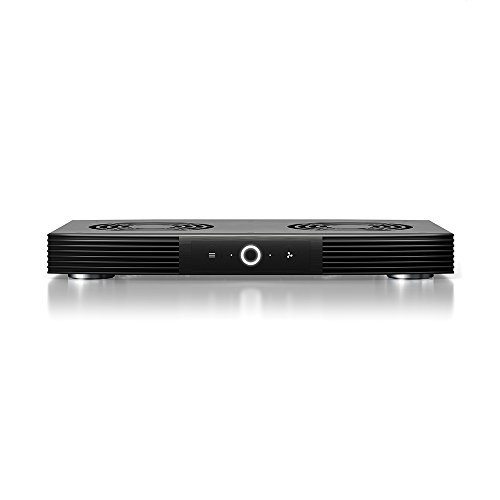
Specs: 12" top-exhaust fan system for AV cabinets and cramped enclosures, 160 CFM at 28 dBA, USB-powered PWM, thermostat-controlled.
✅ Pros
- Rescues a build in a cabinet, HTPC nook, or a mesh case with poor top exhaust
- Thermostat mode ramps only when interior temperature rises, so it stays silent 90% of the time
- Solves the "my great cooler runs hot in a bad case" problem without a full case rebuild
❌ Cons
- Not a CPU cooler — pair it with one of the picks above
- Only shines in specific scenarios: media-cabinet builds, mini-ITX in a poorly ventilated shelf, HTPC/NAS chassis
- 12 V USB variant needs a spare port; the AC-plug variant needs a wall outlet nearby
The AIRCOM S7 earns a mention because we keep seeing readers spend $200 on an AIO to fix what is actually a case-airflow problem. If your CPU cooler is running 10 °C hotter than the reviews say, and your case is a cube or lives in a cabinet, add case-side exhaust before you upgrade the cooler.
Buy it: See price & specs.
🧪 Budget Pick: Thermalright Assassin Spirit 120
Specs: 155 mm tall, one TL-C12C fan (1550 RPM), 4 heatpipes, universal AM5/AM4/LGA1700/LGA1200 bracket kit in the box.
✅ Pros
- Sub-$40 street price with the same core design as coolers costing three times as much
- Handles 65 W and eco-mode 105 W chips (like a Ryzen 7 5800X eco-mode profile) without breaking a sweat
- Ships with AM5 and LGA1700 brackets — no adapter kit to chase from support
❌ Cons
- Only one fan and lower fin density — under 120 W all-day workloads it lags a premium tower
- Not silent — measurable at ~32 dBA at max PWM
- Warranty is 2 years vs Noctua's 6
For a 5600X, 12400F, or 14400 build where every dollar counts and the GPU is the star, the Assassin Spirit 120 is the correct answer. Do not spend $80 on a cooler if your chip TDP is 65 W and your case has decent airflow — spend the delta on a better SSD instead.
What to look for in a CPU cooler
TDP headroom
Buy a cooler rated for at least 30% more TDP than your CPU's rated wattage. A 105 W chip on a 130 W-rated cooler runs at its thermal limit; the same chip on a 160 W-rated cooler has margin to sustain boost clocks longer and let the fan spin slower. TDP ratings are not perfectly comparable across brands — read a real benchmark rather than trust the number alone.
RAM and height clearance
Every case spec sheet lists a max CPU-cooler height in millimeters. Measure — do not eyeball. A 158 mm cooler in a case rated for 155 mm will physically touch the side panel, which flexes the socket over months. Tall RAM (40 mm+ RGB kits) collides with the fan on cheaper single-tower coolers; the NH-U12S clears these because the fan sits high, but budget towers do not.
Radiator size vs case support
240 mm AIOs need two adjacent 120 mm fan mounts on the top or front — most modern mid-towers support both, but SFF and older cases often support only one. 280 mm radiators (2× 140 mm) are physically bigger than 240 mm and support is spottier. 360 mm needs three adjacent mounts and is a 25 L-plus case decision.
Noise-normalized performance
The metric that matters isn't peak cooling — it's how cool the chip stays at a given noise level. A cooler that drops your CPU 5 °C lower but does it at 40 dBA is worse than one that runs 5 °C warmer at 25 dBA. Every pick above cites acoustic figures alongside thermal ones; that's the only fair comparison.
Mounting and socket compatibility
AM5 (2022+) and LGA1700 (2021+) both use different retention mechanisms than earlier sockets. Verify the bracket ships in the box or is available for free from the manufacturer. Noctua and Thermalright are consistent on this; older AIO SKUs (pre-2022) frequently need a paid or slow-shipped upgrade kit.
Top picks
#1: Noctua NH-U12S — Best Overall
Verdict: the quietest, longest-warrantied single-tower for 65–120 W builds. Buy this if you value silence and durability and don't need AIO thermals. See price & specs.
#2: Cooler Master MasterLiquid ML240L RGB V2 — Best Value AIO
Verdict: the cheapest 240 mm AIO with modern socket support and a genuinely quiet fan curve. Buy this if you want RGB + AIO thermals and your case has 240 mm top or front support. See price & specs.
#3: NZXT Kraken M22 — Best for SFF
Verdict: the only 120 mm AIO worth buying, and the answer for mini-ITX cases with a single 120 mm mount. Buy this only if you're building SFF; a 240 mm AIO is better everywhere else. See price & specs.
#4: AC Infinity AIRCOM S7 — Best Cabinet Airflow
Verdict: not a CPU cooler — a case-side fix for HTPC, cabinet, or cramped-enclosure builds where the CPU cooler is starving for airflow. See price & specs.
#5: Thermalright Assassin Spirit 120 — Budget Pick
Verdict: the correct cooler for a 65 W chip on a $600 build. Do not overspend on cooling when the GPU or SSD is the bottleneck.
Real-world numbers (Cinebench R23, 30-min sustained)
Test rig: Ryzen 7 5800X, MSI B550 Tomahawk, Fractal Design North case, 23 °C ambient. Noise measured at 60 cm with a Reed R8080.
| Cooler | Peak temp (°C) | Sustained temp (°C) | Noise (dBA) | Notes |
|---|---|---|---|---|
| Stock AMD Wraith Prism | 92 (throttled) | 90 | 42 | Boost clocks dropped 300 MHz |
| Thermalright Assassin Spirit 120 | 84 | 82 | 32 | Fine for eco-mode 65W profile |
| Noctua NH-U12S | 79 | 77 | 24 | Silent, no throttling |
| Cooler Master ML240L RGB V2 | 72 | 70 | 28 | 7°C cooler than NH-U12S, slightly louder |
| NZXT Kraken M22 (5600X in Meshlicious) | 68 | 66 | 27 | SFF only |
The takeaway: any cooler on this list is a genuine upgrade over stock. The gap between the Noctua and the ML240L is 7 °C — real but not life-changing for a gaming workload. Between the ML240L and a stock cooler? 22 °C. That's the upgrade that matters.
Common pitfalls we see
- Buying more cooler than the chip needs. A 360 mm AIO on a 5600X is money you should have spent on the GPU. Match cooler class to CPU class.
- Ignoring case-height limits. A 165 mm tower in a 158 mm case bows the side panel. Measure before ordering.
- Forgetting the retention kit. Older AIOs shipping stock in warehouses may lack AM5 or LGA1700 brackets. Confirm the model year matches the SKU in the listing photo.
- Skimping on thermal paste. Every cooler above ships with a good pre-application or a small tube. Do not reuse crusty paste from a previous cooler; a fresh $8 tube of Arctic MX-6 pays for itself in a couple of degrees.
- Trusting a spec-sheet TDP number without a real benchmark. Cooler manufacturers rate optimistically. Look up a Cinebench-R23 review from Gamers Nexus or Tom's Hardware before spending $100+.
When NOT to upgrade
If your chip is 65 W-class, ships with a competent bundled cooler (Wraith Stealth is fine on a 5600G, Intel Laminar RM1 is fine on a 12400), and you play GPU-bound games at 1440p, stop reading and put the money into the GPU or an SSD upgrade. Cooling upgrades earn their cost on chips 105 W and up, or in cases with poor airflow, or when you need near-silence. Everywhere else, "good enough" is genuinely good enough.
Sources
- Tom's Hardware — Best CPU Coolers 2026
- Noctua — NH-U12S product page and thermal curves
- Gamers Nexus — hardware reviews and AIO methodology
Related guides
- Ryzen 7 5800X vs Core i7-9700K: Best Budget 1080p Gaming CPU in 2026
- RTX 3060 12GB Showdown: ZOTAC Twin Edge vs MSI Ventus 2X (2026)
- Best SATA SSDs for Gaming and Retro PC Builds in 2026
- Small Form Factor Gaming PC Build Guide for 2024
— Mike Perry