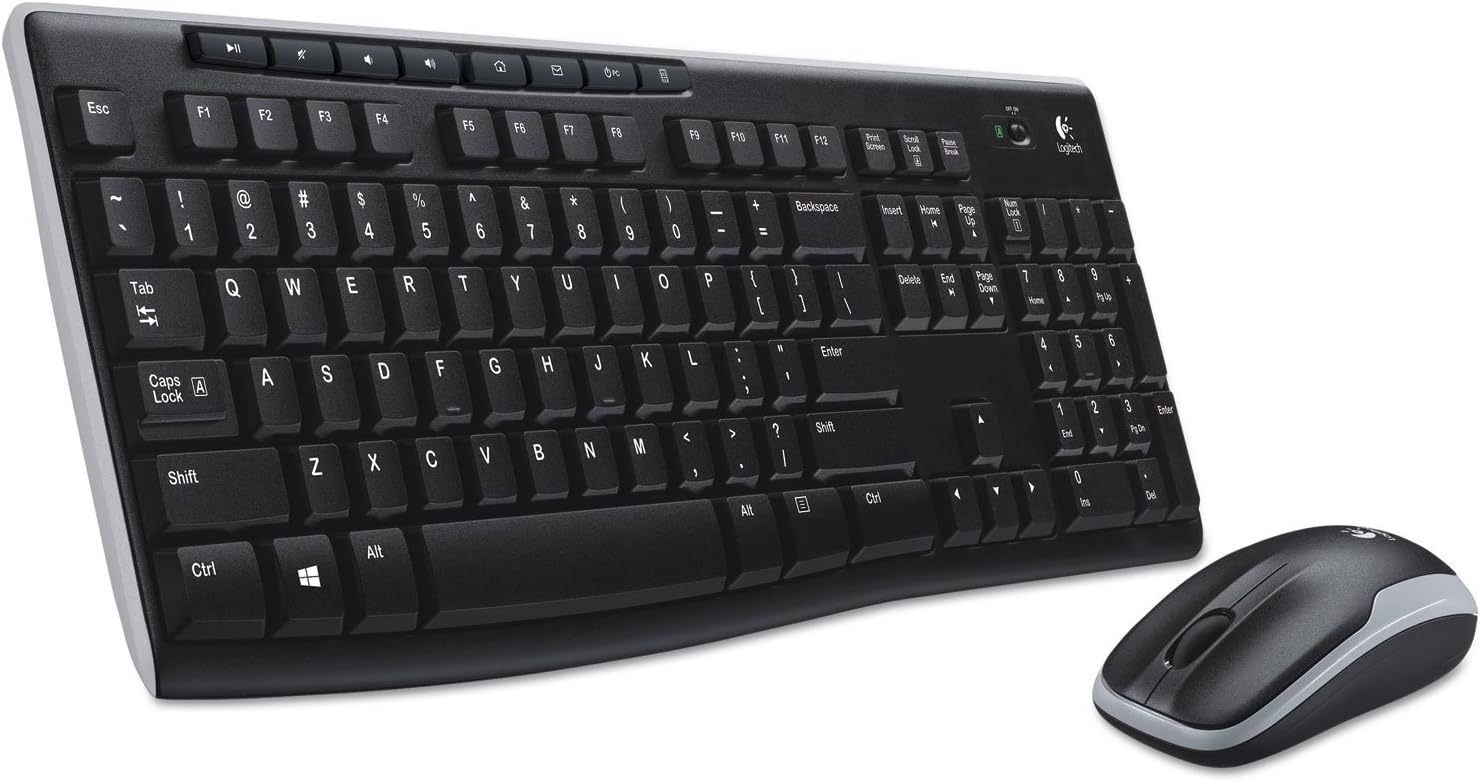
Start with the peripherals, not the tower. For a kid's first PC setup, buy a wireless keyboard-and-mouse combo, a wired headset with a flip-up mic, a wired Hall-effect controller, and a large cloth mouse pad — roughly $125 of gear that survives daily use. Add a plug-and-play retro console instead of the whole setup if the child is under about eight.
Why a family setup is a different buying problem
Most gaming buying guides optimise for peak specification per dollar. That is the wrong objective function for a child's setup, and it is why so many parents end up buying the same category twice.
The setup in question usually lives at a shared desk in a shared room, gets used by someone who is still learning that cables have a bend radius, and gets used next to a drink. It has to survive that. It also has to survive a second thing that catches people out: a child's taste in games changes faster than the hardware depreciates. The rig bought around one specific game is a bad bet; the peripherals bought around durability and fit are a good bet regardless of what they play next year.
So the ranking here is built on repair and replacement cost over three years, on fit and ergonomics for a smaller body, and on the number of failure modes a child can trigger unsupervised — lost dongles, dead batteries, unpaired controllers, a headset volume slider pushed to maximum. Peak specification appears nowhere in that list, and the picks reflect it.
One structural note before the picks: this guide covers the gear around the machine, not the machine itself. That is deliberate. A family with a hand-me-down PC or a console already owns the expensive part; the peripherals are what determine whether the setup is used happily or abandoned. If you are also choosing the box, our best budget PC upgrades for 1440p gaming guide covers the component side.
The overall winner is the Logitech MK270 combo, for reasons that have far more to do with battery life and desk footprint than with anything a spec sheet would flag.
Step 0: what age, and what games?
Set the tier before you look at any product. Three brackets cover almost every family.
Under about eight — plug-and-play. No account, no storefront, no patches, no in-game purchases, no update that breaks bedtime. A fixed library on a small box that connects to the TV. The entire supervision burden disappears, and so does most of the cost. Budget: $60-120, total.
Eight to about thirteen — shared family PC or console at a desk. This is where the peripheral picks below matter most. The machine is shared, so the gear has to suit more than one body size and survive more than one user's habits. Budget: $120-250 for the gear around an existing machine.
Thirteen and up — their own setup. At this point the buying logic converges with adult buying logic, with two exceptions that persist: wired beats wireless for anything they carry or lose, and warranty terms on controllers matter more than they do for an adult who does not play four hours a day. Budget: $200-400 for gear, more if you are buying the machine.
Deciding this first prevents the most expensive mistake in this category, which is buying a teenager's setup for a seven-year-old and then buying it again in three years because none of it fit.
The picks at a glance
| Pick | Best for | Key spec | Price range | Verdict |
|---|---|---|---|---|
| Logitech MK270 combo | Best overall | 2.4 GHz wireless, single receiver | $24-30 | The default desk pair |
| Turtle Beach Recon 50 | Best value | 40 mm drivers, wired 3.5 mm | $25-35 | Cheap enough to replace, good enough not to |
| Sega Genesis Mini | Best for younger kids | 42 built-in games, HDMI | $90-220 | No accounts, no storefront, no patches |
| GameSir G7 SE | Best performance | Hall-effect sticks and triggers, wired | $40-50 | Buys out stick drift |
| SteelSeries QcK XXL | Budget pick | 900 x 400 mm cloth surface | $28-35 | Desk protection plus tracking surface |
Prices checked 2026-08-28 and may vary.
🏆 Best Overall: Logitech MK270 Wireless Keyboard and Mouse Combo
Spec chips: Full-size layout with number pad · 2.4 GHz wireless · single USB receiver for both devices · eight hotkeys · AA batteries included
Pros
- One receiver serves both devices, so there is one thing to lose rather than two
- Battery life measured in years, not weeks — per Logitech's product page, up to 24 months for the keyboard and 12 for the mouse
- Full-size layout with a number pad, which matters because this desk is also a homework desk
- Cheap enough that a spilled drink is an annoyance, not an incident
Cons
- Membrane switches, not mechanical — fine for typing, unremarkable for feel
- The mouse is average-sized and unremarkable for fast-paced shooters
- No rechargeable pack; you are on AA batteries, albeit rarely
At around $24-30, this is the pair that ends the daily-friction problem on a shared desk. The reasoning is entirely about failure modes rather than performance. A child's desk collects three recurring interruptions: something needs charging, something has unpaired, or something has been unplugged and lost. A single-receiver 2.4 GHz combo with multi-year battery life removes all three from the two devices that sit still and get used constantly.
The battery specification is the part worth taking seriously. Logitech rates the keyboard at up to 24 months and the mouse at up to 12 on the bundled cells. Even discounting those figures heavily for real-world use, you are changing batteries roughly annually, which is infrequent enough that it never becomes a reason the desk is unusable on a school night.
The full-size layout deserves a mention too. A tenkeyless or 60 percent board looks tidier and is genuinely better for a competitive-shooter desk where mouse swing space is precious. It is worse for a shared homework desk, where the number pad gets used for maths and the arrow cluster gets used constantly. This is the trade you want at this age.
Where it falls down: if the child is specifically playing competitive shooters and cares about it, the bundled mouse is the weak half of the pair, and a $25 wired gaming mouse alongside this keyboard is a better configuration. That is a small, cheap fix rather than a reason to skip the combo.
See price & specs · Price may vary; checked 2026-08-28 · See full details
💰 Best Value: Turtle Beach Recon 50 Wired Multiplatform Headset
Spec chips: 40 mm drivers · wired 3.5 mm · flip-up mic · multiplatform (PC, PlayStation, Xbox, Switch, mobile) · lightweight synthetic-leather earcups
Pros
- Wired 3.5 mm works on every device in the house without pairing or dongles
- Flip-up mic mutes physically — a child can see whether it is muted
- Light enough for long sessions on a smaller head
- Around $28, which puts it in genuinely replaceable territory
Cons
- Synthetic-leather earcups get warm in long summer sessions
- No active noise cancelling, no wireless, no software EQ
- Headband adjustment is basic; check fit on very young children
The Turtle Beach Recon 50 is on this list because it is the intersection of three requirements that are hard to satisfy at once: it works on everything, it has no batteries, and it costs little enough that replacing it after an accident is not a family discussion. Per Turtle Beach's product page, it is a 40 mm driver design on a standard 3.5 mm analogue connection with a flip-up mic, which is exactly the specification that makes it universal.
Wired is a deliberate recommendation, not a budget compromise. A wireless headset introduces a charge state, a pairing state, and a dongle — three things that can be wrong at the moment the child sits down. A 3.5 mm cable has one failure mode and it is visible.
The flip-up mic matters more than it sounds. Software mute is invisible; a mic that is physically pointing at the ceiling is legible to a nine-year-old and to anyone walking past. For a family setup where voice chat with school friends is common, that is a genuinely useful property.
On hearing protection, treat the headset choice as the smaller half of the problem — set a system-level volume cap. The World Health Organization's guidance on hearing loss frames recreational sound exposure as a function of both level and duration, which is the practical argument for capping at the operating-system level and breaking up long sessions rather than relying on an in-app slider a child can move.
See price & specs · Price may vary; checked 2026-08-28 · See full details
🎯 Best for Younger Kids: Sega Genesis Mini
Spec chips: 42 built-in games · HDMI output · USB power · two wired controllers (region-dependent) · no network connection
Pros
- No account, no storefront, no patches, no in-app purchases — the supervision burden is zero
- Wired controllers, so nothing to charge or pair
- Plugs into the family TV; no desk, no chair, no monitor required
- The library is genuinely good, not nostalgia filler
Cons
- Fixed library — what is on the box is what you get
- Controllers are period-accurate, which means small and simple by modern standards
- Street pricing is volatile as stock has thinned
The argument for the Sega Genesis Mini as a first purchase for a younger child is not nostalgia. It is that every single mechanism by which a modern gaming setup creates parental work is absent. There is no account to create, no age rating to configure, no storefront to lock down, no update that arrives at bedtime, and no way to spend money inside a game. You connect HDMI and USB power, and it plays a fixed set of 42 titles.
That constraint is also a feature for the child. A fixed library invites depth rather than the endless-lobby churn that a storefront encourages, and the games themselves — the Genesis catalogue's platformers, arcade ports, and puzzle titles — are approachable in a way that a modern live-service title is not.
The honest caution is pricing. This is a discontinued product whose street price has drifted well above its original launch price as stock has thinned, and it varies enormously by seller and condition. Check the price before treating it as a budget option; at the low end of its range it is excellent value and at the high end it is not. If you are weighing it against the alternatives in this space, our Genesis Mini vs SNES Classic vs Raspberry Pi 4 comparison works through all three.
Check current listings → · Price may vary significantly by seller; checked 2026-08-28 · See full details
⚡ Best Performance: GameSir G7 SE Wired Controller
Spec chips: Hall-effect magnetic sticks · Hall-effect analogue triggers · wired USB-C · Xbox and Windows licensed · swappable faceplate
Pros
- Hall-effect sticks avoid the wear mechanism that causes stick drift
- Wired, so no charging and no pairing
- Trigger stops for shooters
- Swappable faceplate means it can be personalised without buying a new pad
Cons
- Wired only — a cable across the room to a TV setup is a real constraint
- Xbox and Windows licensed; not a PlayStation controller
- Slightly heavier than a stock pad
Stick drift is the reason this pick exists. Drift is unwanted stick input caused by physical wear in traditional potentiometer-based analogue sticks, where a resistive contact degrades with use. It is the single most common reason a controller gets replaced inside a year of heavy use, and heavy use is what a child's controller gets.
Hall-effect sticks read magnetic field position rather than dragging a contact across a resistive track, which removes that specific wear mechanism. The GameSir G7 SE puts Hall-effect sensors on both the sticks and the triggers at roughly $45, which is the cheapest reliable route to that property as of 2026 — Tom's Hardware's controller roundup covers where it sits against the broader field.
The arithmetic is straightforward: paying $45 once beats paying $30 twice, and the second purchase is not just money, it is a broken controller mid-session and a child who is upset about it.
Wired is again deliberate. For a desk setup the cable is invisible in practice. For a TV setup across a room it is a genuine annoyance, and that is the one case where a wireless pad is the better answer despite everything above.
See price & specs · Price may vary; checked 2026-08-28 · See full details
🧪 Budget Pick: SteelSeries QcK Gaming Mouse Pad XXL
Spec chips: 900 x 400 mm cloth surface · 4 mm thickness · non-slip rubber base · machine-washable
Pros
- Covers the whole desk, so keyboard and mouse both sit on a consistent surface
- Protects the desk from drinks, pens, and the general entropy of a child's desk
- Cloth surface gives predictable mouse tracking on desks that are glass, painted, or textured
- Around $30 and washable
Cons
- Takes up the entire desk, which not everyone wants
- Cloth needs occasional washing to stay fast
- Large mats crease in shipping and need a day to flatten
The most under-bought item on a first setup, and the cheapest thing on this list that changes the experience daily. A large cloth mat does two jobs at once: it fixes tracking on surfaces where optical sensors misbehave — glass, high-gloss laminate, heavily textured wood — and it turns the desk into something that tolerates a knocked-over drink without becoming a hardware problem.
The SteelSeries QcK XXL at 900 x 400 mm covers a typical desk width, which means the keyboard sits on it too. That matters at a shared desk more than at an adult's, because the whole work surface stops being a variable — the mouse behaves the same whether it drifted left during homework or right during a game.
It is also machine-washable, which for this specific audience is not a minor detail.
See price & specs · Price may vary; checked 2026-08-28 · See full details
What to look for in a kid's gaming setup
Wired versus wireless, device by device
The rule that survives contact with reality: wired for what they touch and carry, wireless for what sits still. Headsets and controllers get grabbed, dropped, and left in odd places, so they should be wired — no charge state, no pairing state, no dongle. Keyboards and mice sit on a desk and never move, so a single-receiver wireless pair is the tidier choice with none of the downside.
The one exception is a TV-across-the-room setup, where a wireless controller earns its complexity because the alternative is a five-metre cable across a walkway.
Volume limiting and headset fit
Set the cap at the operating-system level, not in the game. In-app sliders vary per title and reset; a system volume cap holds across everything. Then check fit physically: a headset that clamps too hard gets worn loose or pushed back, which leaks bass, which makes the child raise the volume to compensate. Fit is a hearing-protection variable, not just a comfort one. Measure the earcup against the child's head rather than trusting a "kids" label.
Stick drift and warranty terms
Ask two questions of any controller at this price point: what kind of sticks, and what is the warranty period. Hall-effect sticks avoid the dominant wear mechanism; a warranty that covers drift specifically is worth reading for, because some explicitly exclude it as wear-and-tear. For a device that will absorb hundreds of hours a year, both answers matter more than the button feel you evaluate in the first ten minutes.
Cleanability and spill survival
Prefer a washable mat, a keyboard cheap enough to replace, and a headset with removable or wipeable earcups. Not because accidents are likely — because they are certain, and the difference between a $25 replacement and a $150 one is entirely a purchasing decision made months earlier.
Screen distance and desk depth
A child at a desk sits closer than an adult does, often much closer, and frequently on a chair that puts them low relative to the screen. Aim for roughly an arm's length to the display and the top of the screen at or just below eye level; raise the chair and add a footrest rather than lowering the monitor. Desk depth of 60 cm is workable for a 24-inch display, and text clarity at that distance matters more than refresh rate for a setup that is also used for schoolwork.
The mistakes parents make most often
- Buying peak specs before checking desk and chair fit. A capable machine at a desk that is too tall for the child produces complaints that get attributed to the game. Fit first.
- Skipping the mouse surface. A $30 mat fixes tracking problems that get blamed on a $60 mouse. It is the cheapest diagnostic purchase in this category.
- Choosing wireless for a household that loses cables. Every wireless device adds a state that can be wrong. In a house with children, that is a per-session tax.
- Buying around one game. The game changes; the peripherals stay. Buy for durability and fit, not for a title.
- Treating the headset as an afterthought. It is the device with a hearing-safety dimension and the one worn continuously for hours. It deserves more attention than the keyboard, not less.
- Ignoring the retro option for young children. For an under-eight, a fixed-library console frequently delivers more play and less friction than a PC setup at three times the price.
Related guides
- Best dorm room gaming setup 2026
- Best PC gaming upgrades under $30
- Best gaming room lighting 2026
- Wired vs Bluetooth headsets for competitive FPS latency
Citations and sources
- Logitech — MK270 Wireless Keyboard and Mouse Combo — receiver arrangement and the rated battery life figures (up to 24 months keyboard, 12 months mouse) quoted in the Best Overall section. Accessed 2026-08-28.
- Turtle Beach — Recon 50 gaming headset — 40 mm driver specification, 3.5 mm analogue connection, and flip-up mic design. Accessed 2026-08-28.
- Tom's Hardware — Best PC gaming controllers — competitive context for Hall-effect wired pads in the sub-$50 bracket. Accessed 2026-08-28.
- World Health Organization — Deafness and hearing loss — the level-and-duration framing behind the system-level volume-cap recommendation. Accessed 2026-08-28.
— Mike Perry
Prices and availability change frequently; figures quoted are indicative and may vary. As an Amazon Associate, SpecPicks earns from qualifying purchases.
This piece is editorial synthesis based on publicly available information. No independent first-party benchmarking is reported.


