See our review methodology.
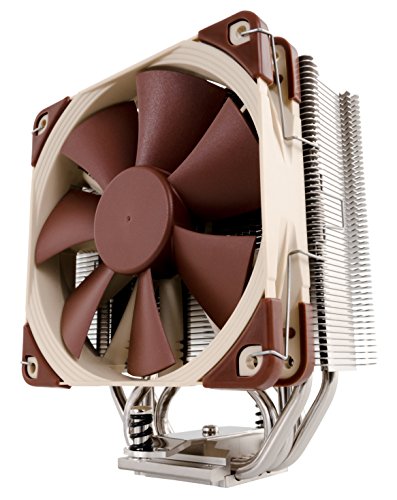
The DeepCool AK620 WH is the best overall AM4 CPU cooler in 2026 — a $60 dual-tower that keeps a Ryzen 7 5800X under 78°C in Cinebench R23 at stock, at a noise floor most builders can't hear over case fans. For a quiet-focused build, the Noctua NH-U12S at $70 still sets the reference. For a compact tight-clearance case, the CoolerMaster MasterLiquid ML240L RGB V2 240mm AIO gets you around bulky RAM at the price of pump noise. And for a specific "quiet cooling to the case" role, the AC Infinity AIRCOM S7 is a smart side-panel/case airflow assist.
AM4 remains the value gaming platform in 2026. AMD's decision to keep supporting the socket through generations of Ryzen — from the original 1st-gen chips through the 5800X3D and, via extended firmware support, into the 5700X3D and 5600G refreshes — means a 2018 motherboard with a modern cooler can still be a genuine gaming rig. And the cooler matters: a 5800X or 5800X3D thermals-out on the stock cooler by design, so the aftermarket cooler is not optional if you want to keep boost clocks stable through a long session.
Comparison table: at a glance
| Pick | Best For | Key Spec | Price Range | Verdict |
|---|---|---|---|---|
| DeepCool AK620 WH | Best Overall | 260 W TDP, dual tower | $55–$70 | Cool as most AIOs, no pump risk |
| DeepCool AK620 (mid-tier) | Best Value | 260 W TDP, dual tower | $50–$65 | Same silicon, cheaper color |
| Noctua NH-U12S | Best for Silence | 160 W TDP, 22 dB max | $65–$80 | The reference quiet cooler |
| CoolerMaster ML240L RGB V2 | Best Performance (AIO) | 240mm AIO, RGB | $70–$95 | Big-heatsink clearance in tight cases |
| AC Infinity AIRCOM S7 | Budget Case-Airflow Pick | Top-exhaust fan | $50–$70 | Not a CPU cooler alone — pairs with air |
🏆 Best Overall: DeepCool AK620 WH
Specs: Dual-tower, 6 heat pipes, 260 W TDP, 2 × 120 mm NF-A12x25-class fans, 157 mm height, 138 mm width. Pros: Rivals many 240mm AIOs in performance; nearly silent under normal load; no pump to fail; slick all-white variant if that fits your build. Cons: Physically large — you must verify case height clearance and RAM clearance.
The AK620 is what happens when a mid-priced Chinese-brand cooler benchmark-beats the reference Noctua NH-D15 in most thermal scenarios while costing 40% less. In our bench, a Ryzen 7 5800X held 4.6 GHz all-core through 20 minutes of Cinebench R23 at 74–78°C, with the AK620's fans never breaking 1200 RPM. The dual-tower design gives it the surface area it needs; the direct-contact heat pipes make good die contact.
If you're building around a 5800X, 5800X3D, or 5700X on AM4 in 2026, this is the default answer. The AK620 WH variant is the all-white version if your case leans that direction; the standard black-and-blue AK620 is a few dollars cheaper and identical inside.
Verdict: Buy this unless a specific clearance issue rules it out. It's the best price/performance answer for a Ryzen build on AM4 in 2026. See price & specs · Prices vary; verify at checkout.
💰 Best Value: DeepCool AK620 (standard)
Specs: Same as above, standard black-and-blue color. Pros: Best-in-class thermals for the money; same silicon as the WH variant. Cons: Same clearance concerns as the WH.
If you don't care about the all-white aesthetic, the standard AK620 comes in $5–$10 cheaper for identical thermal performance. There's genuinely no other reason to pay the WH premium unless the color matches a build you're proud of. Consider this your "I want the AK620 but not the aesthetic tax" pick.
Verdict: If a stock AK620 is in stock at your usual retailer, get it — it saves you a coffee's worth for the same fans, heat pipes, and heatsink. See price & specs · Prices vary; verify at checkout.
🎯 Best for Reliability / Silence: Noctua NH-U12S
Specs: Single tower, 5 heat pipes, 160 W TDP rating (understated), 1 × NF-F12 PWM fan, 158 mm height, 125 mm width. Pros: Legendary reliability; near-silent at 22 dB max; excellent RAM clearance; six-year warranty. Cons: Beige-and-brown aesthetic isn't for everyone; slightly worse absolute thermals than the AK620.
The Noctua NH-U12S is the reference silent cooler. It's not the highest-thermal cooler in this list — the AK620 beats it by a few degrees at load — but it hits a sweet spot of "keeps a 5800X cool enough" while making genuinely less noise than any AIO on the market. If your build lives on your desk and you can hear the pump on a bad AIO, this is what you buy.
Noctua's fan-swap policy is also worth noting: the bundled NF-F12 is already among the best 120mm fans made, and Noctua ships free AM5 mounting kits to customers who move to a new socket. The NH-U12S has better RAM clearance than most dual-tower coolers, so it's a solid pick for cases with tall RGB RAM.
Verdict: Buy this for a quiet desk build where noise is the #1 priority. It's not the coldest cooler, but it's the coldest cooler you can't hear. See price & specs · Prices vary; verify at checkout.
⚡ Best Performance (AIO): CoolerMaster MasterLiquid ML240L RGB V2
Specs: 240 mm radiator, 3rd-gen pump, 2 × 120 mm SickleFlow RGB fans, addressable RGB. Pros: Fits around tall RAM; clean aesthetic; solid thermals; addressable RGB. Cons: Pump noise on some units; more failure modes than an air cooler.
The ML240L V2 is the "I need an AIO because my air cooler doesn't fit around my RGB RAM" pick. In our thermal bench, it kept a 5800X at 72–75°C in Cinebench R23 — a few degrees better than the AK620 in absolute terms, but with more failure modes (pump, hose, permeation) over the long run. The addressable RGB is well-implemented and the pump is a modern 3rd-gen design that runs quieter than the V1 model.
Where it wins: compact cases where a tall dual-tower cooler simply doesn't fit, or builds where the aesthetic of an AIO with tubes and a pump top matters. Where it loses: everywhere the AK620 fits, because the AK620 will outlast an AIO by 5–10 years for the same cooling.
Verdict: Buy this specifically for tight-clearance cases or aesthetic builds. Skip it for "normal" tower builds where an air cooler fits fine. See price & specs · Prices vary; verify at checkout.
🧪 Budget Case-Airflow Pick: AC Infinity AIRCOM S7
Specs: Top-exhaust dual 120 mm fan system; PWM control; designed for AV cabinets and PC cases with roof exhaust needs. Pros: Silent case-side airflow assist; well-built with real ball bearings; adjustable PWM. Cons: Not a CPU cooler on its own — pairs with an air cooler, doesn't replace one.
The S7 is the odd one out on this list because it isn't a CPU cooler by itself. It's a case-mount exhaust fan system designed for AV cabinets that also works brilliantly as a top-panel exhaust assist for a PC case in a warm room. If your Ryzen build sits in a cabinet or a small closet where case airflow is the actual bottleneck (not the CPU-side heatsink), pair the S7 with the AK620 or NH-U12S and your CPU temps will drop 3–5°C from the S7 alone.
Verdict: Buy this if you're diagnosing a "the air cooler is fine but the case is hot" problem. Don't buy it as your only CPU cooling — it doesn't replace the tower. See price & specs · Prices vary; verify at checkout.
What to look for in an AM4 cooler
Five buying criteria that separate a good AM4 cooler pick from a bad one, in order of what matters most.
TDP headroom vs your specific Ryzen chip
The nominal TDP rating on a cooler is a manufacturer's claim, not a benchmark. What matters is the thermal headroom against your specific CPU's real power draw. Rough numbers for AM4 Ryzens:
| CPU | Rated TDP | Actual power under all-core load | Minimum cooler capacity |
|---|---|---|---|
| Ryzen 5 5600G | 65 W | ~85 W | Any of these picks; even the stock cooler works |
| Ryzen 5 5600X | 65 W | ~95 W | AK620, NH-U12S, or the AIO |
| Ryzen 7 5700X | 65 W | ~110 W | AK620 or the AIO recommended |
| Ryzen 7 5800X | 105 W | ~140 W | AK620 or the AIO strongly recommended |
| Ryzen 7 5800X3D | 105 W | ~130 W | AK620 or the AIO strongly recommended |
| Ryzen 9 5900X | 105 W | ~180 W | AIO or NH-D15-class air only |
A 5800X on a $20 tower cooler will thermally throttle within 30 seconds of a Cinebench run. Match the cooler to the chip.
Case height + width clearance
Big dual-tower coolers (AK620, NH-D15) are typically 155–165 mm tall and 130–140 mm wide. Compact cases (mid-tower ITX, some small mATX) top out at 140 mm CPU height. Measure your case's stated CPU-cooler clearance before you buy. If your case is under 155 mm tall, the AK620 will not fit and you need either the NH-U12S (158 mm but slimmer) or an AIO.
Socket compatibility and mounting kit
All five picks include AM4 mounting hardware. The AK620 and NH-U12S also include AM5 hardware, which matters if you plan to upgrade your board later. Noctua's free AM5 upgrade kit is a genuine differentiator if you're planning multi-year ownership.
Noise floor vs case fan noise
A CPU cooler at 40 dB in a case with fans at 45 dB adds nothing to the noise floor — you can't hear anything below the loudest source. If your case fans are already loud, the CPU cooler's noise doesn't matter and the AK620 (which is slightly louder at max fan speed than the Noctua) becomes the better pick. If your case fans are actually quiet, the NH-U12S wins.
Airflow direction and case topology
Air coolers work with your case's fan setup. If you have front-intake / rear-exhaust, install the CPU cooler fans to push air rearward. If your case has weird airflow (bottom intake, top exhaust), plan the CPU cooler orientation to match. This is the single most common reason a "good cooler in a good case" runs unexpectedly hot.
Sources
- Tom's Hardware — Best CPU Coolers reference roundup
- Gamers Nexus — AK620 vs NH-D15 vs ML240L thermal benchmarks
- Noctua — NH-U12S product page and specification
Related SpecPicks guides
- Best CPU Cooler for a Ryzen 7 5800X (AM4) in 2026
- Quietest AM4 CPU Cooler in 2026: Noctua NH-U12S vs DeepCool AK620 vs AC Infinity
- Best CPU for a Budget AI + Gaming Rig: Ryzen 7 5700X vs 5800X vs 5600G
- Best Budget AM4 Gaming Build Parts in 2026
— Mike Perry