Prices quoted were current at publication and may vary. See our review methodology.
Pair a powered HDMI 2.1 dock with a dual-mode 27-inch 4K panel. The JSAUX 6-in-1 Docking Station at $35.99 removes every link-side limit — 4K@120Hz output, gigabit Ethernet, 100W passthrough — and a dual-mode display like the KOORUI G2741L lets you run a sharp 4K desktop, then drop the panel itself into 1080p/320Hz mode when a game needs frames instead of pixels.
Who this is for, and why the display is the expensive half of the decision
This guide is for handheld owners — Steam Deck LCD or OLED, ROG Ally X, Legion Go S — who want a single desk that doubles as a docked console. You already own the machine. What you are buying is the surface it plays on and the box that connects the two, and the money splits very unevenly between those two purchases.
The dock is close to a solved problem in 2026. A competent powered dock costs $36 and does everything a $90 first-party unit does. Per Valve's Steam Deck tech specs, the handheld's single USB-C port carries DisplayPort 1.4 alt mode capable of driving up to 8K@60Hz or 4K@120Hz externally. That is a far higher ceiling than the 7-inch, 1280×800 internal panel — 60Hz on the LCD model, 90Hz on the OLED — and it is a much higher ceiling than the GPU behind it can actually fill in a modern title. The link is not your bottleneck. It never was.
The display is where the decision lives, because a 4K panel asks a question the handheld cannot answer with brute force. A Steam Deck rendering at native 3840×2160 in a demanding AAA game is not a realistic configuration. It is, however, entirely realistic to run a 4K desktop, 4K video, and older or lighter games at native resolution, while pushing demanding titles at a lower internal resolution.
That is exactly the gap the current dual-mode UHD/FHD monitor generation fills, and it is why this guide recommends one over a plain 4K panel at the same price. Dual-mode lets the monitor change resolution and refresh rate rather than making the GPU upscale into a fixed 4K grid. For a bandwidth-rich, GPU-poor device, that is the single most useful feature on the spec sheet — and almost no published buying guide explains why.
Key takeaways
- The dock is not your limit. Steam Deck's USB-C carries DisplayPort 1.4 alt mode rated to 4K@120Hz per Valve. A current HDMI 2.1 dock passes that through intact.
- The GPU is your limit. 4K is a desktop-and-media resolution on a handheld, not a gameplay target. Plan around internal render resolution plus FSR, not native 4K.
- Dual-mode UHD/FHD panels are the right buy. 4K/160Hz for the desktop and light games, native 1080p/320Hz for anything that needs frames — no upscaling either way.
- Power passthrough is non-negotiable for long sessions. A passive hub drains the handheld while driving a display, Ethernet, and USB peripherals from one port.
- Budget the whole desk, not the dock. Dock plus panel plus a wired pad lands between $110 and $425 depending on which display you pick.
Step 0 — diagnose the bottleneck before you buy anything
Two readers ask the same question and need opposite answers. Sort yourself into one of these before you spend a dollar.
"I want a 4K desktop and I'll play at 1080p." This is the common case and the easy one. You want maximum panel sharpness for reading, browsing, emulation, media and older games, and you accept that anything modern renders lower and scales up. Any competent 4K dock plus any 4K panel works. Dual-mode is a bonus rather than a requirement.
"I want native-4K gameplay." Then the handheld is the wrong device and no dock fixes that. Per Valve's tech specs, the Deck's APU is built around a 15W-class power envelope; it targets 1280×800 at 30–60fps in modern titles. Multiply the pixel count by nine and the math does not survive. Buy a small-form-factor desktop instead, or accept aggressive upscaling.
"I play competitive shooters and want frames." This is the case that makes dual-mode a genuine feature rather than marketing. You want the panel in FHD mode at a high refresh rate, rendering natively at 1920×1080, and you want 4K only when you step away from the game.
Answer that question first. It determines whether you spend $260 or $350 on the display, and whether the refresh-rate column on the spec sheet matters to you at all.
What actually limits a docked handheld at 4K
Four separate things get blamed for the same symptom. Only one of them is usually the culprit.
USB-C DisplayPort alt-mode lanes. The Deck's USB-C port allocates lanes between data and video. In the common four-lane DisplayPort configuration you get the full 4K@120Hz ceiling; in a two-lane configuration — which some passive hubs negotiate when they want more USB bandwidth — the video ceiling drops. This is a hub-quality problem, not a handheld problem, and it is the main reason to buy a purpose-built dock rather than a generic laptop hub.
HDMI version on the dock. This one used to matter enormously and has quietly stopped mattering. The previous revision of the JSAUX 6-in-1 topped out at 4K@60Hz because it used HDMI 2.0. Per the product listing, the current HB0603 revision ships HDMI 2.1 and doubles that to 4K@120Hz. If you are reading an older guide that tells you 4K60 is the docked ceiling, that guide is describing hardware that has been superseded. Check the revision before you buy — the older 4K60 units are still in circulation at a small discount.
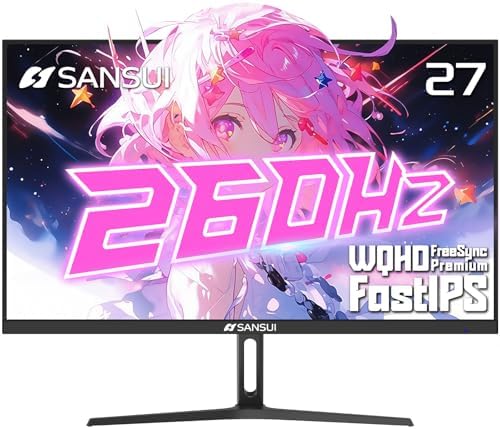
Refresh-rate caps in the display's own firmware. Dual-mode monitors often expose different ceilings per input. The SANSUI 27-inch, per its specifications, reaches 4K@160Hz over DisplayPort but 4K@144Hz over HDMI, while FHD mode hits 320Hz over both. A dock outputs HDMI. That HDMI-versus-DisplayPort delta is invisible on the box and shapes what you actually get.
The GPU. This is the real answer in almost every case. Even with a perfect 4K@120Hz link, an integrated RDNA 2 part in a 15W envelope is not producing 120 frames per second at 3840×2160 in anything demanding. FSR and per-game resolution scaling are not a workaround for a weak link; they are the intended operating mode.
Which dock: the JSAUX 6-in-1, port by port
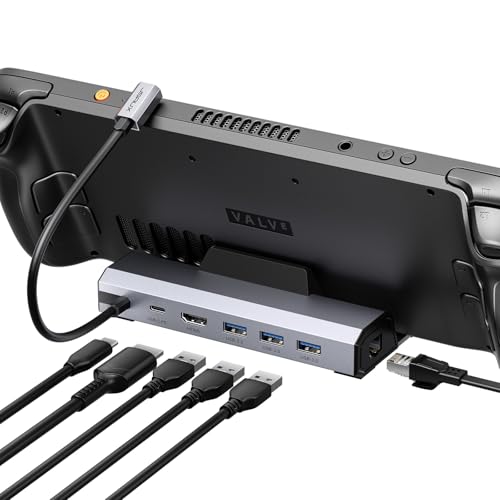
The JSAUX 6-in-1 Docking Station (HB0603) is $35.99 and carries a 4.3 rating across roughly 4,200 reviews. Per the manufacturer's listing, here is what each port does and what it does not.
HDMI 2.1, 4K@120Hz. The headline change over the previous revision, which was HDMI 2.0 at 4K@60Hz. It matters less for gameplay than the marketing implies and more for desktop feel and video — a 120Hz desktop is noticeably smoother to navigate even when games render far below it.
Gigabit Ethernet. The most underrated port on the dock. It removes contention on a crowded wireless band and eliminates the periodic reassociation that shows up as latency spikes in online play. It also transforms the first hours of any new setup, when you are downloading a library.
Three USB-A 3.0 ports. Enough for a wired pad, a keyboard and an external drive simultaneously, which is the practical configuration for a desk that does double duty.
100W USB-C PD passthrough. The reason this is a dock and not a hub. It keeps the handheld charging while driving everything else. Note the manufacturer's own caveat: hitting the rated passthrough requires a 100W charger, which is not included. Budget for one if your existing brick is 45W or 65W.
What it does not do. No DisplayPort output, so the SANSUI's 4K@160Hz DisplayPort mode is unreachable through this dock — HDMI caps you at 144Hz on that panel. No SD card reader on this revision. And the listing explicitly excludes the ROG Xbox Ally and Xbox Ally X, so check your specific handheld against the compatibility list rather than assuming.
Spec-delta table
| Device | Max docked output | Ports | Power passthrough | Price band |
|---|---|---|---|---|
| JSAUX 6-in-1 Dock (HB0603) | 4K@120Hz via HDMI 2.1 | 1× HDMI 2.1, 3× USB-A 3.0, 1× GbE, 1× USB-C PD | 100W PD (charger not included) | $35–40 |
| KOORUI 27" G2741L | 4K@160Hz / FHD@320Hz | HDMI 2.1, DisplayPort 1.4 | N/A (display) | $340–360 |
| SANSUI 27" Dual Mode | 4K@160Hz (DP) / 4K@144Hz (HDMI) / FHD@320Hz | 2× HDMI 2.1, 2× DP 1.4, 3.5mm | N/A (display) | $260–330 |
Which display: KOORUI versus SANSUI
Both are 27-inch Fast IPS dual-mode panels running 4K at up to 160Hz or 1080p at up to 320Hz, both carry HDR400 and FreeSync Premium, and both hold a 4.4 rating. The differences are narrow but real.
| Spec | KOORUI 27" G2741L | SANSUI 27" Dual Mode |
|---|---|---|
| Price | $349.99 | $259.99 |
| Panel | Fast IPS, 1ms | Fast IPS, 1ms (MPRT) |
| 4K mode | Up to 160Hz | 160Hz (DP), 144Hz (HDMI) |
| FHD mode | Up to 320Hz | Up to 320Hz |
| Color | 95% DCI-P3 | 93% DCI-P3, 126% sRGB |
| HDR | HDR400 | HDR400, 400 nits |
| Inputs | HDMI 2.1, DP 1.4 | 2× HDMI 2.1, 2× DP 1.4 |
| Speakers | No | Built-in |
| Adjustability | Height / pivot / tilt | Height 0–130mm, pivot ±90°, swivel, tilt, VESA 100×100 |
| Sync | FreeSync Premium, G-SYNC Compatible | FreeSync Premium |
| Review count | ~12,600 | ~5,000 |
Take the SANSUI if the $90 matters, which for a handheld owner it usually does — $90 is two and a half docks. You get more inputs, built-in speakers, and a more thoroughly specified stand. The 4K@144Hz-over-HDMI cap is irrelevant when your source is a dock that cannot exceed 120Hz anyway.
Take the KOORUI if you also drive it from a desktop GPU, where explicit G-SYNC Compatible certification and slightly wider DCI-P3 coverage are worth paying for, and where the larger review base is a reasonable proxy for fewer panel-lottery surprises.
Either way, the reason to buy dual-mode over a plain 4K panel at the same money is the same: you are not asking the GPU to upscale into a fixed grid. In FHD mode the panel is genuinely 1920×1080 and the handheld renders natively into it. That is a cleaner image than 1080p stretched across a 4K panel, and it is free. For broader panel context beyond the handheld case, Tom's Hardware's 4K gaming monitor roundup and RTINGS' gaming monitor testing both cover the wider market with measured data.
Settings that matter once you are docked
Set per-game resolution, not global resolution. Leave the desktop at 4K and set an internal render resolution per title. A game running at 1280×720 internally with FSR to 4K looks acceptable at desk distance; the same game forced to native 4K does not run.
Cap the frame rate deliberately. An uncapped handheld at a desk runs the APU at full tilt, which means loud fans and a hot chassis for frames the panel may not even be displaying. A 60fps cap on a 120Hz panel is quieter, cooler, and — because frame pacing is more consistent — frequently feels better than an uncapped 70–90fps that swings.
Prefer the panel's FHD mode over 4K-with-aggressive-upscaling. This is the counterintuitive one. If a title needs a 50% render scale to hit your target at 4K, switching the monitor into native FHD/320Hz mode and rendering at 1080p produces a sharper image with lower latency. The dual-mode switch is a two-second menu action. Use it.
Wire the network before you tune anything else. Per Valve's dock documentation, wired networking is one of the core reasons docks exist. Plug in the Ethernet cable first, then complain about frame rates.
Complete the build
Three additions turn a docked handheld into a desk.
A wired pad. The GameSir G7 SE at $44.99 uses Hall-effect sticks, which sidestep the drift failure mode that ends most budget controllers, and it plugs into a USB-A port that is already sitting there. At a desk, wired is simply better: no charging, lowest latency, and one fewer radio competing with the handheld's own Wi-Fi and Bluetooth.
A desk surface. The SteelSeries QcK XXL at $29.99 covers keyboard and mouse together, which matters because a docked handheld running a desktop OS is a mouse-and-keyboard machine roughly half the time.
External library storage. The Crucial BX500 1TB in a USB enclosure attached to the dock gives you a large, cheap library drive without opening the handheld or risking a warranty. SATA-over-USB is slower than the internal NVMe, which is noticeable in a handful of streaming-heavy open-world titles and irrelevant for the emulation and indie libraries that dominate most handheld storage. If you want maximum speed, the internal upgrade path is faster — and riskier. Compare the tradeoffs in our best SSDs for Steam Deck and handheld emulation guide.
Perf-per-dollar math
| Configuration | Cost | What you get |
|---|---|---|
| Dock only (use existing TV) | $36 | 4K@120Hz output, GbE, charging |
| Dock + SANSUI + G7 SE | $341 | Full dual-mode desk, wired pad |
| Dock + KOORUI + G7 SE | $431 | Same, wider gamut, G-SYNC Compatible |
| Full build + pad + mat + 1TB SSD | $517–607 | Complete desk with library storage |
| Small-form-factor desktop + same panel | $900–1,400 | Native 4K gameplay, no portability |
The comparison that matters is the last row. A docked handheld reaches roughly $430 for a complete desk you can unplug and take to the couch. An SFF desktop capable of actual 4K gameplay starts around $900 with the same panel and does not leave the desk. You are paying roughly $470 less for a machine that plays 4K only in the loosest sense, and gaining a portable console.
If you already own the handheld, the docked path is close to unbeatable on cost. If you do not, and you never leave the house, buy the desktop.
Common pitfalls
Buying the older dock revision. The 4K@60Hz HDMI 2.0 version of the same JSAUX model is still sold. Confirm HDMI 2.1 in the listing.
Using the bundled 45W charger. Passthrough is rated to 100W. Feed the dock less and the handheld charges slowly or, under load with peripherals attached, net-discharges.
Assuming DisplayPort specs apply over HDMI. The SANSUI's 160Hz 4K mode is DisplayPort-only. Through a dock you get 144Hz — and through this dock, 120Hz.
Chaining a passive hub off the dock. Every added negotiation layer is another chance for the link to renegotiate mid-session, which reads as display flicker or dropped USB devices.
Leaving the desktop and the game at the same resolution. The whole point of dual-mode is that these should differ.
When not to buy this setup
Skip the 4K panel entirely if your library is mostly modern AAA and you have no interest in a desktop. A 27-inch 1440p/165Hz panel costs less, sits closer to what the handheld can actually render, and removes every upscaling decision from your life. Skip the powered dock if you only ever connect to a TV for an hour at a time and already own a charger you can plug in alongside — a $15 passive hub genuinely covers that case.
Verdict matrix
Get the dual-mode 4K monitor if… your desk does double duty — work, browsing, media, emulation, and gaming — and you want one panel that is sharp when stationary and fast when it needs to be. The dual-mode switch is what makes a 4K panel rational behind a handheld.
Get a plain 1440p panel instead if… you only game, you only play modern titles, and you would rather spend $200 than $350. Nothing about a handheld demands 4K.
Skip the powered dock if… you connect for short sessions only and already have a charger at the TV. Otherwise, at $36, the powered dock is the highest-value purchase in this entire guide.
Bottom line
Buy the JSAUX 6-in-1 dock at $35.99 and the SANSUI 27-inch dual-mode panel at $259.99, add the GameSir G7 SE at $44.99, and run a 100W charger into the dock. That is $341 for a desk that gives you a crisp 4K desktop, native 1080p at high refresh for anything demanding, wired networking, and a handheld you can still unplug and take to the couch. Step up to the KOORUI G2741L only if a desktop GPU will also drive the panel and G-SYNC Compatible certification is worth $90 to you.
Related guides
- Best Storage Upgrades for Legacy and Retro PCs in 2026
- KOORUI 27" 4K vs Samsung Odyssey 4K 27-inch
- Best PC Game Controllers in 2026
- Best Controller for PC Retro Emulation in 2026
- Best Steam Deck Accessories in 2026
- Best SSD for Steam Deck and Handheld Emulation
Citations and sources
- Valve — Steam Deck tech specs (accessed 2026-08-26)
- Valve — Steam Deck Dock (accessed 2026-08-26)
- Tom's Hardware — Best 4K Gaming Monitors (accessed 2026-08-26)
- RTINGS — Best Gaming Monitors (accessed 2026-08-26)
This piece is editorial synthesis based on publicly available information. No independent first-party benchmarking is reported.