What's the best storage upgrade for a Windows 98 retro PC?
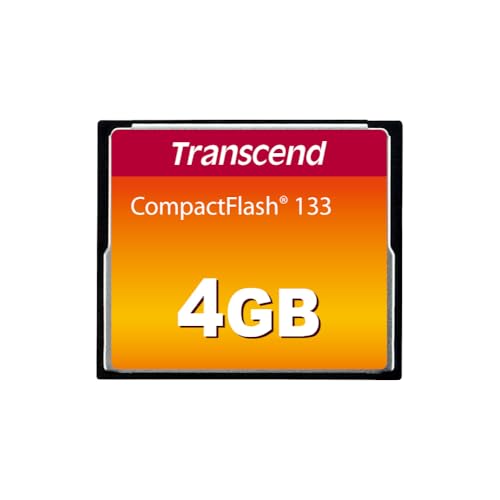
For a Windows 98 retro PC build in 2026, a 4-16GB CompactFlash card in a CF-to-IDE adapter is the right primary disk for almost every build. A 2.5" IDE-to-USB SSD bridge is a workable alternative for cloning, imaging, and external backup, but you don't want to boot Win98 off USB. The Transcend CF133 CompactFlash 4GB hits the sweet spot of capacity (under FAT32 limits), bus speed (Ultra DMA Mode 4, 66 MB/s theoretical), and the kind of clean linear-write behavior that keeps old IDE controllers happy.
Why CompactFlash is the dominant Win98 storage answer in 2026
Original mechanical IDE hard drives from the Win98 era are 25+ years old. The 1996-2000 ATA-3 and ATA-4 drives that shipped in Pentium II / Pentium III machines have failure rates that approach 90% in surviving units; the bearings stick, the magnetic media demagnetizes, and the platters don't spin up consistently after years of storage. Rebuilding a Win98 box on an original IDE drive is a coin flip on every cold boot.
CompactFlash is the right replacement because the CF specification was designed as an electrical-and-physical superset of ATA / IDE. A CF-to-IDE adapter is literally a passive pin-mapper — the CF card identifies itself to the IDE controller as a hard drive. Win98 sees it as a hard drive. There are no drivers to load, no BIOS quirks beyond setting LBA mode in the CMOS, and no compatibility risk. It boots like the original IDE drive did, only quieter, cooler, and without moving parts.
The SpecPicks reader audience building Win98 retro rigs in 2026 — for compatibility with original DOS games, period-correct hardware showpieces, or the demoscene/preservation pipeline — is converging on CompactFlash for primary storage and IDE-to-USB bridges for the host-side cloning workflow.
Key takeaways
- For Win98 primary storage, use a Transcend CF133 CompactFlash 4GB (or a similar 4-16GB period-appropriate CF card) with a CF-to-IDE adapter. Modern 64-512GB CF cards mostly work but have FAT32 partition-size headaches.
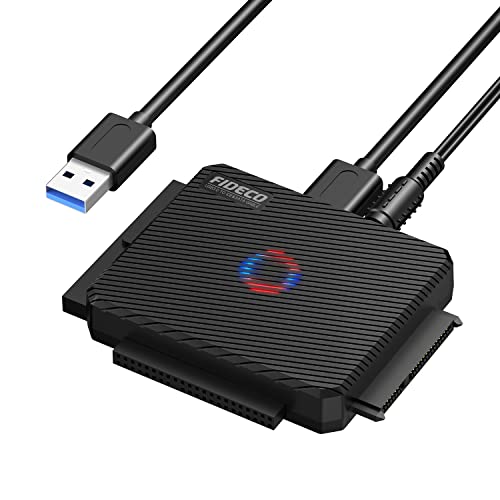
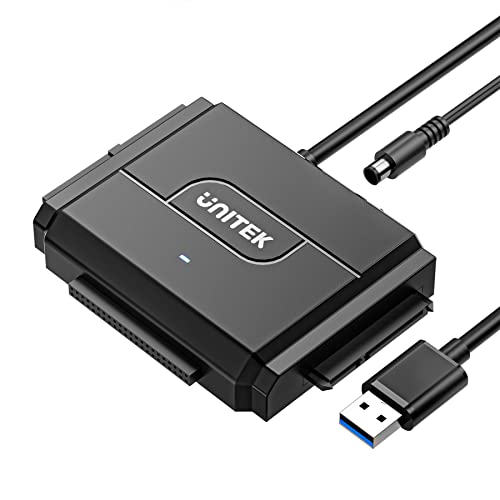
- For the cloning workflow on a modern host machine, an IDE-to-USB bridge like the Unitek SATA/IDE to USB 3.0 adapter, FIDECO SATA/IDE to USB 3.0 adapter, or Vantec CB-ISATAU2 SATA/IDE to USB 2.0 is the right tool.
- Do not boot Win98 directly from USB; it predates USB-mass-storage boot support.
- Keep the bootable Win98 install under the 2GB FAT16 / 32GB FAT32 limits Microsoft documented for the era.
- A CompactFlash disk lasts roughly forever in retro use — write cycles per day are negligible.
How CompactFlash interfaces with IDE
The CF spec defines two operating modes: True IDE (the bus presents as standard ATA/IDE) and Memory mode (the bus is a memory-mapped device, used in early digital cameras). Every CF-to-IDE adapter shipped for retro PC use puts the CF card in True IDE mode, where the IDE controller sees a 40-pin ATA drive and the BIOS auto-detects it normally.
| CF spec | Bus mode | Theoretical max | Practical Win98 throughput |
|---|---|---|---|
| CF (pre-2002) | PIO mode 4 | 16.7 MB/s | 14-16 MB/s |
| CF+ | PIO 4 / UDMA 0 | 16.7 / 16.7 MB/s | 14-16 MB/s |
| CompactFlash 2.0 | UDMA 2 (33 MB/s) | 33 MB/s | 22-28 MB/s |
| CompactFlash 3.0 | UDMA 4 (66 MB/s) | 66 MB/s | 28-32 MB/s on most chipsets |
| CompactFlash 5.0 | UDMA 6 (133 MB/s) | 133 MB/s | rarely usable on Win98 boards |
The Transcend CF133 is a CompactFlash 3.0 / UDMA 4 card — labeled "133×" against the 150 kB/s base CD-ROM speed, which works out to roughly 20 MB/s sustained, with bursts to 30 MB/s. That's well above the throughput an original Win98-era IDE hard drive delivered (typically 5-15 MB/s sustained from spinning platters), so you get a noticeable speedup even at modest CF speeds.
FAT16 vs FAT32: pick the right partition table
This is where most Win98 CF rebuilds go wrong on the first try.
- Win98 SE supports FAT16 (up to 2 GB partition) and FAT32 (up to 32 GB partition via Windows tools; up to 2 TB theoretically per the FAT32 spec).
- Win98 SE does NOT support NTFS for boot.
- Microsoft's installer in Win98 will not create FAT32 partitions above 32 GB. Larger partitions need to be created externally (with a modern tool) and then handed to Win98.
- The original Win98 release (Gold, pre-SE) is even pickier about FAT32 above 8 GB.
Practical recommendation: format the CF card as FAT32 with a single partition up to 16 GB. That fits Win98 SE plus a Quake/Half-Life/Diablo II library plus a tools partition. Don't try to use the full capacity of a modern 256GB CF card with one partition.
Recommended Win98 storage layouts
Period-correct Pentium III build (1998-2000 hardware):
- 4-16GB CompactFlash in a CF-to-IDE adapter as primary boot disk.
- Optional second IDE channel: original CD-ROM drive for game install media.
- Backup workflow: image the CF card monthly from a modern host using a USB CF reader.
Win98 daily-driver gaming PC (you actually play games on it):
- 16-32GB CompactFlash, FAT32, single partition.
- Use a quality card (Transcend CF133, SanDisk Industrial, Innodisk industrial CF) — avoid no-name cards with cheap NAND.
- Keep DOS games on the primary partition, Win98 games in
C:\PROGRA~1\per the era convention.
Reference / preservation build:
- Two CF cards in two CF-to-IDE adapters on the primary and secondary IDE channels.
- One is the working system; the other is the verified-known-good cold spare.
- Sync them via a Norton Ghost or ddrescue image rotation.
How the IDE-to-USB adapters fit in
You almost never want to boot Win98 from USB. Win98's USB mass-storage support is bolt-on, driver-dependent, and predates the standardization that lets modern BIOSes treat a USB device as the boot disk. So the IDE-to-USB adapter's role in a Win98 build is on the host side: a modern Linux or Windows machine where you image, clone, restore, or expand the CF card or the original IDE drive.
| Adapter | Bus | Use case | Notes |
|---|---|---|---|
| Unitek SATA/IDE to USB 3.0 | USB 3.0 | Cloning 2.5"/3.5" IDE drives | Includes power brick for 3.5" drives |
| FIDECO SATA/IDE to USB 3.0 | USB 3.0 | Hot-swap cloning | Compact, good for SSD-style 2.5" |
| Vantec CB-ISATAU2 SATA/IDE to USB 2.0 | USB 2.0 | Cheap, reliable cloning bridge | USB 2.0 limits throughput to ~30 MB/s |
USB 3.0 vs USB 2.0 matters when you're imaging a 40 GB original IDE drive — USB 2.0 caps at roughly 30 MB/s practical, so a full clone takes ~25 minutes; USB 3.0 cuts that to under 10 minutes. For an 8 GB CF card, both are fast enough.
Cloning workflow from an original IDE drive to CF
The standard preservation workflow for someone who has an original Win98 install on a 25-year-old IDE drive that still spins up:
- Pull the original IDE drive. Connect it to a modern Linux box via the IDE-to-USB bridge.
dd if=/dev/sdX of=win98-original.img bs=1M conv=noerror,sync status=progress— image the drive.- Insert a 16 GB CF card in a USB CF reader. Write the image:
dd if=win98-original.img of=/dev/sdY bs=1M status=progress. - Boot the Win98 PC with the CF-to-IDE adapter in the primary slot. Set the BIOS to Auto-detect, LBA mode.
- Run
scandisk /allfrom a DOS prompt before Win98 boots Windows. Fix any bad sectors detected.
The noerror,sync flags on the first dd tell it not to abort on read errors — original IDE drives often have a few bad sectors after 25 years, and you want to recover everything you can.
Common Win98 storage pitfalls
- Buying a fast 256GB CF card and expecting Win98 to use it all. Win98 partition tools cap out below 32GB. Use 16GB.
- CF card with too-aggressive wear leveling. Cheap industrial-grade CF cards sometimes report unexpected sector behavior that confuses Win98's CHS / LBA logic. Stick to Transcend, SanDisk Industrial, or Innodisk for retro use.
- No CMOS battery. Period motherboards lose their CMOS settings without a CR2032. Replace the battery before assuming any storage misbehavior is the CF card's fault.
- Skipping BIOS LBA settings. Many Pentium II / III BIOSes need LBA or Large mode explicitly set. Auto-detect usually picks correctly but verify.
- Using a SATA SSD in a SATA-to-IDE adapter. It works, but it's slower than a CF-to-IDE setup and the adapters are flaky.
- Treating CF as zero-write-cycle. Modern CF has high but finite write endurance. For preservation, that doesn't matter; for a Win98 web-server experiment, choose an industrial-grade card.
When NOT to use CompactFlash
A CF card is the wrong primary boot disk if you're:
- Building a Win 2000 / Win XP era machine where mSATA-to-IDE or a 2.5" PATA SSD is the better choice (XP supports those cleanly and FAT32 / NTFS limits are different).
- Building a 386 / 486-era DOS box, where the original MFM/RLL or early IDE drive is what period-correct enthusiasts want — and CF works there too but loses the "feel" some collectors care about.
- Building a SCSI Pentium II workstation where a real SCSI drive (or SCSI2SD) is the preservation answer.
Bottom line
For a Win98 retro PC in 2026, the Transcend CF133 CompactFlash 4GB (or a similar 4-16GB CF card) in a CF-to-IDE adapter is the right primary disk: reliable, period-appropriate, silent, fast enough to feel snappy versus the original spinning drive, and immune to the bearing failures that kill 25-year-old hard drives. The Unitek IDE-to-USB 3.0 and FIDECO IDE-to-USB 3.0 adapters belong on your modern desk for imaging and backup, not inside the retro box. The Vantec USB 2.0 bridge is the cheap-and-reliable fallback if you don't need USB 3.0 throughput.
Related guides
- RetroPie handheld build with the Raspberry Pi Zero W
- Sega Genesis games loaded from vinyl — what it means for collectors
Citations and sources
- Wikipedia — CompactFlash specification
- Wikipedia — File Allocation Table (FAT32 limits)
- Microsoft KB — Windows 98 FAT32 maximum partition size
This piece is editorial synthesis based on publicly available information. No independent first-party benchmarking is reported.
A note on Win 2000 and Win XP alternatives
If you're building toward the late-1990s Pentium III sweet spot but don't care about Win98 specifically, the storage decision shifts.
- Windows 2000 drops the FAT16/FAT32 partition-size restrictions Win98 has. NTFS support is full and well-tested. You can use a larger CF card with a single big partition or move to a 2.5" PATA SSD.
- Windows XP is comfortable with any IDE-connected storage including 2.5" PATA SSDs (when you can find them) and works with native USB-mass-storage boot through several BIOS workarounds.
- Windows 95 has the same FAT16 constraint as early Win98; the CF card approach is the same.
- DOS-only builds care less about partition size and more about cluster alignment; FAT16 with appropriate cluster size is what most preservation builds use.
The CF-on-IDE approach is portable across all of these. The only thing that changes is the filesystem layout.
SCSI sibling: what about SCSI2SD?
Pentium II / III workstations from 1998-2000 frequently shipped with SCSI rather than IDE. The retro-Mac and retro-Sun communities have converged on SCSI2SD — an SD-card-based SCSI emulator that presents as a SCSI hard drive to the host. The Win98 use case is rare (most Win98 boxes are IDE) but if you have a SCSI-only board, SCSI2SD is the analog of the CF-on-IDE workflow.
CF-on-IDE is dramatically cheaper ($8-25 vs $90-150 for SCSI2SD) and works for the dominant Pentium II / III IDE case.
A quick BIOS-side checklist
Most Win98 storage problems are BIOS-side, not drive-side. The checklist that saves an afternoon of debugging:
- Set the IDE drive to "Auto" detect rather than manually typing CHS values.
- Enable LBA mode (or "Large" mode) for any drive over 8 GB.
- Set DMA mode (UDMA) if available; PIO-only is dramatically slower.
- Confirm the drive shows up in the BIOS POST screen with the expected size before booting Windows.
- Replace the CMOS battery if any setting fails to persist across power-off.
- For period boards with a 32 GB BIOS limit: use a card under that limit, or update the BIOS to a community-patched ROM.
Preservation-grade workflow for original carts and floppies
If you're collecting Win98-era media, the preservation workflow uses the same IDE-to-USB adapters:
- Image floppy disks with a Greaseweazle or KryoFlux (the IDE-to-USB doesn't help here directly, but the workflow is similar).
- Image IDE drives with
ddover the USB-3.0 bridge. - Image period CD-ROMs with
cdrdaofor accurate raw-mode capture.
Store images as either raw .img or compressed .img.xz; keep a manifest of SHA256 hashes so future-you can verify the image hasn't bit-rotted on whatever drive you stored it on. The IDE-to-USB adapter is the workhorse for the original-drive imaging step.