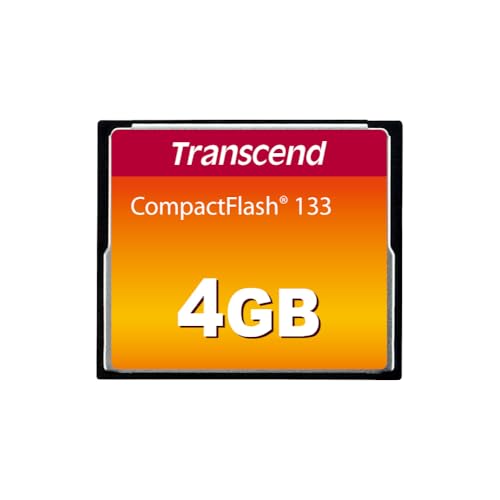
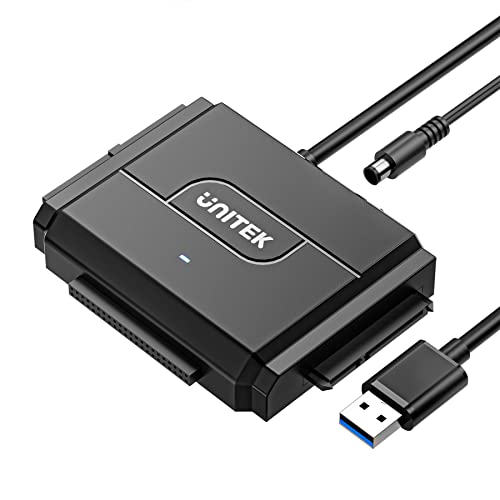
The best SSD for a retro PC build depends on your motherboard's storage interface. If the board has SATA (roughly Pentium 4 / Athlon 64 era, 2002 and later), a Crucial BX500 1TB or a Samsung 870 EVO 250GB drops in and gives you modern reliability with vintage-friendly capacities. If the board is IDE-only (mid-90s through early 2000s), the drop-in champion is a Transcend CF133 CompactFlash card behind a passive CF-to-IDE adapter. If you need to image an old drive to a new one, a Unitek SATA/IDE-to-USB 3.0 adapter is the single most-used tool in the retro-PC toolbox.
Silent, reliable storage is the modern upgrade every retro-PC build makes first, because the original hard drive is almost certainly the loudest, hottest, and least-reliable part of the machine as it stands in 2026. A twenty-five-year-old 5,400 RPM IDE drive sounds like popcorn when it spins up, seeks in the audible-clicking-typewriter register, and has a genuinely non-trivial chance of failing catastrophically the next time it warms up. Modern silent flash storage — SATA SSDs or CompactFlash cards — is a straight upgrade that also makes the machine dramatically more reliable to run for the long haul.
Key takeaways
- SATA-era retro boards (2002+) accept a modern Crucial BX500 1TB or Samsung 870 EVO 250GB as a drop-in HDD replacement.
- IDE-only boards want a Transcend CF133 CompactFlash card behind a passive CF-to-IDE adapter — silent, small enough for period-correct partition tables.
- A Unitek SATA/IDE-to-USB 3.0 adapter is table stakes for cloning the original drive to your new storage.
- Watch out for period OS partition limits: Windows 98's FAT32 cap and Windows XP's 137GB LBA-28 boundary catch newcomers off guard.
- Reliability matters more than raw speed on these machines — the vintage CPU is what caps IO throughput, not the drive.
Step 0: does your board have SATA, IDE, or neither?
Diagnose your interface first. Pop the case open and count the ports on the southbridge. IDE ports are the wide 40-pin ribbon connectors, typically two per board, black or blue. SATA ports are the small L-shaped 7-pin connectors, red or black. Late-1990s and early-2000s boards (Slot 1, Socket 370, Socket A, early Socket 478) are usually IDE-only. Mid-2000s onward (Socket 775 Prescott Pentium 4 and later, Athlon 64 939/AM2) usually have at least two SATA ports plus one or two IDE. First-gen Core 2 boards are the crossover generation — they often have both, and this is the era where the drop-in SATA SSD path really shines.
If you don't want to open the case, the fastest tell is the age. Windows 98 SE and Windows Me are IDE-native. Windows XP came in both flavors and can boot from SATA with an F6 driver load. Windows 7 pre-SP1 assumes SATA. Match the OS to the era and you can predict the interface without touching the machine.
Spec-delta table: five ways to store data on a retro PC
Numbers below are direct-from-manufacturer specs plus the retro-community consensus on real-world fit. Prices are approximate 2026 street.
| Option | Interface | Capacity range | Read speed | Retro fit | Price |
|---|---|---|---|---|---|
| Crucial BX500 1TB | SATA III | 240GB - 2TB | ~540 MB/s | XP/7 SATA boards | $60-80 |
| Samsung 870 EVO 250GB | SATA III | 250GB - 4TB | ~560 MB/s | XP/7 SATA boards | $40-55 |
| WD Blue 500GB SATA SSD | SATA III | 250GB - 4TB | ~545 MB/s | XP/7 SATA boards | $50-70 |
| Transcend CF133 4GB | CompactFlash → IDE | 2GB - 32GB | ~30 MB/s | 98/DOS/XP IDE | $20-40 |
| Unitek SATA/IDE-USB adapter | USB 3.0 host | N/A (transport) | ~300 MB/s | Imaging/backup | $25-35 |
The most important column is "retro fit." A Samsung 870 EVO is a fantastic modern SATA SSD but it needs a SATA port; on a 1998 board with only IDE, it can't be used directly. That's where CompactFlash fills the gap: an old IDE motherboard can talk CF over a passive adapter that maps CF's parallel bus onto IDE's 40-pin.
SATA SSD on a late-era XP board — the drop-in modern path
If your retro board has SATA ports, you are living the easy life. A Crucial BX500 1TB is $60-80, silent, cool-running, and reliable in a way a used HDD from eBay simply is not. Boot Windows XP with the BIOS in IDE-compatible SATA mode (do not enable AHCI unless you have a slipstream install with the AHCI driver injected) and the drive appears as a standard drive letter within the OS. Loading times drop dramatically — a Windows XP boot from the sign-on splash to a usable desktop drops from 40-70 seconds on an old HDD to 8-15 seconds on the SSD. Game load times drop similarly, though the CPU-bound parts of the pipeline don't move.
The Samsung 870 EVO 250GB is the better all-around choice if 250GB is enough for you — it uses Samsung's V-NAND, has higher sustained write speed, and holds SLC-cache performance longer under sustained load. For most retro-PC use cases 250GB is enough; the games and applications of the era were small.
Two footnotes. First, if your board's SATA controller is a first-gen SATA I (1.5 Gbps), you will not see the SSD's full read speed — you'll cap at roughly 150 MB/s. That is still a five-to-eight-x improvement over a period-correct HDD. Second, some very early SATA boards (SiS 964, VIA VT8237) have quirks with modern SSDs' TRIM commands; TRIM does not run under XP anyway, so this doesn't matter in practice.
CompactFlash on IDE — the tinkerer's favorite
For pre-SATA boards, the Transcend CF133 CompactFlash card behind a passive CF-to-IDE adapter is the retro-community consensus for silent, reliable storage. CompactFlash's parallel bus is electrically compatible with IDE — the adapter is just wire routing, no active silicon. That means the OS sees a CF card as a plain old IDE drive, no drivers required, works with everything from DOS 6.22 to Windows XP.
Why CF instead of an SSD via SATA-to-IDE bridge? Two reasons. First, the bridge chips (Marvell 88SA8040 and friends) introduce compatibility quirks with old BIOSes — some machines refuse to boot, others post but hang at the OS loader. Second, CF gives you natively small capacities. A 4GB CF card is a period-appropriate partition size for a Windows 98 build; slapping a 500GB SSD behind an IDE bridge means you're either wasting most of the drive or fighting the FAT32 partition-size limit. The CF card matches the era.
The Transcend CF133 is the retro-community favorite because Transcend's controller is known-good with vintage BIOSes, the write endurance is fine for a low-use retro machine, and the 30 MB/s read speed is far faster than any period HDD.
Bridging old and new — the Unitek adapter for imaging and transfers
Whether you're going SSD or CF, you almost certainly want to image your existing OS install rather than reinstall it from scratch. This is where the Unitek SATA/IDE-to-USB 3.0 adapter earns its keep. Pull the old IDE HDD out of the retro machine, hang it off a modern desktop or laptop via the Unitek adapter, image it with dd or Clonezilla to a file on the modern box, then write the image to your new CF card or SATA SSD (also via the adapter). Slot the new drive back into the retro machine and boot; your existing OS install comes with you.
The Unitek adapter handles both SATA and IDE — the IDE side is a 40-pin ribbon plus a 4-pin Molex power tap, and the SATA side is the standard 7+15 pin combination. It's the same $30 tool for every retro-PC storage migration.
Capacity and partition-size gotchas on vintage OSes
Two limits will catch you. First, Windows 98 SE's FAT32 has a per-partition cap that in practice tops out around 128GB — but the tooling is even more restrictive, and Microsoft's scandisk will start throwing errors around 32GB. In practice, target 8-32GB partitions on Win98 builds regardless of the underlying drive size. Second, Windows XP without SP1 uses 28-bit LBA, which caps single-partition size at 137GB. XP SP2 and later switched to 48-bit LBA and lifted that. If you're installing Windows XP from a pre-SP1 disc onto a modern drive, either slipstream SP2 onto the install media or manually partition to 137GB or below before installing.
CompactFlash's smaller native capacities (2-32GB) neatly dodge both problems. That's part of why the retro community adopted it — the constraint of the storage medium matches the constraints of the era.
Perf-per-dollar and reliability — SSD vs CF vs HDD
Modern flash storage is dramatically more reliable than a 20-25-year-old HDD, full stop. Rotational drives develop bad sectors slowly over their lifetimes; a drive from 2001 that has been sitting on a shelf for a decade might power up fine and then fail six months later without warning. Modern SSDs have 5-10 year MTBFs and firmware that handles error correction transparently. CompactFlash cards from a reputable brand (Transcend, SanDisk) have similar reliability. There is no reliability argument for keeping the vintage HDD in a machine you want to use.
Speed matters less than most people expect. The CPU of a Pentium III 800MHz or an Athlon XP 2200+ can't consume more than ~40 MB/s of storage bandwidth on realistic workloads; anything faster than that is wasted. A Transcend CF133 at 30 MB/s is already fast enough to bottleneck on the CPU rather than the drive. On a later-era SATA XP build with a Pentium 4 Prescott, a Crucial BX500 at 540 MB/s is capped by SATA I (~150 MB/s) or SATA II (~300 MB/s) — still fast enough that the drive is never the bottleneck.
Verdict matrix
- Use a SATA SSD if your board has SATA ports (any XP SP1 or later era, most 2004+ builds). The Crucial BX500 is the value pick; the Samsung 870 EVO is the reliability-tier pick.
- Use CompactFlash if your board is IDE-only (Slot 1, Socket 370, Socket A, most pre-2003 Pentium 4). The Transcend CF133 plus a $5 passive adapter is the go-to.
- Buy the Unitek adapter always. The Unitek SATA/IDE-to-USB 3.0 adapter is the tool you use for imaging and transfers regardless of which storage path you chose.
- Keep the HDD only if you're chasing period authenticity, know what you're getting, and have a backup. Then image it before it dies.
Common pitfalls
Four we see repeatedly. First, enabling AHCI in the BIOS on a Windows XP install that didn't slipstream the AHCI driver — boot loop, immediate BSOD. Fix: switch back to IDE-compatible SATA mode. Second, trying to partition a 500GB SSD as a single volume under Windows 98 SE — the tools bail. Fix: partition to 32GB or under before installing 98. Third, using an off-brand SATA-to-IDE bridge chip on a vintage board — random hangs at boot. Fix: skip the bridge; use CF for IDE builds. Fourth, forgetting that a modern SSD needs a modern jumper strategy — on IDE with a CF adapter you'll set Master/Slave via the adapter's jumper (or leave it Cable Select if it's the only drive).
Bottom line
The best SSD for a retro PC build is the one that matches your board's interface. SATA-era boards want a Crucial BX500 1TB or a Samsung 870 EVO 250GB — modern reliability, silent operation, a fraction of the cost of the machine already sitting in your parts bin. IDE-only boards want a Transcend CF133 CompactFlash card behind a passive adapter. And whichever path you take, buy a Unitek SATA/IDE-to-USB 3.0 adapter — you'll use it every time you touch a retro drive.
Related guides
- Boot Windows 98 from CompactFlash: Transcend CF133 + IDE Adapter Guide
- Best SATA SSD for an AM4 Budget Build: BX500 vs 870 EVO vs WD Blue
- Imaging Vintage IDE Drives in 2026: A CompactFlash + USB Adapter Workflow
- Running Windows XP Off a 2.5-inch SATA SSD via an IDE Adapter (2026 Guide)
- CompactFlash as a Boot Disk: A Silent, Reliable Drive for Your Win98 Retro Rig