Why Build a DIY NVIDIA 3D Vision Emitter?
NVIDIA's 3D Vision system — active-shutter glasses synchronized to a display by an infrared emitter — was one of the more ambitious consumer 3D pushes of the last two decades. The official IR emitters that made it work have been out of production for years, and NVIDIA has not maintained the underlying driver stack on recent GPU generations. That combination leaves anyone still running a 3D Vision-capable monitor and a pair of shutter glasses with two options: hunt for an increasingly scarce used official emitter, or build a replacement.
This is squarely a maker/electronics-reverse-engineering project, not a documented, NVIDIA-supported path. The appeal for hobbyists is straightforward: the core hardware needed to emit and time an infrared signal is commodity-cheap, and a microcontroller like the Raspberry Pi Pico gives you the low-level timing control that a full-size PC or a general-purpose IR blaster doesn't.
It's worth linking this to NVIDIA's broader hardware history for context. The company's willingness to ship unconventional, sometimes short-lived standards — from the NV1's unusual quadratic rendering approach that Sega helped bankroll in 1996 to 3D Vision itself — is a recurring pattern, and it's part of why Sega's early $5M investment in NVIDIA still comes up whenever the company's product history is discussed. Reviving one of those side-branch standards with a $4 microcontroller sits comfortably in that same tradition of hobbyists keeping unusual hardware alive long after the vendor moves on — the same instinct behind community efforts to keep 3dfx Voodoo and NVIDIA TNT drivers installable on Windows 98 using LLM-assisted troubleshooting.
Why the RP2040 Specifically
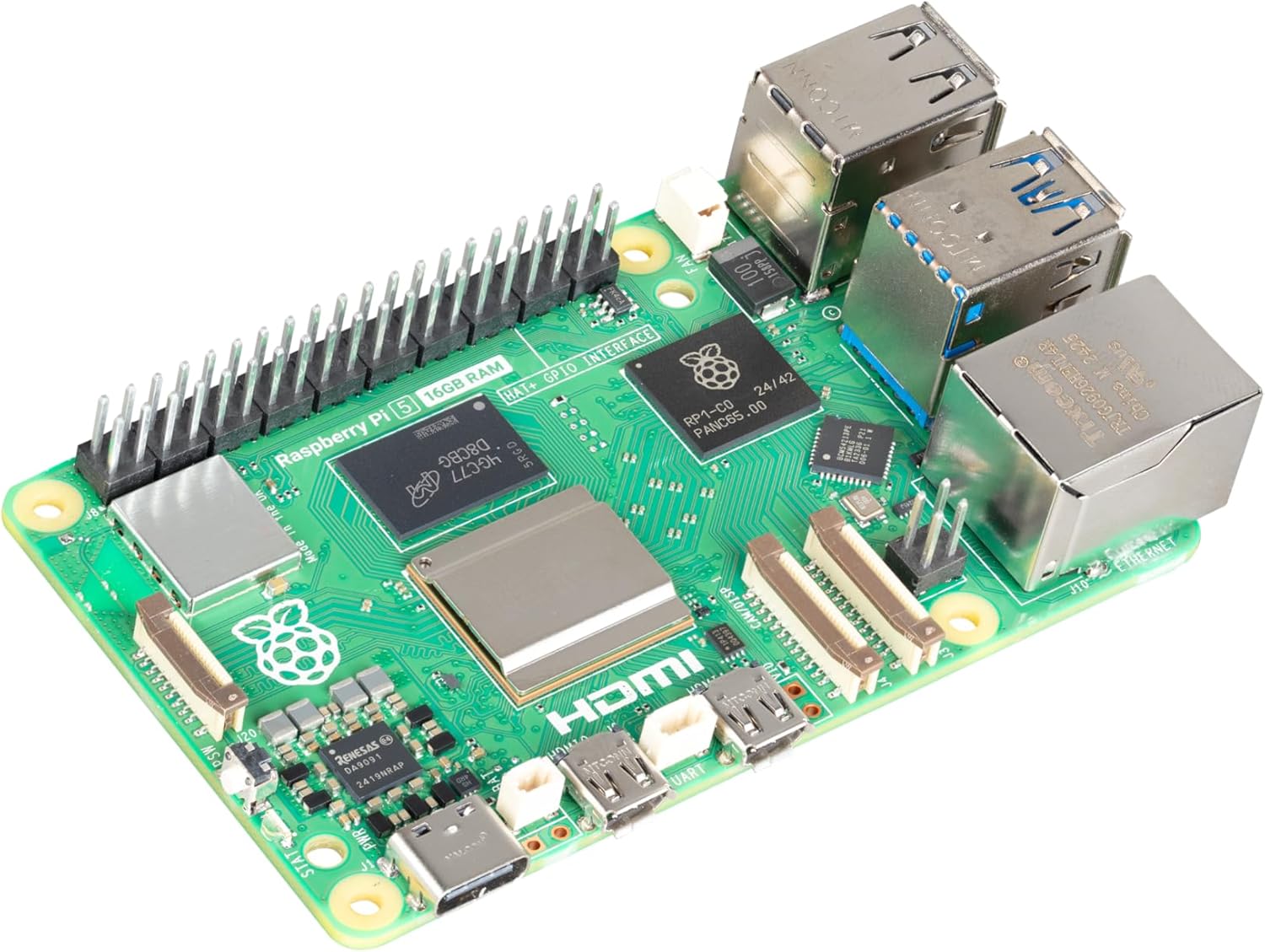
The RP2040 is the microcontroller at the heart of the Raspberry Pi Pico. Per Raspberry Pi's own product documentation, it's a dual-core Arm Cortex-M0+ chip clocked up to 133MHz, with a set of Programmable I/O (PIO) state machines that can generate and read waveforms independently of the main CPU cores.
That PIO block is the actual reason this chip gets picked for signal-timing projects like this one, rather than a more conventional microcontroller. Reproducing a fixed carrier frequency in software — bit-banging a GPIO pin inside a loop — is subject to jitter from interrupts, compiler behavior, and whatever else is running on the core. A PIO state machine can be configured to toggle a pin on a fixed clock-divided schedule in dedicated hardware, which is a meaningfully more reliable way to hold a steady IR carrier over time.
| Component | Role in the build | Rough cost class |
|---|---|---|
| Raspberry Pi Pico (RP2040) | Generates and times the IR signal via PIO | Low-cost microcontroller board |
| IR LED(s) | Emits the actual infrared signal toward the glasses | Commodity passive component |
| Current-limiting resistor | Protects the LED from overcurrent | Commodity passive component |
| Decoupling capacitor | Reduces power-rail noise that can corrupt timing | Commodity passive component |
| 3D Vision-capable display + shutter glasses | The thing you're actually trying to sync | Pre-owned/secondhand market |
Don't treat the "rough cost class" column as a fixed price quote — component and secondhand-hardware prices move, so check current listings before budgeting a build.
The Hard Part: You're Reverse-Engineering an Undocumented Protocol
This is the part of the project that separates "soldered together a blinking LED" from "actually synced glasses to a display." NVIDIA never published the IR protocol the official 3D Vision emitter uses — timing, framing, and carrier characteristics all have to be inferred rather than looked up in a datasheet.
The realistic path most hobbyist projects in this space follow:
- Capture a known-good signal. If you can get your hands on a working official emitter, recording its output with a logic analyzer or oscilloscope gives you ground truth to match against, rather than guessing at IR carrier and framing parameters from scratch.
- Reproduce the waveform on the RP2040. Configure a PIO state machine to output a matching signal, then verify with the same measurement tools that your output tracks the captured reference.
- Test against real glasses, incrementally. Small deviations in timing can be the difference between glasses that sync cleanly and ones that don't respond at all, so this tends to be an iterative process rather than a one-shot flash-and-done firmware upload.
If you don't have access to a genuine emitter to reverse-engineer from, treat this project as considerably harder and less likely to succeed on the first several attempts — you'd be working from secondhand community notes rather than a verified reference signal, and the specifics of any given writeup should be verified against your own measurements rather than taken on faith.
Compatibility Is the Real Bottleneck, Not the Emitter
Even a perfectly reproduced emitter signal only gets you halfway. 3D Vision's software side depends on NVIDIA's legacy driver stack exposing the feature at all, and that support has not kept pace with current GPU generations or current Windows/Linux driver branches. Whether a given GPU and driver combination still has a usable path to 3D Vision is something to verify directly against your own setup rather than assume from an old forum post — driver behavior on discontinued features tends to be the most volatile part of any legacy-hardware project.
This is a similar story to Xbox Mode's performance behavior favoring NVIDIA hardware over AMD in a different context: vendor-specific software paths behave differently across driver generations, and legacy or platform-specific features are the first things to lose consistent support as a vendor's stack moves on. Anyone attempting this build should go in expecting to spend real time on driver-side troubleshooting, not just the electronics.
Troubleshooting Common Build Issues
A few general electronics practices apply directly to this kind of build, independent of the specific IR protocol being targeted:
- Signal interference. Unshielded wiring between the RP2040 and the IR LED can pick up noise that corrupts the timing you worked to reproduce. Keep those runs short, and consider shielded cable if the emitter sits any distance from the board.
- Power-rail noise. A microcontroller sharing a power supply with other noisy electronics can see timing jitter reflected in its output. A decoupling capacitor close to the LED driver circuit is standard practice for exactly this reason.
- Range and angle. IR emitters are line-of-sight and fairly directional. If glasses sync inconsistently, check emitter placement and angle before assuming the signal itself is wrong.
- Confirm you're debugging the right layer. Before spending hours retuning PIO timing, rule out the driver/software side described above — a signal that never reaches a display that isn't exposing 3D Vision support will fail no matter how well-tuned it is.
Is This Project Worth It?
For someone who already owns 3D Vision-capable glasses and a display and simply can't find (or doesn't want to pay for) a working official emitter, an RP2040-based replacement is a reasonable weekend electronics project — provided you go in treating the protocol reverse-engineering as the actual project, not a footnote. For anyone starting from zero hardware, the honest framing is that you're reviving a discontinued, undocumented standard for its own sake, in the same spirit as the retro-hardware preservation work covered in SpecPicks' look at Sega's 1996 NVIDIA investment and the NV1 gamble that shaped every GPU launch since — projects that exist because a piece of hardware history is interesting, not because it's the practical way to watch anything in 3D today.
For a sense of how far NVIDIA's hardware has moved since the 3D Vision era, it's worth comparing this DIY-emitter tinkering against how NVIDIA now cools its AI datacenter accelerators with hot-tub-style coolant loops — the same company's engineering priorities two decades apart.
Citations and sources
- Raspberry Pi Pico product page — official RP2040 board specifications
- RP2040 microcontroller documentation — official chip architecture and PIO documentation
This piece is editorial synthesis based on publicly available information. No independent first-party benchmarking is reported.