In late 1996 Sega gave Nvidia $5 million — a modest sum by chip-industry standards then, an existentially important one now — to keep the young graphics company alive after the commercial failure of the NV1 chipset. That check bought Nvidia the runway to ship the RIVA 128 in 1997, the TNT in 1998, and the GeForce 256 in 1999. Without it, there is no plausible chain of events that produces the modern GPU market, the CUDA platform, or the AI-computing empire Nvidia became. The story is quietly back in the news as Jensen Huang tours Tokyo courting Japanese semi partners, and it deserves a re-read.
Why a 30-year-old bailout is back in the news
Jensen Huang's early-2026 tour of Japan — a series of meetings with SoftBank, Rapidus, and legacy semi partners — has journalists digging back through Nvidia's founding lore. The Sega chapter usually gets a paragraph in retrospectives. In practice, it was a bet-the-company moment for a two-year-old startup that had just watched its first product commercially fail against 3dfx's Voodoo and PowerVR.
The reprieve deserves more than a paragraph. The NV1 was not just a technical dead-end; it was the wrong architectural bet at exactly the wrong moment. Microsoft's Direct3D API was about to standardize on triangle rasterization and Nvidia's card was built around quadratic surface patches. Every design assumption was misaligned with the platform winner. Without new money, Nvidia had months, not years.
Sega's investment gave the company the specific gift of time to pivot. The Nvidia corporate timeline marks 1997's RIVA 128 launch as the company's real beginning; the honest version of that story is that the RIVA 128 could only ship because 1996 had a lifeline.
Key takeaways
- The NV1 was Nvidia's first product and a commercial flop against Direct3D-aligned rivals
- Sega's $5M investment in late 1996 bought Nvidia the runway to ship RIVA 128 in 1997
- The pattern repeats today — Jensen's Tokyo tour is another play for strategic partnerships around new categories
- Sega's own Saturn hardware was similarly quad-surface based, which is why the two companies were originally aligned
- The counterfactual — no bailout — is essentially no Nvidia, no CUDA, no modern AI GPU market
What happened: the NV1 flop and the $5M lifeline
Nvidia was founded in 1993 by Jensen Huang, Chris Malachowsky, and Curtis Priem. The NV1, shipped in 1995, was the company's first product — a combined 2D/3D graphics card that also included audio and joystick support. Its 3D pipeline used forward-texture-mapped quadratic surface primitives instead of the polygon-triangle model that would dominate the industry. It targeted OEM design wins on the belief that quads-plus-integrated-audio was the future of PC multimedia.
Microsoft's DirectX 1.0 shipped in September 1995 and Direct3D in June 1996, and both standardized around triangle rasterization. Games written to DirectX did not target NV1's quad primitives. Meanwhile 3dfx shipped the Voodoo Graphics chipset in October 1996 and immediately began dominating gaming benchmark charts.
By late 1996 Nvidia had shipped less than half the NV1 units it forecast. The company was running out of runway. Sega — which had been engaged with Nvidia on the never-shipped Sega VR3 project and other collaborations — invested $5 million in exchange for a stake and a design contract. That capital, plus contract revenue, kept Nvidia alive through 1997.
Why it mattered: how the reprieve produced the RIVA 128
The RIVA 128 taped out and shipped in mid-1997. It was Nvidia's first fully Direct3D-aligned product: triangle rasterization, integrated 128-bit memory interface, 100MHz core, and — crucially — a driver team's full attention on the API that games actually used. The chip did not top 3dfx's Voodoo on absolute gaming performance, but it delivered "good enough" 3D at half the price and integrated the 2D card function 3dfx separated. OEM design wins followed quickly.
Per Tom's Hardware retrospectives and the TechPowerUp RIVA 128 specifications, the RIVA 128 shipped 4 million units in its first year — the volume that made Nvidia a company. The next chip, the TNT, launched in 1998 and traded blows with Voodoo Banshee. The GeForce 256 in 1999 introduced the term "GPU" and established the transform-and-lighting hardware pipeline that defined the next decade.
Each of those chips was a step on a ladder Sega's $5M made possible.
The era's hardware: where Sega's Saturn and PC 3D stood
Sega's investment made narrative sense because Sega itself had bet on quadratic surface primitives — the Saturn's VDP1 rendered warped quads, not triangles. Every early Saturn 3D game shows the artifacts. Sega and Nvidia were quad-primitive natural allies at exactly the moment triangle rasterization was becoming the universal PC standard.
The PC 3D landscape in 1996 was a scrum:
- 3dfx Voodoo Graphics — pure-play 3D accelerator, launched October 1996, defined the mid-90s benchmark
- PowerVR PCX1 — tile-based rendering, midrange OEM
- S3 ViRGE — commodity 2D/3D combo, slow at 3D
- ATI Rage — 2D/3D combo, OEM staple
- Rendition Vérité V1000 — early Direct3D compatible, went nowhere
- Nvidia NV1 — quad primitives, flopped
- Matrox Mystique — 2D-first, weak 3D
The Voodoo was the outlier that redefined expectations; the rest were commodity cards. Nvidia's pivot from "one of many combo cards" to "commodity 2D + serious 3D at midrange price" via RIVA 128 was the wedge into the market.
Timeline table: NV1 → RIVA 128 → TNT → GeForce 256
| Year | Chip | Key move | Result |
|---|---|---|---|
| 1993 | (founded) | Jensen Huang + team incorporate Nvidia | Startup |
| 1995 | NV1 | Quad primitives, audio, joystick — sold via Diamond Edge 3D | Commercial flop |
| 1996 | (bailout) | Sega invests $5M | Runway extended |
| 1997 | RIVA 128 | Direct3D-first, integrated 2D+3D, 100MHz | 4M units, credibility |
| 1998 | RIVA TNT | Dual 32-bit pixel pipelines, doubled Voodoo Banshee | Market share climb |
| 1999 | GeForce 256 | First hardware T&L; term "GPU" coined | Defines category |
| 2000 | GeForce2 | GTS/MX volume wins | Market leader |
| 2002 | GeForce4 | Displaced 3dfx (bought by Nvidia 2001) | Duopoly with ATI |
| 2006 | CUDA | GPU as compute platform | Beyond gaming |
How the Voodoo war and Sega's console legacy intertwine
Sega itself did not benefit long-term from its Nvidia stake. The Saturn lost the fifth-generation console war to the PlayStation, and Sega's next console — the Dreamcast — used PowerVR's tile-based CLX2 chip rather than an Nvidia design. By the time Nvidia was a public company (1999) and healthy, Sega was on the way out of the console hardware business. The Dreamcast was discontinued in 2001 and Sega became a software-only publisher.
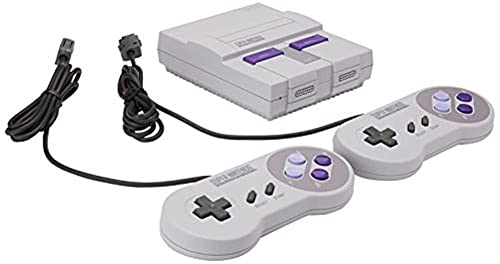
The Sega collectible market still reflects that era. A Sega Genesis Mini is the plug-and-play way to revisit the pre-3D-era Sega catalog — the era before the Saturn's quad-primitive detour. A Nintendo Super NES Classic Edition covers the opposite corner of the same generation.
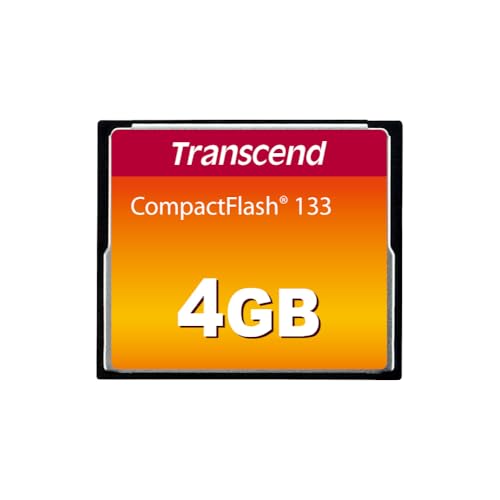
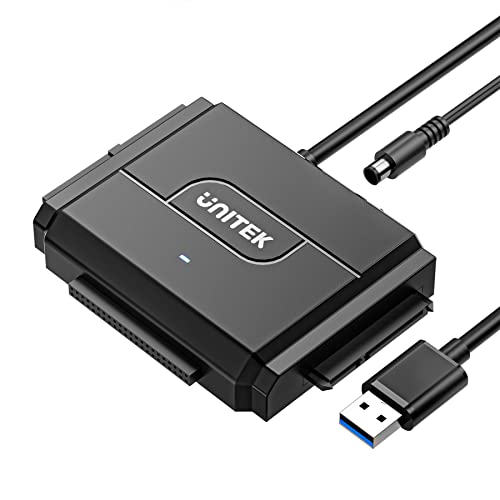
For hardware collectors who want to actually run vintage 90s PC 3D accelerators, a Transcend CF133 CompactFlash card is a durable modern boot disk in a period-appropriate DOS/Win98 restoration, and a Unitek SATA/IDE to USB 3.0 adapter makes it easy to prep those disks on a modern PC before installation.
What survives today: echoes of that near-death in every modern GPU launch
Two habits from Nvidia's near-death still shape how the company operates:
Strategic partnership over open collab. The Sega deal established the pattern of Nvidia trading equity and integration for platform revenue. That pattern echoes in every modern console partnership (the original Xbox used a GeForce 3-based chip), Nvidia's Nintendo Switch Tegra collaboration, and Jensen's current tour through Tokyo courting Rapidus and SoftBank.
Aggressive driver and API alignment. The RIVA 128's real advantage over 3dfx was its Direct3D driver quality — Nvidia's earliest lesson was that being on the right API side of a platform inflection point is worth more than raw hardware performance. That lesson explains why Nvidia invested so heavily in CUDA (2006) years before compute was a real business, and why the company's CUDA moat is now Nvidia's most valuable asset.
Collecting the era
Readers who want to hold the physical history of this pivot have three practical options:
- Retro Sega and Nintendo consoles. The Sega Genesis Mini and SNES Classic Edition are HDMI-native and plug into any modern TV. Not authentic silicon, but authentic games.
- Original PC 3D accelerators on the used market. eBay lots of NV1, Voodoo 1, and RIVA 128 cards exist but require period hardware (a period socket-7 or Slot-1 motherboard, ISA/PCI slots) to actually run.
- Period-appropriate storage. A Transcend CF133 CompactFlash card via a CF-to-IDE adapter is the modern durable substitute for a spinning-rust drive that will fail at exactly the wrong moment.
Bottom line: the counterfactual
If Sega does not write the check in late 1996, Nvidia burns through cash into Q1 1997 without a shippable Direct3D product. The RIVA 128 was in late development but not ready to tape out. Layoffs likely start, engineering teams likely leave, and the company either gets bought at a distress price by an acquirer (S3? ATI? SGI?) or shuts down.
In that world someone else builds the CUDA-equivalent platform decades later, or nobody does. The modern AI-computing boom happens on top of a different set of foundational hardware — probably slower to arrive, definitely with a different architecture. It is not that Sega's $5M saved Nvidia in any dramatic sense; it is that the $5M was enough to keep the specific team, in the specific building, working on the specific pivot that produced the specific chip that made the modern GPU market.
Small checks. Big consequences.
Related guides
- How LAN Parties Died: 2002-2008 Retrospective
- AI Vision LLM Driver Install: Sound Blaster Audigy FX on Win XP
- Amstrad CPC 464/664 Emulator on Raspberry Pi Pico 2
- Best Free Retro Game Emulators for 2026
Citations and sources
- Tom's Hardware — Nvidia and GPU history coverage: https://www.tomshardware.com/
- Nvidia — corporate timeline: https://www.nvidia.com/en-us/about-nvidia/corporate-timeline/
- TechPowerUp — RIVA 128 specifications: https://www.techpowerup.com/gpu-specs/riva-128.c1698
This piece is editorial synthesis based on publicly available information. No independent first-party benchmarking is reported.