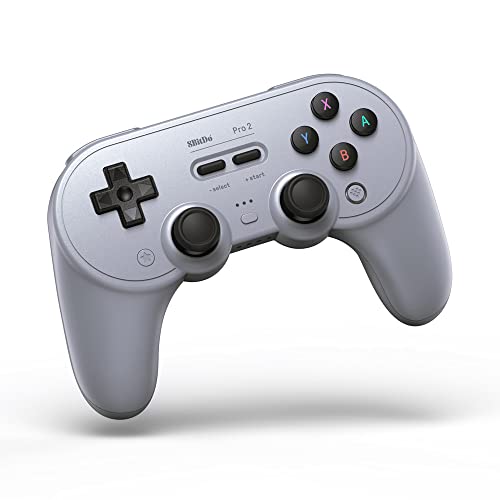
For most PC gamers in 2026, the best all-around controller is the 8BitDo Pro 2 — it works with everything from Steam to old emulators over Bluetooth or USB, adds two back paddles, and costs less than half of a DualSense. Buy a wired GameSir G7 SE if you play twitch shooters and want zero wireless variability. Buy a DualSense if you already own a PS5, prize haptics, or want the best-feeling sticks and adaptive triggers on modern titles that support them.
Wired latency, wireless freedom, and PC compatibility in 2026
PC controllers used to be an easy category: buy a wired Xbox 360 pad or an Xbox One Elite if you were feeling fancy. In 2026 the picture is different. Steam Input added first-class support for every major controller protocol. DualSense adaptive triggers work in a growing library of games. Hall-effect sticks eliminate drift on the two best budget picks. And Bluetooth latency has finally dropped low enough that "wireless" is not a synonym for "delayed" on modern hardware.
That leaves you with a genuinely useful three-way comparison for a first PC controller or a replacement. The GameSir G7 SE is the wired-only Hall-effect pick — no drift, no lag, cheap. The 8BitDo Pro 2 is the versatile all-rounder — wireless, wired, PC, retro emulation, mobile, Switch, and every classic input scheme through profile switching. The PlayStation DualSense is the premium option — best triggers, best haptics, ecosystem tie-in if you also own a PS5.
We walk through what each is actually good at, where the paint chips, and how you protect the one you buy for the road with an ivoler carrying case. By the end you should know exactly which of the three fits your setup.
Key takeaways
- The 8BitDo Pro 2 is the best all-rounder for PC, retro emulation, and Switch.
- The GameSir G7 SE is the wired FPS pick — Hall-effect sticks, cheap, zero drift.
- The DualSense is the premium PC pick if you value adaptive triggers and haptics.
- Wired always beats wireless on latency; wireless has closed the gap enough to be fine for anything below competitive shooters.
- A hard carrying case is worth $10-15 if you take your controller anywhere.
Step 0: what do you actually need?
Three questions to sort yourself:
- Do you play twitch shooters competitively? If yes, wired matters and the G7 SE is a safe bet.
- Do you switch between PC, retro emulators, Switch, or mobile? If yes, the Pro 2 is the pick.
- Do you already own or plan to own a PS5, or do you care about haptics? If yes, the DualSense is the right buy.
If two of those apply, prioritize the answer to the first "yes." Wired vs versatility vs haptics is genuinely a three-way trade.
Spec-delta table
| Spec | GameSir G7 SE | 8BitDo Pro 2 | DualSense |
|---|---|---|---|
| Connection | Wired USB-C | Bluetooth, USB-C, 2.4GHz dongle (with adapter) | Bluetooth, USB-C |
| Sticks | Hall-effect | Standard analog (Pro 2 non-Hall) | Standard analog |
| Battery | N/A wired | AA (rechargeable, included) | 1560 mAh Li-Po (~12h) |
| Extra buttons | 2 back paddles | 2 back paddles | 2 rear customizable via app |
| Haptics | Standard rumble | Standard rumble | Dual actuators + adaptive triggers |
| Weight | 235 g | 228 g | 280 g |
| Price | $40-50 | $50-60 | $70-75 |
| Cable in box | Yes, USB-C | Yes, USB-C | Yes, USB-C |
For the 8BitDo Pro 2 specifically, PC users typically pair it with the 8BitDo Wireless Adapter 2 for lower-latency 2.4GHz over Bluetooth. Bluetooth-only is fine for platformers and RPGs, less so for shooters.
How does the wired GameSir G7 SE feel for FPS and fighting games?
The G7 SE is the wired-controller pick if you have played on a controller enough to know Hall-effect sticks matter to you. Hall-effect uses magnetic-field sensing instead of physical contact for the analog sticks, which eliminates the drift failure mode that has plagued every Xbox and PlayStation controller across the past three console generations.
For FPS games, the wired connection gives you a sub-1ms polling latency, which is what competitive players ask for. Sticks are on the stiffer side out of the box; if you like a looser feel, this is not for you. Triggers are hair-trigger sensitive, which helps in racing and shooters. Two back paddles let you rebind jump or crouch off the face buttons, which matters more than most controller reviewers give it credit for.
For fighting games, the D-pad is fine but not great — you can play a solid Street Fighter on it, but if you take fighting games seriously you should still buy a fightstick or a Hitbox-style pad. See Tom's Hardware best PC controllers for their fighting-game recommendations.
Why is the 8BitDo Pro 2 the versatile all-rounder for PC and retro?
The 8BitDo Pro 2 is the answer if you play across platforms. It supports four independent input profiles that you switch on the controller with a hardware button — one profile for Windows XInput, one for Switch, one for Android, one for MacOS. Profiles include button remapping, so a person who grew up on a SNES pad and needs the SNES face-button layout in Cave Story can have it, while a Steam Deck user has XInput.
Wireless works over Bluetooth for pairing or via the 8BitDo Wireless Adapter 2 for reduced latency. Wired via USB-C is always an option. The build feels premium at its price point — better than the $40-50 Xbox One imitators from the 2010s. Battery is rechargeable AA cells that swap out easily if the pack degrades.
Two things to flag: the sticks are not Hall-effect, so long-term drift is a possibility. The D-pad is legendary — arguably the best D-pad on any modern third-party controller — which is why every retro-emulation guide points at this pad. The 8BitDo support portal documents firmware updates and profile setup thoroughly.
What does the DualSense add on PC, and what's lost without native haptics?
The DualSense is the premium pick and the answer if you value the tactile experience of playing. Adaptive triggers and dual haptic actuators are meaningful — genuinely meaningful — in titles that support them. Returnal, Ratchet & Clank, Death Stranding Director's Cut, God of War Ragnarok on PC all lean into the DualSense hardware and feel materially better than on an Xbox pad.
On PC, adaptive triggers require either DS4Windows/DualSenseX (community drivers) or the game's native DualSense support. Steam Input supports the DualSense natively as a "PS controller" but does not always route the haptics or triggers through to games. For titles without native DualSense integration, the DualSense on PC works but behaves like a nice generic gamepad with better sticks — you lose the reason you paid the premium.
Sticks feel excellent out of the box, better than any of the three. Battery life is average — 10-12 hours per charge. The touchpad is usable on PC as a small trackpad in Steam Big Picture mode. See Rtings gamepad reviews for their independent testing of DualSense latency and haptics on PC.
Which controller survives travel best?
All three fit in a hard carrying case. If you take a controller on trips or between locations, a case like the ivoler carrying case covers the shell and prevents thumbstick damage in a bag. This matters more for the DualSense than the other two — the DualSense's clear plastic shell scratches easily and its glossy touchpad is a fingerprint magnet.
The Pro 2's compact shape fits smaller cases. The G7 SE's cable adds cable-management to your case decision. Any of these three plus a $15 hard case is a durable travel setup.
Verdict matrix
Get the GameSir G7 SE if:
- You play twitch shooters and want zero wireless variance
- You want Hall-effect sticks at the lowest price
- You are fine with a wired controller — no batteries, no pairing
Get the 8BitDo Pro 2 if:
- You switch between PC, Switch, retro emulators, or mobile
- You want the best third-party D-pad on the market
- You want two back paddles and profile switching on hardware
Get the DualSense if:
- You already own or plan to own a PS5
- Adaptive triggers and haptics matter to you
- You play recent PC ports of PlayStation titles with native DualSense support
Common pitfalls when buying a PC controller
- Buying a Bluetooth-only pad expecting 1ms polling. Bluetooth is fine for most games; competitive shooters still want wired or 2.4GHz.
- Missing that the Pro 2 needs the 8BitDo adapter for reliable 2.4GHz. Bluetooth-only Pro 2 works but is not the low-latency configuration.
- Buying a DualSense for PC to save money. If you do not also game on a PS5, the DualSense is overpaying for haptics you may not use.
- Ignoring firmware updates. All three benefit from a firmware update out of the box; check the manufacturer app before you swear off the pad.
- Skipping the carrying case if you travel. A dropped controller can knock a stick out of calibration; $15 is cheap insurance.
When NOT to buy any of these
If you want a fightstick, buy a fightstick. If you want a Hitbox-style pad, buy that. If you play racing sims, look at wheel-and-pedal setups, not gamepads. Gamepads are best for anything that is not competitive fighting-game combat or sim racing.
Recommended pick
For most PC gamers, the 8BitDo Pro 2 is the right answer. It plays modern PC games well, plays retro emulators like nothing else in the class, and works across platforms without profile juggling in software. Add an ivoler carrying case if you travel. Upgrade to the DualSense if you value haptics; step down to the wired GameSir G7 SE if latency in competitive shooters is your top priority.
Related guides
- Logitech G Pro X2 Superstrike Drops to $125.99
- Best Streaming Starter Kit for Creators in 2026
- Ryzen 7 5800X vs Ryzen 5 5600G for a Budget Gaming Build
Citations and sources
- Rtings gamepad reviews — independent latency and ergonomics testing
- Tom's Hardware best PC controllers — category context and fighting-game caveats
- 8BitDo support portal — Pro 2 firmware and profile documentation
As of 2026, controller pricing reflects US street prices; 8BitDo Wireless Adapter 2 is a common secondary purchase for Pro 2 users on PC.