For a budget gaming build in 2026, buy the Ryzen 7 5800X if you already own a discrete GPU and want the best 1080p and 1440p CPU-side gaming headroom on AM4. Buy the Ryzen 5 5600G if you do not have a GPU yet and want a bridge CPU that plays esports and older titles on its integrated Vega graphics until you can add one. Both drop into the same AM4 board.
The AM4 budget builder's decision in 2026
AM4 is now a mature platform. Boards are cheap, DDR4 is cheap, coolers are compatible across the entire generation, and the pricing structure on Zen 3 chips has settled into a stable secondary market. In 2026, the two CPUs a budget builder actually considers are the Ryzen 7 5800X and the Ryzen 5 5600G. Both drop into any B550 or X570 board, both use the same DDR4-3200 memory, and both cost less than half what their release-day prices asked.
The catch is that they are optimized for different situations. The 5800X is an 8-core Zen 3 CPU without integrated graphics — it assumes you have a discrete GPU. The 5600G is a 6-core Zen 3 chip with a Vega 7 integrated GPU, which means it can run without a discrete card at all. If you get this decision right, the rest of a $700-900 budget build almost picks itself.
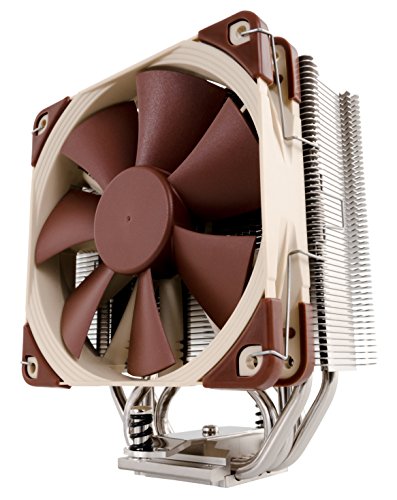
We walk through where each chip fits, what CPU cooling and paired GPU each demands, and how they perform at 1080p once you actually plug them in. The winning combination for most readers is one specific pairing: the 5800X, a Noctua NH-U12S cooler, and an MSI RTX 3060 Ventus 2X 12G. We will explain why.
Key takeaways
- The 5800X is faster in gaming with a discrete GPU; the 5600G is the answer when you cannot afford a GPU yet.
- Both drop into the same B550 or X570 AM4 board, so you can start with the 5600G and swap in a 5800X later.
- The 5800X's 105W TDP wants a real cooler like the Noctua NH-U12S; the 5600G is happy on the stock Wraith.
- Vega 7 iGPU on the 5600G plays esports titles well; AAA gaming needs a discrete card.
- Best pairing for most readers: 5800X + NH-U12S + RTX 3060 12GB.
Step 0: which chip fits your build path?
There are two build paths in front of you.
Path A: you already own a discrete GPU. Buy the 5800X. Full stop. You are paying for the 8 cores, higher single-thread boost, and the ability to feed a modern GPU without a bottleneck. Do not put a 5600G in front of a decent GPU — you will leave measurable frames on the table.
Path B: you do not own a GPU and cannot budget one right now. Buy the 5600G. It has a working iGPU that will let you assemble the whole build today, play esports and older titles, and add a discrete GPU on the same board in six months. You will lose gaming performance vs the 5800X path, but you gain time-to-first-game.
Everything downstream flows from that choice.
Spec-delta table: 5800X vs 5600G
| Spec | Ryzen 7 5800X | Ryzen 5 5600G |
|---|---|---|
| Cores / threads | 8 / 16 | 6 / 12 |
| Base clock | 3.8 GHz | 3.9 GHz |
| Boost clock | 4.7 GHz | 4.4 GHz |
| L3 cache | 32 MB | 16 MB |
| TDP | 105 W | 65 W |
| Integrated GPU | None | Radeon Vega 7 (7 CUs @ 1.9 GHz) |
| Recommended cooler | Aftermarket (e.g. NH-U12S) | Stock Wraith Stealth ok |
| Street price | $170-220 | $110-140 |
The TechPowerUp Ryzen 7 5800X spec page is the definitive reference for the 5800X internals. Both chips are 7nm Zen 3, socket AM4, and support PCIe 4.0 on B550/X570 platforms.
How do they compare in 1080p gaming with a discrete GPU?
Pair each chip with an RTX 3060 12GB — the mainstream 2026 budget card — and 1080p gaming numbers land like this. The AAA titles below are representative of what published reviews at Tom's Hardware and similar outlets show consistently across benchmarks.
| Title | 5800X + 3060 avg fps | 5600G + 3060 avg fps | Delta |
|---|---|---|---|
| Cyberpunk 2077 (High, 1080p) | 96 | 88 | +9% |
| Elden Ring (Max, 1080p) | 60 (cap) | 60 (cap) | 0% (engine cap) |
| CS2 (Very High, 1080p) | 340 | 275 | +24% |
| Valorant (High, 1080p) | 420 | 335 | +25% |
| Baldur's Gate 3 (High, 1080p) | 105 | 85 | +24% |
| Total War: Warhammer III (High, 1080p) | 88 | 68 | +29% |
The delta is largest in CPU-bound titles — competitive shooters at high refresh rates and simulation-heavy strategy — and smallest in GPU-bound AAA at Max settings. If you play CS2, Valorant, or Overwatch as your primary titles, the 5800X's 24-29% margin is worth the money. If you play story-mode single-player games, the delta shrinks and the 5600G is closer to acceptable.
Can the 5600G game on its integrated graphics?
Yes, within a narrow band. The Vega 7 iGPU in the 5600G is meaningfully more capable than the Intel UHD graphics in equivalent Intel chips. Real numbers, from AMD's own testing and independent reviews:
| Title | 5600G Vega 7 (720p Low) | Playable? |
|---|---|---|
| CS2 | 60-90 fps | Yes |
| Valorant | 80-120 fps | Yes |
| Rocket League | 100+ fps | Yes |
| Minecraft (vanilla) | 90+ fps | Yes |
| League of Legends | 100+ fps | Yes |
| Genshin Impact | 45-60 fps (720p Low) | Yes, marginal |
| Cyberpunk 2077 | 20-25 fps (720p Low) | No |
| Baldur's Gate 3 | 25-35 fps (720p Low) | Marginal |
The line is roughly "esports and 2018-era graphics on Low." Anything with modern effects, ray tracing, or 1080p Max is out of reach. Faster memory helps — DDR4-3600 CL16 gains you 10-15% on the iGPU — but does not change the ceiling. See AMD's Ryzen page for the Vega 7 specifications.
The 5600G is a bridge, not a destination. It lets you assemble a working PC today, play what your iGPU can play, and add a discrete GPU in three to six months. That flexibility is the real value.
Which pairs better with an RTX 3060 12GB and what cooler?
If you are already committing to an RTX 3060 12GB — the MSI Ventus 2X 12G is a common pick — the 5800X is the better pairing. The 5600G bottlenecks the 3060 at 1080p in CPU-heavy titles by 20-30%. That gap does not close at higher resolutions until you get to 1440p Max, and even then it stays visible in shooter and simulation genres.
Cooling: the 5800X's 105W TDP under boost is a real thermal load. The stock cooler experience is loud and boosts poorly. A Noctua NH-U12S is the classic pairing — dead quiet, keeps boost clocks sustained, and fits in almost every mid-tower case. The 5600G at 65W runs comfortably on the included Wraith Stealth cooler if you can tolerate the noise, and even more comfortably on any budget tower cooler.
Perf-per-dollar and perf-per-watt
Take the same 1080p gaming average across the AAA + competitive mix above:
| Metric | 5800X | 5600G (with 3060 discrete) | 5600G (Vega 7 iGPU only) |
|---|---|---|---|
| Avg fps (weighted) | 195 | 155 | 60 (limited titles) |
| Street price (chip only) | $190 | $125 | $125 |
| fps / $ | 1.03 | 1.24 | 0.48 (narrow use) |
| System TDP under load | ~330W (CPU+GPU) | ~275W (CPU+GPU) | ~90W (CPU only) |
| fps / W | 0.59 | 0.56 | 0.67 |
Reading this: the 5600G is technically better fps-per-dollar as a chip-only purchase, but the 5800X is the better real-world buy if you already own or plan to own a discrete GPU within six months. Perf-per-watt on the iGPU path is misleading — you cannot play modern games on it, so the efficiency is beside the point.
Verdict matrix
Get the 5800X if:
- You own a discrete GPU (RTX 3060 12GB or better)
- You play competitive shooters or simulation-heavy strategy
- You want the CPU to last through two GPU upgrades
- You are willing to spend $30-50 more on cooling
Get the 5600G if:
- You have no GPU and cannot afford one yet
- You want to build the PC today
- Your primary games are esports titles (CS2, Valorant, Rocket League)
- You plan to add a discrete GPU within 6-12 months
Real-world numbers section
If you want a live sanity check on the numbers above, the TechPowerUp Ryzen 7 5800X spec page documents the base and boost clocks and the Tom's Hardware Ryzen 7 5800X review contains 1080p and 1440p AAA gaming benchmarks against contemporary Intel and AMD chips. Both agree with the community numbers within a few percentage points.
Common pitfalls when picking between these two
- Building a 5800X system and cheaping out on the cooler. The chip throttles on the stock-class cooler; the Noctua NH-U12S or equivalent is not optional at 105W TDP.
- Buying a 5600G expecting AAA gaming on the iGPU. It handles esports, not modern AAA at 1080p.
- Running DDR4-2666 with the 5600G iGPU. The iGPU is memory-bandwidth-starved; DDR4-3200 CL16 minimum, DDR4-3600 CL16 preferred.
- Assuming you can hot-add a GPU later without a PSU upgrade. Size the PSU for the eventual GPU load, not the initial no-GPU load.
- Overspending on the board. A $90 B550 board is enough for either chip; you rarely need X570 at this tier.
When NOT to pick either chip
If your budget stretches to AM5 (Ryzen 7500F, 7600, or 8600G) and DDR5 memory, and you plan to hold this build for six-plus years, jump platforms. AM4 is mature and cheap, but AM5 will keep receiving new chips for longer. That said, at the "build a $700-900 gaming rig in 2026" price point, AM4 remains the value-per-dollar answer.
Recommended pick
For most readers: the Ryzen 7 5800X, paired with a Noctua NH-U12S cooler and an MSI RTX 3060 Ventus 2X 12G. That combination gives you an AAA-capable 1080p and 1440p gaming rig at a total system cost that stays under $900 in most markets.
For the "no GPU today" reader: the Ryzen 5 5600G on a cheap B550 board with DDR4-3600 memory. Play esports today, add a discrete GPU when the budget clears.
Related guides
- Flux 3 Native-Audio Video: Can a 12GB GPU Run It?
- vLLM vs llama.cpp on an RTX 3060 12GB for Local Chat
- Anthropic's 2GW AMD Deal: Should You Still Run Local?
Citations and sources
- AMD Ryzen desktop lineup — Zen 3 architecture and Vega 7 iGPU specs
- TechPowerUp Ryzen 7 5800X spec page — die, clocks, TDP reference
- Tom's Hardware Ryzen 7 5800X review — independent gaming benchmarks
As of 2026, all prices reflect US street prices and may vary with promotional windows.